What the vine knows about change, character, and the long ripening of a life
“What you seek is seeking you.” — Rumi
For most of my adult life, I was the man people came to find when their season had turned without warning.
Seventeen years in the Australian Defence Force as a welfare specialist — which is a clinical way of saying I sat in a chair and held space while other people’s lives fell apart. I sat with soldiers, sailors, aviators who had lost mates and could not yet say their names aloud. I sat with families who had received the knock at the door that reshapes a life. I sat in the long quiet after the words ran out, and I absorbed what poured into that silence, because that was the job.
What I learned in those years, more than anything else, is this.
People are not afraid of change. People are afraid of being in a season they did not choose, that they cannot name, that nobody around them seems to understand, and that nobody can tell them when it will end.
This is the essay I would have given them, if I had known then what the vineyard would later teach me.
It is not an essay with ten steps. I do not have a system for what you are walking through.
What I have is a vine.
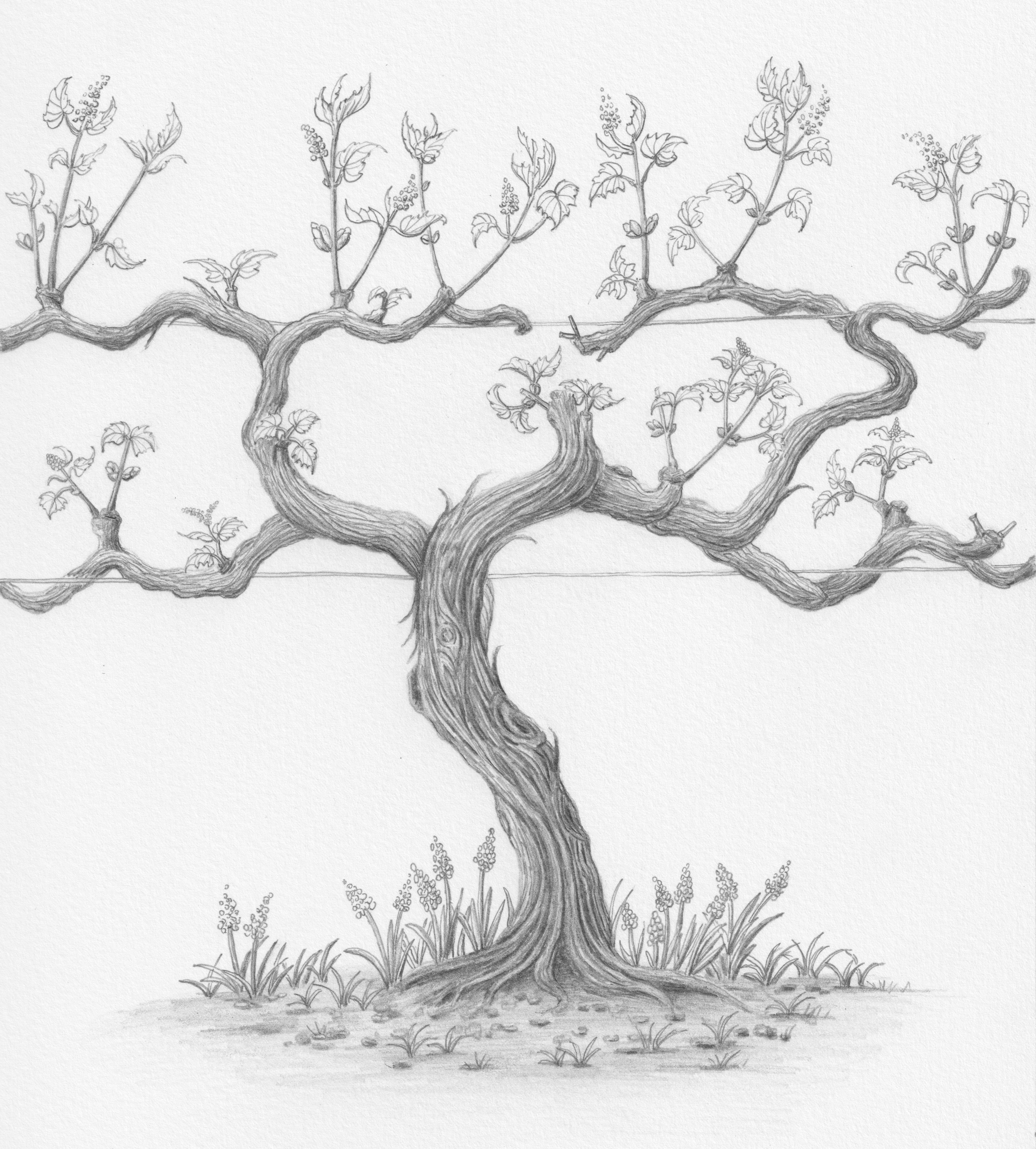
Illustrations by Li Zhang.
Spring — Flowering and Fruit
“The only real journey is the one within.” — Rainer Maria Rilke
In Wisdom & Wine — the novel I have spent the last years of my life writing — Part One opens with these lines:
There is a moment in every life when the hard wood cracks and something green pushes through. You don’t choose the moment. It chooses you. It arrives as a meeting you didn’t expect, a place you stumbled into, a voice that said something your soul had been waiting to hear.
Spring in the vineyard is the season we say we want. New shoots. Pale green against scarred wood. The terrifying, exhilarating moment when the bud decides it can no longer remain closed.
But ask any vigneron in the Barossa and they will tell you the truth — spring is the season we lose the most fruit. A single late frost in September can take the entire vintage. The leaves are too tender. The buds too exposed. The new growth has no callus yet.
Spring is the season of hope. It is also the season of a vulnerability you did not consent to.
In the novel, this is the season Donald walks into without knowing it. A young Australian soldier on a flight from London to Florence, carrying the death of a man named Cameron and the letters he has had to write to mothers, certain he is broken, certain he is finished.
He is wrong.
He is budding.
He does not know yet that an Italian flight attendant will pour him a glass of Sangiovese and point him toward a hilltop town called Montepulciano. He does not know that a woman whose name means wisdom in the Greek will meet him there and teach him to see the vine for what it is. He does not know that the breaking he has been doing is the soil. He does not know that what is about to come is the most important opening of his life.
This is the season of character formation. The season your values stop being words you inherited and start becoming virtues you embody. The season the soul gets patterned by the people you meet, the books you read, the journeys you take when you were not ready to take them.
If you are in a new beginning right now — a marriage, a venture, a sobriety, a return, a quiet inward turning toward something you cannot yet name — do not be surprised that it feels fragile. The vine in spring does not feel powerful. She feels small, and green, and very awake to the weather.
You are not failing.
You are budding.
The question spring asks is the one you cannot answer with anything but your life —
are you willing to be opened?
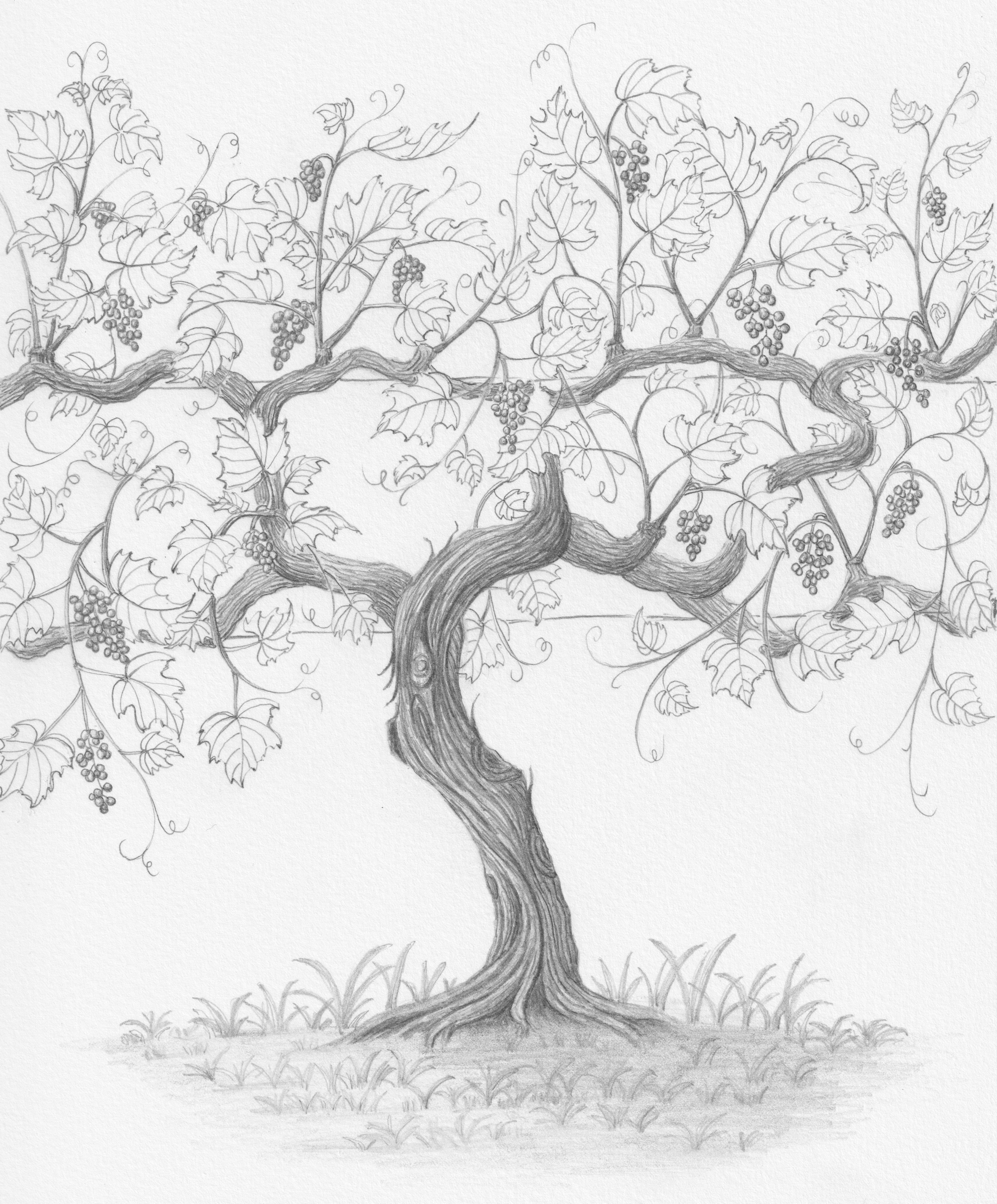
Summer — Ripening
“In the depth of winter, I finally learned that within me there lay an invincible summer.” — Albert Camus
Part Two of the novel opens with this:
The flower is beautiful. But the flower is not the point. After the opening comes the hard part. The part nobody tells you about when they celebrate your beginnings and toast your courage and say how brave you are for starting. The part where the sun beats down and the rain doesn’t come and the soil cracks and the roots have to push deeper, not toward light now, but into darkness.
This is the season I lost the most people from in my welfare work.
Almost nobody quits in spring. The novelty carries them. The flowering carries them. They walk in lit up by the possibility of what is beginning.
They walked out in summer.
Summer is the long one. The leaves fill. The canopy thickens. Small green clusters appear and begin, slowly, to grow. But nothing is yet wine. Nothing is yet harvest. The fruit hangs in its hard, unripe form, asking only one thing of the vine — keep going.
The early thrill of the new shoot has matured into the unromantic work of feeding what we cannot yet eat. Every new commitment is full of energy at the start. Six months in, half of us have quietly stepped away. The wedding is celebrated. The marriage is not.
This is summer. The middle that nobody writes essays about.
In Wisdom & Wine, summer is where Donald is broken open in a slower, deeper way. Not the dramatic breaking of beginning, but the slow breaking of being tested across decades. The career. The losses he could not prevent. The marriages and the postings and the long stretches of being more in airports than in his own kitchen. The grief that does not lift on schedule. The men in the patrol he kept and the ones he could not. The shame he carried that nobody could see.
This is where the values you said you had stop being values and become virtues. Not because you announced them, but because you survived long enough to need them. Not because you read about them, but because you had to choose them again, on a Tuesday afternoon, in a season nobody was watching.
There is a phrase I have been saying to people in their hard seasons for years, and that I wrote into the preface of the novel — the stressed vines make the best wine.
It is not a pretty saying. It is a vineyard fact.
The fruit that forms on a stressed vine is smaller than the fruit of an easy life. Tighter. More concentrated. It holds within its skin the entire story of what it survived, the drought, the heat, the long nights when nothing seemed to be growing at all.
But taste it. Taste what difficulty produces when it is met with endurance instead of surrender. The depth. The complexity. The layers of flavour that could not exist without the pressure that created them.
If you are in the long middle of something — a manuscript that is not yet a book, a recovery that is not yet recovered, a marriage that is being rebuilt one quiet evening at a time, a calling you cannot yet see the shape of — you are in summer. The work is invisible. The fruit is small and green.
This is where the vine withers or the roots deepen. There is no middle ground. There is no comfortable holding pattern.
The question summer asks is this —
will you let the stress deepen you, or will it brittle you?
Stay.
Keep tending.
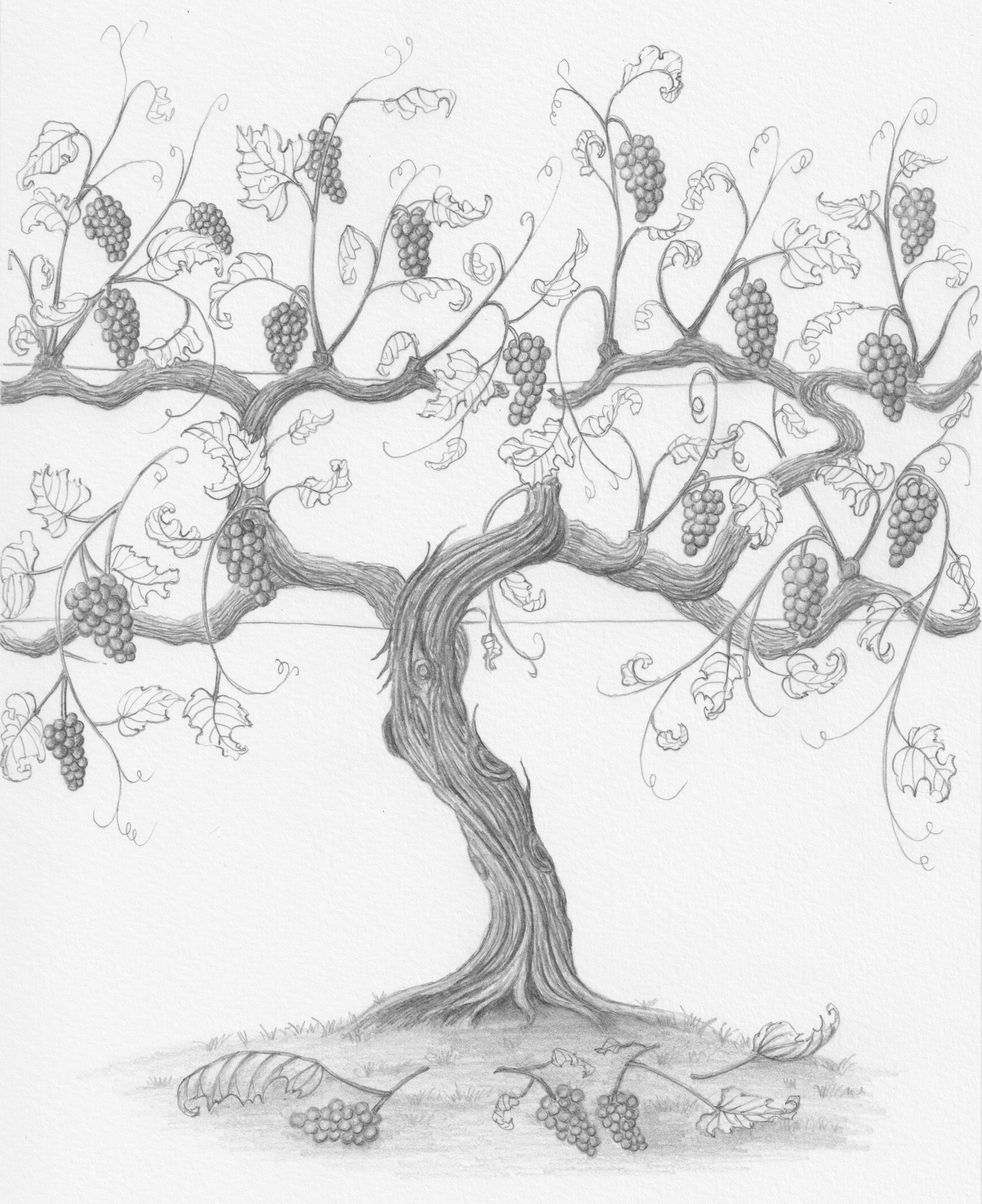
Autumn — Harvest
“What we have once enjoyed deeply we can never lose. All that we love deeply becomes a part of us.” — Helen Keller
Part Three of the novel opens with this:
There comes a day when the fruit is ready. Not because it has reached perfection. Not because the season was kind or the conditions were ideal. The fruit is ready because it has endured everything the vine endured and transformed it into something new.
There is a scene in Wisdom & Wine I return to in my quiet hours.
On the fifth afternoon Donald and Sophia have known each other, she takes him up a hilltop path in Montepulciano that opens onto an old garden at the edge of the world — vineyards spreading across the slope below, grapes ripening into deep purple in the September sun, and beyond them the Val d’Orcia stretching out forever.
She introduces him to Raphael, the keeper of the Conti vineyard, and to Raphael’s son Bruce — a serious, watchful ten-year-old who, his father tells Donald with quiet pride, was born in the harvest. His first cradle was a wine basket.
They walk among the vines. The boy stops at one older and more gnarled than the others, rests his small hand on it as though greeting a relative. This one is nonno’s, he says. Grandfather’s vine. The first one he planted.
They sit at a table beside the farmhouse. Raphael pours wine from a bottle with no label. Bruce stands beside the table with the careful posture of an apprentice. When his father pours, the boy watches every motion. And at one point in the slow afternoon, in his careful English, the boy says something that Donald will remember for the rest of his life.
The vines tell us when they are ready. We do not tell them.
This is autumn.
The dark, heavy clusters. The deepening colour. The vintage you can finally taste. But it is also the season we get wrong in two opposite directions.
Some of us refuse to receive it. The fruit is ripe and we will not pick it. We do not believe we have earned the harvest. We keep the wine in the bottle out of an old story about scarcity. The vine offered. We did not take.
Others of us refuse to release it. We have ripened, and we want it to stay ripe forever. We try to hold autumn into May and June and July. We will not let the leaves fall. We will not let what is finished be finished. We mistake the harvest for the destination.
The vine knows better. The vine accepts what has come, releases what is done, and turns her energy down — toward what is next.
And there is one more thing about autumn that I did not understand until I wrote the novel.
The harvest is not for you alone. It never was. The vine does not produce fruit to admire itself. It produces fruit to be shared, to be crushed, to be transformed into something that brings people together around a table where they speak of things that matter.
This is what the harvest season of a life is for. Everything the storms made in you — the wisdom, the depth, the strength, the love that did not break when it had every reason to — was never meant to be kept.
It was meant to be poured. Generously. At tables you set for people who are still in their summer, still in their spring, still in their hardest winter.
The question autumn asks is this —
whom will you pour for?
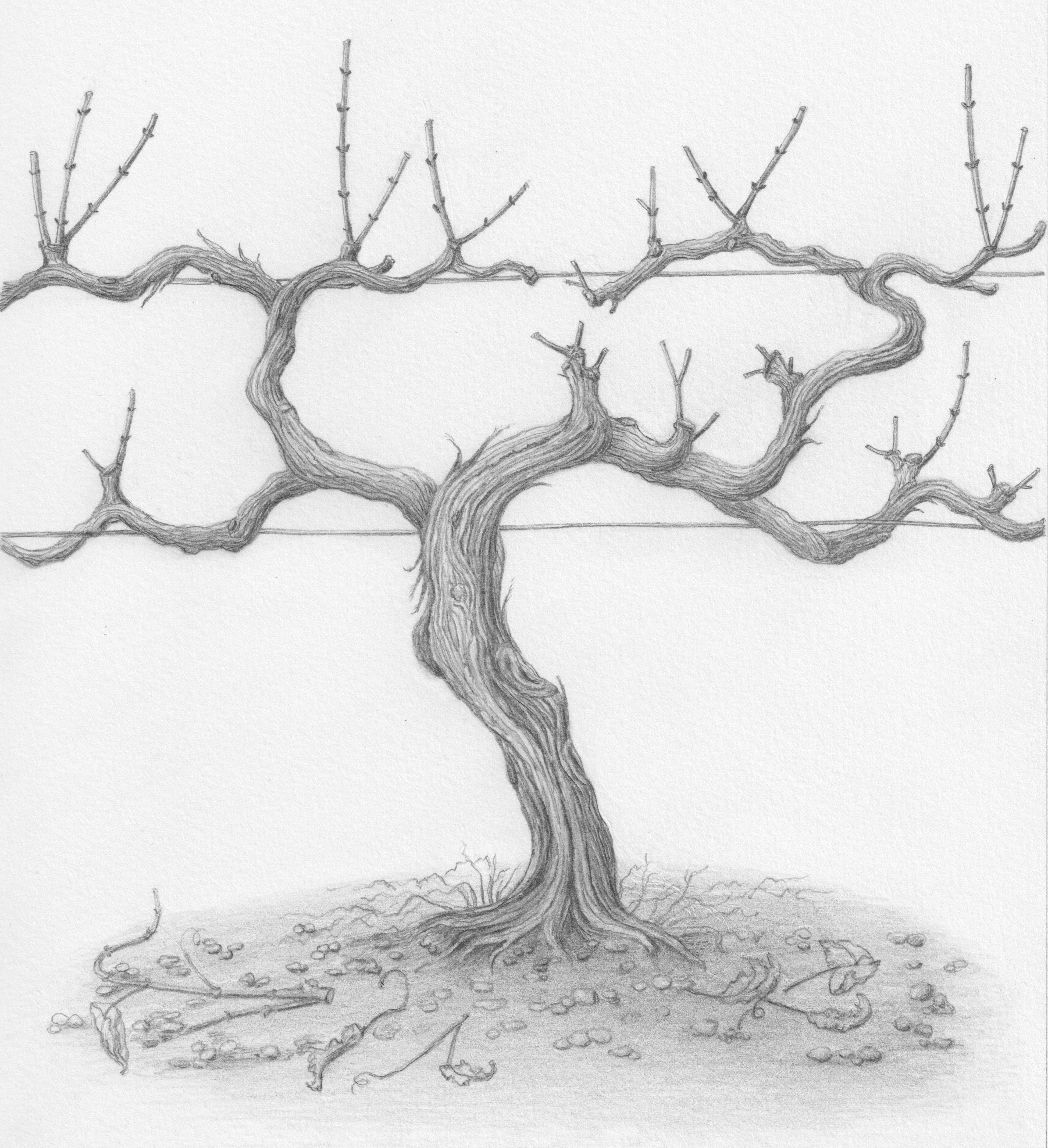
Winter — Dormancy and Rebirth
“The wine of life keeps oozing drop by drop, the leaves of life keep falling one by one.” — Omar Khayyam
Part Four of the novel opens with the words I think about most often:
After the harvest, the vine goes quiet. The leaves fall. The branches go bare. The sap retreats deep into the roots, down below the frost line, below the reach of winter, into the dark earth, where nothing appears to be happening. To the eye, the vine looks dead. Finished. A thing that has given everything it had and is now done.
But the vine is not dead. The vine is doing the most important work of its life.
This is the season Western culture refuses to teach.
We have a vocabulary for spring. We celebrate beginnings. We post the announcements. We toast the births. We have a vocabulary for summer — at least the part that complains. We have a vocabulary for autumn, even if we use it badly, hoarding what we should be giving.
But winter? The bare vine? The cut? The ground scattered with what used to be? The long, quiet, invisible work of integration? We have almost nothing for this season. We medicate it. We rush through it. We pretend it isn’t happening. We treat it like a problem to be solved instead of a season to be lived.
And so we miss what the vine has been showing us all along.
In dormancy, the roots consolidate. The vine takes everything she learned during the growing season — every adaptation to drought, every response to disease, every hard-won adjustment to the soil and the wind and the angle of the sun — and writes it into the wood. Into the permanent structure. Into the memory of the vine itself.
Winter is not the absence of life. Winter is life retreating to its core.
The vigneron who walks the row with his blade is not cruel. He is in love with the next vintage. He prunes only because he knows what she is capable of, and he refuses to let her waste herself on weak wood and crossed canes and the fruit of last year. The cut is care. The bare is preparation.
In the closing pages of the novel, Sophia says something to Donald I could not write without weeping. She tells him that becoming eternal is not a matter of clinging to life, but of returning to it. Not of haunting the places we loved, but of becoming part of them.
The dormant season isn’t death, she says. It’s preparation for spring.
Endings are not the opposite of beginnings. They are beginnings in another form.
If you are in winter right now — the bare season, the cut, the silence, the ground scattered with what used to be — please hear me. You are not dead. You are not lost. The life has not left you. It has only moved — down, in, into the roots. Into the dark earth where the deepest work of your life is being done quietly, without applause, without an audience, without you needing to understand it for it to be true.
The question winter asks is the one no other season asks —
can you trust what cannot be seen?
Trust the dormancy.
Trust the dark.
Trust the roots.
You Cannot Skip a Season
Here is what the vineyard taught me. What seventeen years in welfare work taught me. What Donald and Sophia, in the years I have spent walking with them, taught me as I wrote.
You cannot skip a season.
You cannot leap from the bare winter vine to autumn’s full clusters. You cannot have the harvest without the long green summer. You cannot have the summer without the fragile, frost-exposed spring. You cannot have the spring without the bare winter that came before — and the cut that made the new shoot possible at all.
The vine never tries. The vine submits to the order.
We try, constantly. We try to leap. We try to be three seasons ahead of where we actually are. We see someone else’s autumn and resent our own summer. We see someone else’s spring and grieve our winter. We compare seasons across vineyards and across lives, as if we were all meant to be in the same season at the same time — which we never have been, and never will be.
The vine in your neighbour’s row is not the vine in yours. She may be in budburst. You may be in pruning. Neither of you is wrong. You are simply where you are.
There is a line by Søren Kierkegaard that sits at the centre of everything I teach:
Life can only be understood backwards; but it must be lived forwards.
The vine does not know in spring what wine she will pour in autumn. She just lives the day.
And you do not need to know which season you are in to live it well. You only need to stand in the day you are in, and trust the seasons to do what they have always done — give way to one another, in the right order, on time.
Bruce, the ten-year-old in the Conti vineyard, said it more simply than I ever could.
The vines tell us when they are ready. We do not tell them.
I am not telling you how to walk through your change. I never could. The path is yours. The seasons are yours. The vine is yours.
What I am telling you is this — there is an order to what feels like chaos, and you are not lost. You are somewhere in the cycle. Spring is somewhere ahead of you, and somewhere behind. So is winter. So is harvest. So is the long ripening.
I am here. I am not chasing. I am shining.
When you need to know what season you are in, come back to the vineyard. The vine has done this before. She has done this for a hundred years on the same patch of Barossa earth. She knows the order. She has never once tried to skip a season. And she has never once failed to bear, in her time, the wine she was made to pour.
You will not, either.
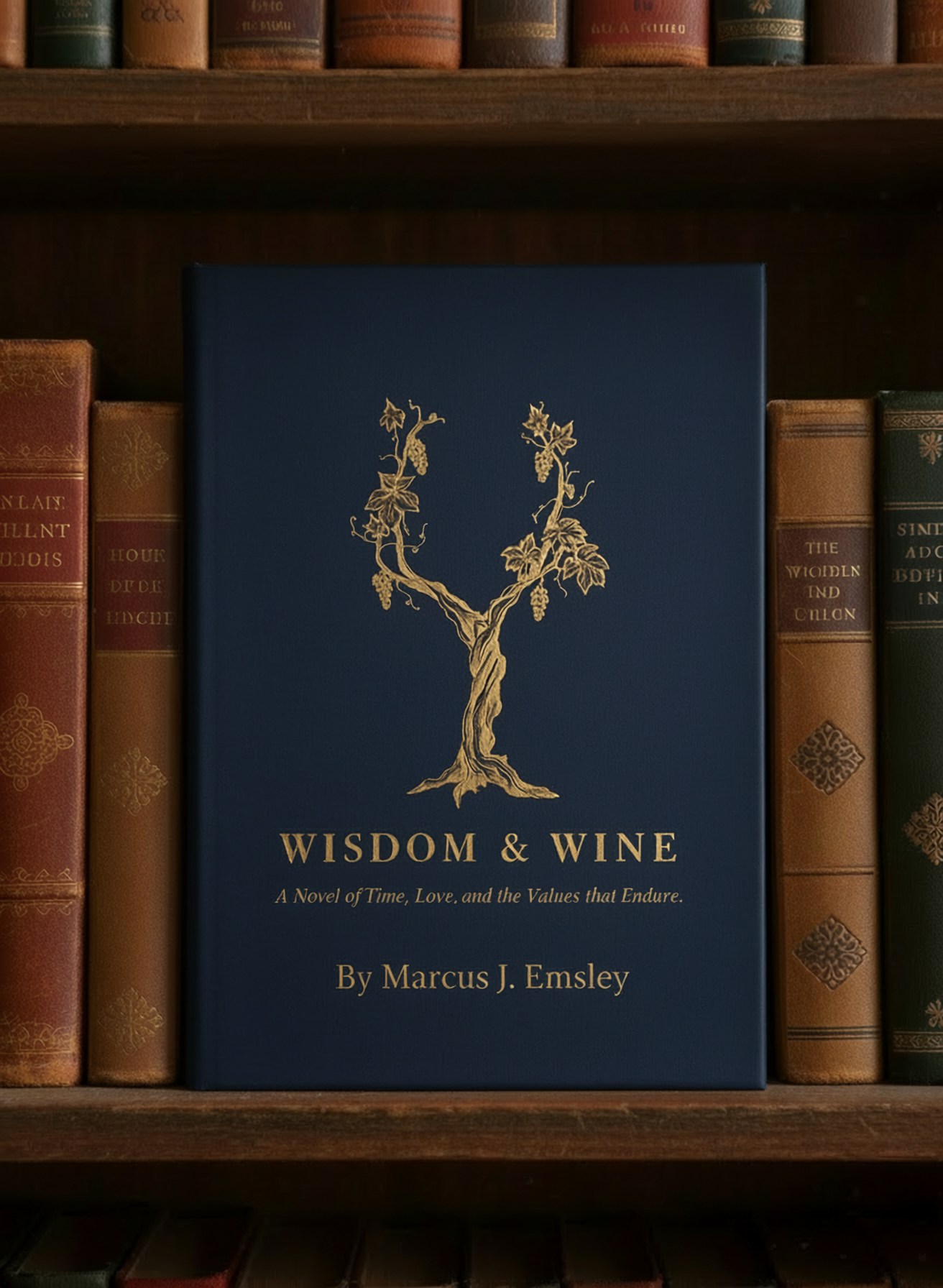
Wisdom & Wine
A Novel of Time, Character and the Virtues that Endure.
The vine, the seasons, and the long slow ripening of a life are the architecture of my novel, Wisdom & Wine. It is currently being read by five of the top literary agents in New York. Wherever the wind of that takes the book next, the vine has already done her work.
It is the story of Donald and Sophia — of the labours that healed him, the love that completed him, and the wine that was poured at tables where people spoke of things that matter. Every passage I have quoted in this essay lives in its pages. When the novel finds you — and it will — you will recognise the vine.
The novel is not the only fruit ripening on this vine. In the months ahead, the gates of the new Arete Estate website open — and what has been tended quietly across these last years becomes visible for the first time. The Wisdom & Wine Companion Journals Parts 1 & 2 — a 365-day walk alongside the novel, through Fortitude, Wisdom, Love, Courage, Temperance and Gratitude — is being readied for pour. The Arete Path Podcast begins its first season soon. A children’s picture book called The Lighthouse is on its way to small hands. A school programme called Wisdom & Wonder is finding its first classrooms. None of it has been chased. All of it has been tended.
If you would like to walk with the vineyard as each new vintage is poured, stay close to The Sculptor’s Library. You will be the first to know.
Until then — live the day you are in. Be brave. The stressed vines make the best wine.
And you are still growing.
Marcus
Barossa Valley, Australia
Written by Marcus J Emsley, The Guide, at Arete Estate in the Barossa Valley. First published 24 May 2026.
Excellence revealed by storms.

Responses