What a 100-year-old barrel in the Barossa teaches us about legacy
In 1878, a man named Oscar Benno Seppelt did something that makes no sense by modern standards.
He filled a 500-litre oak barrel with his finest fortified wine. Then he gave instructions that it was not to be opened for one hundred years.
He was in his early thirties. He would be dead long before anyone tasted it.
Why would someone create something they could never enjoy? Why pour your best work into a vessel that won’t be opened until you’re dust?
Because Benno Seppelt understood something that our instant-gratification culture has almost entirely forgotten:
The most meaningful things we create are often the things we’ll never see completed.
I live in South Australia, in the Adelaide Hills. The Barossa Valley is a short drive away, and nestled within it sits Seppeltsfield — home to what is arguably the most extraordinary wine collection on Earth.
The Centennial Collection.
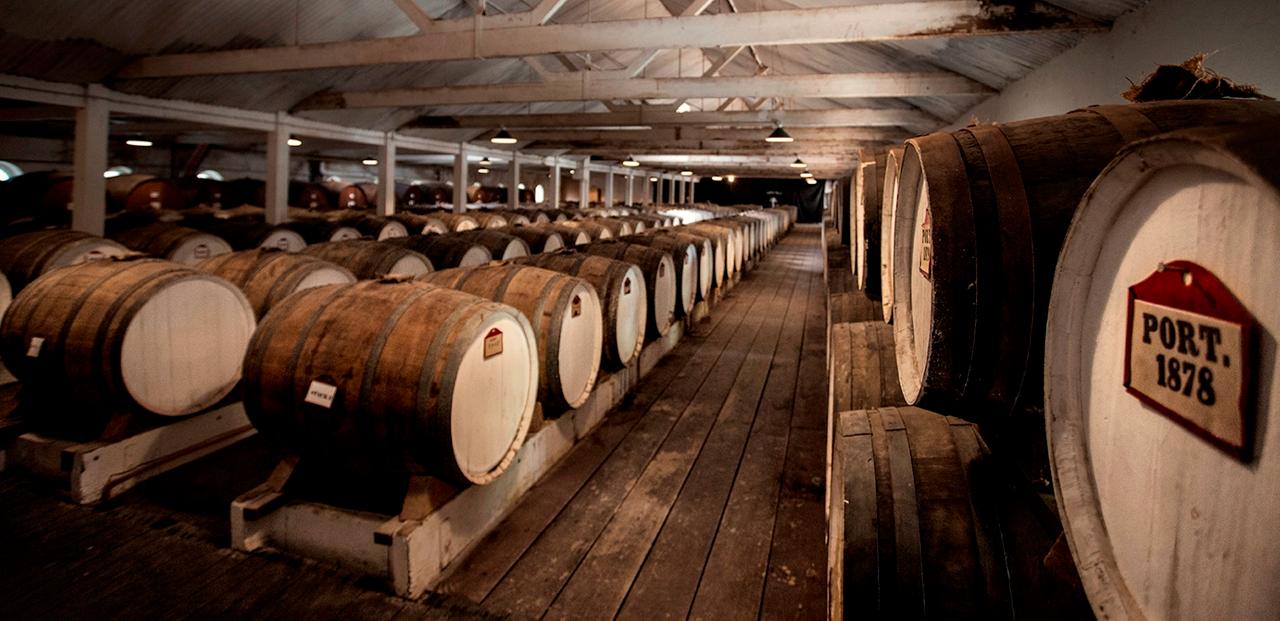
Walk into the Centennial Cellar at Seppeltsfield and you’re walking through time. Row after row of oak barrels, each one representing a single vintage, stretching back unbroken to 1878. One hundred and forty-eight consecutive years. No gaps. No interruptions. Not through world wars, not through depressions, not through changes of ownership, not through anything.
Every year since Benno Seppelt laid down that first barrel, someone has continued the tradition. Every vintage, a new barrel is filled. Every year, the oldest barrel finally reaches its century of maturation — and only then is it released.
The wine you can taste today? It was made in 1925. It has been ageing in oak for one hundred summers and one hundred winters. It was created by people who knew they would never drink it, for people they would never meet.
That is legacy.
There’s a term in winemaking called the angel’s share.
As wine ages in barrels, some of it evaporates. Slowly, year by year, the liquid diminishes. In Seppeltsfield’s Centennial Cellar, about 3% of each barrel’s volume is lost annually to evaporation.
Over a hundred years, this means most of the original wine has vanished into the air. What remains is concentrated, intensified, transformed. The loss is what makes the remainder precious.
I think about this often.
The angel’s share isn’t waste. It’s sacrifice. It’s the portion that’s given up so that what survives can become something extraordinary. Every year, a little more is released into the atmosphere — invisible, irretrievable — and every year, what’s left becomes more valuable.
Legacy works the same way.
We pour ourselves into things — our children, our work, our communities — knowing that much of what we give will evaporate. We won’t see most of the results. We won’t receive most of the credit. The contribution will disperse into the air, invisible, absorbed into lives and futures we’ll never witness.
But what remains. What remains.
What remains is concentrated by the very process of giving. Intensified by the sacrifice. Transformed by time into something we couldn’t have created any other way.
The angel’s share isn’t loss. It’s the price of depth.
Here’s what strikes me most about the Seppeltsfield story: the people who laid down those early barrels weren’t owners. They were custodians.
Fiona Donald, the current chief winemaker, uses that word deliberately. “As custodians of the Seppeltsfield Centennial Collection,” she says, “we are proud of the amazing legacy and vision of Benno Oscar Seppelt.”
Custodians. Not owners. There’s a world of difference.
An owner asks: What can I extract from this? How does this benefit me? What’s my return?
A custodian asks: What was entrusted to me? How do I protect and improve it? Who am I preparing this for?
Benno Seppelt wasn’t thinking about himself when he sealed that first barrel in 1878. He was thinking about 1978 — a date so far in the future that he couldn’t possibly imagine what the world would look like. He was thinking about people he would never meet, entrusting them with something precious, hoping they would be worthy of it.
And then, remarkably, they were.
Generation after generation, through ownership changes, through corporate acquisitions, through every pressure that could have broken the chain — someone always understood that this tradition was bigger than them. Someone always laid down the next barrel. Someone always protected what had been entrusted.
The custodians of 1920 protected the barrels laid down in the 1880s, knowing they’d never taste them.
The custodians of 1960 protected the barrels laid down in the 1920s, knowing the same.
And today’s custodians protect barrels that won’t be opened until the 2120s — wines that will be tasted by people not yet born, in a world we cannot imagine.
That’s the difference between owning something and being entrusted with it.
I think about legacy constantly in my work.
I run Arete Estate, a coaching and speaking practice built on ancient principles of human excellence. The Greek word arete means something like “the full expression of potential” — a knife that’s truly sharp, an eagle that soars with precision, a human being who aligns their actions with their deepest values.
But here’s what the Greeks understood that we’ve forgotten: arete isn’t achieved in a moment. It’s cultivated across time. Often across generations.
The Stoic philosopher Marcus Aurelius wrote his journal in military tents at the edge of the Roman Empire. He never intended for anyone else to read it. He was just trying to become a better person, one evening’s reflection at a time.
Two thousand years later, millions of people read his words. His private practice of self-improvement became a gift to centuries of strangers he could never have imagined.
That’s the wine no one was meant to drink. That’s the barrel sealed with instructions not to open it until the creator is long gone.
Marcus Aurelius was a custodian. He tended something that would far outlast him. And because he tended it faithfully, night after night, we’re still drinking from his barrel today.
What would change if we thought of ourselves as custodians rather than owners?
If we asked not “what can I get from my time on Earth?” but “what has been entrusted to me, and how do I pass it on enriched?”
The Seppeltsfield winemakers understand something profound: they are a link in a chain. They received something precious from those who came before. Their job is to protect it, improve it if possible, and pass it on to those who come after.
They’ll never taste most of the wine they’re making. The barrels they fill today won’t be opened until 2125. They’re pouring their expertise, their care, their best work into vessels that will only be opened when they’re long dead.
And they do it anyway.
Because that’s what custodians do.
In my framework — what I call The Sculptor’s Journey — I teach six virtues for living well: Fortitude, Wisdom, Love, Courage, Temperance, and Gratitude.
But underlying all of them is something I don’t always name explicitly: the long view.
Fortitude (the lighthouse) isn’t just about standing firm today. It’s about building something that will still be standing when you’re gone.
Wisdom (the gold pan) isn’t just about discerning what matters now. It’s about understanding what will still matter in a hundred years.
Love (the kintsugi bowl) isn’t just about healing yourself. It’s about being healed in a way that can heal others long after you’ve stopped breathing.
The virtues aren’t just for you. They’re for everyone your life will touch — including people you’ll never meet, in times you’ll never see.
You are a custodian. Something has been entrusted to you. The question is what you’ll do with it before you pass it on.
There’s a moment in the Seppeltsfield tour that gets me every time.
You walk through the Centennial Cellar, past barrel after barrel, each one labelled with its vintage year. 1923. 1915. 1902. 1889. You’re walking backward through time, past two world wars, past the Spanish flu, past the Federation of Australia, back and back to the original barrel from 1878.
And then the guide offers you a taste. Not from a bottle. From the barrel itself. Wine that’s been ageing for a century, drawn directly from the wood that’s held it since before your grandparents were born.
You’re tasting someone else’s intention. Someone who never met you. Someone who trusted that the chain would hold, that the custodians would be faithful, that someday — someday — a stranger would stand in this cellar and experience what they created.
That’s what legacy feels like on your tongue.
It’s not sweet, exactly. It’s complex. Layered. Earned. It carries the weight of every year, every season, every percentage point lost to the angel’s share. It tastes like patience. It tastes like faith. It tastes like someone believing in a future they’d never see.
I don’t know what barrel you’re filling.
Maybe it’s your children — pouring into them daily, knowing you’ll never see most of what they become.
Maybe it’s your work — building something that will outlast your involvement in it.
Maybe it’s your character — becoming someone whose influence will ripple outward long after your death.
Maybe it’s a tradition, a practice, a set of values you’re protecting because someone protected them before you.
Whatever it is, you won’t drink most of it. You’re not meant to.
You’re meant to fill it. To seal it. To trust that the chain will hold. To believe that someday, someone you’ll never meet will stand in a cellar you’ll never see and taste something extraordinary — and never know your name.
That’s the angel’s share. That’s the cost of depth.
That’s the wine no one was meant to drink.
Benno Seppelt has been dead for over a century. But every year, in February, they open another one of his barrels. Every year, people taste his intention, his vision, his faith in the future. Every year, someone raises a glass to a man they never knew and whispers, consciously or not, a word of gratitude.
He couldn’t have known.
He couldn’t have known that 148 consecutive vintages later, the tradition would still be unbroken. He couldn’t have known that people would fly from around the world to taste what he made. He couldn’t have known that his simple act of faith — sealing a barrel he’d never open — would become one of the most remarkable legacies in the wine world.
He just knew that some things are worth creating even if you never get to enjoy them.
He just knew that a custodian’s job is to pass things on better than you found them.
He just knew that the wine no one was meant to drink might be the most meaningful wine of all.
I’ll leave you with this.
In 2125, someone will open a barrel that’s being filled right now. They’ll taste wine made from grapes that are still on the vine as you read these words. They’ll experience the intention of winemakers who are alive today — who are, at this moment, filling vessels they’ll never open.
What are you filling?
What barrel are you sealing, knowing you’ll never taste it?
What are you pouring your best work into — not for yourself, but for the strangers who’ll come after?
Because that’s legacy. That’s arete across time. That’s what it means to be a custodian instead of just an owner.
The most meaningful things we create are often the things we’ll never see completed.
Fill the barrel anyway.
Seal it with faith.
Trust the chain.
And let the angel’s share do its quiet, sacred work.
Written by Marcus J Emsley, The Guide, at Arete Estate in the Barossa Valley. First published 10 January 2026.
Excellence revealed by storms.

Responses