
Love · What seventeen years of sitting with the broken taught me about the orchestra inside us all
I was sitting across from a man who hadn’t slept in days.
Not restlessness. Not the ordinary insomnia of a racing mind. Days of lying in the dark, eyes open, watching the ceiling, while the same forty-five seconds played on an endless loop.
The meeting he was in when his phone buzzed. The way he glanced at the screen, saw her name, and thought: I’ll call her back in ten minutes. The ten minutes that became fifteen. Then twenty. Then the second call from her phone, but not her voice.
Forty-five seconds. The hinge on which a life swings.
His wife. Forty-three years old. Heart attack. Healthy, or so they thought. Gone between one breath and the next, alone on the kitchen floor, while he sat in a conference room talking about operational direction.
If I had answered. If I had just answered. If I had stepped out. If I had...
Eleven days of that. The same loop, the same forty-five seconds, the volume turned all the way up.
I’ve been in military welfare for seventeen years. I’ve sat in this chair hundreds of times. Different faces, different losses, different loops, but the same thing underneath.
Grief. Not grief as a feeling. Grief as a sound.
Have you ever noticed that? Grief has a sound. It’s not crying, though there’s crying. It’s something underneath: a low hum, a static, a frequency that drowns out everything else. When someone’s deep in it, you can almost hear it in the room. The air gets heavier. Sound travels differently.
I used to think my job was to turn that sound off. To find the right words, the right framework, the right intervention that would make the grief go quiet so the person could function again.
I was wrong.
Grief isn’t a malfunction, and grief isn’t the enemy. Grief is one instrument in the orchestra. The thing that breaks people isn’t that it plays. It is when it plays so loud they can’t hear anything else.
The Orchestra
I need you to imagine something.
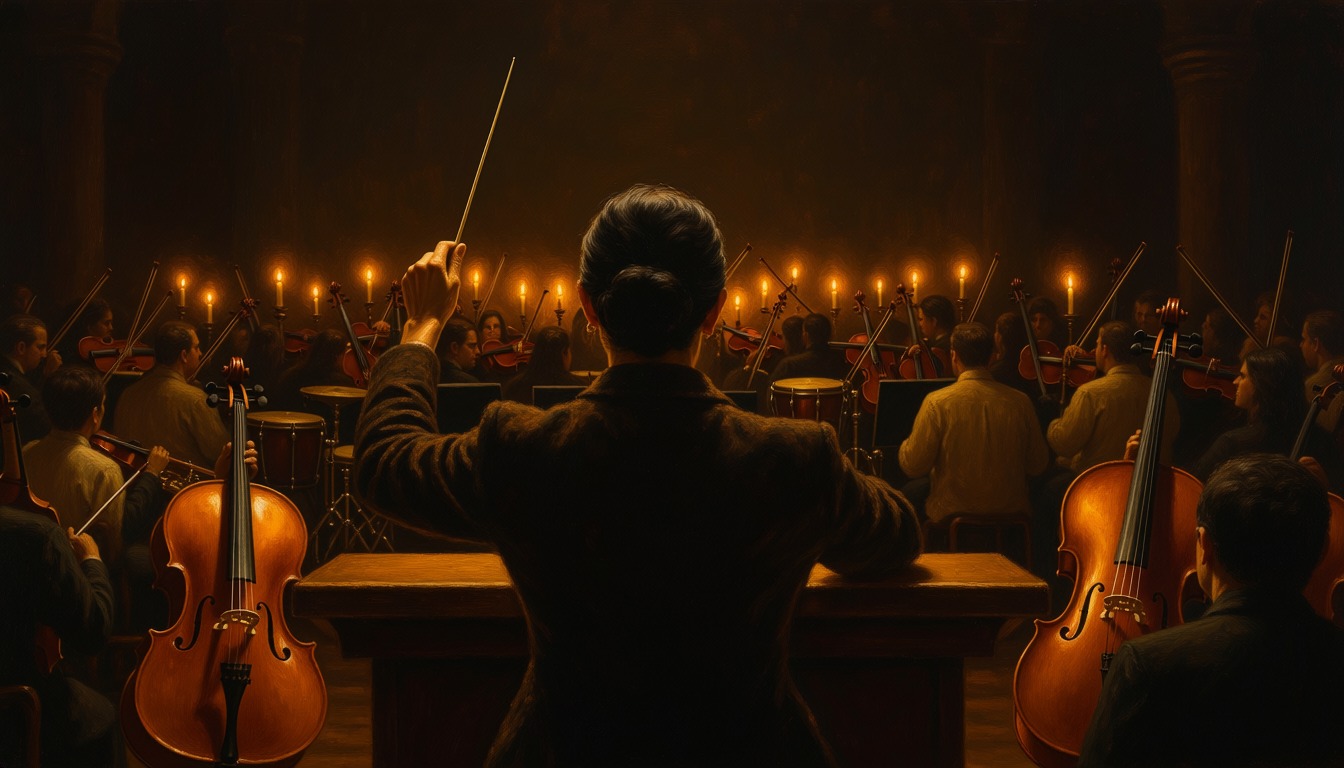
You’re standing in front of an orchestra. A full symphony, every section filled. Except this isn’t a concert hall. This is you. This is your inner life, and every instrument represents something that lives inside you.
There’s a grief section. Cellos, maybe. Deep and mournful, the kind of sound that resonates in your chest. But there’s also love: violins, bright and aching. There’s fear, timpani drums, sudden and startling. There’s anger, brass, blaring, impossible to ignore. There’s hope, a flute perhaps, quiet, easy to miss if you’re not listening.
There’s guilt. There’s joy. There’s the need to protect, the need to let go, the need to be held, the need to run. All of them, all at once, a full orchestra playing every moment of your life.
None of these instruments are bad. Not one. Not even the ones that hurt. They’re all trying to tell you something. They all belong.
But orchestras need a conductor.
Without someone at the centre, baton raised, watching everything at once, deciding what comes forward and what falls back, the instruments don’t make music. They make noise. The cellos drown out the violins. The drums overpower the flute. The brass section goes rogue, playing its own tempo, louder and louder until it’s all you can hear.
That’s what happens when grief plays too loud. It’s not that grief is wrong. It’s that grief is playing a solo when it should be part of an ensemble.
And the conductor, the one who’s supposed to bring balance? That’s you.
The Man Who Couldn’t Sleep
I didn’t try to fix him. Not that day.
Seventeen years taught me that fixing is a fantasy. You can’t reach into someone’s chest and turn the volume down. You can’t argue with grief, reason with it, explain it away. But you can remind them that they’re the conductor.
“Can I ask you something?” I said.
He looked at me. Eleven days of no sleep. Eyes like bruises.
“What else is playing?”
He didn’t understand.
“Right now,” I said, “the guilt is loud. I can hear it. But what else is playing? What other instruments?”
Silence. The kind of silence where someone is either about to shut down completely or break through to something. I waited.
“I don’t...” He shook his head. “There’s nothing else. It’s just this. The loop. Over and over.”
“You loved her,” I said. “For how long?”
“Thirty-one years.”
“That’s an instrument. Love. It’s still playing, and that’s why this hurts so much. What does that sound like?”
More silence. But different now. Like he was actually listening.
“It sounds like... morning coffees. She always made the coffee. I don’t know how she did it, same beans, same machine, but hers was always better.”

“What else?”
“Her laugh. She’d start laughing before she finished her own jokes. Couldn’t help it. Ruined the punchline every time.”
His voice cracked. But something shifted in the room.
“That’s the love section playing,” I said. “What else is in there?”
“I don’t know. Fear, maybe? The kids. My daughter won’t talk to me. My son keeps asking if I’m okay and I don’t know what to tell him.”
“That’s playing too. The fear, the protectiveness. What else?”
“Gratitude?” He said it like a question. Like he wasn’t sure he was allowed. “I mean... thirty-one years. Some people don’t get that. Some people never find what we had.”
“That’s the gratitude section. Keep going.”
We sat there for an hour, maybe more. Naming the instruments. Not to make the guilt go away (it didn’t go away) but to make space for the rest of the orchestra.
By the end, he was crying. Not the held-in, jaw-clenched kind. The other kind. The kind that sounds like relief.
The guilt was still loud. But it wasn’t playing solo anymore.
What the Loud Instruments Are Trying to Say
I wish someone had told me this years ago: the instruments that play loudest are usually the ones that need to be heard the most. Not indulged. Not obeyed. But heard.
Guilt says: You mattered. Your presence mattered. You’re not indifferent to the people you love. That’s not a monster. That’s love with nowhere to go. Guilt is loyalty to a bond that can’t be honoured in the usual ways anymore.
Anger says: Something was wrong. Something was unjust. You know how things should have been. That’s not weakness. That’s your integrity looking for a target, your sense of rightness with nothing to fight.
Fear says: Pay attention. Something important is at stake. Protect what matters. That’s not cowardice. That’s the part of you that wants to survive, that wants the people you love to survive.
These instruments aren’t trying to destroy you. They’re trying to tell you something. The problem isn’t their existence. The problem is when they’re the only voice in the room, when the guilt plays so loud you can’t hear the love underneath it, when the fear drowns out the courage that’s also there, waiting for its turn.
The conductor’s job isn’t to smash the drums, fire the brass section or pretend the cellos don’t exist. The conductor’s job is to acknowledge every section (I hear you, I see you, you belong here) and then, gently, firmly, bring in the rest.
A Practice for the Overwhelmed
If you’re in a season where one instrument is drowning out the rest, try this. Not to fix anything. Not to make the loud thing quiet. Just to remember that you’re the conductor.
Find somewhere you won’t be interrupted. Five minutes. That’s all. Close your eyes if it helps.
Ask, out loud or silently: What’s playing loudest right now?
Name it. Don’t argue with it. Don’t try to turn it down. Just acknowledge it. Okay. Fear. You’re loud right now. I hear you.
Then ask: What else is playing?
Listen. Really listen. Is there love in there too, even a whisper? Is there grief, and underneath the grief, gratitude for what was lost, which means it mattered? Is there anger, and underneath the anger, a fierce care for something you’re not willing to give up on?
Name what you find. Let the other instruments know they haven’t been forgotten.
You don’t have to fix the loud one. You don’t have to silence it or argue it away or understand exactly why it’s there. You just have to stop letting it play solo. Bring in the rest of the orchestra, and see what music becomes possible then.
Eleven Months Later
I saw him again. The man with the forty-five seconds.
Different person. Not the same man I’d sat across from before. Same eyes, but something behind them had shifted.
He told me about the first night he slept. Really slept.
“I was lying there. Doing that thing, listening for what else was playing. And I heard something I’d been blocking out.”
“What?”
“Her voice. Not the memory of her voice. I mean, yes, that. But specifically... what she would have said. What she’d want for me.”
He paused. Looked at his hands.
“She would have told me to sleep. She would have said, ‘For God’s sake, go to sleep. I’m not going anywhere. I’ll still be gone tomorrow. You being exhausted doesn’t help anyone.’ That’s... that’s exactly what she would have said.”
He laughed. A small, broken laugh.
“So I let that play. Her voice telling me to take care of myself. And somewhere in there, the guilt... it didn’t stop. It’s still there. But it turned down. Just enough.”
He slept that night. And the night after.
The orchestra learned to play together.
The Conductor Is You
This is one of the six virtues of The Arete Path: Temperance.
Not the bloodless, Victorian kind. Not “moderation in all things” like some greeting card. Temperance as conducting. Temperance as harmony.
All those instruments inside you, the grief, the love, the fear, the hope, the parts you’re proud of and the parts you wish you could cut out, all of them belong.
The question isn’t how to silence the ones that scare you. The question is who’s holding the baton.
You are. You’ve always been. Even when it doesn’t feel like it, even when the orchestra is in chaos and you can barely hear yourself think, the conductor’s podium is still there, waiting.
Step up to it. Raise the baton. And bring in the rest of the music.
About the author
Marcus J Emsley · The Guide
Marcus spent seventeen years as a welfare officer in the Royal Australian Air Force, at home and on operations overseas, sitting with people in grief, trauma and the mornings they did not want to rise. He is the founder of Arete Estate in the Barossa Valley, South Australia, the creator of The Sculptor's Journey and Wisdom & Wonder, and the author of the debut novel Wisdom & Wine. He is the son of a primary school teacher who coached footy, cricket and life, and a palliative care nurse who showed him what kindness at the hardest door looks like. He has stood in the dark himself, and he writes from the far side of it.
What we are building at Arete Estate
Arete is excellence becoming. It is the highest expression of who you were always meant to be, not the finished version, but the version that keeps reaching. It is not built. It is revealed.
Arete Estate exists to help people reveal, not construct, the highest version of themselves. We do this through six virtues drawn from the world's wisdom traditions, taught through stories, walked through daily practice, and offered to anyone who is ready to begin: the parent raising a child, the leader carrying a team, the soldier returning from service, the school shaping the next generation, the person sitting alone in the early hours of the morning wondering if there is a path through.
Our work is to make that path visible. To stand as a lighthouse for the seekers, the grieving, and the broken. To remind every person we reach that excellence is not built, it is revealed by storms, and that they are not alone in the storm.
We do not chase. We shine. The Sculptor's Journey (The Doorway, The Walked Path, The Guided Path), An Hour with the Guide, Meditate with Arete, Wisdom & Wonder and The Sculptor's Library are the rooms of that house.
Six virtues. One journey. Your highest self.
www.areteestate.com.au · info@areteestate.com.au · Instagram @areteestate
If this essay touched something raw
Some of what is written here is heavy. If it has stirred something you are carrying, please do not carry it alone tonight.
Lifeline 13 11 14 · Open Arms (veterans and families) 1800 011 046 · 1800RESPECT 1800 737 732 · Kids Helpline 1800 55 1800 · In an emergency, call 000.
Reaching out is not weakness. It is all six virtues at once: the Fortitude to stay, the Wisdom to know you need a hand, the Love to let someone in, the Courage to ask, the Temperance to set the weight down, and the Gratitude for the one who answers.

Responses