Love · You don’t fall in love. You choose it. The fall is choosing it again tomorrow.
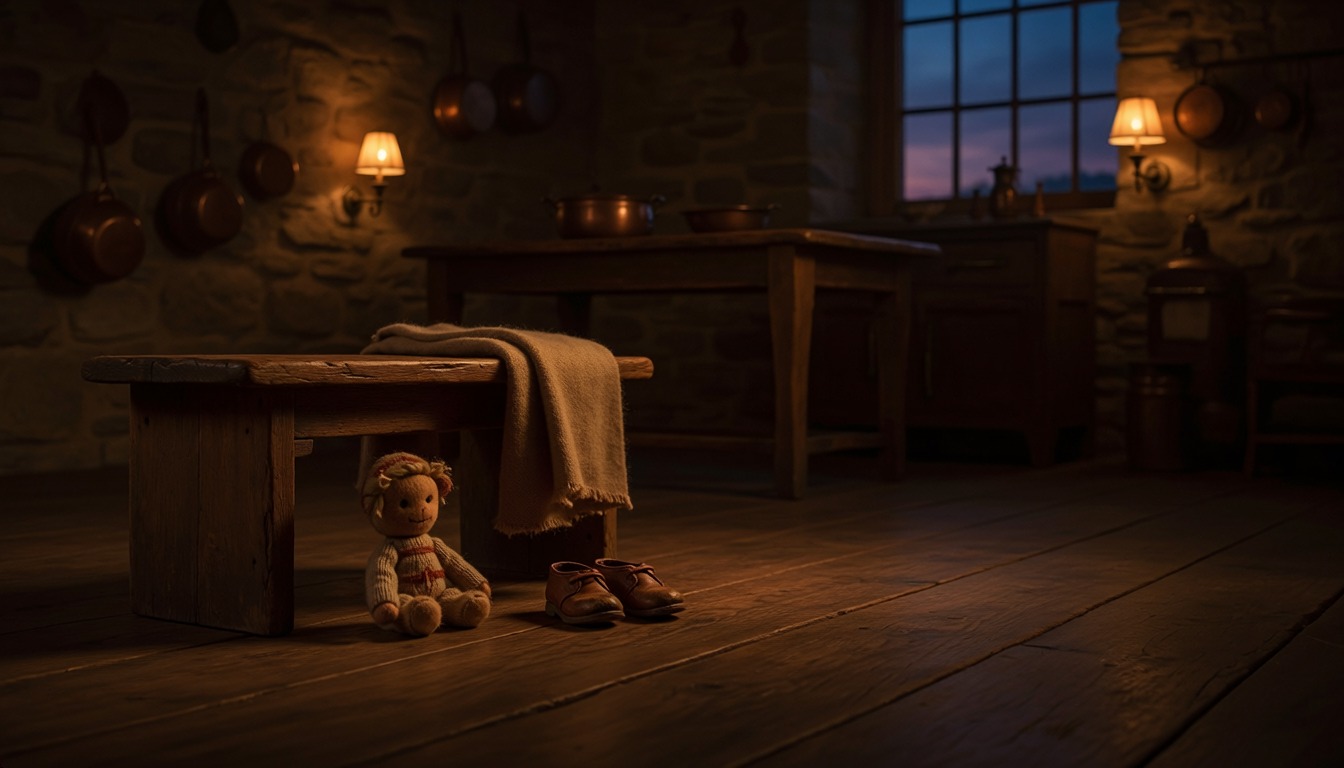
I was listening to Maggie Dent on a podcast not long ago.
If you haven’t come across her, she’s one of Australia’s most trusted voices on parenting: a former teacher and counsellor, a mother of four sons, a grandmother, and someone who has spent decades in classrooms, living rooms and lecture halls helping parents understand their children, and more importantly, helping parents understand themselves.
She said something that stopped me.
It wasn’t complicated. It wasn’t a clinical framework or a new piece of research. It was the kind of thing that only someone who has sat with thousands of parents, really sat with them, in their exhaustion and their guilt and their fierce, aching love, would know how to say.
And what she said, in essence, was this:
Connection before correction. You cannot shape a child who doesn’t feel safe with you.
I turned it over in my mind for days. Because I realised she wasn’t just talking about parenting. She was talking about the oldest question in philosophy. The question every Stoic, every Buddhist, every parent standing in a kitchen at nine o’clock at night with a child who has just said something unreasonable has had to answer:
Do I choose to be right? Or do I choose to be kind?
This essay is about that choice. Not once. Not in a single moment. But across the full arc of parenthood, from the tiny hands that grip your finger to the adult hands that may or may not reach for the phone.
It is about the virtues that parenting demands of you. And the love, the unconditional, unearnable, unreturnable love, that makes those virtues possible.
The Truth Nobody Tells You
Nobody tells you this before you become a parent.
Your child is not the project. You are.
Every parent begins with the assumption that they are shaping a child. And they are, partially, imperfectly, with far less control than they imagine. But the deeper truth, the one that only reveals itself at two in the morning when the baby won’t sleep, or in the driveway when your teenager drives away and you’re not sure they’ll come back safely, is this:
Parenting does not reveal who your child is. It reveals who you are.
It reveals your patience, and the exact point where it runs out. It reveals your capacity for grace, and the moment you discover you have none left. It reveals every unresolved room in your own mansion, because your child will find the door, walk straight in, and turn on every light you thought you’d switched off years ago.
This is not a failure of parenting. This is the gift of it. Painful, uninvited, and absolutely essential.
Because you cannot give your child what you do not possess. You cannot teach patience if you are running on empty. You cannot model kindness if you are at war with yourself. You cannot offer unconditional love if you have never learned to receive it, or to give it to the most difficult person in your house.
Which, on most days, is you.
The First Room: The Years of Noise
Ages roughly nought to ten. The years of small hands, big feelings, and relentless questions.
This is the room where the world tells you that you should be grateful. And you are, fiercely, overwhelmingly, in a way that sometimes makes you cry in the shower. But gratitude and exhaustion are not opposites. They live in the same room, and anyone who tells you otherwise has either forgotten or is lying.
In these years, the choice between right and kind is constant and merciless.
Your four-year-old has a meltdown in the supermarket. You know, you are absolutely certain, that giving in is the wrong move. Every parenting book confirms it. Every well-meaning onlooker in aisle five confirms it with their eyes. You are right.
But your child is not experiencing a strategic negotiation. Your child is drowning. Their nervous system has been hijacked by something too big for their body to hold. And they don’t need you to be right. They need you to be safe.
To kneel down. To lower your voice. To say, with your body and your breath and your steady, unshakeable presence: I am here. This feeling will pass. And when it does, I will still be here.
That is not weakness. That is Fortitude, the first virtue. Standing firm and shining, even when the storm is inside both of you.
In these years, Temperance is learning when to speak and when to be still. Not every moment needs your correction. Sometimes the most powerful thing you can do is hold the space and let the storm pass without commentary, without lecture, without the need to turn every meltdown into a teaching moment. The conductor doesn’t play every instrument. The conductor creates the conditions for harmony.
And Wisdom, oh, Wisdom is the hardest one in these years. Because Wisdom asks you to acknowledge the mud. To sit in the reality that you lost your temper at breakfast. That you shouted when you promised yourself you wouldn’t. That you are, on this particular Tuesday, not the parent you imagined you would be.
Acknowledge the mud. Record the gold. The gold is that you’re still here. Still trying. Still choosing to show up tomorrow and do it again, imperfectly and completely.
In the early years, choosing to be kind costs you your pride. And that is the first gift your child gives you without knowing it.
The Second Room: The Years of Silence
Ages roughly eleven to eighteen. The years of closed doors, half-answers, and the slow, necessary pulling away.
If the first room is noise, the second room is silence. And the silence is louder than anything your toddler ever screamed.
Your child, who used to tell you everything, who climbed into your bed on Sunday mornings, who held your hand in car parks, has become a stranger who lives in your house, eats your food, and answers your questions with a single syllable that somehow contains both contempt and vulnerability in equal measure.
This is the season that breaks parents. Not because the love diminishes, it doesn’t, not for a single second, but because the love has nowhere to land. You are holding out your hands and your teenager is walking past them, eyes down, earphones in, heading toward a door you are not invited through.
And here is where the choice between right and kind becomes almost unbearable.
Because you can see things they can’t see. You can see the friendship that is toxic. The decision that will end badly. The pattern forming that you recognise because you lived it yourself, twenty years ago, and you still carry the room it built.
You want to reach in and fix it. You want to say: I know where this goes. Let me save you the pain. And you would be right. You probably are right. Your experience, your perspective, your years on this earth have given you exactly the insight this moment requires.
But being right is not what this moment requires.
This moment requires Courage. The hardest kind. The courage to let them fail. The courage to stand at the edge of the cliff and watch them walk toward it, knowing that the fall is how they learn, and that your job is not to prevent the fall, but to be there when they land.
The courage to say: I don’t agree with this choice. I love you anyway. And I’m not going anywhere.
Maggie Dent understands this season better than almost anyone. She has spent decades telling parents of teenagers the thing they most need to hear: your child is not rejecting you. They are becoming themselves. And the pulling away, the silence, the monosyllables, the eye-rolling, the door-slamming, is not a sign that you’ve failed. It is a sign that they feel safe enough to separate from you. Safe enough to push against you, because they trust, somewhere deep beneath the performance of indifference, that you will not leave.
The teenager who slams the door is not saying I don’t love you. They are saying: I trust you enough to be my worst self in front of you. Don’t leave.
That trust is the fruit of every night you knelt down in the supermarket. Every time you chose kind over right in the first room. It doesn’t feel like fruit. It feels like failure. But it is the most important thing you have ever built.
Love in this room looks different. It is not the carried-to-bed love of the early years. It is the porch-light-on love. The packed-lunch-even-though-they-didn’t-say-thank-you love. The I-won’t-ask-again-but-I’m-here-when-you’re-ready love.
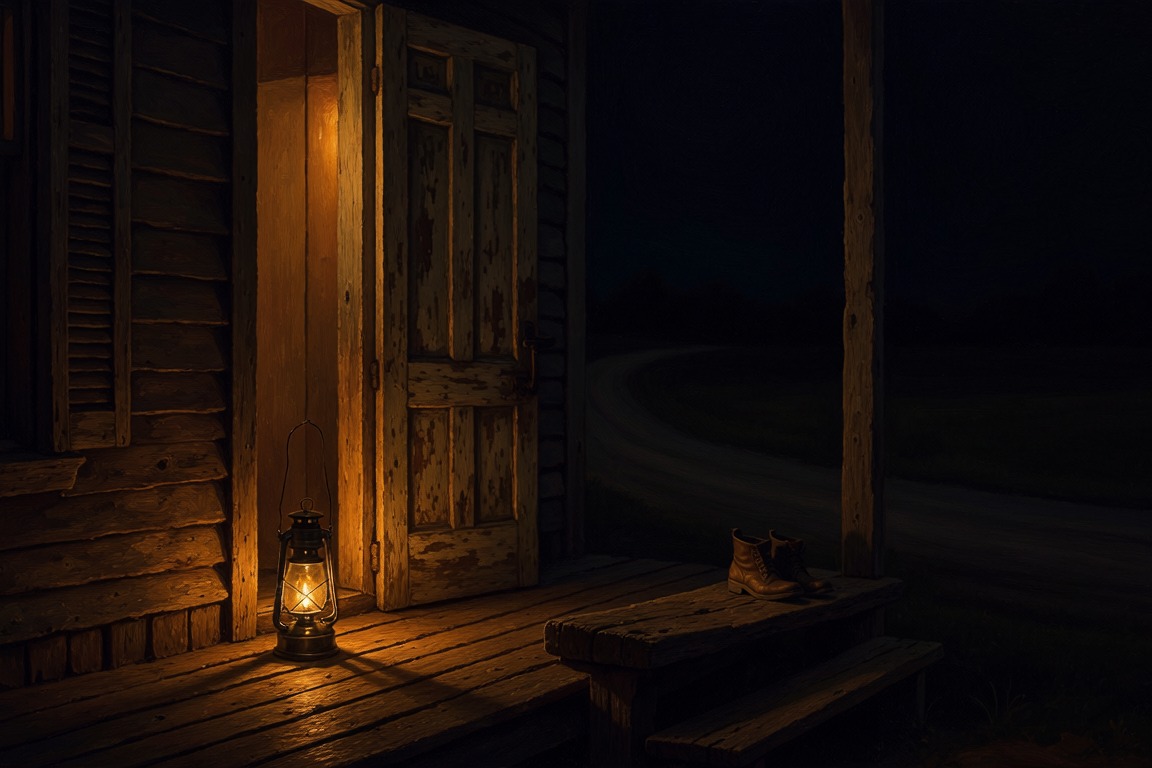
You don’t fall in love with your teenager. You choose it. Every morning. Especially the mornings after the hard nights. The fall is choosing it again tomorrow.
The Third Room: The Years of Letting Go
Ages eighteen and beyond. The years of open hands and quiet prayers.
Nobody prepares you for this room.
The books stop here. The parenting courses end at adolescence. And the world assumes that once your child is an adult, the work is done.
The work is not done. It has simply changed shape.
Your child is making choices you would not make. Living a life you did not plan. Loving people you haven’t met, in cities you didn’t choose, building rooms in their own mansion that you will never see the inside of.
And you, the person who held them before they had a name, who walked the hallway at 3am, who learned an entirely new version of patience and courage and love because they demanded it simply by existing, you are standing in the doorway of an empty room in your own house, and the silence is not the teenage kind. It is the permanent kind.
This is the room where being right doesn’t even matter anymore.
Because what would you do with it? Call your thirty-year-old and tell them their career choice is wrong? Tell your twenty-five-year-old that their partner isn’t good enough? Explain to your adult child, who is building their own life with their own hands, that you know better?
You might. You might be right. You might have the experience, the hindsight, the perspective.
But being right in this room will cost you the only thing that still matters: the relationship.
This is where Gratitude, the final virtue, reveals itself as perhaps the most demanding of all.
Planting what you won’t harvest and tending what you didn’t plant.
Gratitude in the third room means watching your child become someone you didn’t design, and being grateful for it. It means seeing them make choices you wouldn’t make, and choosing to trust the foundation you laid rather than the floorplan you imagined. It means letting go of the child you planned and receiving the adult who arrived.
That is not passive. That is not resignation. That is the deepest act of love a parent can perform, the recognition that your child was never yours to keep. They were yours to raise. And raising, by definition, means lifting them until they are high enough to leave your hands.
Khalil Gibran wrote it more beautifully than anyone:
“Your children are not your children. They are the sons and daughters of Life’s longing for itself. They come through you but not from you, and though they are with you yet they belong not to you.” (Khalil Gibran, The Prophet)
Every parent who has read those lines knows two things simultaneously: they are true, and they are almost impossible to live.
Living them is the work of the third room. And it requires every virtue you possess.
The Six Virtues of a Parent
Every virtue in The Arete Path shows up in parenthood. Not as theory. Not as philosophy. As the lived, daily, unglamorous practice of loving someone more than you love being right.
Fortitude. Stand firm and shine, even when the storm is inside you. The parent who holds steady when their child falls apart. The parent who is the same person on the bad days as the good days. The lighthouse that doesn’t flicker.
Temperance. Conduct your life with balance. The parent who knows when to speak and when to be silent. Who resists the urge to correct every mistake, teach every lesson, fill every silence. Who understands that sometimes the most powerful thing you can do is nothing.
Wisdom. Acknowledge the mud. Record the gold. The parent who admits when they got it wrong. Who apologises to their child, not as a performance of humility, but as a real act of it. Who knows the difference between a moment that needs their voice and a moment that needs their presence.
Love. You don’t fall in love. You choose it. The fall is choosing it again tomorrow. The parent who loves their child not because of what they do, but because of who they are. Who loves them on the slamming-door days. Who loves them when they stop calling. Who loves them in a way that asks for nothing: not gratitude, not obedience, not even acknowledgement.
Courage. Fear tells you the stakes. Courage says ‘noted’, and begins anyway. The parent who lets their child fail. Who has the hard conversation instead of the easy silence. Who says ‘I was wrong’ to a person half their age and means it. Who watches their child walk into the world and does not chase after them.
Gratitude. Planting what you won’t harvest and tending what you didn’t plant. The parent who gives without a ledger. Who does the invisible work that nobody thanks them for. Who watches their child become someone they didn’t plan, and thanks the universe for the surprise.
These virtues are not aspirational. They are not something you achieve and then possess. They are a daily practice. A daily choice. And the arena where they are tested most ruthlessly, most honestly, and most beautifully, is your own home.
What Unconditional Actually Means
We use the word unconditional so often it has lost its weight. So let me give it back.
Unconditional love does not mean love without pain. It does not mean love without boundaries. It does not mean love that accepts everything and says nothing.
Unconditional love means: there is no version of you that I will not love.
Not the version that fails the exam. Not the version that gets arrested. Not the version that marries the wrong person, or chooses the wrong career, or says something at Christmas dinner that makes your chest hurt for three days.
Not even the version that pushes you away. That stops calling. That chooses a life so different from the one you imagined that you grieve the imaginary child you never had while trying to love the real one standing in front of you.
Unconditional love is not the absence of disappointment. It is the decision that disappointment will never be the final word.
That is the hardest sentence in this essay. Because it asks you to hold two things at once: the reality that your child has let you down, and the decision that your love will not let them go.
Maggie Dent has spent her life saying this to parents in a hundred different ways. Connection before correction. See the child, not the behaviour. Love them first. The rest follows.
It does follow. Not quickly. Not neatly. Not in the way the parenting books promise. But it follows. Because a child who knows they are loved, truly, unconditionally, even in their worst moments, is a child who will eventually find their way home. Not to your house. To themselves.
And a parent who has practised that love, who has chosen kind over right, a thousand times, in three different rooms, across decades, is a person who has been shaped by the very thing they were trying to shape.
That is the hidden gift of parenthood. You set out to raise a child. And somewhere along the way, the child raised you.
Tonight
If you are a parent reading this, in any room, at any age, in any stage of this relentless, sacred, impossibly beautiful work, I want to leave you with this.
You will get it wrong. You already have. So have I. So has every parent who ever lived. The getting-it-wrong is not the failure. The failure is letting the wrong moment become the final moment. Letting the mistake become the identity. Letting the guilt harden into something that stops you from trying again tomorrow.
You are not a perfect parent. You were never meant to be. You are a parent who is being shaped, daily, hourly, by the very child you are trying to shape. And the virtues you are learning in the process (the fortitude, the temperance, the wisdom, the love, the courage, the gratitude) are not being performed for your child’s benefit.
They are being forged in you. By the storm of loving someone this much.
So the next time you’re standing in the kitchen. And your child has said something unreasonable. And every part of you wants to be right. To correct. To teach. To explain. To win.
Pause. Breathe. And ask yourself the only question that has ever mattered:
Do I want to be right? Or do I want to be kind?
Choose kind. Not because it’s easy. Because it’s brave. Because it keeps the door open. Because it says to your child, at four, at fourteen, at forty:
I am here. I choose you. And there is no version of you that will make me leave.
That is unconditional love. And it is the finest thing a human being will ever practise.
About the author
Marcus J Emsley · The Guide
Marcus spent seventeen years as a welfare officer in the Royal Australian Air Force, at home and on operations overseas, sitting with people in grief, trauma and the mornings they did not want to rise. He is the founder of Arete Estate in the Barossa Valley, South Australia, the creator of The Sculptor's Journey and Wisdom & Wonder, and the author of the debut novel Wisdom & Wine. He is the son of a primary school teacher who coached footy, cricket and life, and a palliative care nurse who showed him what kindness at the hardest door looks like. He has stood in the dark himself, and he writes from the far side of it.
What we are building at Arete Estate
Arete is excellence becoming. It is the highest expression of who you were always meant to be, not the finished version, but the version that keeps reaching. It is not built. It is revealed.
Arete Estate exists to help people reveal, not construct, the highest version of themselves. We do this through six virtues drawn from the world's wisdom traditions, taught through stories, walked through daily practice, and offered to anyone who is ready to begin: the parent raising a child, the leader carrying a team, the soldier returning from service, the school shaping the next generation, the person sitting alone in the early hours of the morning wondering if there is a path through.
Our work is to make that path visible. To stand as a lighthouse for the seekers, the grieving, and the broken. To remind every person we reach that excellence is not built, it is revealed by storms, and that they are not alone in the storm.
We do not chase. We shine. The Sculptor's Journey (The Doorway, The Walked Path, The Guided Path), An Hour with the Guide, Meditate with Arete, Wisdom & Wonder and The Sculptor's Library are the rooms of that house.
Six virtues. One journey. Your highest self.
www.areteestate.com.au · info@areteestate.com.au · Instagram @areteestate
If this essay touched something raw
Some of what is written here is heavy. If it has stirred something you are carrying, please do not carry it alone tonight.
Lifeline 13 11 14 · Open Arms (veterans and families) 1800 011 046 · 1800RESPECT 1800 737 732 · Kids Helpline 1800 55 1800 · In an emergency, call 000.
Reaching out is not weakness. It is all six virtues at once: the Fortitude to stay, the Wisdom to know you need a hand, the Love to let someone in, the Courage to ask, the Temperance to set the weight down, and the Gratitude for the one who answers.

Responses