
Wisdom · Some truths are too large for instruction. They have to be walked through in story.
There is a conversation that every human being will eventually have.
Not the conversation about career or money or what you’re doing with your life. Not the one about politics at Christmas dinner. Not even the one about love, though it’s close.
I’m talking about the conversation with grief.
The one that arrives without an invitation and sits down at your table like it owns the place. The one that rearranges every piece of furniture in your life and then stares at you as though you’re the one who moved.
I have sat across from that conversation a thousand times. Professionally, for seventeen years in the military. Personally, more times than I’d like to count. And after all those years, all those rooms, all those silences, all those moments when the right words didn’t exist, I realised something that shook me.
I couldn’t teach what I’d learned. Not directly. Not through a framework or a keynote or a coaching session.
Some truths are too large for instruction. They need to be felt.
So I wrote a novel.
The Question That Started It
It began with a question I couldn’t stop asking.
Not a philosophical question. Not a clever question. A raw one. The kind that wakes you at 3am and won’t be bargained with:
If you had one more conversation with someone you’d lost, what would you say?
That’s it. That’s the question that built a novel.
Because the truth is, most of us never get to finish the conversation. Death doesn’t wait for you to find the words. It doesn’t pause while you work up the courage to say the thing you’ve been carrying. It arrives on its own schedule and leaves you standing in a room full of silence, holding sentences that no longer have anywhere to go.
I know this because I’ve seen it. Hundreds of times. The spouse who didn’t say I forgive you. The child who didn’t say I understand now. The parent who ran out of time before the story was finished.
And I know it because I’ve felt it. Standing in my own silence. Holding my own unfinished sentences.
The novel became the place where those sentences could finally land.
Why Fiction?
I am not, by training, a novelist. I’m a welfare officer. A coach. A philosopher, if you’ll allow the word. My tools are conversation, presence, and the occasional well-placed question.
But grief doesn’t respond well to tools. Grief is not a problem to be solved. It is a landscape to be walked. And the only way to walk someone through a landscape is to take them there.
Non-fiction says: Here is what grief is. Here is how to process it. Here are five steps.
Fiction says: Come with me. I’ll show you.
There are rooms in the human experience where even the best non-fiction can’t quite reach. Rooms where you need a character to walk in before you, to feel the weight before you carry it, to make the mistakes before you make yours. Rooms where the only honest response isn’t a lesson. It’s a story.
Wisdom & Wine is set in one of those rooms.
The Man in the Study
His name is Donald.
He lives in the Barossa Valley. And six weeks ago, the woman he loved for forty-six years died of cancer.
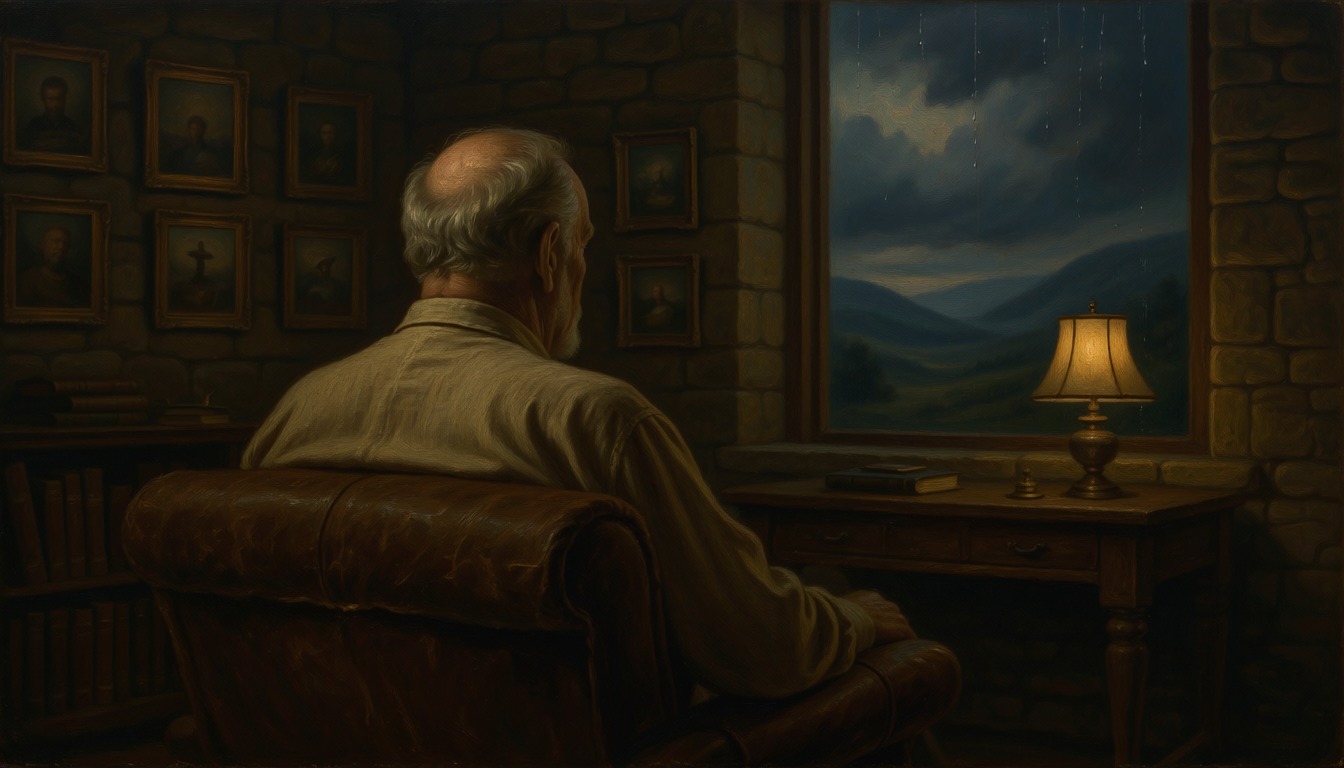
He’s sitting alone in his study with three bottles of wine he cannot bring himself to open. Each one holds a memory he isn’t ready to touch. Outside, a storm is building, the kind the Barossa throws at you when it’s tired of waiting for you to pay attention.
That’s where the novel begins. Not with hope. Not with wisdom. With a man in a chair who has run out of reasons to stand up.
I wrote Donald because I’d met him. Not one version of him, a hundred versions. Every grieving spouse, every lost parent, every veteran sitting in my office with steady hands and devastated eyes. Donald is all of them. And he’s none of them. He is the composite of every person I’ve ever sat across from who was brave enough to admit they were broken.
But I didn’t write Donald to stay broken. I wrote him to show what happens when a broken man picks up the chisel and begins, slowly, painfully, beautifully, to sculpt something from the marble of his suffering.
The Gardener
Into Donald’s storm walks a figure who will change everything.
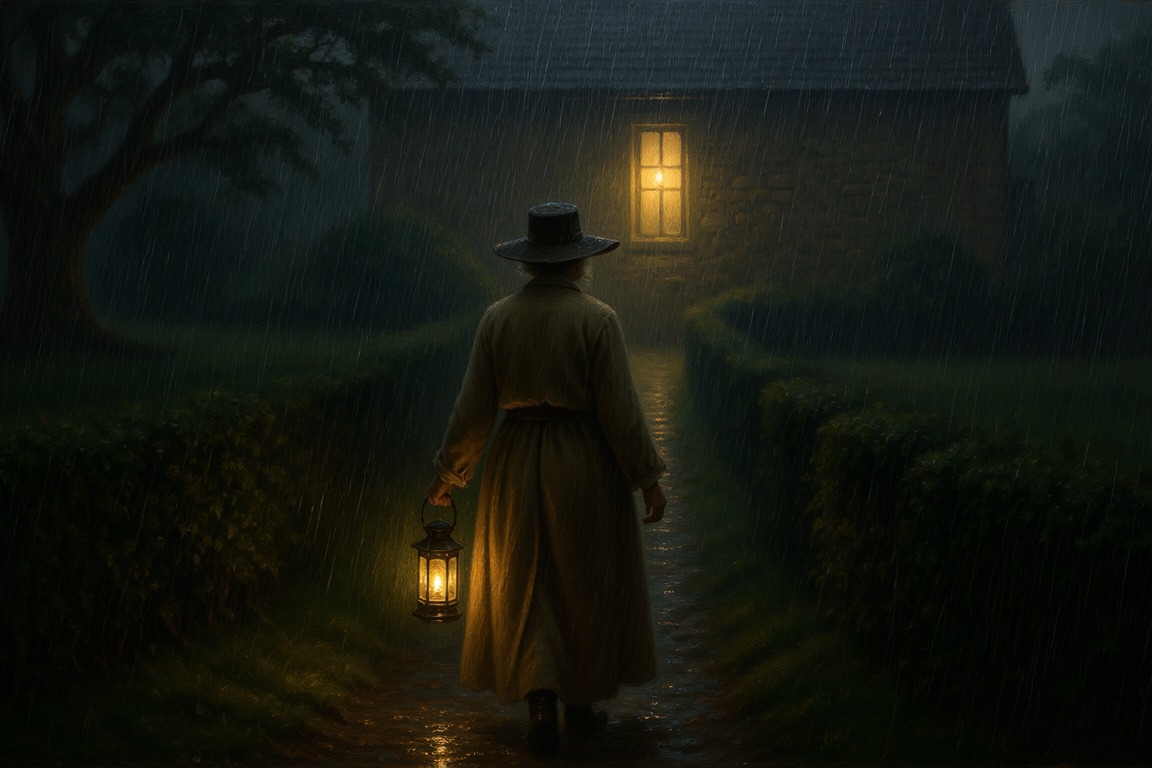
An old man. Quiet. Patient. Impossibly familiar. He calls himself the Gardener, and he arrives the way wisdom always does: uninvited, at precisely the wrong moment, carrying exactly the thing you didn’t want to hear.
The Gardener doesn’t fix Donald. He doesn’t offer platitudes or five-step programmes. He does something far more dangerous.
He tells Donald the story of Heracles.
Not the Disney version. Not the statue-in-a-museum version. The real one. The one where a man driven mad by grief is given twelve impossible tasks, not as punishment, but as a path back to himself. Twelve labours. Twelve chances to discover that the thing hunting you can become the armour that protects you.
Over the course of one long night, the Gardener walks Donald through each labour. And each labour becomes a mirror, reflecting a truth about grief that Donald has been refusing to face.
The Nemean Lion: the invincible fear you must walk toward, not away from.
The Lernaean Hydra: the problems that multiply every time you try to fight them alone.
The Augean Stables: the mess so vast it seems impossible, until you redirect the river.
By dawn, Donald hasn’t solved his grief. He hasn’t “moved on”. But something has shifted. The marble has received its first honest strike.
The Barossa
I set this novel in the Barossa Valley because the Barossa doesn’t let you lie.
I live here. I write here. And I have watched, season after season, the quiet miracle of something beautiful being drawn from difficulty. The Barossa doesn’t promise comfort. It promises depth. And depth is what grief needs: not distraction, not escape, not a tropical island with a cocktail menu. Depth. Roots. Time.
The valley in Wisdom & Wine is not a backdrop. It is a character. Donald’s study overlooks the vines. The Gardener tends them. And by the novel’s end, they carry a meaning that I hope will stay with readers long after they close the book.
The Six Virtues
At the heart of Wisdom & Wine are six virtues, each one taught to Donald by a different generation of his family, each one passed forward through a single object and a single story.
A lighthouse, standing firm in a storm his father couldn’t calm.
A conductor’s baton, teaching the art of holding all things in harmony.
A gold pan, carried from the Australian goldfields by a great-grandfather who knew the difference between mud and meaning.
A ring, repaired with gold in the Japanese tradition of kintsugi, because the broken places are where the beauty enters.
A windmill, turning resistance into power on a farm where the nearest help was three hours away.
A garden, planted by hands that would never see it bloom.
Six virtues. Six stories. Six picture frames hanging on the wall of a study that smells of old books and good wine. And a granddaughter named Sophia, wisdom, who will one day carry every one of them forward.
I won’t tell you how. That’s what the novel is for.
Why I Had to Write It
I need to be honest with you about something.
I didn’t write Wisdom & Wine because I thought the world needed another novel. I wrote it because I needed to say something I couldn’t say any other way.
Seventeen years in the military, sitting with grief and trauma and the broken places where people lose their footing: that work shaped me. It scarred me. It gave me everything I now teach. But it also left me holding stories I couldn’t tell. Not because they were classified. Because they were sacred. They belonged to other people, and I would never betray that trust.
But the lessons, the distilled, alchemised, hard-won gold of those years, those were mine. And they were too important to die with me.
So I built a man called Donald to carry them. I gave him a wife named Sophia, wisdom itself, to lose and to find again. I gave him a Gardener who arrives at the exact moment you stop believing anyone is coming. And I gave him twelve impossible tasks, because I believe with every fibre of my being that the path through suffering is not around it, not over it, not pretending it doesn’t exist, but through it. Labour by labour. Day by day. Strike of the chisel by strike of the chisel.
This novel is the conversation I wished I could have with every person who has ever sat in my office, in my keynote audience, in my coaching sessions, and said: I don’t know how to carry this.
My answer, after everything: you carry it the way the vine carries the season. You push your roots deeper. You hold on through the frost. And one day, not today, maybe not this year, but one day, what grew through you becomes the thing worth harvesting.
What the Book Is
Wisdom & Wine carries five original illustrations by the artist Li Zhang, one for the heart of each season of the story, and they still stop me mid-sentence when I look at them.
I’m not going to pretend this is just another book. This is the most personal thing I’ve ever created. A novel drawn from rooms most people never enter, about conversations most people never finish, carrying wisdom that was earned in the hardest possible way.
It is a novel about a man who loses everything and discovers, in a vineyard, in a storm, in the company of a mysterious old gardener, that excellence is revealed by storms, not despite them. That you are both the sculptor and the marble. That the mud and the gold arrive together, and your only job is to choose what you carry forward.
It is, I hope, a book that makes you want to call someone you love. A book that makes you open the bottle you’ve been saving. A book that makes you sit in the garden for ten minutes longer than you planned, just to notice what’s growing.
And it is an invitation, the same one the Gardener offers Donald on that stormy night in the Barossa:
You don’t have to carry this alone. But you do have to carry it. Let me show you how.
About the author
Marcus J Emsley · The Guide
Marcus spent seventeen years as a welfare officer in the Royal Australian Air Force, at home and on operations overseas, sitting with people in grief, trauma and the mornings they did not want to rise. He is the founder of Arete Estate in the Barossa Valley, South Australia, the creator of The Sculptor's Journey and Wisdom & Wonder, and the author of the debut novel Wisdom & Wine. He is the son of a primary school teacher who coached footy, cricket and life, and a palliative care nurse who showed him what kindness at the hardest door looks like. He has stood in the dark himself, and he writes from the far side of it.
What we are building at Arete Estate
Arete is excellence becoming. It is the highest expression of who you were always meant to be, not the finished version, but the version that keeps reaching. It is not built. It is revealed.
Arete Estate exists to help people reveal, not construct, the highest version of themselves. We do this through six virtues drawn from the world's wisdom traditions, taught through stories, walked through daily practice, and offered to anyone who is ready to begin: the parent raising a child, the leader carrying a team, the soldier returning from service, the school shaping the next generation, the person sitting alone in the early hours of the morning wondering if there is a path through.
Our work is to make that path visible. To stand as a lighthouse for the seekers, the grieving, and the broken. To remind every person we reach that excellence is not built, it is revealed by storms, and that they are not alone in the storm.
We do not chase. We shine. The Sculptor's Journey (The Doorway, The Walked Path, The Guided Path), An Hour with the Guide, Meditate with Arete, Wisdom & Wonder and The Sculptor's Library are the rooms of that house.
Six virtues. One journey. Your highest self.
www.areteestate.com.au · info@areteestate.com.au · Instagram @areteestate
If this essay touched something raw
Some of what is written here is heavy. If it has stirred something you are carrying, please do not carry it alone tonight.
Lifeline 13 11 14 · Open Arms (veterans and families) 1800 011 046 · 1800RESPECT 1800 737 732 · Kids Helpline 1800 55 1800 · In an emergency, call 000.
Reaching out is not weakness. It is all six virtues at once: the Fortitude to stay, the Wisdom to know you need a hand, the Love to let someone in, the Courage to ask, the Temperance to set the weight down, and the Gratitude for the one who answers.

Responses