
Wisdom · Character is not built in the good times. The storm strips away what was borrowed, and what is underneath was there the whole time.
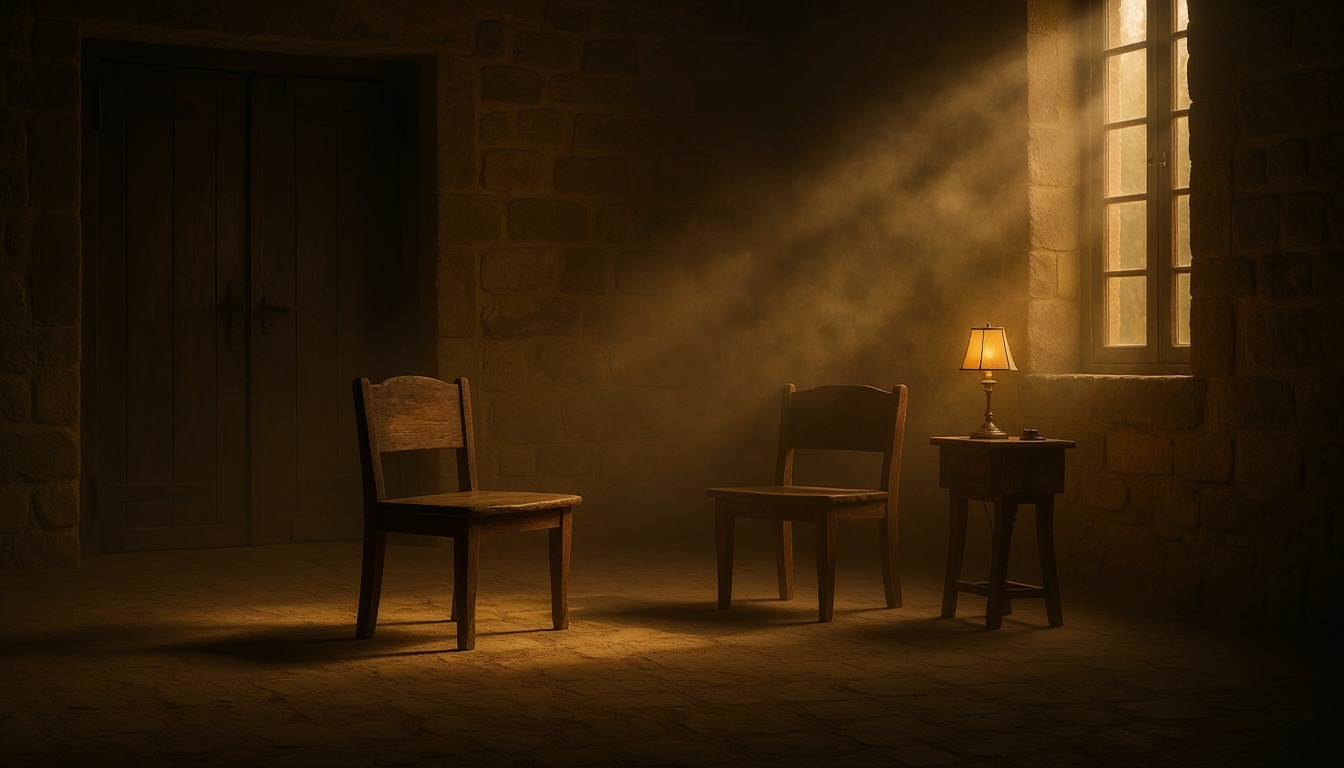
For seventeen years, I created spaces where people could finally say the thing they hadn’t been able to say anywhere else.
Not in a therapy room. Not behind a confession screen. In an office. With a chair across from mine. And a door that, when it closed, meant that whatever was brought in here would be held with care: without judgement, without consequence, without the need to perform.
I was an officer in the Australian Defence Force. My role, at its heart, was to create environments where people felt safe enough to be vulnerable. And in the military, where strength is the currency, where showing difficulty can feel like professional suicide, that was no small thing.
People came in carrying what they couldn’t put down anywhere else. Grief that had arrived without warning, years after the event that caused it. Shame about what they’d seen, or done, or failed to do. The slow unravelling of identity that happens when the role you’ve built your life around stops being enough to hold you together. They sat across from me, soldiers, officers, men and women who had given themselves completely to something larger than themselves, and in the quiet of that room, the armour came off.
I wasn’t there to fix them. You cannot fix grief. You cannot argue someone back to wholeness. What I could do, what I learned across hundreds of conversations and seventeen years, was stay. Hold the space. Not abandon the person inside the difficulty.
And in staying, I learned something that no philosophy degree ever taught me.
Character is not built in the good times.
You don’t discover who you are when everything is working. You discover who you are when it isn’t: when the scaffolding falls away, when the identity you’ve been wearing no longer fits, when the storm arrives and you have to decide, in real time, what you are actually made of.
The people who came through that door were not broken. That is the lie we tell about crisis, that it diminishes people. What I witnessed, again and again, was the opposite. The storms of their lives were stripping away everything borrowed (the borrowed confidence, the borrowed certainty, the borrowed version of themselves that had worked until it didn’t) and underneath, in the rubble of what they thought they were, something else was waiting.
Something real. Something that had been there the whole time.
This is the insight that eventually became the name of everything I’ve built.
In ancient Greek, arete (ἀρετή) did not mean virtue in the soft, passive sense we tend to use today. It meant excellence: the finest possible expression of what something is. A knife with arete cuts perfectly. A horse with arete runs with everything it has. A person with arete? They live well. Not easily. Not without difficulty or failure or grief. But fully, bringing all of who they are to bear on the life they’ve been given.
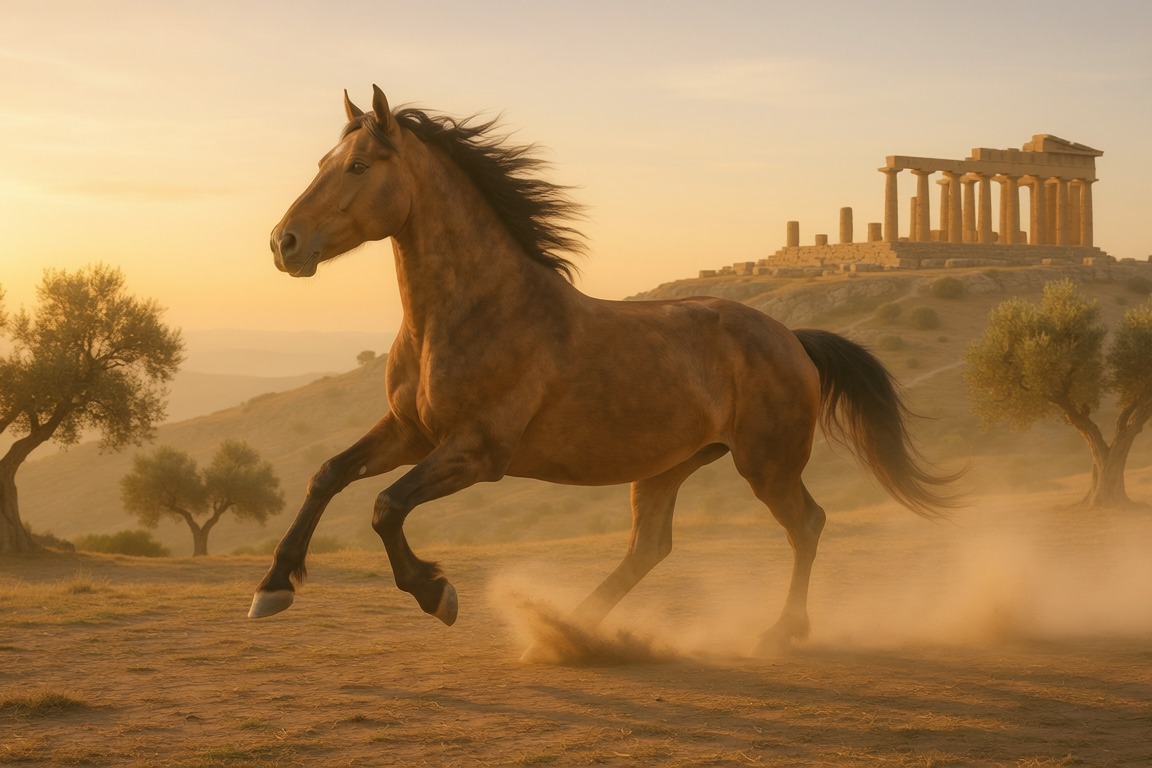
The word is kin to aristos, the Greek for “best”. The Greeks understood, in the way that people who have survived difficult things understand, that the finest expression of a human life does not emerge from comfort. It emerges from the contest.
From the storm.
From the seventeen years of rooms held, of hard conversations not flinched from, of sitting with human beings in the depths of what they carried, and watching them, slowly, become more of themselves.
I didn’t read my way to this understanding. I earned it.
When I left the ADF, I knew what I believed before I knew what I would build.
I believed that the finest version of every human life is already present, waiting, like Michelangelo’s angel in the marble, to be revealed. Not created. Not manufactured by the right habits or the right morning routine. Revealed, by the chisel of difficulty, of chosen discipline, of the storms we most want to avoid and most need to endure.
I believed that philosophy, real philosophy, tested across three thousand years against actual human suffering, has never been more urgently needed than it is right now.
And I believed that a company built around those convictions could do something most businesses never attempt. Not sell a product. Not deliver a service. Call people to their highest selves.
That company is Arete Estate. It is the same room I held for seventeen years, made larger. The room where it is safe to be honest. Where the examined life is not just possible, but invited.
Everything I write explores one question, in a hundred different directions, across as many weeks as it takes.
What does it mean to live well?
Not successfully: well. Not comfortably: well. The ancient Greeks had a word for that too: eudaimonia. Usually translated as happiness, but that is a poverty of translation. Eudaimonia means flourishing, the full expression of a life lived according to its highest nature, through difficulty and beauty alike.
I write about the six virtues that anchor this work. About the ancient wisdom traditions that arrived at these same truths independently, from Athens to Angkor Wat, from the Sufi poets to the Stoics. About the people, named and unnamed, who embodied these virtues imperfectly and memorably. And about what seventeen years of holding space for human vulnerability taught me about what we are actually made of.
This will not be comfortable every week. Arete is not comfortable. The chisel is not comfortable. The storm is not comfortable.
But the angel in the marble is real.
And if something in this piece has landed in you in a way that is difficult to name, I would gently suggest that the finding was not accidental.
You are already on the path. You have been for a while.
The question is simply whether you want to walk it with intention.
Stay. Read slowly when you can. Bring your real questions. Bring the version of yourself that knows there is more, more depth, more integrity, more excellence, than the one currently on display.
The door is open.
It always has been.
About the author
Marcus J Emsley · The Guide
Marcus spent seventeen years as a welfare officer in the Royal Australian Air Force, at home and on operations overseas, sitting with people in grief, trauma and the mornings they did not want to rise. He is the founder of Arete Estate in the Barossa Valley, South Australia, the creator of The Sculptor's Journey and Wisdom & Wonder, and the author of the debut novel Wisdom & Wine. He is the son of a primary school teacher who coached footy, cricket and life, and a palliative care nurse who showed him what kindness at the hardest door looks like. He has stood in the dark himself, and he writes from the far side of it.
What we are building at Arete Estate
Arete is excellence becoming. It is the highest expression of who you were always meant to be, not the finished version, but the version that keeps reaching. It is not built. It is revealed.
Arete Estate exists to help people reveal, not construct, the highest version of themselves. We do this through six virtues drawn from the world's wisdom traditions, taught through stories, walked through daily practice, and offered to anyone who is ready to begin: the parent raising a child, the leader carrying a team, the soldier returning from service, the school shaping the next generation, the person sitting alone in the early hours of the morning wondering if there is a path through.
Our work is to make that path visible. To stand as a lighthouse for the seekers, the grieving, and the broken. To remind every person we reach that excellence is not built, it is revealed by storms, and that they are not alone in the storm.
We do not chase. We shine. The Sculptor's Journey (The Doorway, The Walked Path, The Guided Path), An Hour with the Guide, Meditate with Arete, Wisdom & Wonder and The Sculptor's Library are the rooms of that house.
Six virtues. One journey. Your highest self.
www.areteestate.com.au · info@areteestate.com.au · Instagram @areteestate
If this essay touched something raw
Some of what is written here is heavy. If it has stirred something you are carrying, please do not carry it alone tonight.
Lifeline 13 11 14 · Open Arms (veterans and families) 1800 011 046 · 1800RESPECT 1800 737 732 · Kids Helpline 1800 55 1800 · In an emergency, call 000.
Reaching out is not weakness. It is all six virtues at once: the Fortitude to stay, the Wisdom to know you need a hand, the Love to let someone in, the Courage to ask, the Temperance to set the weight down, and the Gratitude for the one who answers.

Responses