
Seven world titles. Two won in love. The story of Layne Beachley AO.
THE ARETE HEROES SERIES · PART II
A NOTE BEFORE YOU READ
This essay names sexual violence, depression, and suicidal thoughts — in the words Layne Beachley herself has used. If you are in your own storm right now, please look after yourself first. Read it when you are ready, and reach out for help if you need it. Lifeline 13 11 14. Beyond Blue 1300 22 4636.
To the Woman Reading This
There is a story you have been telling yourself for a long time.
Quietly. Privately. So quietly that some days you almost forget you are telling it. But it is there. Underneath the work and the family and the photographs and the smile you give the world.
It is the story that says you will be loveable when.
When the body is right.
When the marks are in.
When the boy notices. The husband notices. The boss notices.
When you are chosen.
When the photo is good enough to post.
When the children turn out the way you needed them to, so that someone might finally turn to you and say, “yes. This. You. You are enough. You did it.”
The story is older than you.
You did not invent it. You inherited it. From a mother, perhaps, who told it to herself. From a kitchen, perhaps, where someone said something to you a long time ago that made you believe you would have to earn the air you breathe.
You have carried it for so long you do not remember the day you picked it up. You only know that some nights it is heavier than others. Some nights you stand in the kitchen of your own grown-up life, looking at the proof of everything you have built, and feel the strange quiet hollow where the joy was supposed to be.
That is what I want to talk to you about.
Because there is a woman who told herself the same story for thirty years. She told it to herself in a kitchen in Manly when she was eight years old. She believed it so completely that she built her whole life on it.
She became the most successful female surfer in history.
And it did not fix her.
Not for a long time.
I want to tell you what fixed her in the end. Because what fixed her is the same thing that will fix you.
And it is not what you think.
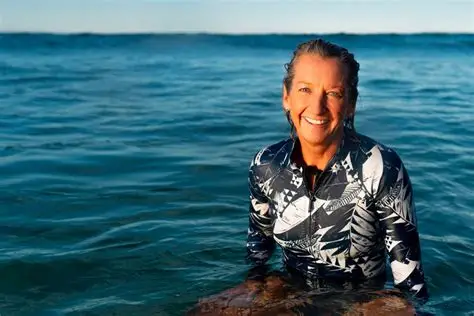
The Girl in the Kitchen
Her name is Layne Beachley.
You may know the name. The seven world titles. The Beast riding the fifty-foot waves at Outer Log Cabins. The little Australian woman who paddled into water grown men would not paddle into.
Forget all of that.
I want you to meet a girl.
She is eight years old. She is sitting at a kitchen table in Manly. Her father is a lifesaver who has been raising her alone since her mother died on an operating table the year before, and he is about to tell her something that is going to change her in a way that will not become visible for thirty years.
He tells her she is adopted.
He tells her that her real mother was seventeen years old. That her real mother had been raped. That she, this little girl in this kitchen, had been the consequence of a violence that nobody had asked for. That the name she had been called all her life ... Layne ... was not her first name. Her first name had been Tania.
She is eight years old.
She does not cry. She does not run from the table.
She sits very still.
And inside her, in a place no adult would be able to see for the next three decades, she makes a decision that will shape every single thing she ever does next.
She decides that the only way she will ever be loveable is to become a world champion at something.
It is one of the saddest sentences a child has ever spoken.
It is also the sentence you have been speaking to yourself, in some form, for most of your life.
Maybe yours is not “world champion.” Maybe yours is “good mother.” Or “successful career.” Or “thin enough.” Or “the one who never lets anyone down.”
But it is the same sentence. It is the same eight-year-old in the same kitchen, deciding that she will have to “earn” the right to be loved.
It is a lie.
It was a lie when Layne told it to herself, and it is a lie now, in the kitchen of your own life. But you have been carrying it for so long it feels like the truth.
Stay with me. Because what comes next is the part that matters.
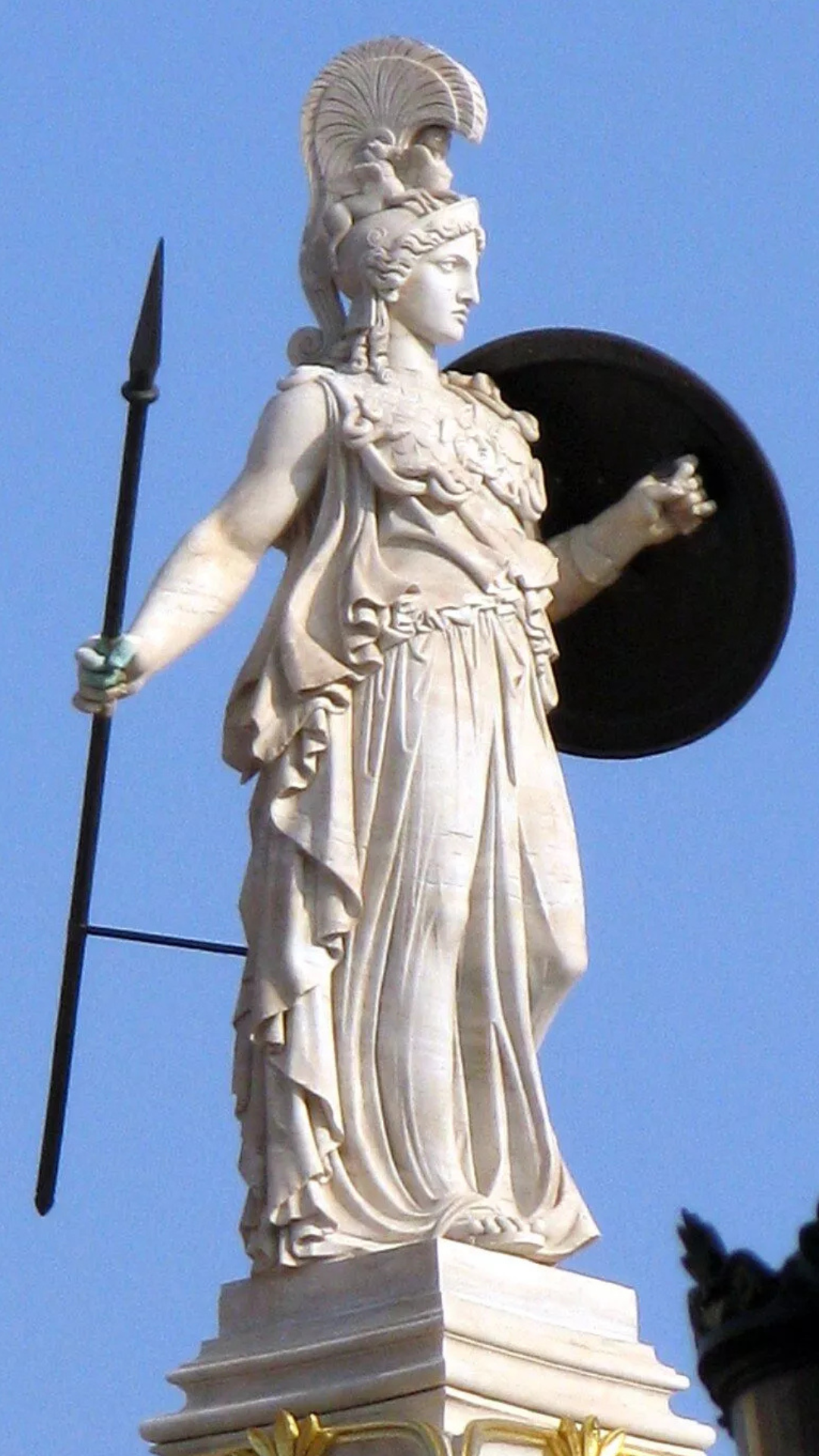
Athena
Before I tell you what happened to Layne, I want to tell you about a goddess.
Her name is Athena. She lives in the Greek tradition, which is the tradition that gave the world the word Arete, the fullest expression of what a human being can become.
Athena is unusual.
She has no mother.
She is born from the head of her father, fully formed and fully armed, the helmet already on, the shield already raised. She does not have a girlhood. She does not have a woman to teach her how to be a woman. She has only the absence where the mother was supposed to be, and out of that absence, fully grown, she walks into the world already wise and already dangerous.
She is the patron of two things at once. Wisdom and the warrior. The strategy and the spear. The calm hand and the fire.
The Greeks understood something we have forgotten.
Some of the strongest souls in the world are forged from what was missing.
A girl raised without the thing she most needed does not always become weaker for it. Sometimes the absence does the chiselling. Sometimes the missing piece is the very thing that produces the masterpiece.
I want you to remember this. Because the story you have been telling yourself, the story that says you will be loveable when, is, almost always, a story about something you did not get. A mother who could not love you the way you needed. A father who left or stayed but could not see you. A childhood that arrived with pieces missing. A body that did not arrive the way you wanted it to.
You have been telling yourself that the absence is the wound.
It can also be the forge.
Athena was not less for being motherless. She was Athena because of it.
Layne Beachley was conceived in violence and given up at six weeks old. Her adoptive mother died when she was seven. She was eight when she found out the world she had been living in was not the world she had been born into.
Three pieces, missing.
From them, an Athena.
Hold that picture in your mind, gently, while we go back to her.
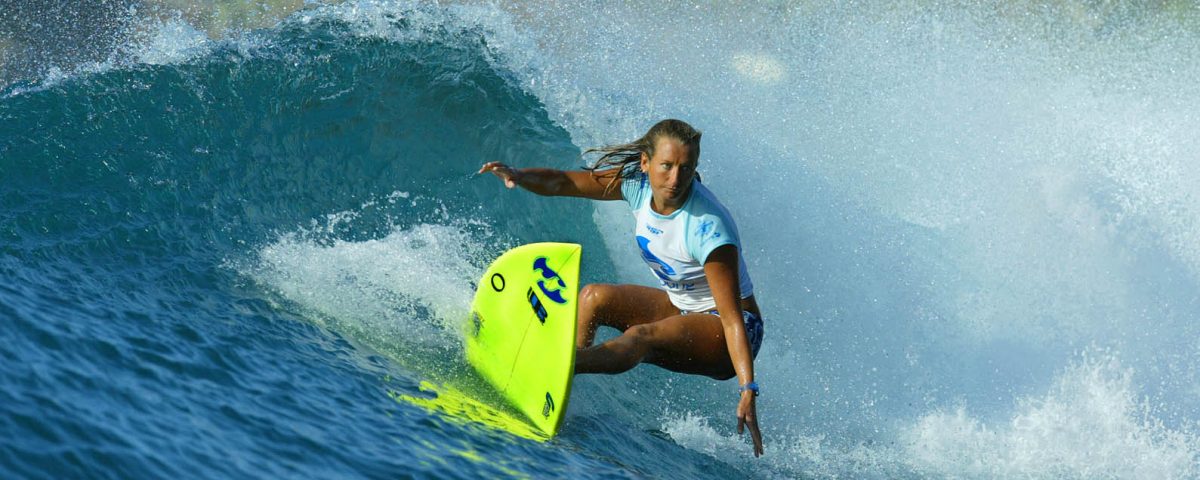
What the Lie Cost Her
She kept her promise to the eight-year-old.
She became a world champion. Once. Then again. Then again. Six times in a row. Then a seventh, three years later. The only surfer in history of any gender to win six titles in a row. The Hawaiians, who do not give respect easily, gave it to her. They called her the Beast. The country called her a national treasure. The cameras loved her.
And the eight-year-old in the kitchen kept watching from inside her body. Kept waiting. Kept asking.
Was that enough? Are we loveable yet?
And the answer kept coming back: not yet.
Each title was supposed to be the one. Each podium was supposed to be the moment. And each time she stood in the proof of her worth, the trophy in her hand, the country applauding, the sponsors lining up, the strange hollow was still there.
She has a phrase for those years now. She did not have it then. But she has it now.
She was not surfing for world titles. She was surfing for self-worth.
And no medal in the world is shaped like self-worth. The trophy was the wrong shape. The trophy was always going to be the wrong shape. The hole inside her was the size of a missing mother and a missing childhood and a worth she had been told, at age eight, that she had to earn. No object made by human hands has ever been built to fill that hole.
She did not know this yet. So she kept trying.
She paddled into bigger waves. The Beast outside her got bigger.
She trained harder. The body broke. Twice. Chronic fatigue. The body trying, with the only language it had, to ground a plane that would not land.
She came back. She kept winning.
And on some nights, in private, in rooms nobody else was in, the hollow was so loud she could not be in her own body. There were nights, by her own admission, when she thought about how she might end her own life.
Suicidal. That is her word.
I want you to read this carefully.
A six-time world champion. The most decorated female surfer alive. Beloved by a country. Sponsored. Celebrated. Photographed.
And a woman, on some nights, thinking about her own suicide.
It is possible to be high-functioning and dying at the same time.
I do not know what your version of this is. I do not know if you have ever stood in a podium of your own, the promotion, the body weight, the wedding photo, the school the kids got into, and felt the strange empty under your sternum where the joy was supposed to be.
I know you might have.
I know that some of you, reading this right now, are reading it from inside your own version of the storm. Smaller, perhaps. Quieter, perhaps. But the same shape.
And I want you to know what Layne wants you to know.
You are not the only one. And it is not the truth.
The hollow is not the truth about you. The hollow is the truth about the lie.
She kept trying to fill it for thirty years. Until something happened that finally broke through.
The Question
It was not a moment of victory.
It was a question her husband asked.
His name is Kirk. He is a musician. He had been watching her for years. He had been watching her give the best version of herself to her career and her sponsors and the cameras, and bringing the leftovers home.
He had been getting the broken Layne for a long time.
He asked her something one day. Not cruelly. Lovingly. The way a man asks a question when he has finally run out of patience for everything except the truth.
“Why do I always get the broken Layne?”
Sit with that for a moment.
Because it is not just his question. It is the question every person who loves a high-functioning woman wants to ask her, and almost never finds the courage to.
Why do they get the broken version?
Why does everyone else get the polished one?
Why is the world allowed to take her best, while the people who actually love her are left, again and again, with what is left over at the end of the day?
It is a question about love. But it is also a question about “worth.” Because the woman who is giving her best to everyone else, and her leftovers to her family, is the woman who has not yet figured out that she does not have to “earn” her family’s love. They were already in. They have been in the whole time.
Layne heard it.
And something cracked.
Not a breakdown. A breakthrough. A small piece of light, finally, getting in.
She had spent thirty years trying to fix the eight-year-old in the kitchen.
Kirk’s question was the first time anyone had told her that the eight-year-old had been wrong.
Wrong about the lie. Wrong about what would make her loveable. Wrong about what she had to earn.
She had been loveable the whole time. To Kirk. To her father. To her stepdaughter. To the friends who had stayed. To the ocean.
But she could not let any of them love her, properly, until she stopped surfing in fear.
The Two Titles in Love
Years later, looking back, she would say something extraordinary about her seven world titles.
She would divide them in two.
Five of them, she would say, were won in a state of fear.
Two were won in a state of love.
Same trophy. Same body. Same wave.
Different woman.
The first title — because she was still, somewhere underneath the ambition, a girl on a beach who loved the ocean. The trophy was a side-effect of the love. She had not yet learned to need it.
The seventh title — because she had finally let go of needing it again. After Kirk’s question. After the small piece of light, finally, getting in. The trophy was no longer the proof of anything. The trophy was just a trophy. She could now, after a lifetime of trying, simply enjoy the wave.
In between, five titles in a state of fear. Five titles where the trophy was supposed to be the proof. Five trophies that did not, no matter how shiny, fill what was hollow.
She has a phrase for the difference.
Process, not outcome.
When you focus on outcome, she has said, you are at the mercy of the world. You feel good when things go well. You feel bad when they don’t. You are a winner one day and a loser the next. You are nothing more than what the leaderboard says about you. And the leaderboard is going to keep changing for the rest of your life.
When you focus on process, the trophy becomes a side-effect. The work becomes the worth. The morning becomes the meaning.
And the worst day at the office cannot, by definition, take it away from you. Because the meaning was never sitting in the trophy. The meaning was sitting in the morning. And the morning is yours.
I want you to read that again.
The meaning was never sitting in the trophy. The meaning was sitting in the morning. And the morning is yours.
That sentence is the whole essay.
You can win in fear, or you can win in love. The first will hollow you, no matter how high the podium gets. The second will fill you, slowly, the way an ocean fills a tide pool, a little more every morning, until one day you look down and realise the water has risen, quietly, while you were busy paddling.
The choice is daily.
It is the only choice that matters.
What the Ocean Gave Back
Layne walked away from professional surfing in 2008. Not because she was finished. Because she had finally figured out how to stay.
She walked away on her own terms. At her own event. The Beachley Classic. The largest prize purse on the women’s tour, which she had built with her own hands, so that the women coming up behind her would not have to fight the same fight she had fought.
Sixteen years before that, she had founded a foundation called Aim for the Stars, in her own words, “to prevent girls and women alike from having to go through this same amount of adversity.”
Five hundred women. Almost a million dollars in grants. Each one a quiet seed planted into a life she would never see flower.
She had spent thirty years trying to earn the right to be loved.
She spent the next twenty making sure other women would not have to.
That is what the ancients called “gratitude”, not as a feeling, but as a practice. Tending what you didn’t plant. Honouring the gift that arrived before you understood it as a gift. Planting what you will not harvest.
In 2018, ten years after she had retired, she came back to compete one last time. Not for a comeback. Not for the cameras. Just for the closing of a loop. She entered the inaugural Masters championship at the age of forty-six. She won.
First woman ever to win it.
Not in fear, this time. Not even, exactly, in love.
In belonging. In returning to the only thing that had ever truly belonged to her, and finding it still there, still waiting, still hers.
And in 2020, in the middle of a pandemic, she co-founded Awake Academy.
A digital platform. Built with another woman who had survived her own version of the same storm. Designed to give other people, men and women, athletes and accountants, anyone running themselves into the ground, the tools she had spent thirty years figuring out alone.
Seven rounds in the flagship course. One for each world title.
Twenty-nine workbook exercises. One for each event she ever won.
Nineteen videos. One for each year she spent on tour.
She had taken her own life and turned it into a curriculum.
Excellence revealed by storms — and given away.
What the ocean gave back was not the seven trophies. The trophies were what she gave the ocean.
What the ocean gave back was her.
It gave her back to herself.
And she is now using everything she got to make sure other people, you, reading this, on whatever screen you are reading this on, in whatever room you are sitting in tonight, have a chance to be given back to themselves, too.
If You Need What She Built
A small practical pause, before the bigger word.
If any part of this essay is finding you in your own version of the storm, if you are recognising yourself in the high-functioning, the worn out, the woman who has been giving everyone else the polished version and bringing the leftovers home, the things Layne built since are exactly what was built for you.
Awake Academy is the curriculum she made out of her own life. It lives at awakeacademy.com. The flagship course is called “Own Your Truth.” It is for the woman who is winning at the wrong thing, and who is finally ready to stop. It is, by her own description, deeply personal. The work she did, alone and slowly, over thirty years, is now condensed into a place anyone can walk into.
Her co-authored book — Awake Academy: Know Yourself, Grow Yourself and Live a Happier, More Purposeful Life — carries the same teaching in pages you can hold in your hands.
Her biography, Beneath the Waves, written with Michael Gordon, tells the story she used to keep buried.
And if there is a young woman somewhere in your life, a daughter, a niece, a girl on the team you coach, who is chasing something nobody around her is yet supporting, look up the Layne Beachley Foundation and the work she has spent twenty years pouring into other people’s daughters. Layne is also Chair of Surfing Australia, and a current ambassador for several causes that exist for exactly this reason.
She has spent her post-career life turning the hardest lessons of her own life into oxygen for somebody else.
If you need oxygen, breathe.
It is hers, and now it is yours.
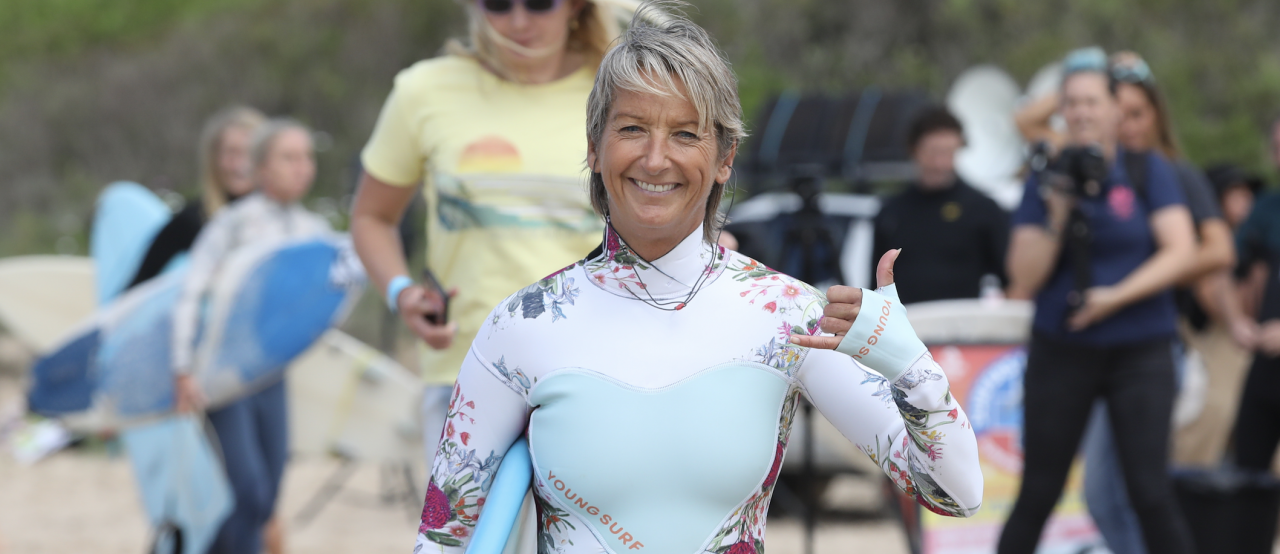
What Her Life Teaches Me
A word, now, from me. Marcus.
At Arete Estate, the work I built after seventeen years of walking alongside soldiers and their families through the worst days of their lives, character formation is grounded in six virtues. Six ancient Greek pieces of the soul, recovered for the modern world. We use them to coach. We use them to write. We use them to raise children, build businesses, and stand up to our own storms.
Most lives, when you look closely, reveal one or two of them clearly.
Layne Beachley’s life reveals all six.
Let me tell you what her life teaches me through them. Not so I can put a label on her. So you can see what is possible for the version of you that is reading this right now.
Gratitude. Five hundred women lifted, almost a million dollars given, sixteen years of a foundation built specifically so other girls would not have to fight the fight she fought. Tending what you didn’t plant. Planting what you will not harvest. She did not wait for the harvest. She went straight to the planting.
Courage. Five years of last places. Four jobs. One hour of surfing a week. The train to Newcastle alone, at seventeen, to face a world champion, and beat her. The windmill before the storm. A thousand quiet mornings, before any wave was famous, before any camera was watching.
Fortitude. Six titles won inside a storm nobody could see. Suicidal nights, alone, in rooms the country never entered. The lighthouse standing firm when the storm is inside her. She did not run. Even on the nights when running would have been understandable.
Wisdom. One question from her husband, finally heard after thirty years of carrying the wrong one. The gold pan after the long flood. Acknowledging the mud. Recording the gold. Choosing what to carry forward.
Temperance. Three lost mothers, a father with dementia, a marriage, a career, a country’s admiration, a daily surf at fifty-three, all in one body, all at once, no single piece collapsing the others. The conductor. All instruments, even the broken ones, in harmony.
Love. Two world titles, won in love, not fear. A husband, chosen and chosen again. A stepdaughter. A community. An ocean she walks back to every morning, whether the swell is good or terrible. You don’t fall in love. You choose it. She has chosen it daily, for a lifetime.
Six virtues. One life.
The anatomy of a hero.
And the Greek word for what gets revealed when those six are woven together is the word the entire Arete Heroes Series is built around. Not victory. Not the trophy. Not the title. The fullest expression of what a human being can become, hammered out under pressure, rather than handed over in calm.
I write these essays so that those six virtues are no longer the property of the ancient Greeks. They are yours. They are already inside you. The lives we tell stories about are not the unreachable heroes of myth. They are mirrors held up so that you can find the same six pieces inside yourself and learn to live them on purpose.
That is the work of Arete Estate.
And that, in the end, is the work Layne Beachley has been doing in her own way for twenty years.
She is not the first lighthouse on the shore. She will not be the last.
I am one of them, too. So are the people who built Awake Academy alongside her. So are the women who came up through her foundation. So are the men and women in your life who have lit their own light, quietly, after their own storm, and who are now, in their own way, signalling to the next person.
Not from pain. Through pain.
Pain that has been turned, slowly and deliberately, into strength.
That is what Arete is. That is what this whole series is about.
She is shining now. And it would be a shame to be in the water tonight, in your own storm, and miss the light.

So. Now. You.
I want you to do something for me before you close this essay.
I want you to think about the kitchen.
Yours, this time. Not Layne’s.
I want you to think about the moment in your own life when an eight-year-old version of you decided what she would have to “earn” in order to be loveable. There is one. There is always one. Some of you remember it clearly. Some of you do not remember it at all, but you know it is there, the way you know an old injury is there because the weather changes.
I want you to thank her.
Because she has been carrying you, all this time. The eight-year-old has been the engine of every long day and every late night and every promotion you chased and every dress you bought and every photograph you posted. She has been working without rest, on your behalf, for decades.
She did her best. Thank her.
And then I want you to tell her she can put it down now.
You do not have to earn the right to be loved.
You never did. You are not behind. You are not late. You are not insufficient.
You are already enough. The water already knows.
There is a goddess in your tradition who walked into the world without a mother and became wisdom and warrior in the same body. Athena. Born from the absence. Forged from what was missing.
You can be both. You were born both.
There is also a woman, alive right now, in Manly, fifty-three years old, paddling out at first light in water she has known since she was four. Layne Beachley. Born from violence. Adopted at six weeks. Mothered, then unmothered, then unmothered again. Who told herself a lie at eight years old and lived inside that lie for thirty years.
And who, now, is on the rocks. With a lighthouse. Signalling.
She is signalling to you.
Whatever your version is. Whatever your storm is. Whatever the wave is that you are riding right now, in fear or in love.
She is on the shore. She has been where you are. She has come home.
And she is using every breath she has left to tell you that you can come home too.
Not by winning more.
By learning what she learned.
That you have been loveable the whole time.
Stand firm. Shine anyway.
Your arete is not waiting on a podium. It is waiting in the choice you make tomorrow morning, when no-one is watching.
THE ARETE HEROES SERIES
A fortnightly portrait of lives that embody the six virtues of Arete Estate — Fortitude, Wisdom, Love, Courage, Temperance, Gratitude. These are not profiles of perfection. They are stories of people whose arete — their highest character — was revealed by the storms they refused to run from.
Written by Marcus J Emsley, The Guide, at Arete Estate in the Barossa Valley. First published 30 April 2026.
Excellence revealed by storms.

Responses