An Arete Estate reflection on identity, virtue, and the Australia worth loving.
There are moments that land in you before you understand them.
I was a boy. My dad was beside me. And a song came on that did something to the air in the room — the kind of thing you can’t explain to someone who wasn’t there, but anyone who was there would know exactly what you mean.
John Williamson’s voice. That unmistakable opening. And a question — not a statement, not a boast — a question:
“Is there still a place for you and me?”
I didn’t have the words for what I felt then. The words “Hey True Blue, don’t say you’ve gone.”... I do now. It was the feeling of being handed something. Of someone older pointing at something important and saying, quietly, without fanfare — this matters. Remember this.
My dad didn’t explain it. He didn’t need to. Some things are taught without teaching. Some things are passed on simply by being in the room together when they happen.
That moment, I now understand, was character formation. Not a curriculum. Not a lecture. Just a father, a son, and a song asking the right question.
The Question Williamson Was Really Asking
True Blue was released in 1981. But its question has never aged.
It wasn’t written as an anthem of superiority. It wasn’t flag-waving dressed up as music. Listen closely — really listen — and you’ll hear something far more vulnerable than that. You’ll hear a man who loves something deeply and is quietly afraid it might be slipping away.
That’s not arrogance. That’s grief with hope still in it.
Williamson was asking whether the thing worth being proud of — the character at the heart of this country — could survive what was coming. The rush. The noise. The drift toward surface over substance.
He was asking whether we still knew who we were.
And here’s what strikes me, decades after sitting beside my dad on a school chair listening to that song for the first time: that question wasn’t about Australia.
It was about us. All of us. Every generation, in every country, in every culture that has ever tried to build something worth keeping.
It was a question about character.
Not Colour. Not Creed. Character.
I want to be careful here — and honest.
This is not a political article. I have no interest in who you vote for, what you believe, where you came from, or what you look like. That’s not what this is.
What I am interested in is what Williamson pointed at. What my dad passed on without knowing he was doing it. What I have spent years trying to build at Arete Estate.
The belief that there is something in the human person — something forged by difficulty, refined by choice, expressed in how we treat each other when it costs us something — that is worth protecting. Worth passing on. Worth being proud of.
Not the performance of identity. The substance of it.
True Blue, at its heart, is a song about a people who endure. Who show up. Who don’t quit when the dust is thick and the distance is long. Who carry each other without being asked. Who stay loyal not because it’s easy but because they’ve decided that loyalty means something.
That’s not a nationality. That’s a virtue.
And virtues don’t belong to one people. They belong to anyone brave enough to choose them.
The Red Dust and the Lighthouse
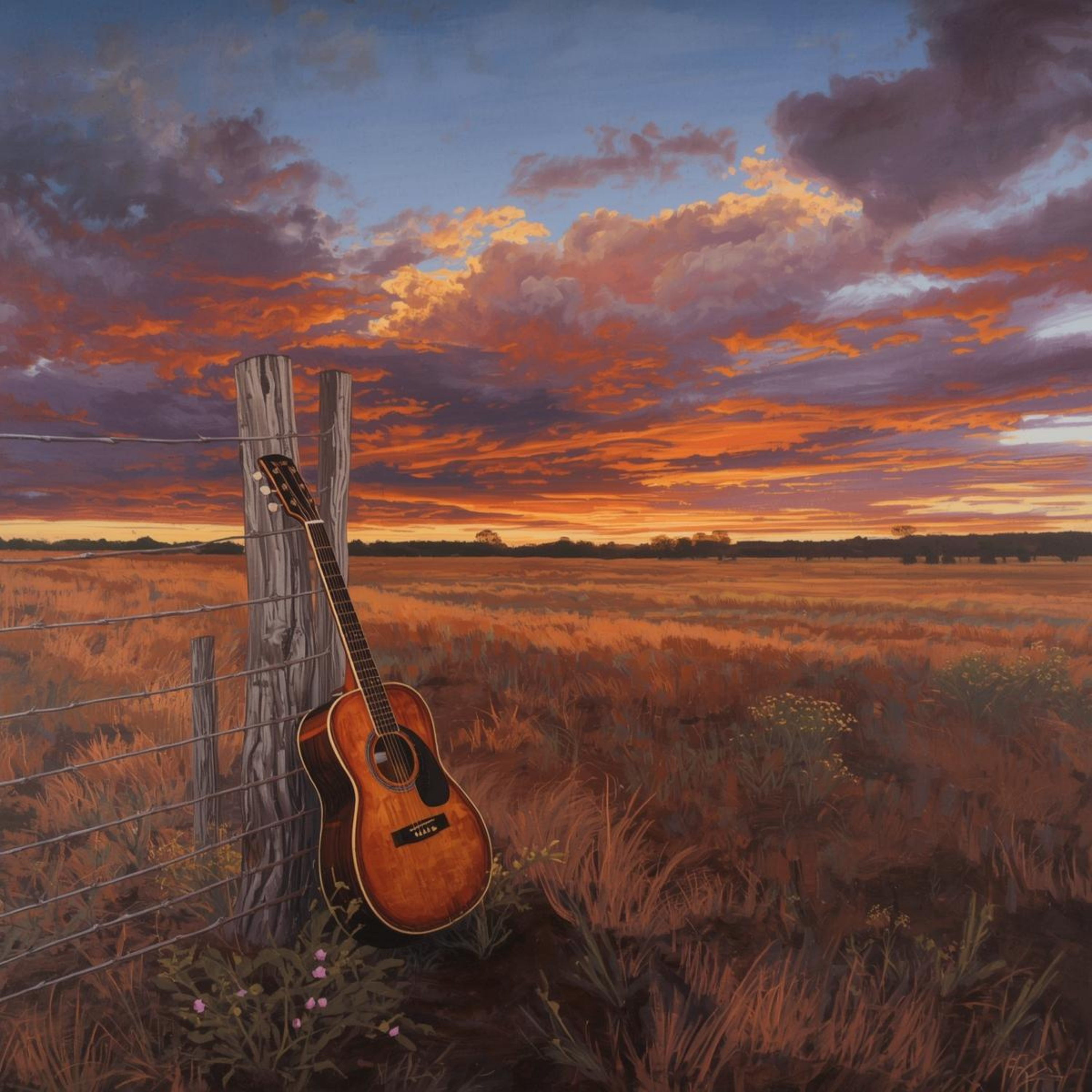
There’s an image in the song — the red dust, the wide open country, the drover, the stock horse, the silence that stretches to the horizon.
People sometimes read that as nostalgia. A longing for a simpler time.
I read it differently.
I read it as Fortitude.
The lighthouse doesn’t stand on calm water. It stands on the rock the waves hit hardest. It shines not because conditions are ideal — it shines because they aren’t. The light exists for the storm, not despite it.
The Australian character that Williamson was singing about — and I’ve seen versions of it in defence force mess halls, in hospital corridors, in drought-cracked paddocks, in the quiet dignity of people carrying grief nobody else can see — that character is the lighthouse.
It doesn’t announce itself. It doesn’t demand recognition. It simply stays lit.
Stand firm. Shine on.
That’s Fortitude. And it’s as Australian as red dust and a cold can at the end of a long day.
Mateship Is Not a Word. It’s a Practice.
The song talks about mateship. It always has. And like most things worth keeping, the word has been stretched and borrowed and occasionally misused — until some people are embarrassed by it.
Don’t be.
Because underneath the word, if you strip it back, is one of the most profound human commitments there is.
I will not leave you in the storm.
That’s it. That’s all mateship ever was. Not a boys’ club. Not an excuse for bad behaviour dressed up as loyalty. Just the ancient, unglamorous, deeply human decision to stay beside someone when staying is hard.
I’ve seen it in the ADF. In the welfare work. In the rooms where people are carrying things no one should have to carry alone — grief, trauma, loss, the particular weight of watching someone you love disappear piece by piece.
In those rooms, mateship is not a concept. It’s a lifeline — “Is it standin’ by your mate when he’s in a fight.”
And here at Arete Estate, we call it by its classical name: Love.
Not the feeling. The choice.
You don’t fall in love with your people. You choose them. You choose to show up. You choose to stay. You choose to sit beside them in the dark and not say a word if that’s what they need, or to hand them a cold drink and make them laugh if that’s what they need instead.
“You don’t fall in love. You choose it. The fall is choosing it again tomorrow.”
That’s what the song was always singing about. We just needed a word for it.
Wisdom in the Wide Country
There’s a particular kind of wisdom that comes from land and silence and hard work.
Not the wisdom of the lecture hall — though that has its place. The wisdom of paying attention. Of watching the sky for rain that hasn’t come. Of knowing when to push and when to wait. Of understanding that the land doesn’t care about your timeline, your opinion, or your mood.
The Gold Pan is Arete Estate’s symbol for Wisdom. And it’s exactly right.
You pan for gold by moving through the mud — deliberately, patiently, without the guarantee that anything will appear. Most of what you lift is river dirt. But you don’t stop. You acknowledge the mud. You record the gold. It’s asking the question — “Hey True Blue, can you bear the load?”
The Australians Williamson was singing about — the ones who built something from nothing in an ancient, indifferent, magnificent country — those people were gold panners. They didn’t have the luxury of waiting for conditions to improve. They moved with what they had, they showed up and were prepared to ‘bear the load’, in the dirt they were standing in, and they found something worth keeping.
That’s the wisdom I want to pass on. Not cleverness. Not information. The deep, earned, worked-for understanding that comes when you keep going after the easy answers run out.
The Garden in the Dust
You might not expect gratitude to thrive in harsh country.
But it does. And it always has.
There’s something about difficulty that, when it doesn’t break you, teaches you to see. Really see. The colour of the sky at the end of a long day. The sound of rain after months without it. The weight of a hand on your shoulder from someone who didn’t have to stay.
Gratitude isn’t the easy feeling you get when everything goes right. That’s just pleasure. Gratitude is what grows when you’ve been through the hard thing and you’re still here — and you notice, with something close to wonder, that there was beauty in it. That there were people in it. That even the storm had a shape worth remembering.
The Garden is Arete Estate’s symbol for Gratitude. And gardens in dry country are an act of defiance and faith at the same time. They say: I believe something worth tending can grow here.
That’s the Australia I love. Not the postcard version. The version that keeps planting anyway.
What We Pass On
My dad didn’t sit me down and give me a character lecture.
He sat beside me and let a song do it.
And somehow, in that ordinary moment — a boy, a father, a Friday afternoon, John Williamson asking a question neither of us could have answered then — something was transmitted. Something took root.
I didn’t know it was called Fortitude. I didn’t know it was called Gratitude, or Wisdom, or Love, or Courage, or Temperance. I just knew that being Australian meant something. That there was a standard to try to live up to. That the people who’d come before us had done hard things and done them with grace, and that we owed them something in return.
Not guilt. Inspiration.
That’s what True Blue was always asking us to feel. Not superiority. Not tribalism. Inspiration — the deep, steady kind that makes you want to be worthy of something larger than yourself.
The Australia Worth Loving
So here’s what I believe, as plainly as I can say it.
The Australia worth loving is not defined by a flag or a border or a political position. It’s defined by character. By the choices made under pressure. By the people who stayed lit when the storm was loudest. By the quiet ones who carried others without expecting a ceremony. By the kids who were handed something by their parents — a song, a story, a standard — and decided to carry it forward.
True Blue was a question.
Arete Estate is an answer.
Not the answer — we’re not that arrogant. But an answer. A hand extended. A lamp lit at the door. The beacon is on. The path is here.
Come walk it.
The Invitation
If something in this piece landed in you — if you heard an echo of your own dad, your own school chair, your own moment when a song or a story handed you something you’ve been carrying ever since — then you already know what we’re building.
We’re building it for you.
Not for any particular gender, colour, religion, or political persuasion.
For anyone who believes that character is worth forming. That virtues are worth teaching. That the best version of a person — and a people — is always a choice, made daily, made deliberately, made with love.
That’s True Blue.
That’s Arete.
That’s The Sculptor’s Journey.

Written by Marcus J Emsley, The Guide, at Arete Estate in the Barossa Valley. First published 21 February 2026.
Excellence revealed by storms.

Responses