
Love · You were not weak. You were outside your window, and windows widen.
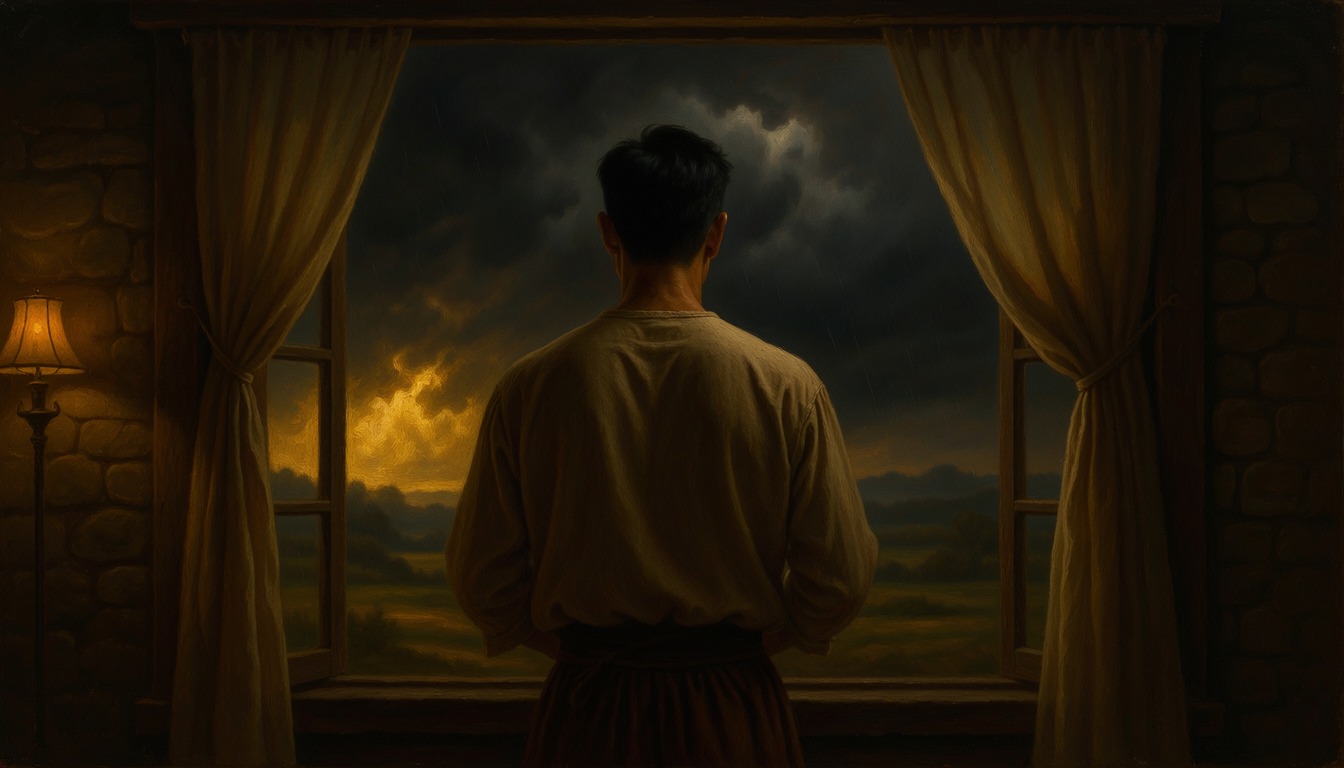
“We suffer more often in imagination than in reality.” Seneca, Letters
It happens in seconds, doesn’t it? One moment you are holding it together, in the argument, the meeting, the school car park, and the next, something surges up through you and takes the wheel. The sharp words are out of your mouth before you chose a single one of them. Or the opposite: your mind simply empties, the words you needed gone, and you stand there, present in body only, while the moment sails past. And afterwards comes the part that really wounds, the private verdict, passed at two in the morning: what is wrong with me? This letter is the answer. The real one. It will show you what actually happened in your body in that moment, hand you an absolution you have been owed for years, and leave three tools in your pocket, ten seconds each, no equipment, no audience, that work in any storm you will ever stand in. Read it once for yourself. You will read it a second time thinking of someone you love.
The Day the Staying Didn’t Work
First, the replay, because you have lived some version of this scene, and probably recently. The disagreement was going fine, almost civil, until one sentence landed wrong, and the heat came up your neck like a lit fuse, and you heard yourself say the thing you had promised yourself you would never say. Or the meeting where they turned to you, and every word you had prepared simply left the building. Or the moment with your child, at the ragged end of a long day, when the smallest thing broke the dam, and the person raising their voice in your kitchen did not feel like you at all. And here is the truth of it: it wasn’t. Not the you who chooses, anyway. In that moment, an older crew had taken the ship.
Here is what actually happened, in plain language, because nobody ever explains it, and the not-knowing is where all the shame grows. When something reads as threat, a raised voice, a hard silence, a phone lighting up with that name, your body moves before your mind gets a vote. The heart bolts. The chest tightens. The breath goes high and shallow. And a voice far older than words gives its one ancient order: get out. Fight, flee, or freeze. It is magnificent machinery, tuned across a million dangerous years, and it is fast precisely because it does not stop to consult you. It also has one famous flaw: it cannot tell a lion in the grass from a hard conversation in a kitchen. It floods first. It asks never.
So take the absolution, and take it all the way in: what happened was not a failure of character. It was equipment, doing exactly what it was built to do, at a moment it misread. You have not been weak. You have been un-taught, nobody ever showed you the machinery, let alone the handles on it. And what was never taught can always be learned. That is the whole business of this letter.
You were not weak. You were outside your window, and windows widen.
The Lion, or the Feeling of One
Two thousand years ago, Seneca put his finger on the strangest feature of the whole system: we suffer more often in imagination than in reality. Sit with how precise that is. The conversation you dreaded for three weeks took eleven minutes and ended in an embrace. The diagnosis you rehearsed at 3am never arrived. The wave, almost every time, is larger in the dreading than in the facing, because the imagined storm has no edges, no clock, and no mercy, while the real one is nearly always smaller, slower, and survivable. Your alarm, remember, cannot tell lions from the feeling of lions. Which means half the floods that sweep you were set off by weather that existed only behind your own eyes.
Ask yourself: what does the imagined version of your fear insist will happen, that the real version, looked at squarely in daylight, very likely will not?
The Window
Now for the picture that changes everything, and I will keep it home, because it is. Imagine standing at an open window while a storm blows outside. Stand close, and you can feel the weather on your face, the cold, the spray, the push of it, and still remain inside the room: feet on the floorboards, hands steady, mind your own. Touched by the storm, not taken by it. Every one of us has a range like that, a width of weather we can stand at the window for. Inside it, you can feel the distress and still think, still speak, still choose: you are the captain. Pushed past its edge, the glass gives, and the storm is in the room, at the wheel, sweeping you up into the fire of the fight or down into the fog of the freeze. Everyone carries this range. Nobody chose its width; life sized it, the home you grew up in, the storms already weathered, the sleep you did or didn’t get last night.
I sat inside the truth of this for seventeen years before I ever heard its name. In the hardest rooms of my service I watched two people receive the same news an hour apart, and one could stand in it, ask questions, hold a hand; and the other was swept, flooded or gone silent, through no failure of love or courage. The people who study the mind have a name for what I was watching. The psychiatrist Dan Siegel called it the window of tolerance, and their finding lands like a bell: the window is not a fixed inheritance. It is not the hand you were dealt. It is a capacity. And capacities, hear this in your chest, can be trained.
Standing firm is a skill, not a mood.
Ask yourself: think of the steadiest person you know. What if their calm was never a gift they were given, but a window they have quietly trained?
The Swimmer’s Secret
Watch a child learn to swim, because the whole secret is on display at the shallow end of any pool in the country. First lesson: the water is terror. The tummy flips, the fingers clamp the edge, every ancient alarm in the small body is ringing. And watch what the learning actually is, because it is not the fear vanishing. The fear does not vanish. It is held. The child feels the full rush of it and stays in the water anyway, one breath, one let-go of the edge, one small paddle at a time, until the body makes its slow, astonishing discovery: I can bear far more than I believed. By Friday, the same water is a playground. The water never changed. The window did.
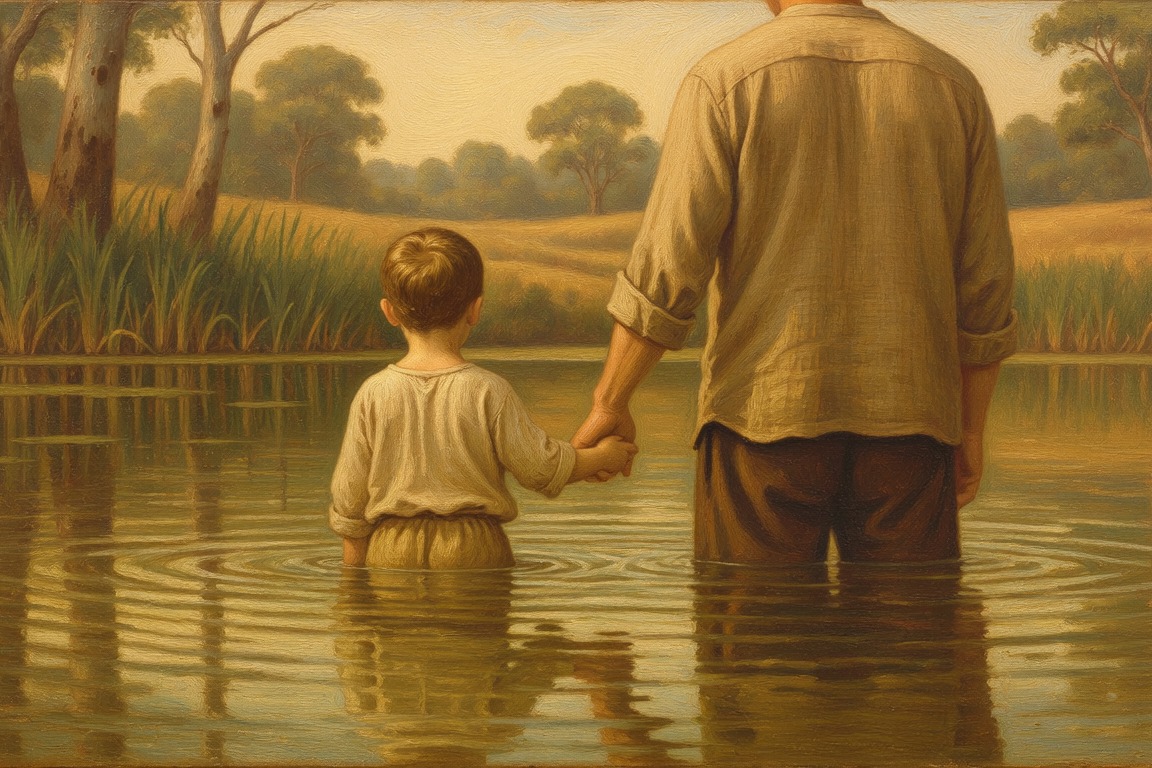
This is the mechanism under everything The Arete Path builds, and it works in you exactly as it works in the swimmer. Every time you feel the surge and stay, just one moment longer than felt possible, you are not merely enduring. You are teaching. You are giving your body a lesson it records in its very wiring: this can be held. The wave crests and passes. I am still here on the far side. Repeat that lesson enough times and something quietly miraculous happens: the things that once swept you away become things you can stand in. The hard conversation. The grief. The wait. Nothing about the storm has changed. Everything about your capacity to weather it has.
Nothing about the storm changes. Everything about your capacity to weather it can.
Ask yourself: which storm that once swept you clean away can you now stand in, and what, looking back, did the widening?
The Three Tools
So how do you stay near the window’s edge without being swept past it? Here are the three tools, and I promise you they will look almost insultingly small, which is precisely why they work. They fit in a boardroom, a school pick-up line, a hospital corridor, the front seat of a parked car. First: feet on the floor. Press them down and feel the ground push back, the oldest anchor there is, telling a flooding body the one thing it most needs to know: you are here, not in the imagined storm. Second: a breath out longer than the breath in. Of all that ancient alarm machinery, the long exhale is the single lever you can pull by hand, it is the body’s own message, in the body’s own language, that the lion has passed. Third: the feeling named, in one honest word. Scared. Angry. Ashamed. Overwhelmed. Not a paragraph, a word. Because a feeling named is a feeling seen, and what is seen loses its power to ambush.
A storm named is a storm made smaller.
Feet. Breath. Name. Three tools, ten seconds, no equipment, no audience. They are not soft practices, whatever the loud world says, they are how you stay in the fight without being swept out of it. They are what steady hands do in emergency rooms and cockpits and every hard conversation ever held with grace. And they are yours now, for every wave that is coming.
Widen the Window
So here is this week’s practice, in two small movements. The first: when distress rises, and it will, use the tools, right there, in the moment. Feet on the floor. One long breath out. The feeling named in one honest word. Ten seconds, and you have bought yourself back the wheel. The second movement is the one that changes your year: once, on purpose, stand at a small chosen edge one moment longer than feels comfortable. The slightly-too-hard conversation opened. The wait endured without the phone. The feeling sat with instead of scrolled away. Because here is the last truth of this letter, and it deserves to be said plainly: the window widens at its edges, never from the middle of comfort. Every deliberate moment at the edge is a brick added to the sill.
And be patient with the pace, the way you would be with the swimmer. No one demands the deep end on Tuesday. The window does not widen in leaps; it widens the way all real strength arrives, quietly, cumulatively, one held moment at a time, until one day you notice you are standing calmly in weather that would once have swept you to sea, and you cannot quite remember when that became true. That is Fortitude, not a mood that visits the lucky, but a skill built by the willing.
Try the three tools. The lamp at Arete Estate is lit. It will not chase you. It will simply keep shining, steady in every storm, until you are ready. Come in when you are, and stay as long as you like.
Excellence revealed by storms.
For the Young Ones
The same truth, made small enough to hold. To be read aloud.
Do you remember your first swimming lessons? The water felt freezing. Your tummy did flips. Everything in you said get out, get out, get out. And then, do you remember what happened by Friday? The same pool. The same water. And suddenly it was ... fine. Fun, even. The water didn’t get warmer. You got braver. Your body learnt the water.
Big feelings work exactly the same way. Scary, angry, worried, embarrassed, when they rush in, everything says get out! But feelings are like pool water: your body can learn them. And every time you stay just a tiny bit longer than feels easy, your brave-muscle grows a little bit stronger. That is a true thing about how bodies and brains work, not a story. Brave is a muscle. And muscles grow.
And here are three little tools to help you stay, small enough to carry everywhere. One: feet like tree roots, press your feet into the floor and feel how strong the ground is. Two: dragon breath, breathe out long and slow, longer than you breathe in, like a gentle dragon. Three: name it, say what the feeling is, out loud or in your head: “I’m scared.” “I’m cross.” Naming a feeling is like turning on the light, it always gets a bit smaller.
A practice, and the grown-up goes first
Tonight at the table, practise “Feet, Breath, Name” together, and grown-ups, you go first. Tell them about one big feeling that rushed you today. Then do the three tools together, slowly: feet like roots, one long dragon breath out, and name the feeling in one honest word. Then it’s their turn: what rushed you today? Feet. Breath. Name. You are giving them a kit they will carry into every exam room, every first day, and every storm of their lives, and you are showing them that grown-ups use it too.
About the author
Marcus J Emsley · The Guide
Marcus spent seventeen years as a welfare officer in the Royal Australian Air Force, at home and on operations overseas, sitting with people in grief, trauma and the mornings they did not want to rise. He is the founder of Arete Estate in the Barossa Valley, South Australia, the creator of The Sculptor's Journey and Wisdom & Wonder, and the author of the debut novel Wisdom & Wine. He is the son of a primary school teacher who coached footy, cricket and life, and a palliative care nurse who showed him what kindness at the hardest door looks like. He has stood in the dark himself, and he writes from the far side of it.
What we are building at Arete Estate
Arete is excellence becoming. It is the highest expression of who you were always meant to be, not the finished version, but the version that keeps reaching. It is not built. It is revealed.
Arete Estate exists to help people reveal, not construct, the highest version of themselves. We do this through six virtues drawn from the world's wisdom traditions, taught through stories, walked through daily practice, and offered to anyone who is ready to begin: the parent raising a child, the leader carrying a team, the soldier returning from service, the school shaping the next generation, the person sitting alone in the early hours of the morning wondering if there is a path through.
Our work is to make that path visible. To stand as a lighthouse for the seekers, the grieving, and the broken. To remind every person we reach that excellence is not built, it is revealed by storms, and that they are not alone in the storm.
We do not chase. We shine. The Sculptor's Journey (The Doorway, The Walked Path, The Guided Path), An Hour with the Guide, Meditate with Arete, Wisdom & Wonder and The Sculptor's Library are the rooms of that house.
Six virtues. One journey. Your highest self.
www.areteestate.com.au · info@areteestate.com.au · Instagram @areteestate
If this essay touched something raw
Some of what is written here is heavy. If it has stirred something you are carrying, please do not carry it alone tonight.
Lifeline 13 11 14 · Open Arms (veterans and families) 1800 011 046 · 1800RESPECT 1800 737 732 · Kids Helpline 1800 55 1800 · In an emergency, call 000.
Reaching out is not weakness. It is all six virtues at once: the Fortitude to stay, the Wisdom to know you need a hand, the Love to let someone in, the Courage to ask, the Temperance to set the weight down, and the Gratitude for the one who answers.

Responses