
Love · Masculinity, manliness, and the blueprint boys were never given
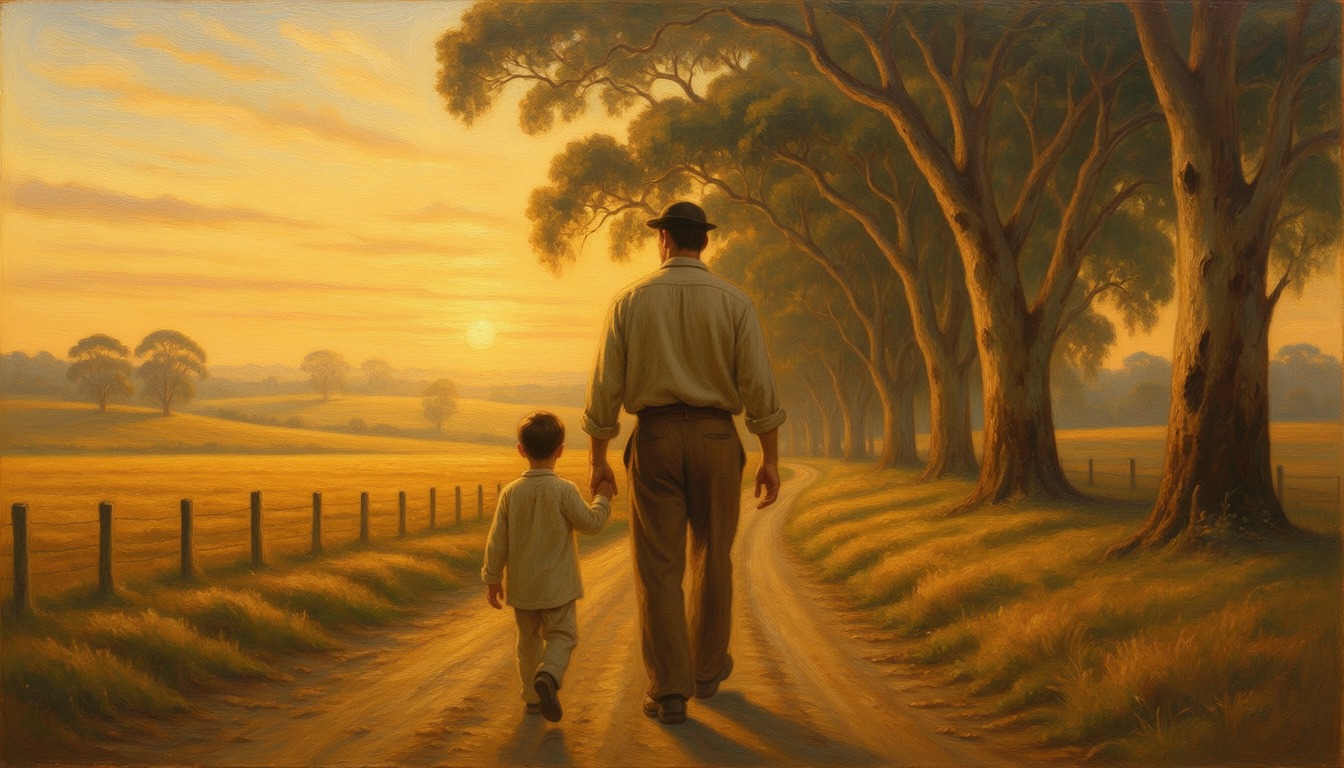
Something is wrong with how we are raising boys. And almost everyone can feel it.
Parents feel it at the dinner table when their thirteen-year-old son quotes something he heard online that makes the room go quiet. Teachers feel it in classrooms where boys are either performing dominance or retreating into silence, with nothing in between. Girls feel it in hallways, in messages, in a culture that is teaching the boys around them that power is something you take, not something you earn.
And boys feel it most of all, even if they can’t name it. The confusion. The hunger. The sense that they are supposed to be something, but no one has told them what.
Into that vacuum, a culture has arrived. You know the one. The red pill. The manosphere. The algorithm-fed ecosystem of podcasts, clips and influencers who have looked at a generation of lost boys and said: I’ll tell you what a man is.
And millions of boys, hungry, directionless, desperate for a model, leaned in. Because a wrong answer, delivered with confidence, will always beat silence.
I want to say this to every parent, every teacher, every mentor, and every boy who is reading: they are not offering your sons masculinity. They are offering them a performance of masculinity. A shallow, brittle, terrified version of manhood that collapses the moment it is tested by anything real: grief, intimacy, failure, love.
And there is something better. Something deeper. Something that has existed for thousands of years, long before the algorithm, long before the influencer, long before the red pill.
It is called virtue. And it builds whole men.
Masculinity vs Manliness
We need to separate two words that our culture has collapsed into one.
Masculinity, as the culture currently sells it, is a checklist. Dominate. Accumulate. Never show weakness. Control the room. Win the argument. Get the girl. Build the empire. Project strength at all times, especially when you don’t feel it.
It is a performance. And like all performances, it requires an audience. Take the audience away and the whole thing crumbles, because there is nothing underneath. No foundation. No anchor. Just a man standing on a stage, flexing for strangers, terrified that someone will see the cracks.
Manliness is something else entirely.
Manliness is ancient. It is what the Greeks meant when they spoke of Aretē, excellence of character. It is what the Stoics practised when they trained themselves to meet the world with steady hands and open eyes. It is what your grandfather meant, whether he had the language for it or not, when he said: a good man does the right thing even when no one is watching.
Manliness does not need an audience. It does not need to dominate a room to feel safe in it. It does not confuse volume with strength, or control with leadership, or silence with weakness.
A manly man can be gentle without being weak. Firm without being cruel. Present without being performative. Vulnerable without being broken.
The difference between masculinity and manliness is the difference between a man who tells you he’s strong and a man who shows you, not by flexing, but by staying. By being steady when the room is shaking. By choosing what is right over what is easy, every single day, without applause.
That is what we should be teaching our boys. Not how to perform. How to become.
“Waste no more time arguing about what a good man should be. Be one.” Marcus Aurelius, Meditations.
The Vacuum We Created
There is an uncomfortable truth that nobody wants to say out loud. The manosphere did not create the problem. It filled a gap that we left open.
For decades, we have been telling boys what not to be. Don’t be aggressive. Don’t be dominant. Don’t be loud. Don’t take up space. Don’t be that kind of man.
And those corrections were necessary. Parts of the old model were broken. The stoicism that became emotional starvation. The toughness that became cruelty. The leadership that became control. Those things needed to be named and challenged.
But we made a critical error. We tore down the old blueprint and forgot to build a new one.
We told boys who not to be, but we never told them who they could be. We described the disease but never offered the cure. We pointed at the wreckage and said don’t be like that, and then we walked away, and left them standing in the rubble with no tools and no plans.
Of course they followed whoever showed up with a blueprint. Even a toxic one. Even a shallow one. Even one that will ultimately fail them. Because a boy who is hungry for a model of manhood will eat whatever is put in front of him.
It is time to put something better on the table.
Where Are the Heroes?
But it wasn’t just the blueprint we removed. It was something older. Something boys have needed since the first fire was lit and the first story was told. We took away their heroes.
Every culture in human history understood something that we have somehow forgotten: boys learn by imitation. They always have. A boy standing in the backyard with a stick is not playing. He is rehearsing. He is asking the question that sits at the centre of every young man’s becoming: who do I want to be like?
That question is not a flaw. It is not toxic. It is developmental. It is how character has been transmitted for thousands of years, through story, through aspiration, through heroes who showed boys what strength and honour and sacrifice could look like when they were woven together.
Achilles taught boys about the cost of pride. Odysseus taught them that the cleverest man in the room is the one who finds his way home. King Arthur taught them that power means nothing without justice. These were not perfect men. That was the point. Their flaws were part of the teaching; the story didn’t hide the cracks. It showed you what happened when a man let his worst nature lead.
And then we dismantled them.
We looked at the old heroes and saw the violence, the conquest, the outdated models of manhood, and some of that critique was necessary. But instead of refining the heroes, we removed them. We replaced them with ironic, deconstructed versions that don’t inspire anyone. We gave boys anti-heroes and called it sophistication. We took the sword out of the hero’s hand and put nothing in its place.
“Since it is so likely that children will meet cruel enemies, let them at least have heard of brave knights and heroic courage.” C.S. Lewis
So who are their heroes now? Influencers in rented cars. Men who measure manhood in followers, in money, in women treated as trophies. Boys didn’t choose those heroes because they are aspirational. They chose them because they were the only ones available.
A boy who has no Achilles will follow whoever is loudest. A boy who has no Odysseus will mistake the algorithm for wisdom. A boy who has no Arthur will believe that power without justice is leadership.
We did this. And we can undo it.
The Hero Boys Actually Need
This is why I wrote my novel with Heracles in it.
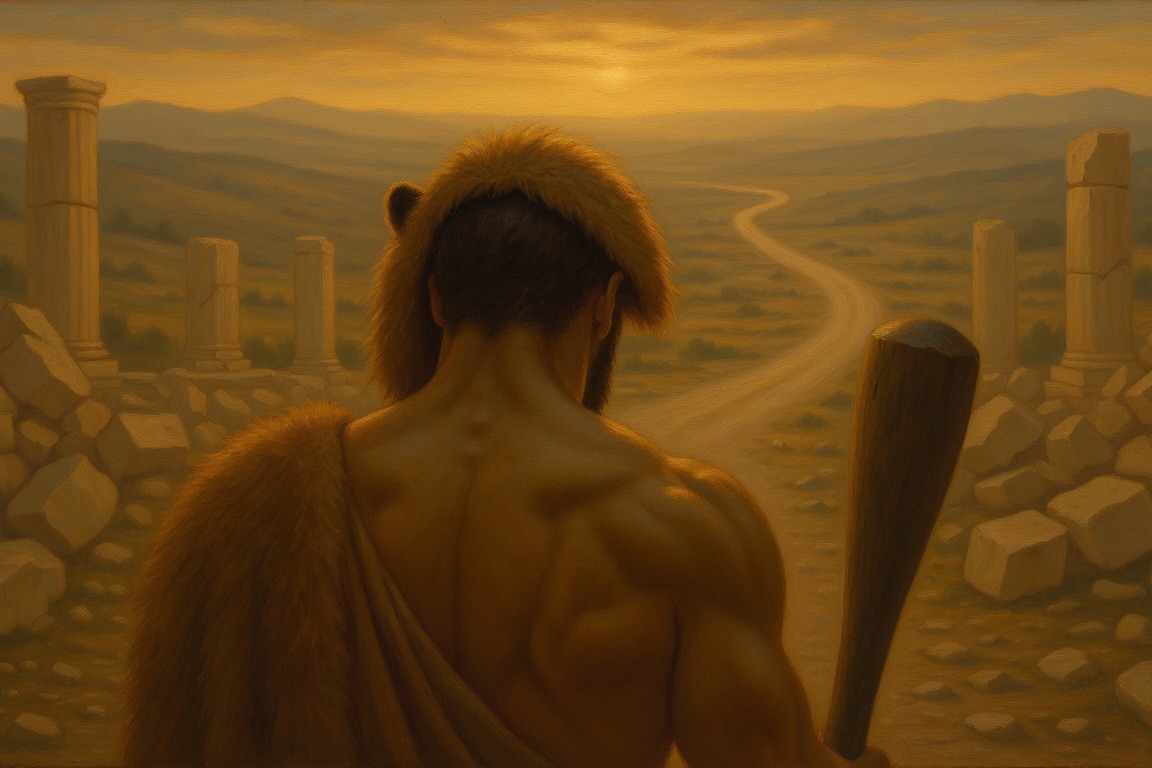
Not the cartoon. Not the muscle-bound superhero. Not the sanitised Disney version with the happy ending and the merchandising deal. The real Heracles. The ancient one. The one most people have never properly met.
Because the real Heracles was not a story about strength. He was a story about failure, catastrophic, devastating, world-ending failure, and what a man does with himself afterwards.
Heracles destroyed the thing he loved most. That is where his story begins, not with the muscles, not with the lion’s skin, but with a man standing in the wreckage of his own life, knowing that he caused it, knowing that he cannot undo it, and choosing to do the work anyway.
The Twelve Labours were not punishment. They were repair. Each one demanded something different from him, not just physical strength, but patience, humility, cunning, endurance, sacrifice, and the willingness to serve when every part of him wanted to run.
That is the hero boys need. Not a man who never fails. A man who fails terribly, owns it completely, and then spends the rest of his life earning his way back: not through dominance, but through service. Not through performance, but through practice. Heracles did not complete the Twelve Labours for an audience. He did them because the work was the only path back to himself.
When I wrote Wisdom & Wine, I built the story around the Twelve Labours because I wanted to give boys, and men, and everyone, a hero they could actually learn from. Not a hero who is untouchable. A hero who is broken and brave and doing the work.
That is the kind of hero who changes a boy’s life. Not the one who has never been tested. The one who was tested, and shattered, and got back up. The one who looked at his own wreckage and said: I will not let this be the end of my story.
Boys don’t need perfect heroes. They need whole ones. Heroes who show them that strength and vulnerability can live in the same body. That courage and fear are not opposites but companions. That the measure of a man is not whether he falls, but what he builds after he gets back up.
The ancient world understood this. Every myth, every epic, every story told around a fire was a blueprint disguised as an adventure. The hero’s journey was never really about the monster or the quest. It was about the boy in the audience, watching, absorbing, quietly asking: could that be me?
We need to answer that question again. And the answer is yes.
The Blueprint: Six Virtues That Build a Whole Man
At Arete Estate, we teach six virtues. Not as theory. Not as a poster on a classroom wall. As a lived practice, the daily, unglamorous, essential work of becoming the kind of person the world actually needs.
These virtues are not male or female. They are human. But I want to show you what they look like when a boy learns them, when they are woven into the architecture of a young man’s character so deeply that they become who he is, not what he performs. And I want to show you how each virtue answers a specific lie the culture is telling our sons.
Fortitude, the lighthouse. The culture says: never show weakness, dominate or be dominated. The virtue says: stand firm and shine, even when the storm is inside you.
The culture teaches boys that strength means never breaking. Fortitude teaches them something far harder: you will break, the storm will come, and your job is to stand firm anyway, not by being hard, but by being anchored. A boy who learns fortitude does not perform toughness. He develops steadiness. He becomes the person others turn to when the room is shaking, not because he doesn’t feel the earthquake, but because he has learned to stand in it without running.
Temperance, the conductor. The culture says: take everything, more is always better. The virtue says: conduct your life with balance, all things in harmony.
The culture teaches boys that excess is success. More money, more status, more conquests, more volume. Temperance teaches them that a life without balance is not powerful, it is chaotic, and chaos dressed up as ambition is still chaos. A boy who learns temperance becomes a man who can govern himself. Who knows when to speak and when to listen. Who understands that discipline is not punishment; it is the instrument that makes freedom possible.
Wisdom, the gold pan. The culture says: manipulate the system, game the game. The virtue says: acknowledge the mud, record the gold, choose what you carry forward.
The culture teaches boys to hack, hustle and shortcut their way to the top. Wisdom teaches them something the algorithm will never offer: honest self-examination, the willingness to look at your own life clearly, the mud and the gold, and choose with integrity what you carry forward. A boy who learns wisdom does not become clever. He becomes discerning. He learns to tell the difference between what is popular and what is true.
Love, the lavender and the book. The culture says: conquer, collect, never be vulnerable. The virtue says: you don’t fall in love, you choose it, and the fall is choosing it again tomorrow.
The culture teaches boys that love is something you win, a trophy, a conquest, a scoreboard, and that opening your heart is the fastest way to lose. Real love, the kind that lasts, teaches the opposite. It is the hardest, bravest, most demanding thing a man will ever do. Not the falling. The staying. A boy who learns love does not become soft. He becomes capable of the deepest kind of strength there is: the strength it takes to stay open in a world that rewards closing down.
Courage, the windmill. The culture says: never be afraid, fear is weakness. The virtue says: fear tells you the stakes; courage says “noted”, and begins anyway.
The culture teaches boys that real men don’t feel fear, that it is a flaw to be buried so deep it never surfaces. Courage teaches the truth: fear is not the enemy, fear is information. It tells you something matters. And courage is the decision to act in its presence. A boy who learns courage does not become fearless. He becomes brave. And there is a world of difference between a man who has never felt fear and a man who feels it every time and starts anyway.
Gratitude, the garden. The culture says: take credit, build your brand, make sure they know your name. The virtue says: plant what you won’t harvest, and tend what you didn’t plant.
The culture teaches boys that legacy is fame, that the measure of a life is how many people know your name. Gratitude teaches the deepest truth of all: the most meaningful work a man will ever do is the work that no one sees. The father who shows up every morning. The teacher who stays late. The friend who listens without fixing. The man who plants a tree he will never sit under. A boy who learns gratitude does not grow up measuring himself against the scoreboard. He measures himself against the garden: what he tended, what he nourished, what grew because he was there.
That is the whole man. Not a collection of performances. A garden of practices.
We Are All in This Together
I need to say something important, and I need to say it clearly. This is not a men’s issue. It is a human issue.
When we fail our boys, we fail everyone. We fail the girls who deserve to grow up surrounded by whole men, men who see them as equals, not conquests. We fail the parents who are watching their sons disappear into a screen and emerge speaking a language they don’t recognise. We fail the teachers who are standing in front of classrooms full of boys who have been taught that vulnerability is weakness and empathy is a liability.
And we fail the boys themselves. The ones who are confused, and hungry, and looking for someone, anyone, to show them what a good man looks like.
We are all in this together. Mothers and fathers. Sisters and brothers. Teachers and coaches. Friends and mentors. The boy sitting in the back of the classroom who hasn’t spoken in weeks, and the girl sitting beside him who is already learning to make herself smaller.
Both of them deserve better. Both of them deserve a culture that teaches character, not performance. That builds depth, not image. That says to every young person: you are not what you project. You are what you practise.
The Door Is Open
This is why I built Wisdom & Wonder. Not as a lecture. Not as a curriculum that sits in a binder and gathers dust. As a lived experience of character formation that takes the six virtues and makes them real in the lives of young people, through story, through practice, through the slow, daily, unglamorous work of becoming.
Wisdom & Wonder does not tell boys who not to be. It shows them who they could become, and gives them the tools to get there. It does the same for girls. Because virtue has no gender. Fortitude belongs to every human who has stood in a storm. Love belongs to every person who has chosen to stay. Courage belongs to every child who has faced their fear and begun anyway.
It exists because I looked at the world and asked the same question every parent and teacher is asking: where is the blueprint? I couldn’t find it. So I built it.
If you are a parent who is worried about your son, this was written for you. If you are a teacher who can see what is happening and doesn’t know how to respond, this was written for you. If you are a boy or a young man who has been consuming the red pill and the manosphere and something inside you knows it isn’t enough, that the version of manhood they are selling you is hollow, and performative, and will leave you alone in a room with a body you’ve armoured and a heart you’ve abandoned, this was written for you.
You deserve more than a performance of strength. You deserve the real thing. Virtue is the real thing. And the door is open.
We do not need more loud men. We do not need more dominant men. We do not need more men who perform strength and practise cruelty and call it leadership.
We need whole men. Men who are anchored, not armoured. Steady, not rigid. Gentle and strong, not one or the other. Men who can stand in a storm without performing for the audience. Men who can love without keeping score. Men who can lead by serving and serve without needing to be seen.
We need men who have been built, not by the algorithm, not by the influencer, not by the culture that profits from their confusion, but by virtue. By the slow, patient, deliberate work of becoming.
Excellence is not the absence of storms. Excellence is revealed by them. That is the blueprint. That is the path. And it has been waiting for your sons, for all of our children, all along.
The lighthouse is lit. Come walk the path.
About the author
Marcus J Emsley · The Guide
Marcus spent seventeen years as a welfare officer in the Royal Australian Air Force, at home and on operations overseas, sitting with people in grief, trauma and the mornings they did not want to rise. He is the founder of Arete Estate in the Barossa Valley, South Australia, the creator of The Sculptor's Journey and Wisdom & Wonder, and the author of the debut novel Wisdom & Wine. He is the son of a primary school teacher who coached footy, cricket and life, and a palliative care nurse who showed him what kindness at the hardest door looks like. He has stood in the dark himself, and he writes from the far side of it.
What we are building at Arete Estate
Arete is excellence becoming. It is the highest expression of who you were always meant to be, not the finished version, but the version that keeps reaching. It is not built. It is revealed.
Arete Estate exists to help people reveal, not construct, the highest version of themselves. We do this through six virtues drawn from the world's wisdom traditions, taught through stories, walked through daily practice, and offered to anyone who is ready to begin: the parent raising a child, the leader carrying a team, the soldier returning from service, the school shaping the next generation, the person sitting alone in the early hours of the morning wondering if there is a path through.
Our work is to make that path visible. To stand as a lighthouse for the seekers, the grieving, and the broken. To remind every person we reach that excellence is not built, it is revealed by storms, and that they are not alone in the storm.
We do not chase. We shine. The Sculptor's Journey (The Doorway, The Walked Path, The Guided Path), An Hour with the Guide, Meditate with Arete, Wisdom & Wonder and The Sculptor's Library are the rooms of that house.
Six virtues. One journey. Your highest self.
www.areteestate.com.au · info@areteestate.com.au · Instagram @areteestate
If this essay touched something raw
Some of what is written here is heavy. If it has stirred something you are carrying, please do not carry it alone tonight.
Lifeline 13 11 14 · Open Arms (veterans and families) 1800 011 046 · 1800RESPECT 1800 737 732 · Kids Helpline 1800 55 1800 · In an emergency, call 000.
Reaching out is not weakness. It is all six virtues at once: the Fortitude to stay, the Wisdom to know you need a hand, the Love to let someone in, the Courage to ask, the Temperance to set the weight down, and the Gratitude for the one who answers.

Responses