
Courage · Service, virtue, and the debt that has no ledger
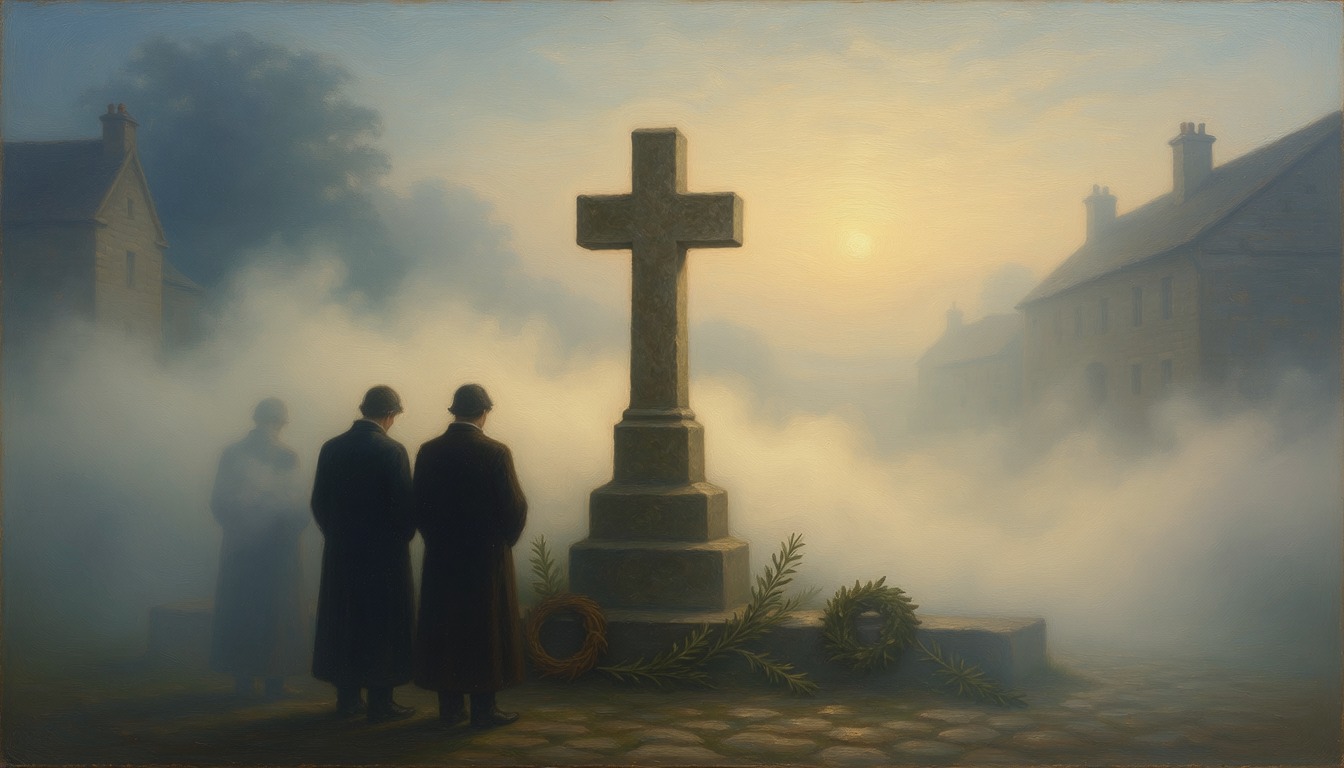
I watched the strongest men I have ever known fall apart.
Not in battle. Not under fire. Not in the chaos where training takes over and the body does what it was built to do. In the silence afterwards.
One of my career roles was a welfare officer in the Royal Australian Air Force. Seventeen years of service. Multiple deployments. My job was to look after the people who looked after the nation: soldiers, aviators and sailors. The ones the public sees on Anzac Day in pressed uniforms and polished medals. I saw them in the moments the cameras never reach.
During a nine-month rotation in Afghanistan, I was assigned as one of the sentries to honour the body of Corporal Cameron Baird VC MG after he was killed in action.
Cameron Baird was a commando. A man who had already earned a Medal for Gallantry. On the day he died, he charged an enemy-held position three times. Three times. Because the men behind him were pinned down and someone had to move first. On the third charge he was killed, and his actions allowed his team to regain the initiative and neutralise the threat. He was thirty-two years old.
He was later awarded the Victoria Cross, the 100th Australian to receive the nation’s highest honour for valour. But in that room, in that silence, there was no ceremony. There was just a man who would not be going home, and the men who loved him trying to find a way to say goodbye.
I stood guard. And I watched. It is all I could do.
I watched special forces operators, men who had been trained to endure anything the human body and mind can withstand, kneel beside a flag-draped metal box and weep. Not quietly. Not with the restrained composure the public imagines. They broke. Completely. The kind of breaking that comes from a place so deep inside a person that no amount of training can reach it.
These were the strongest men, physically and mentally, that I had ever stood beside. And in that room, saying farewell to a hero, a fallen soldier, a brother, they were simply human. Stripped of rank and resilience and everything the uniform is supposed to armour you with.
That is what service looks like when the cameras are gone. Not the march. Not the medal. The breaking. The true honour you give to a country’s fallen.
And in that same deployment, in a bunker in Kabul, I watched my daughter being born through a screen.
A laptop propped against a concrete wall. A man in a room that smelled like dust and diesel, watching new life arrive through a pixelated window. Unable to touch her. Unable to hold her. Watching the beginning of something precious from inside a place built for endings.
Death and life. Duty and love. The weight of both in the same hands, in the same rotation, in the same man.
That is what service costs. Not the years. Not the deployments. The things you carry that cannot be weighed, cannot be seen, and cannot be explained to anyone who wasn’t in the room.
The Quiet Professionals
There is a type of service member that most Australians will never meet.
They exist across all three services, Army, Navy, Air Force. The commando who moves through darkness. The clearance diver who works in silence beneath the surface. The pilot who flies into places the news will never name. They do not seek recognition. They do not wear their service on their sleeve. They are trained to operate in the spaces between what the public sees and what the nation needs done.
Australia’s special forces operators are among the most capable, disciplined and quietly extraordinary human beings on earth. They are selected not just for physical endurance but for psychological resilience, moral judgement under extreme pressure, and the capacity to make life-and-death decisions in seconds, decisions that will be reviewed for years by people who will never understand the context in which they were made.
As a welfare officer, I served alongside these men and women. In theatre and back home. In the rooms after the operations that the public would never hear about. My role crossed every service, every rank, every deployment. A sailor carrying grief he couldn’t name. An aviator who hadn’t slept in weeks. A soldier whose hands were steady on the weapon but shaking at the dinner table. They all came through the same door.
What I saw in those rooms was not what the public imagines. It was not aggression, or bravado, or the cold detachment of a machine. It was exhaustion. Grief. Moral injury so deep it had no name. Men and women who had done what their country asked of them and then come home to find that the country had moved on. The parade was over. The cameras were gone. And the weight of what they carried didn’t get lighter. It got lonelier.
“The soldier, above all other people, prays for peace, for he must suffer and bear the deepest wounds and scars of war.” General Douglas MacArthur
The Debt That Has No Ledger
There is a feeling that runs through the veteran community. It does not belong to one side of any argument. It does not live in headlines or courtrooms or political debates. It lives in kitchens and RSLs and group chats and the silences between mates who have stopped talking about it because talking about it doesn’t seem to change anything.
The feeling is this: we gave everything, and it wasn’t enough.
Not enough for the nation to truly understand what was asked of them. Not enough for the system to hold them properly when they came home broken. Not enough for the conversations about service to extend beyond one day in April and a two-minute silence that, for some of them, lasts the other 364 days of the year.
Men and women deployed to Afghanistan, some of them multiple times, because their country said it mattered. They left families. They missed births, birthdays, first words, last breaths. They stood in places where the ground itself could kill you, and they did their job, and they trusted that the nation they served would remember what it asked of them.
Many of those men and women feel that the nation has forgotten. Or worse, that the nation has turned the lens of judgement on the very people it sent into the impossible.
I am not here to litigate who is right. I am here to say this: the debt a nation owes its service members has no ledger. It cannot be repaid with a medal, a march, or a minute of silence. It can only be honoured by seeing them, truly seeing them, and refusing to look away.
If you have served, in any capacity, in any era, I see you. Not the uniform. Not the rank. Not the deployment. You. The person inside the service number. The one who came home different and tried to pretend they didn’t. The one who stands at the cenotaph each April and feels something they cannot name, because the weight of it has no language.
I see you. And what you carried matters.
Service as the Ultimate Pursuit
At Arete Estate, I teach six virtues. I built them from the ground up, informed by philosophy, grounded in practice, and shaped, more than anything, by seventeen years of watching what happens to human beings when they are tested beyond what should be survivable.
And this is what I know: the military did not teach me these virtues. The military revealed them. They were already there, in the men and women I served alongside, in the families who held the line at home, in the communities that showed up at airports and memorial services and hospital bedsides.
True service, the kind that costs you something real, is the ultimate expression of virtue. Not because service members are saints. They are not. But because the act of placing yourself in harm’s way for the benefit of others, whether on the ground, in the air, or at sea, is the purest distillation of everything I believe about character.
Let me show you what I mean.
Fortitude is the soldier who stands post in the dark. The sailor who holds the watch in a rolling sea when every part of their body wants to surrender. The aviator who flies into weather that would ground a civilian pilot because the mission requires it. Not because they are fearless, but because the people depending on them need someone who will not move. That is the lighthouse. The decision to stand firm when every nerve in your body is telling you to step back.
Temperance is the operator who holds fire. The clearance diver who works methodically when speed would kill. The loadmaster who follows the checklist on the hundredth flight because discipline doesn’t take days off. In a world that celebrates the dramatic, the person who governs themselves under pressure, who conducts the chaos into something disciplined, is performing the most undervalued act of courage there is.
Wisdom is the leader who looks at the intelligence, looks at the terrain, looks at the faces of the people under their command, and makes the best decision available with incomplete information. The ship’s captain in contested waters. The squadron leader managing fatigue and risk. The platoon commander in a village where nothing is as it seems. Not the perfect decision. The best one. And then living with it. That is wisdom: the willingness to sit with the mud alongside the gold and carry the weight of both.
Love is the partner who stays. Who holds the family together through the third deployment, the fifth missed Christmas, the night terrors, the silence that arrives on the other side of a satellite phone. Love in a military family is not a feeling. It is an endurance event. It is the wife giving birth alone while her husband guards a body in Kabul. It is the husband raising children while his wife flies missions he will never be briefed on. It is choosing, day after day, to stay with the broken thing and fill the cracks with gold.
Courage is the commando who steps off the helicopter. The submariner who descends into silence. The pilot who flies the sortie into the unknown. Every single time. Not without fear, with it. Fear tells them exactly how high the stakes are. And courage says noted, and begins anyway. Every deployment, every mission, every door walked through is a decision to act in the presence of fear. That is not recklessness. That is the purest form of moral courage there is.
Gratitude is the veteran who tends the garden. Who plants what they will not harvest. Who mentors the young diggers, the new aviators, the junior sailors coming through, knowing they will carry the same weight. Who stands at the cenotaph every April and remembers, not with nostalgia, but with reverence, the ones who didn’t come home. Gratitude is not a feeling. It is an act. It is the decision to honour what was given by continuing to give.
All Who Served
This essay began in Afghanistan. But the weight it describes does not belong to one conflict or one generation.
It belongs to the diggers who waded through Gallipoli mud in 1915 and never came home to explain what they saw. To the men who walked the Kokoda Track with dysentery and malaria and a rifle that weighed more than hope. To the women who served as nurses, as code-breakers, as the invisible infrastructure that held the war effort together while history recorded only the men’s names.
It belongs to the national servicemen who were sent to Vietnam by a ballot and came home to a country that did not know how to welcome them. To the peacekeepers in Timor-Leste who saw things that peace was supposed to prevent. To the men and women who deployed to Iraq and Somalia and the Solomon Islands and a dozen other places the public has already forgotten.
And it belongs to the families. The wives and husbands who raised children alone. The parents who drove to the airport and prayed the right number of people would walk off the plane. The children who grew up with a parent who was present but unreachable, whose body came home but whose mind was still standing in the dust.
All of you carried something. All of you served. And not all of it was visible, and not all of it was honoured, and not all of it was understood. But it mattered. Every bit of it.
They shall grow not old, as we that are left grow old; Age shall not weary them, nor the years condemn. At the going down of the sun and in the morning, We will remember them. Laurence Binyon, “For the Fallen”
Before the March
Every April, before the sun rises, men and women across Australia lace their boots in the dark.
Some pin medals to their chest: their own, or their grandfather’s, or their mother’s. Some stand at cenotaphs in capital cities. Some stand at memorials in country towns where the list of names is longer than the town’s current population.
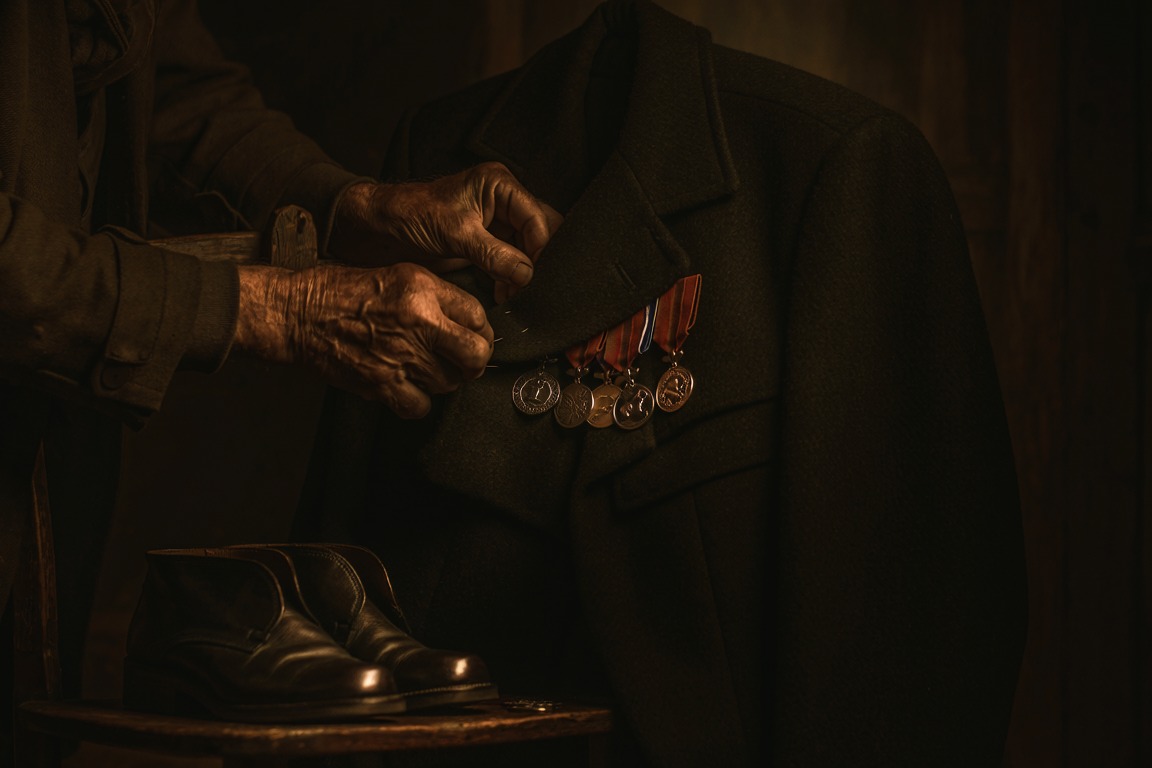
Some do not march at all. They sit in their cars in the RSL car park and decide, for the fifth year in a row, that they cannot walk in. Not because they don’t want to. Because the weight of what they carry makes the door feel too heavy.
I want to speak to that person.
You do not have to march to be honoured. You do not have to stand in a crowd to prove that your service was real. You do not have to perform remembrance for an audience. If all you can do is sit in the driveway with a cup of tea and remember the face of someone who didn’t come home, that is enough. That is Anzac. That is the weight, carried quietly, as it always has been.
But if you are sitting in the dark tonight and the weight feels like too much, if the silence has become something heavier than memory, please hear this: you are not alone. You were never meant to carry this alone. And there are people who will hold the space for you if you let them. Open Arms is there around the clock on 1800 011 046, staffed by people who understand military service. They will not judge you. They will listen.
I want to close with something I have carried since the first day I sat across from a service member who could no longer carry alone.
Service is not a chapter of your life. It is the architecture of your character. It is the thing that was revealed in you, not built, not manufactured, but revealed, by the storms you walked through. Excellence is not the absence of storms. Excellence is revealed by them.
The dust of Afghanistan is still in the creases of some of your memories. The mud of Gallipoli is still in the soil of this nation. The weight of every deployment, every patrol, every vigil, every farewell is still here. In you. In the families. In the silence before the bugle sounds.
That weight is not a burden. It is a testament. It is the proof that you gave something of yourself for others, freely, without a ledger, without guarantee of recognition, without knowing whether the nation would remember.
We remember. Not just in April. Tonight. And every day that this lighthouse shines.
To every man and woman who served. To every family who held the line. To every veteran who stands in the dark each April morning, remembering:
Lest we forget.
About the author
Marcus J Emsley · The Guide
Marcus spent seventeen years as a welfare officer in the Royal Australian Air Force, at home and on operations overseas, sitting with people in grief, trauma and the mornings they did not want to rise. He is the founder of Arete Estate in the Barossa Valley, South Australia, the creator of The Sculptor's Journey and Wisdom & Wonder, and the author of the debut novel Wisdom & Wine. He is the son of a primary school teacher who coached footy, cricket and life, and a palliative care nurse who showed him what kindness at the hardest door looks like. He has stood in the dark himself, and he writes from the far side of it.
What we are building at Arete Estate
Arete is excellence becoming. It is the highest expression of who you were always meant to be, not the finished version, but the version that keeps reaching. It is not built. It is revealed.
Arete Estate exists to help people reveal, not construct, the highest version of themselves. We do this through six virtues drawn from the world's wisdom traditions, taught through stories, walked through daily practice, and offered to anyone who is ready to begin: the parent raising a child, the leader carrying a team, the soldier returning from service, the school shaping the next generation, the person sitting alone in the early hours of the morning wondering if there is a path through.
Our work is to make that path visible. To stand as a lighthouse for the seekers, the grieving, and the broken. To remind every person we reach that excellence is not built, it is revealed by storms, and that they are not alone in the storm.
We do not chase. We shine. The Sculptor's Journey (The Doorway, The Walked Path, The Guided Path), An Hour with the Guide, Meditate with Arete, Wisdom & Wonder and The Sculptor's Library are the rooms of that house.
Six virtues. One journey. Your highest self.
www.areteestate.com.au · info@areteestate.com.au · Instagram @areteestate
If this essay touched something raw
Some of what is written here is heavy. If it has stirred something you are carrying, please do not carry it alone tonight.
Lifeline 13 11 14 · Open Arms (veterans and families) 1800 011 046 · 1800RESPECT 1800 737 732 · Kids Helpline 1800 55 1800 · In an emergency, call 000.
Reaching out is not weakness. It is all six virtues at once: the Fortitude to stay, the Wisdom to know you need a hand, the Love to let someone in, the Courage to ask, the Temperance to set the weight down, and the Gratitude for the one who answers.

Responses