
Love · On the men we are losing, the strength we got wrong, and the one thing to do this week.
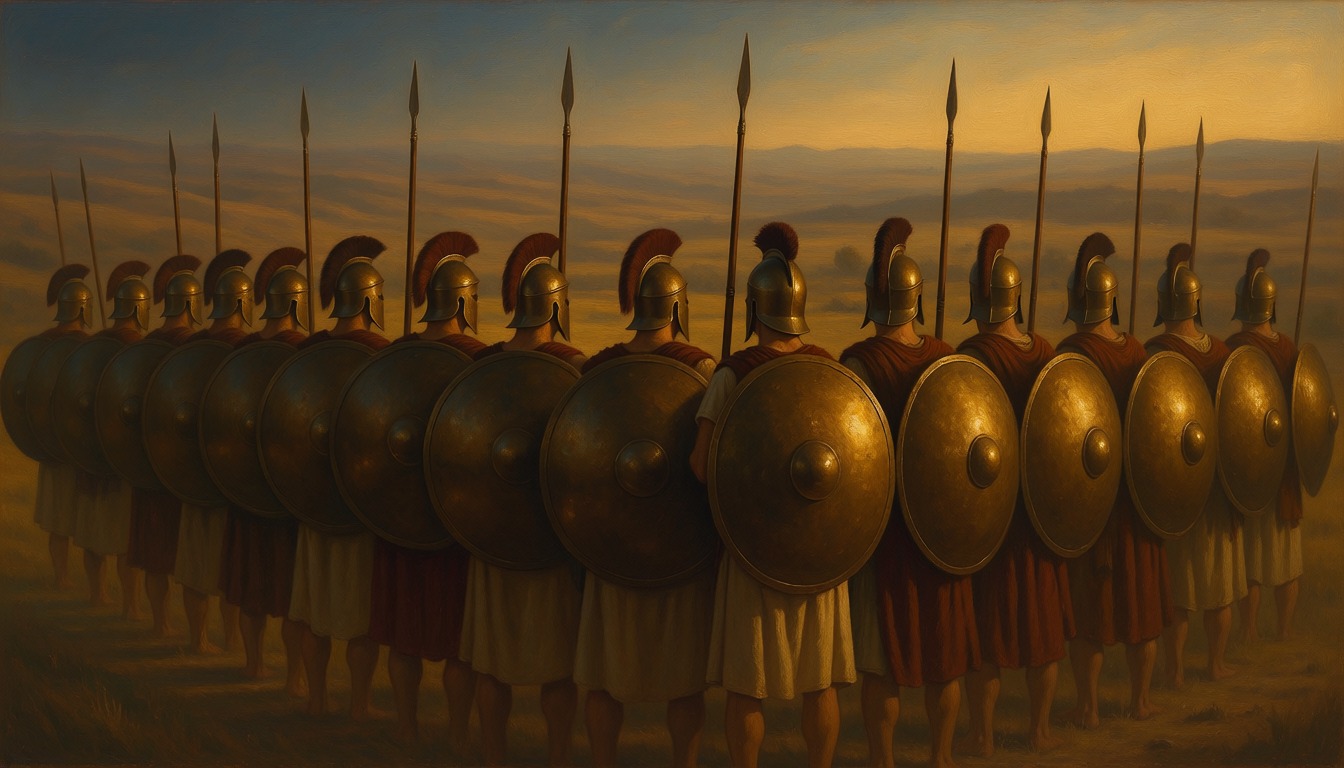
“We were born to work together, like feet, like hands, like eyelids, like the rows of upper and lower teeth.” Marcus Aurelius, Meditations
Of every four Australians we lose to suicide, three are men. Year after year, in the Bureau of Statistics’ figures, it is the leading cause of death for Australians between fifteen and forty-four, ahead of the roads, ahead of everything. And the part that should stop you where you sit is this: most of them were fine last week. They were at the barbecue. They were at the school pick-up. They said “she’ll be right” and meant it as a kindness, so that nobody would have to carry what they were carrying. This is a letter about strength and character, because we have been teaching men the wrong kind for a very long time. It reaches back to the Greeks, who knew better than we do. And it ends by asking you to do one thing this week. Not to feel something. To do something.
The Man Who Was Fine
I spent seventeen years in uniform as an Air Force welfare officer, which is a formal way of saying I sat with people on the worst days of their lives. And in those years I learned a pattern I would give anything to unlearn. The men we lost were rarely the ones on anybody’s list. They were the steady ones. The dependable ones. The bloke who fixed everyone else’s problems and never seemed to have one of his own. The one always up for a laugh, a joke, a bit of banter. Afterward, in the rooms where the people who loved them sat with tea going cold, the same sentence came out of every mouth in every accent: he seemed fine. He was fine. He was joking on Thursday.
He was fine because he was strong, and he was strong the way we taught him to be. Carry it. Handle it. Don’t bring it home, don’t bring it to the pub, don’t bring it anywhere. We hand boys that instruction before they can read, and we are surprised when the men they become cannot put the weight down. The Greeks saw this coming two and a half thousand years ago. Sophocles wrote a whole tragedy about it. Ajax, the mightiest warrior at Troy after Achilles, the man whose shield was the size of a tower, is destroyed not by an enemy but by shame, and by a night spent alone with it while the men who loved him slept in their tents. The play was performed in front of the whole city. Athens sat in the open air and wept for a strong man nobody reached in time. That was the warning. We have had it since the fifth century BC. It is time we finally heard it.
Most of them were fine last week.
Ask yourself: which man in your life is “fine”, and when did you last make it safe for him to be anything else?
The Shield Was Never Yours
Now let the Greeks teach the other half, because they held a truth about strength that we have lost. Ask anyone what a Spartan warrior carried, and they will say a spear and a shield. But listen to what the Spartans themselves said about the shield. Plutarch records it. A Spartan mother handed her son his shield and told him to come back with it or on it. And when a man was asked why the law punished losing a shield but forgave losing a helmet, the answer was simple: the helmet is for yourself. The shield is for the line. In a phalanx, every man held his great round shield to the left, covering the man beside him, and trusted that the man on his right was covering him. Alone, a hoplite shield guards half a body. Locked together, they made a wall that turned back empires.
That is what strength was, at the source. Not the man standing alone. The wall. The Spartans were the most physically formidable men of their age, and their entire idea of courage was mutual: you did not fight for yourself, you held your shield for your brother and he held his for you. Marcus Aurelius, the most powerful man on earth in his day, wrote it in his private notebook so he would not forget it: we were born to work together, like hands, like feet, like the two rows of teeth. We have somehow reversed it. We tell men the strong one needs nobody. The Greeks would have called that man a danger to the line. And the truth is, he is a danger to himself first.
Notice where the strength came from, too. Not from the man out the front. There was no man out the front; the phalanx had no hero at the tip, only equals, shoulder to shoulder, each one covered by the next. We are not made strong by the people we watch from a distance. We are made strong by the voice beside us, the one that says, when the line is about to give, keep going, I am here. Our age has swapped that for the influencer, the figure out the front with the light on him, and the quiet lesson of every influencer is that you are meant to stand alone and admire. Elders, leaders, parents, mates: the real ones never stood out the front. They walked beside you, at your pace, with a calm voice, and they said the only thing that has ever kept a man in the line: keep going. I am here.
Strength was never the man standing alone. It was the wall.
Strong Enough to Weep
The ancient world knew something else that we have forgotten so completely it sounds like a joke. Their heroes wept. Not privately. Openly, on the beach, in front of the army. Achilles, the greatest fighter who ever lived in story, tears at his hair and cries out loud for his friend. Odysseus, king and warrior, weeps on the shore of an island every day for seven years, and Homer does not think less of him for a single line of it. The men who invented the word hero had no notion that tears were weakness. That idea is modern, and it is killing us. We have amputated half of a man and called the remainder strong.
I do not say this from a library chair. In 2013, in Afghanistan, I stood guard over the body of Corporal Cameron Baird VC MG, one of the finest soldiers this country has ever produced, in the hours and days after he was killed. I watched the greatest warriors of our own day, men whose names you will never know, men who had done things in the dark that the rest of us are permitted to sleep through, come to him one by one and weep. Openly. Without shame. Without a single glance to see who was watching. And then, in the same hour, I watched them wipe their faces, turn, and go back to work. Back to their duty, because there was a war still to fight and their brothers still needed them in the line. That is the whole of it. That is what strong looks like when it has nothing left to prove: the tears and the duty, in the same man, in the same hour, and neither one cancelling the other. Achilles would have recognised every single one of them.
They wept without shame. Then they turned, and went back to their duty.
So let me say plainly what strong means to me at Arete Estate, mentally and physically, because they are not two things. The body first: a man who trains, who sleeps, who walks under the sky and eats like someone who intends to stay alive is doing mental health work whether he calls it that or not; the iron and the morning light are medicine, and every gym floor, every footy oval and every basketball court in this country is a mental health clinic that nobody thought to name. And the mind: strong is not the absence of the storm. Strong is the capacity to name it. To say, out loud, to another human being, I am not okay. That sentence is a deadlift. It takes more from a man than anything he will ever put on a bar, and it is the single most protective thing he can do. The man who can say it is stronger than the man who cannot. That is not a soft opinion. It is the Spartan arithmetic: the one who calls for the shield keeps the line alive.
Ask yourself: when did you last answer “how are you” with the truth, and who could you say it to this week?
The Ones We Stopped Calling
Now the quiet part, the part underneath all of this. Men are not losing their lives to weakness. They are losing them to isolation, and isolation arrives so slowly that no one notices it happening. Think of the men you were close to at twenty-five. The ones you would have called at 2am. Now count how many of them you have spoken to this year. Not liked, not scrolled past, spoken to. For most men over thirty-five the number is small enough to be frightening, and it did not happen through any falling-out. It happened through nothing. Work, kids, distance, the assumption that he’s busy, the assumption that he’d call if it mattered. A friendship does not need a fight to end. It only needs silence, and men are experts at silence.
Seneca, writing to his friend Lucilius two thousand years ago, said something that should be carved above every man’s front door: no one can live happily who thinks only of himself, and if you want to be loved, love; if you want a friend, be one first. The rekindling is not complicated. It is one phone call, made badly, with no agenda. “Mate, I’ve been thinking about you. No reason. How are you going?” And then the practice the welfare officer in me will hand you for free, because it saved lives in my years and it will save them in yours: ask twice. The first “fine” is a reflex. Wait a beat, and ask again. “No, mate. How are you actually?” Then say nothing. Hold the silence like a shield. The truth comes out in the second answer, if it comes at all, and it almost never comes to a man who only asked once.
The shield you carry was never for you.
Ask yourself: which mate have you stopped calling, and what has stopped you?
What a Father Teaches
Every boy and every girl in this country is learning something from the men in their house, and it does not come from what is said. It comes from watching. Sons and daughters learn what to do with pain by watching what their fathers do with theirs, and they learn something else besides: whether a strong man stands out the front, or beside you. The father who never bends teaches his boy that men do not bend, and the boy will carry that instruction into every storm of his life and never once ask for a hand. The father who says, at the table, in front of his children, “I had a hard year, and I talked to someone about it,” teaches something that will outlive him: that the strongest man in the house asked for help, and the house did not come down. It stood, the way a wall stands. And it teaches them how to stand with each other for the rest of their lives: not above, not out the front, but side by side, equals, one calm voice to the next. Keep going. I am here.
I will tell you why I know this. There was a night, years into my service, when the weight of every room I had ever sat in came to sit in mine, and I very nearly did not stay. I held on. And what I held on to was not my own strength; I had spent all of it. It was a phone, and a voice on the other end that did not flinch. Somebody held their shield over me when mine was on the ground. Everything Arete Estate is, every letter, every practice, every course, the whole road, grew out of that one act of a person answering. I built this place so that the shield is always within reach for the next man, and so that the boys watching him learn the right thing about strength.
The strongest thing a father can say is: I was not okay, and I asked.
Ask yourself: what will the young ones watching you learn this week about what strong men do with pain?
This Week: Three Things
This is a stop-and-act letter, so here is the action. Not next month. This week.
One. Call one man you have drifted from. Not a text. A call. Say the true thing: “I’ve been thinking about you.” Let it be awkward. Awkward is what rekindling feels like for the first ninety seconds.
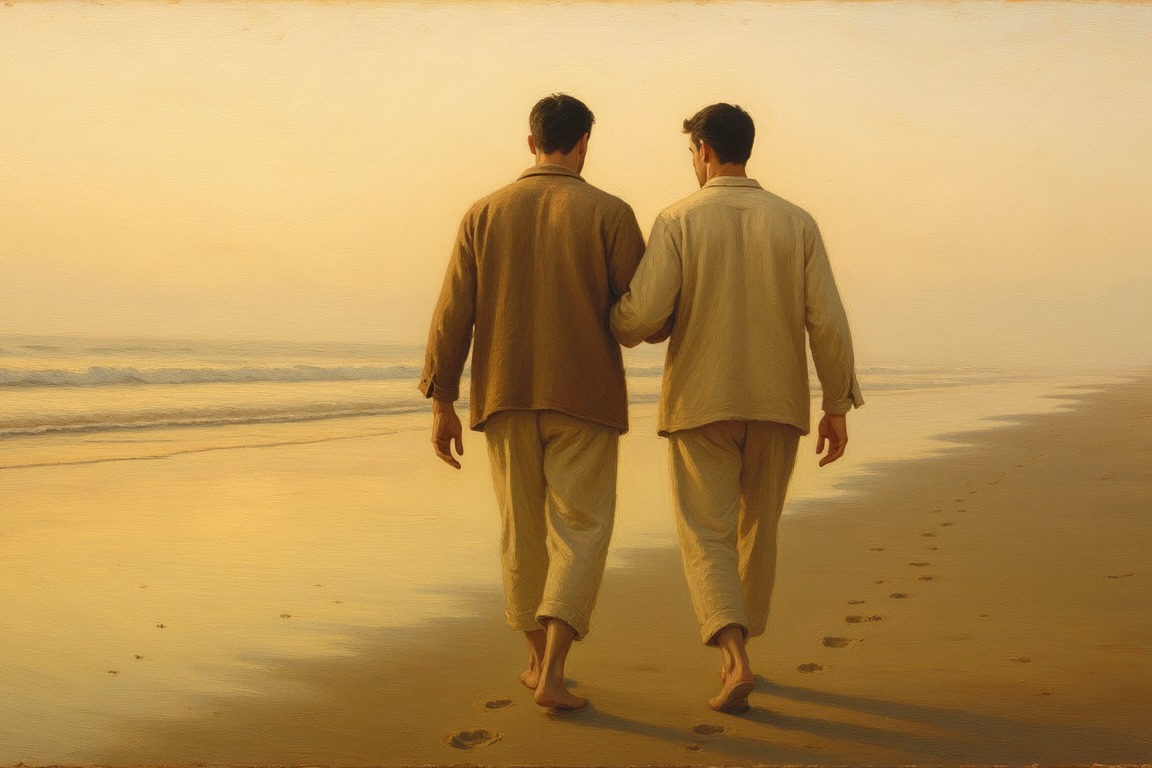
Two. Ask someone twice. Your brother, your father, your son, the mate from work who has gone quiet. “How are you?” and then, after the reflex, “No. How are you actually?” And hold the silence. You are not there to fix anything. You are there to hold the shield while he sets the weight down.
Three. If the man who is not fine is you, then your action is the bravest one in this letter, and the one the Spartans would salute: say it to one person today. A friend, a partner, a doctor, one of the numbers at the end of this page. Not because you are weak. Because that is what the strong ones do, and the line needs you in it.
If this letter finds you in the dark tonight, then this is the only paragraph that matters, and the rest can wait. You are not a burden, you are not weak, and you are not the exception to the shield wall. Say it to one person tonight. If there is no one, there are people awake right now who are trained for exactly this and will not flinch: Lifeline on 13 11 14 (or text 0477 13 11 14), the Suicide Call Back Service on 1300 659 467, MensLine Australia on 1300 78 99 78. All of them, all night.
The estate will keep writing about this, because the lighthouse does not shine for one month and go dark. The whole road, The Sculptor’s Journey, was built on the Spartan truth: no one walks it alone, and the second hand is not a weakness in the plan but the plan itself. The lamp is lit. Come in when you are ready. And this week, before the weekend barbecue, make the call.
For the Young Ones
The same truth, made small enough to hold · to be read aloud.
A very long time ago in Greece, there were soldiers called Spartans, and they had a rule about their shields that surprises everybody. A Spartan’s big round shield wasn’t really for him. It was for the soldier standing next to him. Every man held his shield a little to the side, so it covered his friend, and his friend’s shield covered him. Alone, one shield could only guard half a person. Together, they made a wall that nothing could get through. The Spartans said a man could lose his helmet and still be forgiven, because a helmet only protects yourself. But a man who dropped his shield let his friend down, and that was the one thing you never did.
People are exactly like that. Everybody needs a shield, and everybody is a shield. When you feel sad or scared or worried, the strongest thing in the world is not to hide it. It is to tell someone. That is you letting a friend hold their shield over you. And when you notice someone else is having a hard time, you ask them, and you listen, and you stay. That is you holding your shield over them. Nobody is strong on their own. Strong is what a wall of friends is.
So here is the bravest secret the Spartans knew, and now you know it too: asking for help is not the opposite of strong. It is what strong people do.
A practice, and the grown-up goes first
This week, make a shield. A big circle of cardboard, painted however you like. On it, write the names of the people who hold their shield over your family: grandparents, mates, neighbours, teachers, the coach, the doctor, the friend who always turns up. Then grown-ups, you go first: tell the kids about a time you were not okay and you asked someone for help, and what happened when you did. Then it’s their turn. Put the shield up somewhere everyone walks past. On the days that are hard, it will still be there, telling the truth: this family does not stand alone.
About the author
Marcus J Emsley · The Guide
Marcus spent seventeen years as a welfare officer in the Royal Australian Air Force, at home and on operations overseas, sitting with people in grief, trauma and the mornings they did not want to rise. He is the founder of Arete Estate in the Barossa Valley, South Australia, the creator of The Sculptor's Journey and Wisdom & Wonder, and the author of the debut novel Wisdom & Wine. He is the son of a primary school teacher who coached footy, cricket and life, and a palliative care nurse who showed him what kindness at the hardest door looks like. He has stood in the dark himself, and he writes from the far side of it.
What we are building at Arete Estate
Arete is excellence becoming. It is the highest expression of who you were always meant to be, not the finished version, but the version that keeps reaching. It is not built. It is revealed.
Arete Estate exists to help people reveal, not construct, the highest version of themselves. We do this through six virtues drawn from the world's wisdom traditions, taught through stories, walked through daily practice, and offered to anyone who is ready to begin: the parent raising a child, the leader carrying a team, the soldier returning from service, the school shaping the next generation, the person sitting alone in the early hours of the morning wondering if there is a path through.
Our work is to make that path visible. To stand as a lighthouse for the seekers, the grieving, and the broken. To remind every person we reach that excellence is not built, it is revealed by storms, and that they are not alone in the storm.
We do not chase. We shine. The Sculptor's Journey (The Doorway, The Walked Path, The Guided Path), An Hour with the Guide, Meditate with Arete, Wisdom & Wonder and The Sculptor's Library are the rooms of that house.
Six virtues. One journey. Your highest self.
www.areteestate.com.au · info@areteestate.com.au · Instagram @areteestate
If this essay touched something raw
Some of what is written here is heavy. If it has stirred something you are carrying, please do not carry it alone tonight.
Lifeline 13 11 14 · Open Arms (veterans and families) 1800 011 046 · 1800RESPECT 1800 737 732 · Kids Helpline 1800 55 1800 · In an emergency, call 000.
Reaching out is not weakness. It is all six virtues at once: the Fortitude to stay, the Wisdom to know you need a hand, the Love to let someone in, the Courage to ask, the Temperance to set the weight down, and the Gratitude for the one who answers.

Responses