
On Character, Belonging, and the Thing That Makes Us One — A Harmony Day Reflection
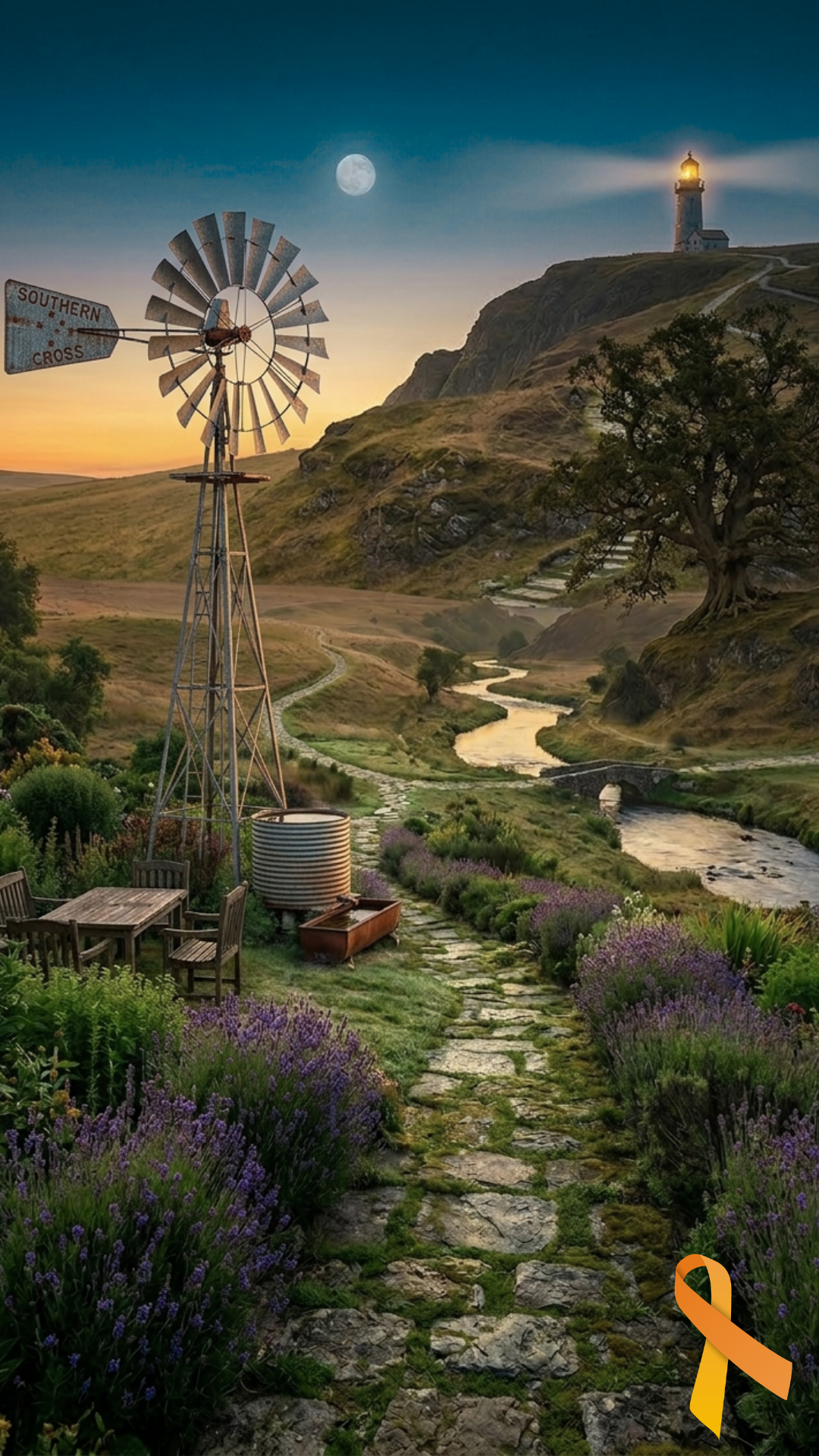
There are two trees on opposite sides of a valley.
The first has been standing there for a hundred years. Its bark is deep and furrowed, scarred by decades of drought and fire and wind. Its branches reach wide — wide enough that three generations of one family have picnicked beneath them, told stories beneath them, buried their grief beneath them. It is part of the landscape. People who have never touched it feel like they know it.
The second was planted ten years ago. It is thinner. Its bark is smoother. Its branches are still finding their direction — reaching, testing, not yet sure of their shape. It was brought here from another place, its roots wrapped in hessian, and put into ground it didn’t choose. People who drive past it don’t notice it yet. It hasn’t earned the landscape the way the first one has. Not yet.
From the road, they look nothing alike.
Different species. Different age. Different shape. Different story. One belongs here in the way that old things belong — by right of presence, by weight of time. The other is still becoming. Still growing into the ground it was given. Still earning its place.
But here is what the road doesn’t show you.
Beneath the surface — beneath the soil that nobody looks at, in the dark where nobody is watching — the roots are reaching toward each other.
Not because anyone told them to. Not because there is a programme for root integration or a policy that says trees of different species should connect. But because that is what roots do. They seek water. They seek depth. They seek the underground streams that sustain life. And those streams don’t belong to one tree. They belong to the valley. They were there before either tree was planted, and they will be there long after both are gone.
Above the ground, we look different. Below it — in the place where character lives, where values are formed, where the real architecture of a person is built — the roots are the same.
That is what I want to talk about today. On Harmony Day. In a country that is, right now, having a conversation about who belongs and who doesn’t — and too often having it by looking at the branches instead of the roots.
What the Valley Taught Me
I live in the Barossa Valley. And the Barossa is, without trying to be, one of the most powerful Harmony Day stories in the country.
The Kaurna people walked this land for tens of thousands of years before anyone else arrived. Their relationship with this ground — its seasons, its water, its life — is older than most civilisations on earth. Their roots are the deepest of all.
Then came the German Lutherans. Fleeing religious persecution in Prussia in the 1840s, they arrived with almost nothing — their faith, their work ethic, and a knowledge of the vine that would change the landscape forever. They didn’t speak English. They weren’t welcomed by everyone. They built churches with their hands and planted vineyards in soil they didn’t yet understand.
Then came the English, the Scottish, the Polish, the Italian families — each wave bringing their own language, their own food, their own songs, their own way of pruning a vine or raising a child or burying their dead. Each one different. Each one strange to the ones who came before.
And now — walk through the Barossa on any given Saturday. The butcher whose family came from Silesia six generations ago is selling mettwurst to a family who arrived from Vietnam fifteen years ago. The winemaker whose great-great-grandmother planted the first Shiraz on this hillside is pouring for a couple who grew up in Mumbai and chose the Barossa because something about the light here felt like home. The children in the primary school are singing in English, learning Kaurna words, eating dumplings and bratwurst and banh mi in the same lunch order.
Nobody planned this. No committee designed it. It happened the way valleys happen — slowly, over time, one root system reaching toward another, until the ground beneath was so interwoven that you couldn’t remove one tree without disturbing every other.
Harmony is not a programme. It is what happens when people plant themselves in the same ground and give the roots enough time to find each other.
The Virtue That Has No Flag
Every nation has a flag. Every culture has a symbol. Every tradition has colours and songs and stories that say: this is who we are. And all of that matters. It should be celebrated. It should be honoured. It should be taught to children and carried forward with pride.
But there is something that belongs to no nation, no culture, no flag — and belongs to all of them equally.
Character.
You cannot look at a person and see their fortitude. You cannot hear someone’s accent and know their courage. You cannot judge a person’s wisdom by their postcode or their capacity for love by the colour of their skin. You cannot measure someone’s gratitude by their religion or their temperance by their country of origin.
Character is invisible until it is tested. And when it is tested — when the storm comes, when the hard decision arrives, when someone needs to stand firm or speak truth or choose love over convenience — it looks the same in every language.
The mother who gets up at 5:47am and holds the family together without being thanked — she exists in every culture on earth. The father who pauses in the driveway and chooses which version of himself walks through the door — he exists in every suburb, every city, every country. The friend who shows up with no agenda other than presence. The stranger who offers help without being asked. The grandparent who plants a tree they will never sit beneath.
These people do not belong to one country. They belong to every country. And the thing that connects them — the underground stream that runs beneath every valley on earth — is not geography or genetics or faith or language.
It is virtue.
Marcus Aurelius — a Roman emperor — wrote about it. Confucius — a Chinese philosopher — taught it. The Kaurna elders — the first people of this valley — lived it. The Buddha spoke of it. Rumi sang of it. Every civilisation that has endured has arrived at the same conclusion, independently, across oceans and centuries:
The measure of a person is not where they come from. It is who they become when the weather arrives.
That insight has no flag. And that is what makes it universal.
What Belonging Actually Costs
Harmony Day carries a beautiful motto: Everyone belongs. And I believe that — deeply, unreservedly. It is the foundation of everything we build at Arete Estate.
But I want to say something that the poster doesn’t say. Because belonging is not free. And pretending it is does a disservice to the people who work hardest to create it.
Belonging costs you your assumptions.
It costs you the comfort of sameness — the easy, unchallenged world where everyone at your table looks like you, sounds like you, believes what you believe. That world is comfortable. It is also small. And it produces shallow roots.
Belonging costs you the lazy shorthand of judgement — the habit of seeing a person’s accent before you see their courage, their headscarf before you see their wisdom, their skin before you see their soul. It costs you the willingness to be wrong about someone. To say: I made an assumption and it was wrong, and I am grateful it was wrong, because the person behind the assumption is more interesting, more complex, more human than the story I had already written about them.
Desmond Tutu — who spent his life building belonging in a country that was designed to prevent it — understood this cost:
“My humanity is bound up in yours, for we can only be human together.” — Desmond Tutu
My humanity is bound up in yours. Not beside yours. Not parallel to yours. Bound up in it. Tangled. Interwoven. Like roots beneath a valley that cannot be separated without damaging both trees.
That is the cost of belonging. It requires you to accept that your humanity is not a solo project. That the fullest version of you — the version with the deepest roots, the widest branches, the most fruit — only grows in ground that is shared.
And here is the other side of that cost — the side that is not a cost at all, but a gift:
When you plant yourself in shared ground — when you let your roots reach toward the roots of people who look nothing like you, who came from places you have never been, who carry stories you have never heard — you do not become less of who you are. You become more. Your root system deepens. Your branches reach further. Your capacity for fortitude, for wisdom, for love, for courage, for gratitude — for every virtue — expands, because it is being fed by underground streams you never knew existed.
Belonging does not dilute who you are. It deepens you. The tree with the widest roots is always the tree planted in shared ground.
The Table You Set
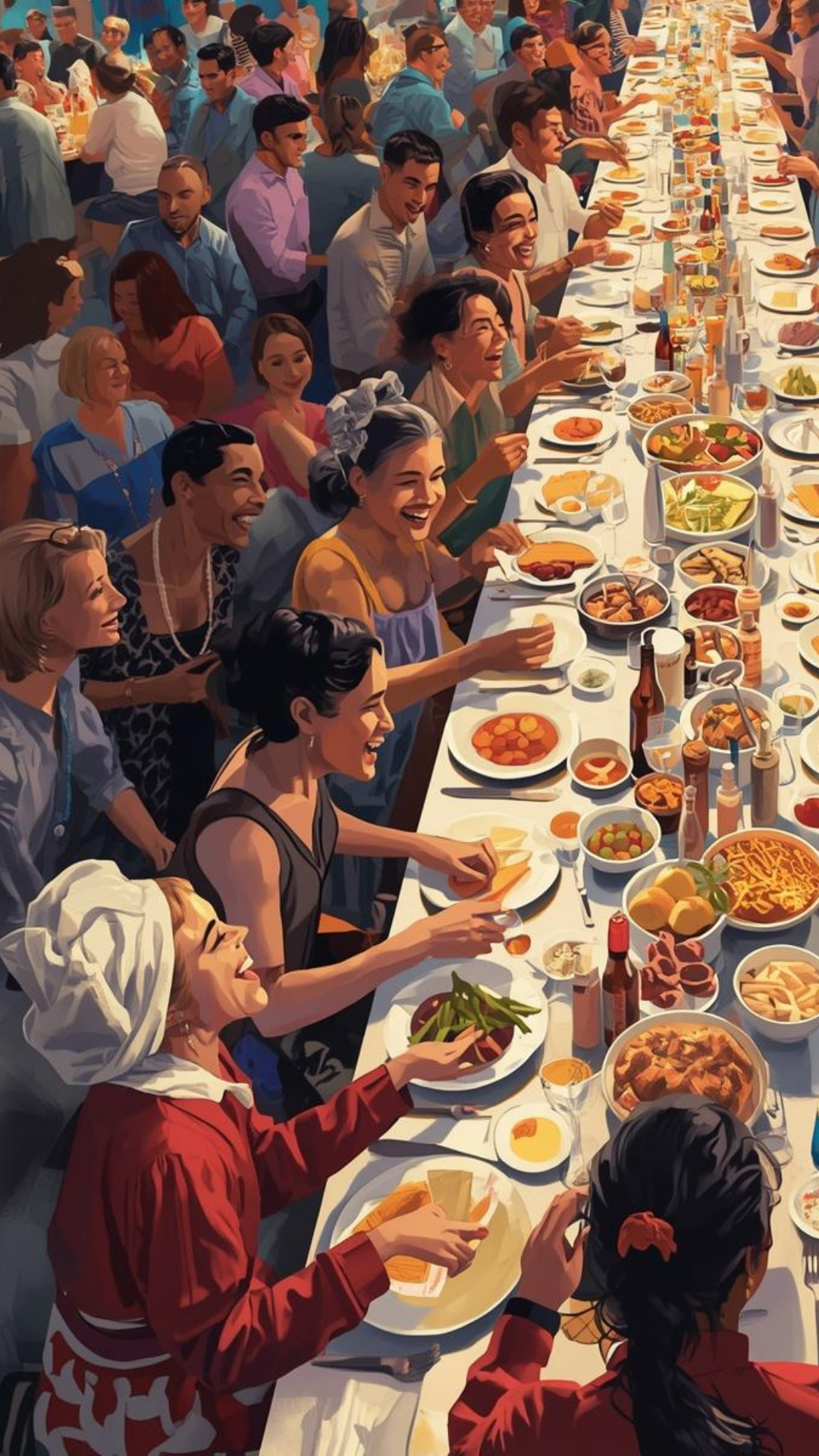
Imagine a table. Not in a restaurant. Not at a conference. In your home. The kind of table where the real conversations happen — where the masks come off and the voices drop and people stop performing and start being.
Now imagine that the only requirement for a seat at this table is character.
Not your surname. Not your postcode. Not the school you went to or the country your grandparents left or the language you speak at home. Just this: are you willing to sit with people who are different from you and see them as human first?
At this table, the woman who fled Syria with her children sits next to the fourth-generation farmer whose family cleared this land. And they discover — not through a programme, not through a policy, but through the simple act of breaking bread together — that they have both known fear. They have both practised courage. They have both stood firm in storms that nobody else could see. They have both loved people who were difficult to love, and stayed when leaving would have been easier, and planted things they may never see grow.
They do not need to agree on everything. They do not need to share a faith or a politics or a worldview. They need to see each other. To recognise, beneath the differences that are real and important and should never be erased, the root system they share.
Maya Angelou said it with a simplicity that makes the chest ache:
“We are more alike, my friends, than we are unalike.” — Maya Angelou
More alike than unalike. Not identical. Not the same. Alike — in the deep places. In the root system. In the things that matter most when the weather arrives and the surface differences fall away like leaves in a storm.
The table you set in your own life — the one you choose to gather people around — says everything about who you are. Are you setting a table where only people who look like you are welcome? Or are you setting a table where character is the entry requirement and everything else is a conversation?
The second table is harder. It is messier. The food is unfamiliar sometimes. The accents require patience. The stories challenge things you thought you knew. But the roots that grow beneath that table — the roots of genuine connection, of shared virtue, of the slow discovery that the person you thought was nothing like you is actually living the same human story in a different language — those roots will hold through any storm.
Harmony is not the absence of difference. It is the presence of respect — and respect is a virtue, not a policy.
The Six Roots We Share
At Arete Estate, we teach six virtues. They are ancient. They are practical. And they belong to every person reading this — regardless of where you were born, what you believe, or what language you dream in.
Fortitude — the capacity to stand firm when the storm comes. The refugee who crossed an ocean in a boat knows this virtue. The farmer who survived the drought knows it too. The single mother in any suburb, in any country, who gets up at dawn and holds the world together without being thanked — she knows it in her bones. Fortitude has no flag. It has roots.
Wisdom — the gold in the mud. The hard-won knowledge that cannot be googled. Every grandmother in every culture carries this — the quiet understanding of what matters, learned not in a classroom but in the river of a life fully lived. Wisdom crosses every border because it lives in the bones, not the books.
Love — the daily choice. The hand held in the hospital corridor. The coffee made someone else’s way. The child who loves their parent not because they were perfect, but because they were there. You don’t fall in love. You choose it. That teaching sounds the same in every language it has ever been spoken in.
Courage — the willingness to face the wind. The person who leaves everything they know and starts again in a country where they cannot pronounce the street names. The teenager who stands up for the kid being bullied, even though it costs them. The person who says I was wrong in any language and means it. Courage is the windmill. It has no nationality.
Temperance — the art of balance, of knowing which voice this moment needs. The elder who speaks only when the room is ready to listen. The parent who bites their tongue so their child can learn. The conductor of a life that holds many instruments — many roles, many demands, many identities — and finds harmony among them. Every culture on earth has a word for this.
Gratitude — planting what you won’t harvest and tending what you didn’t plant. The migrant who tends the soil of a country they didn’t build and makes it better. The community that tends the traditions of people who arrived yesterday with the same respect as those who arrived a century ago. Gratitude is the garden. And the garden has room for every seed.
These six virtues are not Australian. They are not Greek, or Stoic, or Buddhist, or Christian, or Indigenous, or Western, or Eastern. They are human. They have appeared, independently, in every civilisation that has ever survived — because they are the root system of what it means to be alive. And they do not ask where you came from. They ask who you are becoming.
The six virtues have no flag, no language, no borders. They belong to every person willing to practise them. And they connect us — underground, invisibly, permanently — to every other person who is doing the same.
What Harmony Actually Means
The word harmony comes from music. And it does not mean unison.
Unison is everyone singing the same note. That is not harmony. That is sameness dressed up as togetherness. It is pleasant. It is safe. And it is flat. One note. No depth. No texture. No beauty.
Harmony is different voices singing different notes — and creating something together that none of them could create alone.
It requires difference. Without difference, there is no harmony — only monotone. The soprano needs the bass. The melody needs the counterpoint. The ancient tree needs the young tree. The person who has been here for generations needs the person who arrived last year. Not because difference is tolerated. Because difference is the instrument. It is the very thing that makes the music possible.
Rumi — a Persian poet whose words have been translated into more languages than almost any other writer in history — wrote:
“Out beyond ideas of wrongdoing and rightdoing, there is a field. I’ll meet you there.” — Rumi
A field. Not a courtroom. Not a debate stage. Not a comments section. A field — open, quiet, with room enough for every person who is willing to step beyond their certainties and meet another human being in the place where labels fall away and only the person remains.
That field is what Harmony Day is asking us to find. Not once a year. Every day. In the supermarket. In the school pickup line. In the workplace. At the table where you choose who sits.
It is the field where the roots meet. Where the underground streams run. Where the thing that connects us — character, virtue, the slow and sacred work of becoming a good human being — is more real and more powerful than any of the things that divide us.
Tomorrow
Tomorrow is Harmony Day. And the country will wear orange and host morning teas and share posts about diversity and inclusion. And all of that is good. All of it matters. Every act of recognition — however small, however brief — is a root reaching toward another root.
But I want to offer you something deeper than a day. Something that lasts longer than a morning tea. Something you can carry with you on March 22nd and every day after — not because a calendar tells you to, but because it is true.
You are a tree. You were planted in a specific place, by specific people, in specific soil. That is your story and it matters and it should be honoured.
But your roots — the deep ones, the ones that reach for water in the dark — are the same roots that every other human being on this planet is growing. Fortitude. Wisdom. Love. Courage. Temperance. Gratitude. The same six roots, in every valley, in every country, in every culture that has ever endured.
You are not the same as the person beside you. You should not be. Sameness is not the goal. The goal is harmony — different notes, different voices, different stories, creating something together that none of us could create alone.
So tomorrow — and every day after — I am asking you to do one thing.
Look past the branches.
When you meet someone who looks different, sounds different, prays different, lives different — look past the canopy. Past the bark. Past the leaves that are not the same shape as yours. And look for the roots. The character. The virtue. The human being beneath the surface who is, in every way that matters, growing toward the same water you are.
Martin Luther King Jr. — who spent his life asking a nation to do exactly this — said it with a weight that still hasn’t settled:
“I have a dream that my children will one day live in a nation where they will not be judged by the colour of their skin but by the content of their character.” — Martin Luther King Jr.
The content of their character. Not the content of their accent. Not the content of their surname. Not the content of their passport. Their character. The roots. The deep stuff. The stuff you can only see when you stop looking at the branches.
That is the dream. Not just his. Ours. Every person who has ever looked past the surface and seen the soul has been dreaming it. Every culture that has valued virtue over appearance has been building it. Every parent who teaches their child to see the human being first and the category second is planting it.
Everyone belongs. Not because of where they come from. Because of who they are becoming.
The roots are the same.
They have always been the same.
Happy Harmony Day, Australia.
Now let’s make it every day.
The Invitation
The Sculptor’s Journey is a philosophy-based character formation framework built on six classical virtues that have no flag, no borders, and no expiry date. It exists for anyone — regardless of background, culture, language, or belief — who believes that the best version of themselves is not waiting on the other side of a perfect life. It is being revealed, right now, by the storms they are standing in.
If this piece resonated with you — if you saw yourself in the trees, the valley, the table, or the field beyond wrongdoing and rightdoing — then you already understand what we are building.
Written by Marcus J Emsley, The Guide, at Arete Estate in the Barossa Valley. First published 19 March 2026.
Excellence revealed by storms.

Responses