
Wisdom · A hundred metres of light, and the nerve to keep driving.
“A journey of a thousand miles begins beneath one’s feet.” (Lao Tzu, Tao Te Ching)
Character is not caught but taught: a craft, learnable at any age, beginning with one small practice. Which brings us to the trailhead, and to the three quiet objections that stop most journeys before a single step is taken. I don’t know the way. I don’t have anyone. I don’t know where to start. This essay is the answer to all three, and the answer is older than every road on earth. No one who ever arrived anywhere set out with the whole road in view. No one. They set out with three things: a map that showed enough, a guide who had walked ahead, and a few tools that fit their hands. By the end of it, all three will be in yours.
The Headlights
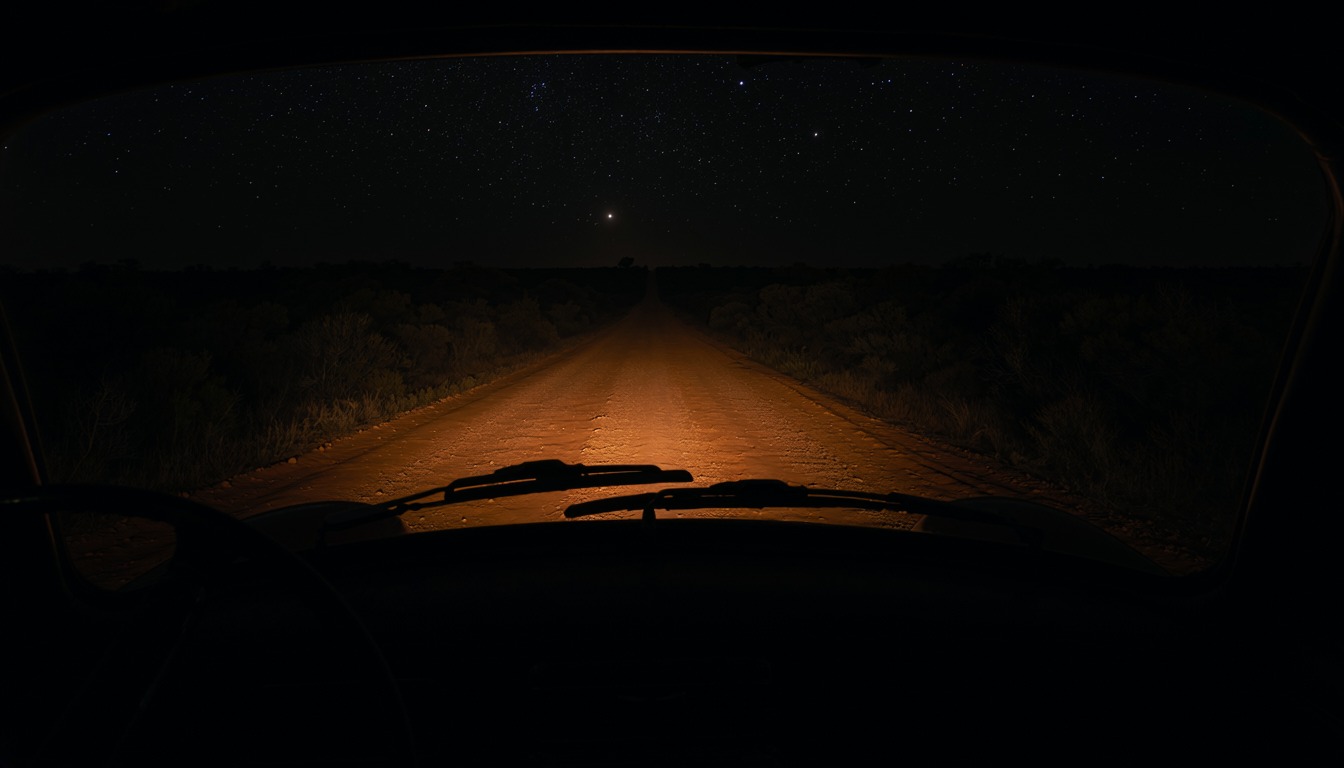
You have made this drive. Leaving late from somewhere far from home, a country town, a relative’s place, a long day that ran longer, with hours of dark road ahead. And there is a strange thing you never once thought about as you turned the key: your headlights reach about a hundred metres. That is all. Beyond that cone of light there is nothing, black paddocks, black sky, a road you cannot see. One hundred metres of visible road ... and hundreds of kilometres to travel. By every reasonable measure, the trip should be impossible.
And yet you made it home. You always make it home. Because the light is not fixed to the road, it is fixed to you. Every time you advance, the light advances. The hundred metres you can see is renewed at the exact moment you need it and never a moment sooner, all the way to your own front gate. The American novelist E. L. Doctorow once said that writing a novel is like driving at night: you can see only as far as your headlights, but you can make the whole trip that way. He was being modest. That is not just how novels work. That is how everything works.
And I can vouch for him. When I wrote my own novel, Wisdom & Wine, I came to know that hundred metres of light better than I ever wished to. There were long stretches, whole seasons of the writing, when I could not see the ending, could not see the next chapter, could barely see past the scene in front of me. All I ever had was a faint light a little way up the road: the next paragraph, the next honest sentence, the next morning back at the desk. And I will tell you plainly, if it were not for that faint light ahead, I would never have finished the journey. The book that sits in the world today was not written by a man who could see the whole road. It was written a hundred metres at a time.
Because you have been standing at some trailhead of your life, the change you want to make, the person you intend to become, with the engine running, refusing to pull out, for one reason: you cannot see the whole road. Where it goes. How it ends. Whether you will manage the stretch that lies beyond the bend. So hear the oldest travelling truth there is, and let it take the weight off your chest: the whole road was never on offer. Not to you, not to anyone, not once in the history of journeys. The headlights were.
You do not need to see the whole road. You need a hundred metres of light, and the nerve to keep driving.
The Map You Actually Need
Twenty-five centuries ago, on the far side of the world, an old keeper of records set down a small book of impossible depth, the Tao Te Ching, and in it, the most quoted travelling line ever written. You know it as “a journey of a thousand miles begins with a single step.” But the older, truer rendering is better still: a journey of a thousand miles begins beneath one’s feet. Not with the atlas spread on the bonnet. Not with the itinerary, the forecast, the five-year plan. With the ground you are already standing on, the one patch of earth you can actually reach.
Understand what Lao Tzu is freeing you from, because it may be the very thing that has kept you parked. You thought you needed the whole map before you could move, the full picture of where this ends. But watch what a real walker actually asks of a real map. Not the whole country. The next waypoint. Enough to know the direction is sound and the next marker findable. That is all a map has ever truly given anyone, and it is enough, because every waypoint reached redraws the map a little further. Stop drafting the five-year atlas in the dark. Find the next marker. The rest of the country will introduce itself as you arrive.
The journey does not begin with the map. It begins beneath your feet.
Ask yourself: what whole map have you been waiting for, and how long has the waiting kept you parked?
The Guide Who Has Walked It
Now come west, to the greatest poem Europe ever produced, and notice how it begins. Not with a hero in his strength. With a man lost: midway through the journey of his life, in a dark wood, the straight way gone. Dante wrote himself lost on the very first page, and then notice, above everything, what mercy arrives first. Not a map. Not a light. Not a way out. A guide. Out of the shadows steps Virgil, a traveller who has walked these roads before, even the roads that run through hell, saying, in effect, the oldest sentence of rescue there is: I know the way. Walk behind me. The West’s founding story of the lost soul does not begin with information. It begins with company.
And it has never stopped being true. In 1953, the whole world learned the name Edmund Hillary, first to stand on the summit of Everest. But roped to him, step for step, was a man named Tenzing Norgay, who had been on that mountain six times before. Six expeditions. He knew its moods and its lying weather, its hidden ways and its honest ones. The most famous “first” in the history of adventure was, in truth, two sets of footprints, and one of them belonged to a guide. Nobody summits alone. Nobody was ever meant to.
An old Roman named Seneca compressed the whole teaching into one line that two thousand years have not improved: the road is long through rules, and short through examples. You can read a hundred books about patience and barely move; stand for one week beside a truly patient person, and something in you starts to change shape. So find your Virgil. Find your Tenzing. Someone a stretch further up the very road you are standing at the foot of: the tradie who beat the drink, the mother who rebuilt after the divorce, the mate who started the business, the elder who carries grief with grace, the boss who inspires you to become your best. And then do the thing almost nobody does: ask. People are honoured to be asked. It is one of the deepest compliments a human being can pay another, and the asking, all by itself, is the first act of the journey.
Every summit ever reached was reached on a rope tied by another’s hands.
Ask yourself: who has already walked the stretch of road you are standing at the start of, and what, truly, is stopping you from asking them?
The Tools in Your Hands
Then there is the third thing, and it is the humblest and the most underrated. Watch an apprentice on their first day. Nobody hands them the full kit. They get a few tools, a good measure, a sharp pencil, a saw, a level, and one instruction that will carry them for fifty years: learn these until they are part of your hands. Because every old tradesman knows the truth the hardware catalogue will never tell you: the best builder is not the one with the most tools. It is the one who has mastered the few.
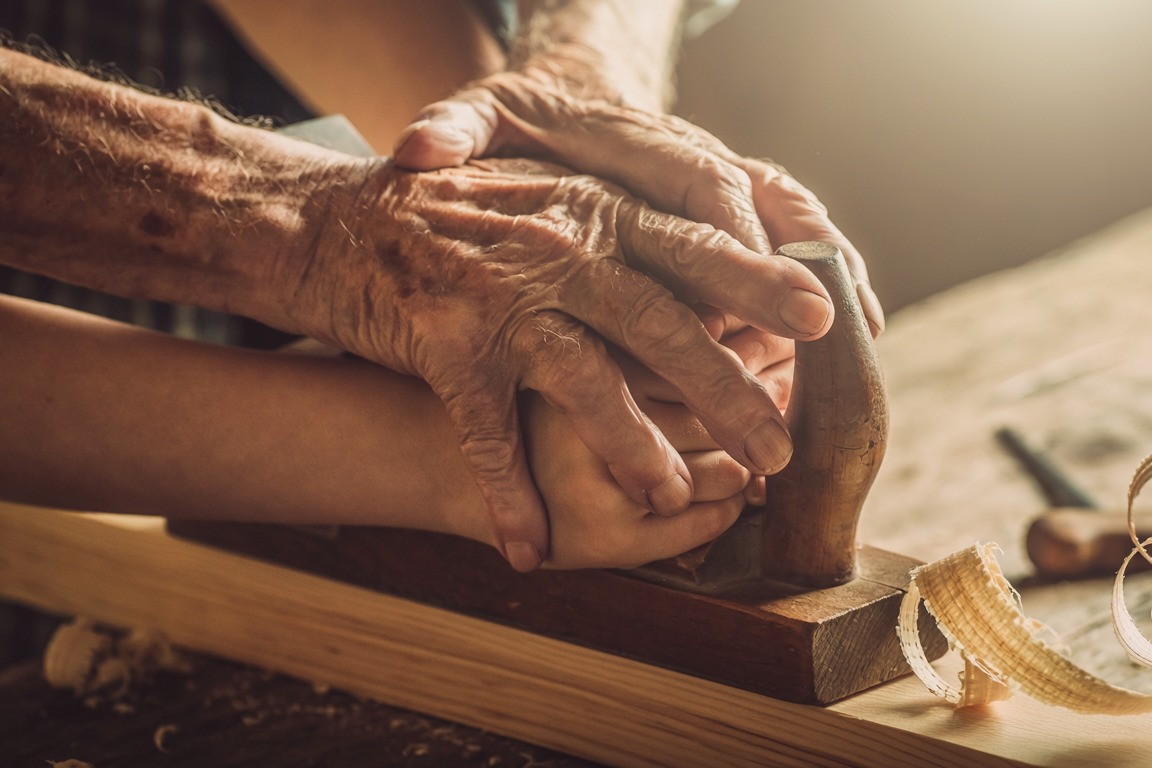
I learned this in uniform, long before I ever thought about workbenches. Across my military service, in the work-ups before deployment, on deployment itself, and in the long resetting after, the tool we drilled with most was the one none of us ever hoped to use: the weapon. And the standard our instructors held us to has never left me. We did not practise until we got it right. We practised until we could not get it wrong. Until the hands knew the drill in the dark, under stress, dog-tired, without the mind needing to be asked. That is what mastery of a tool actually is, not that you can do the thing on a good day, but that the thing has become part of you on every day, including the worst ones. And that is exactly the standard worth bringing to the small tools of character: the honest sentence, the evening five minutes, the one small rep. Not until you get them right. Until you cannot get them wrong.
Do not practise until you get it right. Practise until you cannot get it wrong.
A few tools, mastered, build more than a hundred, admired.
Ask yourself: which single tool, used daily for the next month, would change more in you than any grand plan you have ever drawn?
Name Your Stone
So this is where the essay has been walking, and I want you to do it tonight, while the light of it is still on you. Do not plan the journey. Do not draft the atlas. Instead, do the one thing every real journey begins with: name your stone. The one weight you already know you are carrying. The one labour that is yours, the temper, the fear, the habit, the wound, the mountain you have been circling for years. Write it down in a single honest sentence. Naming it does not make it heavier. Naming it is the moment it stops being fog and becomes a road.
And once your stone is named, remember the sculptor, and let his marble change the way you hold it. Michelangelo did not attack the block. He worked it: small chip after small chip, day after patient day, each strike removing one more sliver of what was never the figure, until the character that had been standing inside the stone all along stepped out into the light. Your stone is no different. The weight you have just named is not a boulder to be heaved aside in one heroic morning. It is marble, waiting on the chisel of small, repeated practice. Chip by chip. Rep by rep. Not to build someone new, to reveal the character that has always existed in you, beneath everything the years have piled on.
Then two small acts to set beside it. Find the next step, not the tenth, the next: the one your headlights already show, small enough to take this week. And find the guide, one message, to one person further up your road, this week. That is the whole beginning: a stone named, a step seen, a rope offered. A waypoint, a guide, a tool. Every journey that ever mattered started with less.
The library lamp at Arete Estate is lit, as it always is. It will not chase you across the water. It will simply keep shining until you are ready. The door is open. Come in whenever you like, and stay as long as you wish.
Excellence revealed by storms.
For the Young Ones
The same truth, made small enough to hold. To be read aloud.
Have you ever walked at night with a torch? There is a funny thing about a torch: its little circle of light only shows you a few steps of the path. Everything past that is dark. And yet, you can walk all the way home like that. How? Because every time you take a step, the light moves with you, and the next bit of the path appears. You never see the whole way. You never need to.
Big things in life work exactly like the torch. When something feels too big, a new school, a hard project, learning something tricky, it feels scary because you’re trying to see the whole way at once. But you were never meant to see the whole way. You only need to see the very next step. Take it, and the light moves with you.
And there is another secret of every great journey: nobody walks it alone. Even the bravest explorers who ever lived took a guide, someone who had walked that way before. So when your path feels dark, do two things: look for your next step ... and look for your guide. A parent, a teacher, a big sister, a friend who has done it before. Asking for a guide isn’t weakness. It is what every hero in every true story has ever done.
A Practice (and the Grown-Up Goes First)
Tonight at the table, play “The Next Step”, and grown-ups, you go first. Name one thing in your life that feels too big right now. Don’t explain the whole mountain, just name it. Then say the one small next step you could take tomorrow, the bit your torch can already see. Then it’s their turn: what feels too big? What’s the very next step? If you like, turn the lights down and pass a real torch around while you talk. You are teaching them the oldest travelling wisdom there is, the whole way is never visible, and the next step always is.
About the author
Marcus J Emsley · The Guide
Marcus spent seventeen years as a welfare officer in the Royal Australian Air Force, at home and on operations overseas, sitting with people in grief, trauma and the mornings they did not want to rise. He is the founder of Arete Estate in the Barossa Valley, South Australia, the creator of The Sculptor's Journey and Wisdom & Wonder, and the author of the debut novel Wisdom & Wine. He is the son of a primary school teacher who coached footy, cricket and life, and a palliative care nurse who showed him what kindness at the hardest door looks like. He has stood in the dark himself, and he writes from the far side of it.
What we are building at Arete Estate
Arete is excellence becoming. It is the highest expression of who you were always meant to be, not the finished version, but the version that keeps reaching. It is not built. It is revealed.
Arete Estate exists to help people reveal, not construct, the highest version of themselves. We do this through six virtues drawn from the world's wisdom traditions, taught through stories, walked through daily practice, and offered to anyone who is ready to begin: the parent raising a child, the leader carrying a team, the soldier returning from service, the school shaping the next generation, the person sitting alone in the early hours of the morning wondering if there is a path through.
Our work is to make that path visible. To stand as a lighthouse for the seekers, the grieving, and the broken. To remind every person we reach that excellence is not built, it is revealed by storms, and that they are not alone in the storm.
We do not chase. We shine. The Sculptor's Journey (The Doorway, The Walked Path, The Guided Path), An Hour with the Guide, Meditate with Arete, Wisdom & Wonder and The Sculptor's Library are the rooms of that house.
Six virtues. One journey. Your highest self.
www.areteestate.com.au · info@areteestate.com.au · Instagram @areteestate
If this essay touched something raw
Some of what is written here is heavy. If it has stirred something you are carrying, please do not carry it alone tonight.
Lifeline 13 11 14 · Open Arms (veterans and families) 1800 011 046 · 1800RESPECT 1800 737 732 · Kids Helpline 1800 55 1800 · In an emergency, call 000.
Reaching out is not weakness. It is all six virtues at once: the Fortitude to stay, the Wisdom to know you need a hand, the Love to let someone in, the Courage to ask, the Temperance to set the weight down, and the Gratitude for the one who answers.

Responses