
Wisdom · On standing firm when the world wants you to perform
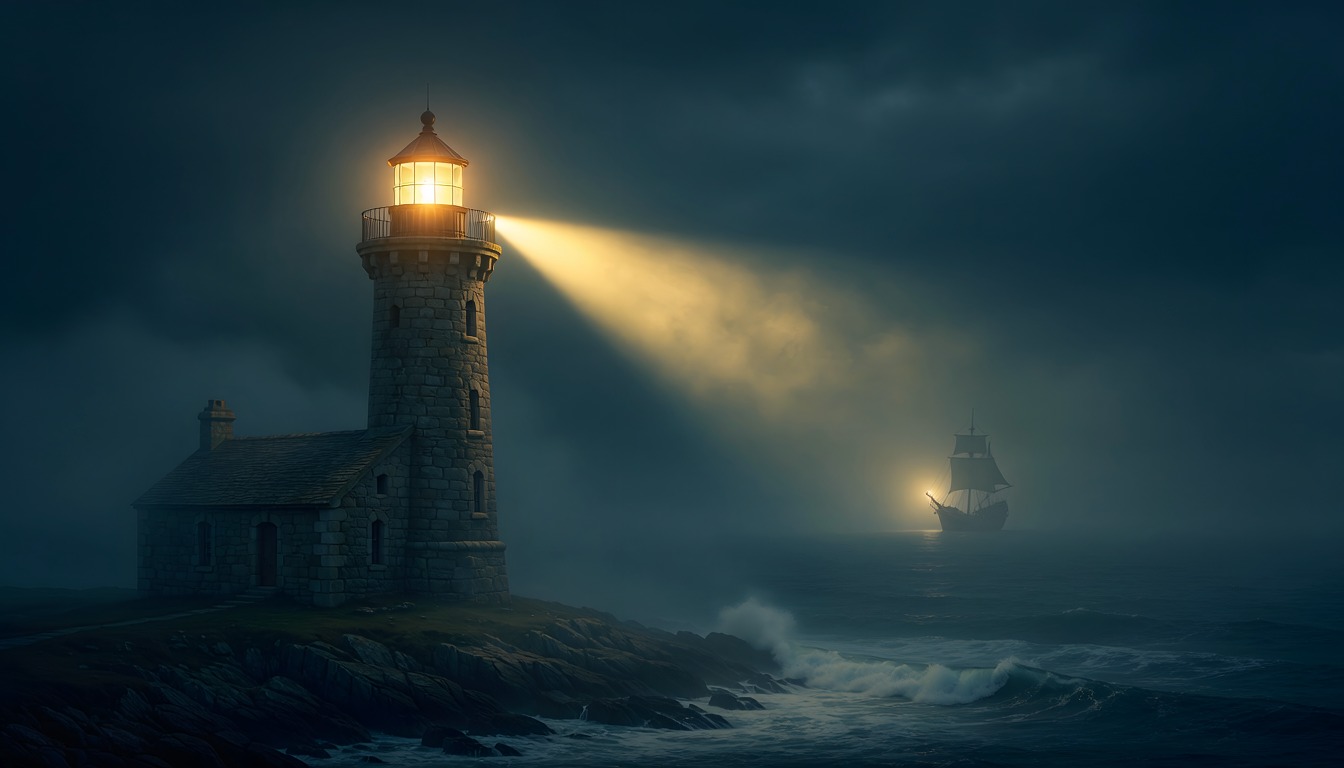
There is a kind of darkness that doesn’t arrive all at once.
It builds. Slowly. The way clouds gather over open water, one at a time, each one harmless, until suddenly the horizon is gone and the sea beneath you is a stranger.
You still know your name. You still know what you’re capable of. Your hands still work. Your mind is still sharp. But the direction, that quiet certainty about where you’re heading and why, has dissolved into the grey. And no amount of skill or willpower can manufacture a horizon that isn’t there.
If you are in that place right now, on the water, in the dark, engine running but compass spinning, then this was written for you. Not to fix you. Not to instruct you. Not to give you a five-step plan for finding the shore. Just to tell you something that is true, even when you can’t feel it:
There is a light. It is not chasing you. It is not shouting. It is standing exactly where it has always stood. And when you are ready, when the waves settle enough for you to lift your eyes, you will see it.
Every person who has ever found their way home found it the same way. Not because someone came to rescue them. Not because the storm stopped. But because somewhere in the darkness, something steady refused to go out.
The Ocean Most People Don’t Talk About
We talk about storms as though they are events. A crisis. A diagnosis. A redundancy letter. A funeral. Something that arrives with a date and a name, and eventually passes.
But the hardest ocean most people sail is not the storm itself. It’s the flat, grey stretch that comes after. Or before. Or, and this is the one nobody warns you about, the stretch that arrives in the middle of an ordinary life, when nothing is technically wrong, and yet nothing feels right.
The sea is calm. The sky is overcast. And you are drifting. Not sinking. Not drowning. Just drifting. Uncertain. Unable to name what’s missing, but certain that something is. Carrying a restlessness that doesn’t respond to logic, because it isn’t a problem to be solved. It’s a direction to be found.
This is the ocean the line attributed to Rumi speaks to: “The wound is the place where the Light enters you.”
Most people read that and think of dramatic wounds. The big ones. The visible scars. But there is something quieter in it. Sometimes the wound is simply the ache of not knowing where you belong. The slow bruise of living without a bearing. The exhaustion of moving without meaning.
And into that wound, into that exact place of uncertainty, is where the light enters. Not because you went looking for it. But because you were finally open enough, honest enough, tired enough to let it in.
The Man Who Didn’t Chase Me
I need to tell you about a man named Paul Murray. We called him Muz. Well, I actually called him Sir.
It was early in my officer career. I’d been handed my first real test as an executive element, the kind of decision that doesn’t just affect your day, but affects the careers and livelihoods of others. The kind that sits on your chest at night and is still sitting there in the morning.
I knew my purpose. I knew my talents. I was reasonably sure of my limits. But what I didn’t have, what no amount of competence could give me, was certainty of direction. I was the tugboat in the open ocean. Powerful enough. Built for the work. But spinning in a fog of my own making, unsure which heading would lead to harbour and which would lead to rocks.
And Muz, the best commanding officer an aspiring officer could have, did something I will never forget. He didn’t chase me.
He didn’t pull me aside for a performance talk. He didn’t hand me a manual or sit me down for a long explanation about leadership. He didn’t hover. He didn’t correct in real time. He didn’t perform the role of mentor.
He stood firm. He trusted. He guided everyone around him with the quiet, dedicated light that shone not because anyone asked for it, but because that was simply what he was, what he still is. He was the same man on the hard days as he was on the easy ones. Steady. Present. Unmoved by the noise. And he shone, not for attention, not for credit, but because that is what lighthouses do.
And I found my way.
Not because Muz told me the answer. But because his consistency gave me something to orient toward. His steadiness reminded me what steadiness looked like. His posture, not his words, taught me more about leadership than any course or classroom ever did.
He didn’t rescue me. He was simply visible. And that was enough.
Years later, I understood what he had done. And I understood that the thing that saved me was not advice, not intervention, not instruction. It was presence. The kind that doesn’t demand anything from you. The kind that doesn’t need you to be grateful, or even to notice. The kind that will still be burning long after you’ve found the shore.
That is the lighthouse. And it changed everything I believe about how we stand in the world.
The Only Posture Worth Taking
The world will tell you to chase the ships.
It will tell you to market yourself. To brand yourself. To shout louder, post more, perform your wisdom for an audience that scrolls past in two seconds. It will tell you that if people can’t see you, you don’t exist. That influence is measured in reach. That impact is measured in noise.
The lighthouse knows better.
The lighthouse doesn’t argue with the storm. It doesn’t negotiate with the waves. It doesn’t redesign itself to be more appealing to passing ships. It doesn’t dim its light when the fog is thick, thinking nobody can see it anyway. It doesn’t burn brighter to compete with other lights along the coast.
It does one thing. The same thing. Every night. In every storm. Without applause, without guarantee, without knowing which ships will make it home. It stands firm. And it shines.
Marcus Aurelius, the Roman emperor who governed an empire while writing private notes to himself about how to be a decent human being, captured this posture perfectly: “Be like the rocky headland on which the waves constantly break. It stands firm, and round it the frothing waters are laid to rest.”
Be like the rock. Not because it feels nothing. Not because it is cold or indifferent. But because it has decided, long before the wave arrives, that it will not be moved by things it cannot control. The wave comes. The wave breaks. The rock remains.
That’s not stubbornness. That’s not detachment. That is the deepest kind of love there is, the love that says: I will be here. Whether you come to me today or in ten years. Whether you notice me or sail straight past. I will be here.
To the Ships
If you are on the water tonight, and you know who you are, I want to tell you what I wish someone had told me when I was spinning in that fog.
You are not lost. You are between directions. There is a difference. Lost means the destination doesn’t exist. Between directions means you haven’t found it yet. It exists. It is waiting. And you are closer than you think.
You are not weak. You are in open water. Open water is where every person of substance eventually finds themselves, past the safety of the harbour, past the easy answers, past the shore that other people never leave. You didn’t drift here by accident. You sailed here because something in you demanded more than the shallows.
You are not alone. I know it feels that way. The fog makes every ship invisible to every other ship. But the ocean is full of people just like you, engines running, compass spinning, hands steady but hearts uncertain. You are in good company. The bravest company, in fact.
And this is the part that matters most: you do not need to find the shore tonight. You only need to look for the light.
Not every light. Not the flashy ones on the entertainment strip. Not the neon ones trying to sell you something. Not the ones that flicker and move and promise quick answers to slow questions.
Look for the steady one. The one that hasn’t moved. The one that was there last night and will be there tomorrow night and will be there long after the storm has passed and you’ve forgotten what the waves felt like.
That light is not trying to save you. It is trying to show you where the rocks are, so you can save yourself. That is the difference between rescue and guidance. Between a tugboat and a lighthouse. A tugboat comes to you. A lighthouse trusts you to come to it.
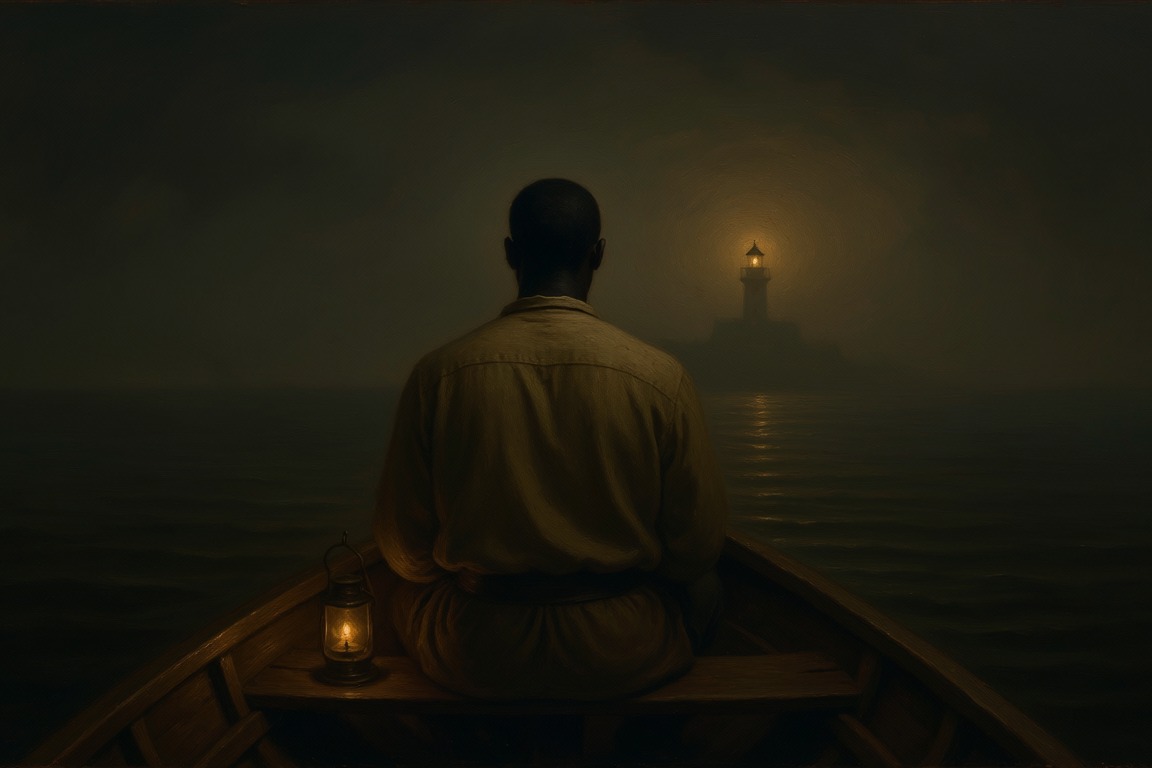
And the most profound thing about that trust is that it honours you. It says: I believe you have the strength, the skill, and the courage to navigate this water. I am not going to insult you by dragging you to shore. I am going to respect you by standing here, burning, and believing that you will find your way.
To the Lighthouses
And now, to those of you who are not on the water tonight. To those who are standing firm. Burning steady. Showing up for someone who may not even know you’re there.
The parent who keeps the porch light on, literally or otherwise, for a child who has stopped calling. The friend who sends the text that never gets a reply, and sends another one next week. The partner who holds the house together while the other one falls apart, and never once makes them feel like a burden. The colleague who shows up with the same quiet integrity on the day nobody notices as on the day everyone does. The teacher who plants seeds in soil they will never see bloom.
I need you to hear something. Because the hardest part of being a lighthouse is the silence.
The lighthouse doesn’t know which ship will make it home tonight. It shines anyway.
That is the most courageous sentence I know. Because it means you are choosing to burn without evidence that it’s working. You are choosing steadiness without applause. You are giving the most generous thing a human being can give, consistent, non-performative, unrewarded presence, and trusting that it matters.
It matters.
I know because a man named Muz stood on the headland for me when I was thirty-something and fog-blind, and he never once needed me to thank him for it. He just kept shining. And I found the harbour. And every good thing I’ve built since then has his light somewhere in the foundations of it.
You don’t always get to see the ship come home. But that doesn’t mean it didn’t.
The Wound and the Light
The wound is where the light gets in. But there is a second truth hidden inside that line that most people miss: the wound is also where the light gets out.
Every person who has been broken open by life, by loss, by failure, by the kind of experience that leaves you sitting on the floor at three in the morning wondering who you are now, has a choice. You can brick up the wound and pretend it never happened. You can let it bleed forever, wearing it as an identity.
Or you can let it become a window. A place where light enters you and, in time, passes through you and reaches someone else.
That is how a ship becomes a lighthouse. Not by being fixed. Not by being healed. Not by arriving at some imaginary shore where everything is resolved and the water is always calm. But by standing, wounded, honest, still burning, in a place where someone else in the dark can see you and think: if they survived that water, maybe I can too.
Your wound is not your weakness. It is your window. And someone, right now, is navigating by the light that passes through it.
Tonight
Wherever you are as you read this, on the water or on the headland, searching or standing, fogbound or burning, I want to leave you with the only posture that has ever made sense to me.
Don’t chase the ships. Don’t perform your wisdom. Don’t compete for attention. Don’t measure your worth by who responds, who notices, who thanks you, who calls back.
Stand firm. Shine. And trust that the ships that need you will find you.
Not all of them. That’s not the deal. The lighthouse never promised to save every vessel on the water. It promised one thing only: I will be here.
That is Fortitude. The first virtue. The foundation of everything. Stand firm and shine, even when the storm is inside you.
And if you are the ship tonight, if you are reading this from somewhere on the open water, engine running, compass spinning, heart uncertain, lift your eyes. The light is there. It has always been there. It is not chasing you. It is not shouting. It is not performing. It is simply shining.
And you, brave, tired, still moving, are closer to the harbour than you know.
The lighthouse doesn’t chase the ships. It stands. It shines. And the ships that need it, find it.
Be the light. Or look for it. Either way, you are not alone on this water.
About the author
Marcus J Emsley · The Guide
Marcus spent seventeen years as a welfare officer in the Royal Australian Air Force, at home and on operations overseas, sitting with people in grief, trauma and the mornings they did not want to rise. He is the founder of Arete Estate in the Barossa Valley, South Australia, the creator of The Sculptor's Journey and Wisdom & Wonder, and the author of the debut novel Wisdom & Wine. He is the son of a primary school teacher who coached footy, cricket and life, and a palliative care nurse who showed him what kindness at the hardest door looks like. He has stood in the dark himself, and he writes from the far side of it.
What we are building at Arete Estate
Arete is excellence becoming. It is the highest expression of who you were always meant to be, not the finished version, but the version that keeps reaching. It is not built. It is revealed.
Arete Estate exists to help people reveal, not construct, the highest version of themselves. We do this through six virtues drawn from the world's wisdom traditions, taught through stories, walked through daily practice, and offered to anyone who is ready to begin: the parent raising a child, the leader carrying a team, the soldier returning from service, the school shaping the next generation, the person sitting alone in the early hours of the morning wondering if there is a path through.
Our work is to make that path visible. To stand as a lighthouse for the seekers, the grieving, and the broken. To remind every person we reach that excellence is not built, it is revealed by storms, and that they are not alone in the storm.
We do not chase. We shine. The Sculptor's Journey (The Doorway, The Walked Path, The Guided Path), An Hour with the Guide, Meditate with Arete, Wisdom & Wonder and The Sculptor's Library are the rooms of that house.
Six virtues. One journey. Your highest self.
www.areteestate.com.au · info@areteestate.com.au · Instagram @areteestate
If this essay touched something raw
Some of what is written here is heavy. If it has stirred something you are carrying, please do not carry it alone tonight.
Lifeline 13 11 14 · Open Arms (veterans and families) 1800 011 046 · 1800RESPECT 1800 737 732 · Kids Helpline 1800 55 1800 · In an emergency, call 000.
Reaching out is not weakness. It is all six virtues at once: the Fortitude to stay, the Wisdom to know you need a hand, the Love to let someone in, the Courage to ask, the Temperance to set the weight down, and the Gratitude for the one who answers.

Responses