
Courage · You do not rise to the occasion. You fall to the level of your formation.
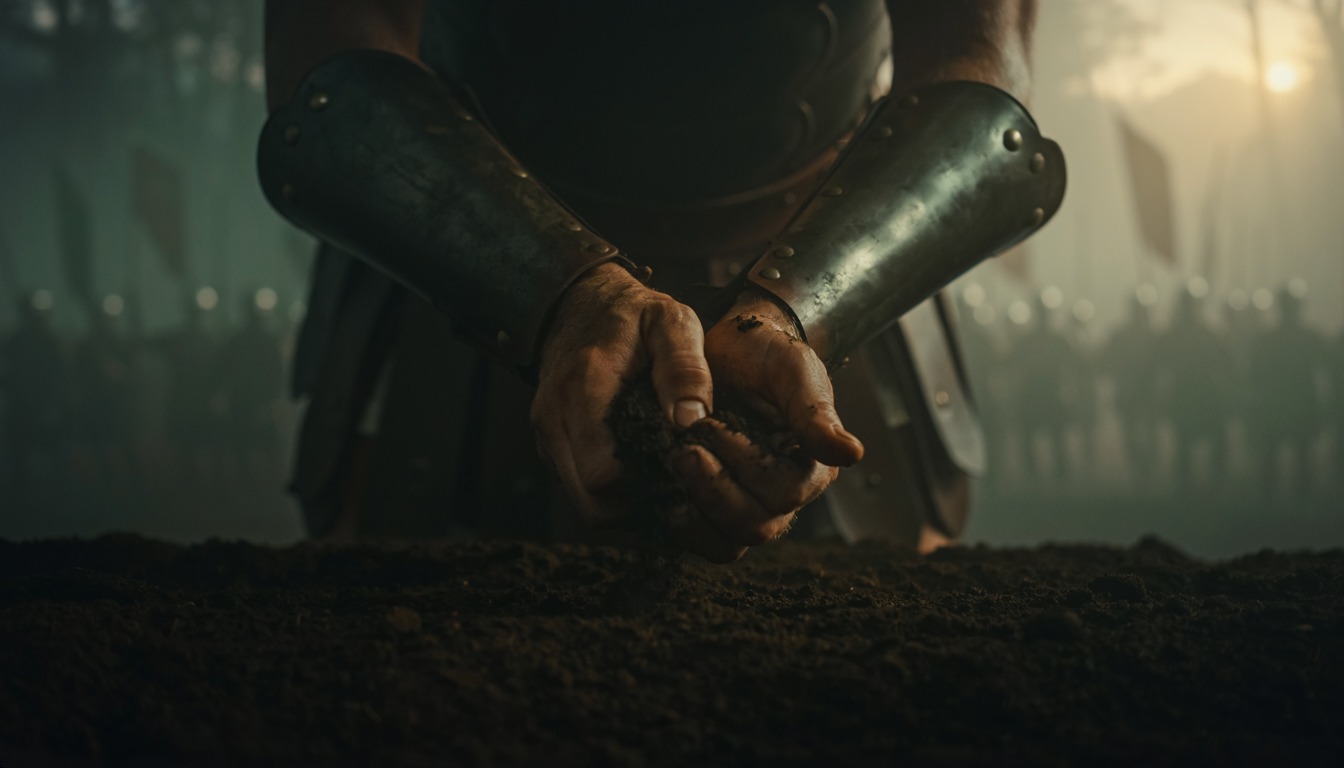
Before every battle, he kneels.
Not to pray, or not only to pray. He takes a handful of soil and rubs it slowly through his fingers, as if he is reading it. Around him, five thousand men wait on his word. Cavalry stamp in the treeline. Fire arrows are being dipped and lit. And the most powerful general in the Roman Empire is on one knee in the mud, touching the earth like a man checking whether his fields are ready for planting.
Because that is what he is. Maximus Decimus Meridius is a farmer. The armies came later.
This is the detail most people miss in Gladiator, and it is the detail that holds everything else. We remember the arena. We remember the roar, the sand, the moment he turns and reveals his name to the emperor who destroyed his life. But the arena did not make that man. The arena only revealed him.
The man in the arena was formed in the field.
The Storm That Strips
Here at the Estate we return, again and again, to a single conviction: excellence is not built by storms. It is revealed by them. The sculptor does not add marble; he removes it. The storm does not construct character; it strips away everything that was never truly ours, title, comfort, reputation, certainty, until what remains is simply who we are.
Few stories put this to the test as brutally as this one.
Watch what the storm takes from Maximus. His rank: gone in a single order. His freedom: sold in chains. His name: erased, he becomes “Spaniard,” a thing to be bet on. And his family, the whole reason he fought, the home he could describe down to the smell of jasmine on the evening air, taken in the cruellest way imaginable.
By every external measure, there is nothing left of him.
And yet the man who walks out onto the sand of a dusty provincial arena is unmistakably the same man who knelt in the dirt of Germania. The storm took everything he had. It could not touch what he was.
The man who formed him knew this long before the arena proved it. Marcus Aurelius, writing by lamplight in a war camp on the Danube, in a private journal never meant for our eyes: “What stands in the way becomes the way.” The storm is not the interruption of the work. The storm is the work.
That is the question this story quietly asks each of us: if the storm came for you tomorrow, the title, the income, the recognition, the plans, what would remain? Because whatever would remain, that is your character. Everything else is costume.
Maximus and the Six Virtues
Hold Maximus up to the light and you find the virtues are not decorations on his story. They are its architecture.
Fortitude. The moment: a nameless slave in a provincial pit, refusing to perform his own death, winning ugly, hurling his sword into the stands, and demanding to know whether the crowd has had its fill. He endures what should break a man, and here is the crucial part, he endures without becoming his enemy. Commodus is what happens when suffering meets a hollow centre: it curdles into cruelty. Maximus is what happens when suffering meets a formed one: it hardens into resolve. Both men lose their fathers, in a sense. Both are denied what they believe is theirs. Only one is destroyed by it, and it is not the slave.
When suffering last found you, what did it meet at your centre, and what is it turning you into?
Wisdom. The moment: an old emperor by candlelight, confessing to his general that Rome’s greatness is only a fragile whisper, and that it will vanish unless someone guards it who wants nothing for himself. It is easy to forget who formed him. Maximus is the chosen son of Marcus Aurelius, the actual philosopher-emperor whose private journal we still read two thousand years later as the Meditations. The same journal that cuts through every excuse ever made: “Waste no more time arguing what a good man should be. Be one.” The old man saw in his general what he could not find in his own bloodline: someone who understood that Rome was an idea, a fragile whisper worth protecting, not a prize worth possessing. Wisdom, in this story, is knowing the difference between what power is for and what power feels like. Maximus never confuses the two.
Where in your life have you mistaken what power feels like for what it is for?
Love. The moment: asked to describe his home, a general speaks like a man reciting scripture: the gate, the poplars, the jasmine on the evening air, his son among the ponies. Strip away the swords and this is a story about a man trying to get home. His courage is not fuelled by glory; the film goes out of its way to show he finds glory faintly ridiculous. It is fuelled by two people waiting at the end of a dusty road, and later, by the hope of meeting them again beyond it. Love is not the soft subplot of his story. It is the engine of it. The fiercest men in history have almost always been fighting toward something tender.
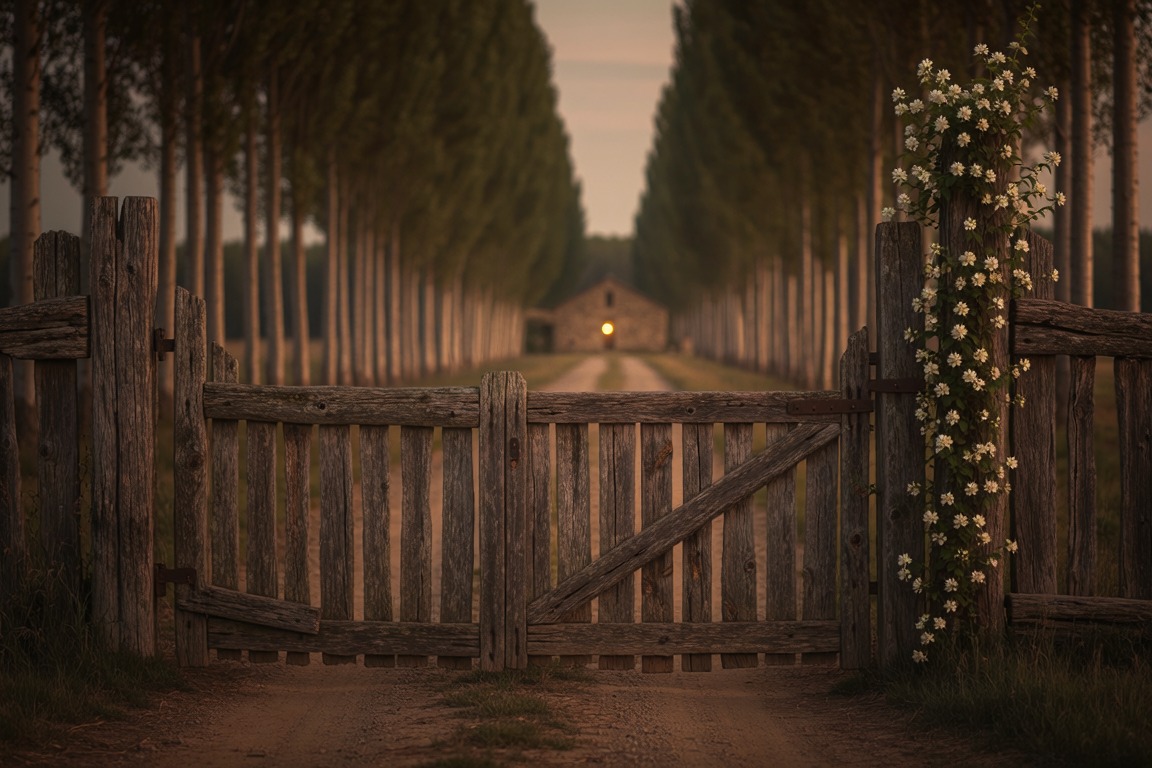
What are you fighting toward? Could you describe it as precisely as a road home?
Courage. The moment: the helmet comes off before the emperor of the known world, and a dead man speaks his own name like a drawn blade, father to a murdered son, husband to a murdered wife. Yes, the arena. But look closer at where his courage actually peaks. It is not against tigers or champions. It is the moment he stands unarmed before absolute power, removes his helmet, and tells the truth about who he is, father to a murdered son, husband to a murdered wife, knowing the words themselves might be his death sentence. Courage is not the absence of fear. It is the refusal to let fear edit your identity.
Where is fear currently editing your story, and what truth would you speak if it couldn’t?
Temperance. The moment: offered Rome itself by its dying emperor, he asks for the one reward an empire cannot counterfeit, permission to go home. Here is the test almost no one passes. Twice, Maximus stands within reach of ultimate power, the dying emperor offers it, the conspirators offer it again. A lesser man takes the throne and calls it justice. Maximus wants only to hand Rome back to itself and go home to his farm. He is the safest man in the empire to give power to, precisely because he does not want it. Temperance is not weakness of appetite. It is strength of order, knowing what belongs first, and refusing to let even an empire jump the queue.
What are you reaching for right now that you would be safer not wanting?
Gratitude. The moment: a friend kneeling in the empty Colosseum at dusk, burying two small clay figures in the sand, promising to see him again, but not yet. And so we return to the soil. That small ritual before battle is many things, grounding, remembrance, prayer, but at its heart it is gratitude. For the earth that fed his family. For the men beside him. For the dead who go ahead of him. He carries small clay figures of his wife and son through slavery and sand, and in the end he is buried, in effect, with the harvest. A man who touches the ground before the fight never forgets what the fight is for.
What is your handful of soil, the thing you touch before battle to remember why you fight?
Strength and Honour
Two words, passed between soldiers the way other men pass a handshake. A greeting. A farewell. A covenant.
Listen to how the film uses them. Never as a boast. Never alone. Always man to man, eye to eye, in the breath before hardship, as if to say: whatever comes, this is who we will be in it.
Neither of those two words survives without the other.
Strength without honour is Commodus. All the power of an empire, ordered by nothing but appetite, and so it devours everything, including itself. Honour without strength is only good intention: a beautiful compass on a ship with no engine. But strength ordered by honour, capacity in the service of covenant, that is the oldest definition of excellence we have. The Greeks called it arete, and they meant exactly this: not what you are capable of, but what your capability is for.
Strength is the marble. Honour is the sculptor.
And this is where the story stops being about Rome and starts being about you. Because hardship is coming, not as punishment, but as revelation. The season that strips the title. The year that empties the account. The diagnosis, the betrayal, the silence where applause used to be. When it arrives, it will ask you only one question, and it will not accept your résumé as an answer:
Who are you, when everything you had is gone, and only what you are remains?
So decide now. Not in the arena, in the field. Decide who you will be in the hardship before the hardship comes, because character chosen under fire was almost always chosen long before it, in the quiet, when choosing cost nothing and no one was watching.
Decide to be the one whose suffering hardens into resolve, not cruelty. The one who knows what power is for. The one fighting toward something tender. The one who tells the truth with the helmet off. The one who can be handed everything, and still wants only to go home. The one who kneels, and touches the earth, and remembers.
Then find another person and say it to them, out loud, eye to eye, the old way. Make it a covenant, not a caption. Because honour only exists between people: it is the promise that your strength is safe in their presence.
Strength is what the storm reveals. Honour is what you do with what it finds.
The Field Before the Arena
So what do we take from a Roman general onto our own ground, the workplace, the marriage, the diagnosis, the quiet Tuesday when the storm finally arrives?
Just this: you do not rise to the occasion. You fall to the level of your formation.
Maximus does not become extraordinary in the arena. He becomes visible there. The steadiness under pressure, the loyalty that outlasts betrayal, the hand that refuses the crown, all of it was planted years earlier, in seasons no one applauded. In the field. In the daily, unwitnessed work of becoming.
Which means the most important arena of your life is the one nobody is watching: the early morning, the kept promise, the small honest act repeated until it is no longer an act at all. “The soul becomes dyed,” Marcus wrote, “with the colour of its thoughts.” The field is where the dyeing happens. The storm will come, for all of us, it comes. And when it does, it will not ask what you intended to become. It will reveal what you have already become.
There is a line in the film that has outlived it, spoken to soldiers before the charge: “What we do in life echoes in eternity.” We tend to hear it as a call to grand deeds. I think it is truer, and harder, than that. The echo is not made in the moment the world is watching. It is made in the dirt, on one knee, long before.
Kneel in your field now. So you can stand in your arena later.
Walking It Home
Pan for Gold. In your journal tonight, sit with this: If the storm took my titles, roles and plans tomorrow, what would remain? Write it down plainly. Whatever you find is your marble, the rest is what the sculptor is still removing.
One handful of soil. Choose a small daily ritual of grounding and gratitude, before the meeting, before the hard conversation, before the fight that matters. Thirty seconds. Touch the earth, literally or otherwise. Remember what the fight is for.
Pass the flame. If a person came to mind while you read, someone standing in their own arena right now, send this to them, with a word about the field you have watched them build in.
Author’s Note
I spent seventeen years walking alongside soldiers, and I can tell you the film gets one thing exactly right: the strongest people I ever served with were not the ones chasing the arena. They were the ones who knew, precisely and quietly, what they were trying to get home to. Excellence revealed by storms, but formed, always, in the field.
And a last confession, reader to reader: this is my favourite film of all time. It has been teaching me for a quarter of a century, about strength, about honour, about the long road home, and more than a little of what became Arete Estate was first seeded in its soil. So let me borrow the old gladiator’s question one final time, and turn it gently on its head. I hope you were entertained by these words. But far more than that, I hope you were called by them.
The Guide
About the author
Marcus J Emsley · The Guide
Marcus spent seventeen years as a welfare officer in the Royal Australian Air Force, at home and on operations overseas, sitting with people in grief, trauma and the mornings they did not want to rise. He is the founder of Arete Estate in the Barossa Valley, South Australia, the creator of The Sculptor's Journey and Wisdom & Wonder, and the author of the debut novel Wisdom & Wine. He is the son of a primary school teacher who coached footy, cricket and life, and a palliative care nurse who showed him what kindness at the hardest door looks like. He has stood in the dark himself, and he writes from the far side of it.
What we are building at Arete Estate
Arete is excellence becoming. It is the highest expression of who you were always meant to be, not the finished version, but the version that keeps reaching. It is not built. It is revealed.
Arete Estate exists to help people reveal, not construct, the highest version of themselves. We do this through six virtues drawn from the world's wisdom traditions, taught through stories, walked through daily practice, and offered to anyone who is ready to begin: the parent raising a child, the leader carrying a team, the soldier returning from service, the school shaping the next generation, the person sitting alone in the early hours of the morning wondering if there is a path through.
Our work is to make that path visible. To stand as a lighthouse for the seekers, the grieving, and the broken. To remind every person we reach that excellence is not built, it is revealed by storms, and that they are not alone in the storm.
We do not chase. We shine. The Sculptor's Journey (The Doorway, The Walked Path, The Guided Path), An Hour with the Guide, Meditate with Arete, Wisdom & Wonder and The Sculptor's Library are the rooms of that house.
Six virtues. One journey. Your highest self.
www.areteestate.com.au · info@areteestate.com.au · Instagram @areteestate
If this essay touched something raw
Some of what is written here is heavy. If it has stirred something you are carrying, please do not carry it alone tonight.
Lifeline 13 11 14 · Open Arms (veterans and families) 1800 011 046 · 1800RESPECT 1800 737 732 · Kids Helpline 1800 55 1800 · In an emergency, call 000.
Reaching out is not weakness. It is all six virtues at once: the Fortitude to stay, the Wisdom to know you need a hand, the Love to let someone in, the Courage to ask, the Temperance to set the weight down, and the Gratitude for the one who answers.

Responses