
Gratitude · A fortnightly practice. Name the bloom, water the shoot, understand the thorn.
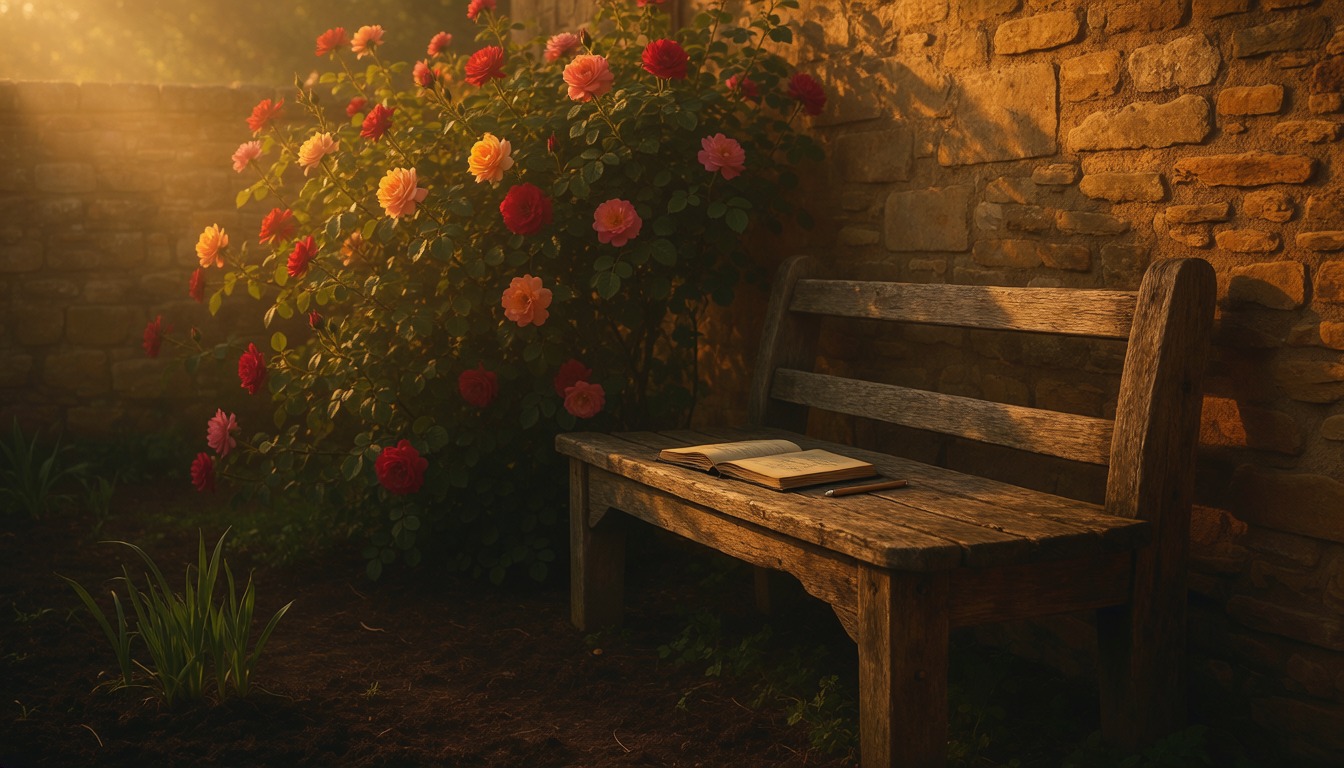
You have a garden.
You didn’t plant all of it. You didn’t choose the soil. You didn’t pick the climate or the exposure or the stones that sit just beneath the surface, catching the spade every time you try to dig a little deeper. Some of what grows there was seeded by people who loved you well. Some was seeded by people who didn’t. Some arrived on the wind, uninvited, unnamed, growing before you noticed it was there.
But it is yours. All of it. The blooms and the weeds and the patch in the corner that you haven’t looked at properly in years because you’re not sure you want to see what’s growing there.
And here is the truth that this essay is built on. The truth that will either set you free or make you uncomfortable, and ideally both:
The garden does not care whether you feel ready to tend it. It grows regardless.
Every weed you ignore becomes a belief. It sends roots deeper. It spreads. It takes up space that could have held something you actually chose. And one day you look up and the weed is so established, so entangled with everything around it, that you mistake it for something you planted. You call it personality. You call it ‘just the way I am’. You defend it, because pulling it up now would disturb everything it has grown beside.
And every seed you water, every small, daily, deliberate act of attention, becomes a habit. A conviction. A way of being in the world that you didn’t inherit and didn’t stumble into, but cultivated. On purpose. With your own hands. In your own soil.
Voltaire, who spent his life asking what a person could actually control in a world that seemed determined to control them, ended his most famous work with a line that has outlived every empire that existed when he wrote it:
“We must cultivate our garden.” Voltaire, Candide
Not the world’s garden. Not someone else’s garden. Ours. The one we stand in. The one we inherited and must tend, not because it is perfect, but because it is ours, and neglecting it does not make the weeds go away. It makes them the only thing that grows.
This essay is about that garden. The one inside you. The one that is growing right now, whether you are tending it or not. The Garden Within.
The Three Truths of the Garden
Every honest life, examined at any given moment, contains three truths growing simultaneously.
Not one. Not the good one or the bad one. Three. At once. In the same soil. On the same day. And the person committed to Arete, to excellence of character, to the honest life, to the daily practice of becoming, doesn’t pretend otherwise. They walk their garden regularly. They look at what is growing. And they name it. All of it.
Because naming is the first act of tending. You cannot water what you cannot see. You cannot pull a weed you won’t acknowledge. And you cannot nurture something tender if you don’t know it’s there.
The three truths are these.
The Bloom: What Is Flourishing
Start here. Not because it is the easiest (for many people it is actually the hardest) but because it is the most neglected.
The Bloom is what is thriving in your life right now. Not what you wish were true. Not what looks good from the outside or what you tell people when they ask how things are going. What is actually bearing fruit. The relationship that is deepening. The discipline that is holding. The skill that is sharpening. The part of your life where effort is quietly meeting result, and something real, something you can feel in your body, not just claim with your words, is growing.
Most people have one of two problems with the Bloom.
The first is dismissal. They glance past it. They are so fixated on what is wrong, the thorn, the problem, the unfinished business, that the thing that is flourishing becomes background noise. It doesn’t get named. It doesn’t get honoured. It sits in the corner of the garden, blooming, and nobody notices, least of all the person who watered it.
The second is inflation. They perform gratitude without feeling it. They list their blessings the way you list items on a receipt, accurately but without weight. Grateful becomes a word they say rather than a state they inhabit. And the bloom, surrounded by all that hollow acknowledgment, doesn’t feel tended. It feels catalogued.
The Arete Path practice is neither.
You name the bloom plainly. Without exaggeration. Without dismissal. And then you ask the question that turns a pleasant observation into wisdom:
What tended this into being?
Because a bloom doesn’t arrive by accident. Something was watered. Something was pruned. Something was given sunlight and patience and the kind of attention that doesn’t announce itself but shows up every day. Often the person who did that watering was you, through choices so small they felt insignificant at the time. The conversation you had instead of avoiding. The boundary you held instead of collapsing. The morning you showed up for the practice when nobody was watching and nothing felt different.
Those choices bloomed. And recognising that, without false humility, is not arrogance. It is the most practical form of wisdom there is. Because if you know what tended the bloom, you know how to tend the next one.
But the question cuts both ways. Sometimes the bloom was tended by someone else. A partner who held the house together while you were falling apart. A friend who kept calling even when you stopped answering. A parent who planted something in you decades ago that only now, in this season, is bearing fruit. Naming that, recognising that you are harvesting what someone else planted, is the deepest form of gratitude. And it connects directly to the teaching of the sixth virtue:
Planting what you won’t harvest, and tending what you didn’t plant. Gratitude
The Bloom asks you to notice what is growing, to understand why, and to honour both the gardener and the garden. That is Gratitude and Wisdom working together, side by side, two virtues, one truth, named plainly in the soil of your actual life.
The Shoot: What Is Emerging
The Shoot is the tender growth.
It is the thing you are nurturing that hasn’t proven itself yet. The new discipline, three weeks old, fragile, still finding its rhythm. The mending relationship, a phone call made, a door cracked open, but nothing certain on the other side. The skill still clumsy in your hands. The idea you believe in but cannot yet defend. The conversation you are building the nerve to have.
Shoots are the most vulnerable things in any garden. They are too new to be established and too important to be ignored. They can die from two opposite causes, being pulled upward too fast, or being left alone too long.
The person who pulls the shoot upward is the one who demands immediate results. Who starts the meditation practice and quits after a week because they don’t feel enlightened. Who begins the difficult conversation and retreats the moment it gets uncomfortable. Who plants the seed of change and then stands over it with crossed arms, saying: ‘show me something, show me the results. Now. Prove this was worth my time.’
The shoot cannot answer that question yet. It is underground. It is doing its work in the dark, sending roots into soil nobody can see. And the demand for visible progress (now, immediately, on my schedule) kills more shoots than any drought.
The person who leaves the shoot alone is the one who plants and forgets. Who starts something meaningful and then gets distracted by the urgent. Who says I’ll come back to that and never does. Who treats the tender growth as a someday project rather than a today practice. And the shoot, unfed, unwatched, quietly dies, not from neglect that looked like cruelty, but from neglect that looked like busyness.
The Arete Path practice with the Shoot is two things that don’t come naturally together: patience and attention.
You cannot pull a shoot upward to make it grow faster. The musician who practises scales for two weeks does not get to demand a concerto. The parent who begins a new approach with their teenager does not get to expect transformation by Friday. The person who starts journalling, or walking, or sitting in the quiet for the first time in years, does not get to judge the harvest by the first season.
But you also cannot ignore it. The shoot needs you to show up, not dramatically, not with grand gestures, but with the steady, daily, unglamorous attention that is the difference between something that grows and something that dies of inattention.
There is a line attributed to Lao Tzu that holds this with the kind of simplicity only deep wisdom produces:
“Nature does not hurry, yet everything is accomplished.” Attributed to Lao Tzu
Everything is accomplished. Not by force. Not on your schedule. Not according to the timeline your ego has drawn up. But in the way that living things grow, at their own pace, in their own time, with roots deepening in the dark long before anything appears above the surface.
The Shoot asks you to trust that process. To keep watering what you cannot yet see. That is Temperance and Courage working together, the patience to wait and the bravery to keep investing in something that hasn’t proven itself yet.
The Thorn: What Is Drawing Blood
And then there is this.
The thorn. The thing in your garden that hurts. The frustration you carry. The pattern you keep repeating. The relationship that pricks you every time you reach for it. The habit you cannot seem to break. The voice in your head that is harsher than any voice you would use on a friend. The thing that is drawing blood, quietly, consistently, in a place where nobody else can see the wound.
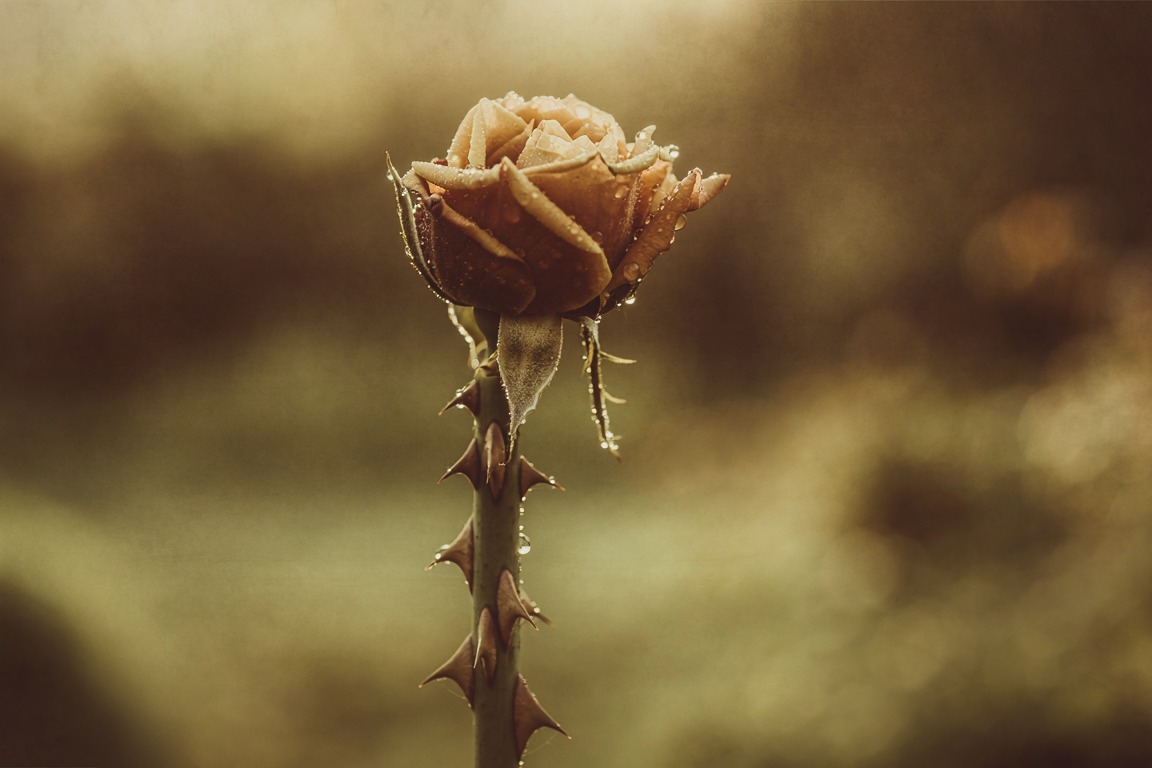
Here is what you need to know about thorns: they are not failures. They are part of every living garden. The rose and the thorn grow on the same stem, and this is not a flaw in the design. It is the design.
But not all thorns are the same. And the practice, the fortnightly practice of walking your garden, requires you to look at the thorn clearly and ask: what kind is this?
The thorn that needs removing. This is the habit, the pattern, the relationship, the belief that is not serving you and never has. You can see it clearly. You have always seen it clearly. You just haven’t pulled it yet, because pulling hurts, because the roots have gone deep, because the thorn has been there so long it has become part of the landscape and the garden without it feels unfamiliar. But it is draining the soil. It is taking nutrients from the things you actually want to grow. And every fortnight that you walk past it and pretend it is acceptable is a fortnight that the bloom beside it gets a little weaker.
The thorn that needs leaving alone. This is the pain that accompanies growth. The discomfort of change. The grief that needs its season. The tension of holding two truths at once: I am not where I want to be, and I am further than I was. This thorn is real and it hurts and every instinct says remove it. But pulling it would damage the plant it belongs to. The ache of the shoot that is growing slowly is not a sign that something is wrong. It is a sign that something is alive. The wise act is to let it be. To sit with the discomfort. To trust the process. Not every pain is a problem to solve. Some pain is the price of something you are not willing to lose.
The thorn you grew yourself. This is the hardest one. The frustration that traces back to your own choices. The consequence you planted with your own hands and must now harvest. The relationship you damaged through neglect. The opportunity you wasted through fear. The pattern you keep repeating because it is familiar, even though it cuts. This thorn does not need removal or tolerance. It needs understanding. It needs you to sit with the question: why did I plant this? What was I getting from it? And what would I need to change, in myself, not in the world around me, to stop growing it?
Rumi, who understood the relationship between pain and growth with a tenderness that still makes the chest ache, wrote:
“The wound is the place where the Light enters you.” Rumi
The wound. The thorn. The place that draws blood. It is also, if you are brave enough to look at it, if you are willing to sit with it rather than rip it out in anger or ignore it in fear, the place where the light gets in. Where the growth happens. Where the next bloom begins.
The Thorn asks you to see what hurts and respond with discernment rather than reactivity. That is Fortitude and Love working together, the strength to look at the difficult truth, and the compassion to respond to it with care rather than violence.
The rose and the thorn grow on the same stem. This is not a flaw in the design. It is the design.
Why Every Fortnight
You might wonder why this practice is fortnightly, not daily, not weekly, not whenever you feel like it. The answer lives in the garden itself.
A gardener who checks the soil every day becomes anxious. They hover. They overwater. They pull at shoots before they’ve had time to take hold. A gardener who checks once a season misses everything: the weed that could have been pulled in ten seconds becomes a root system that takes months to clear, and the shoot that needed one moment of attention dies unseen.
A fortnight is the rhythm of a garden that is being tended, not managed. Long enough for something to change. Short enough that the change can be caught. Marcus Aurelius, who kept a journal that was essentially a daily garden walk of his own mind, understood that self-examination is not a luxury but a structural necessity:
“Look within. Within is the fountain of good, and it will ever bubble up, if you will ever dig.” Marcus Aurelius, Meditations
Ever dig. Not once. Not when the crisis comes. Ever. The garden does not wait for you to be ready. It grows regardless. And your job, your only job, is to show up with honest eyes and a willingness to name what you find.
The Garden That Outlasts You
Here is the part of this practice that most people don’t reach until they’ve been doing it for a while. And when it arrives, it changes everything.
Your garden is not just for you.
Every bloom you tend, every shoot you nurture, every thorn you examine with honesty, these do not stay in your soil. They travel. They seed. The patience you practised this month, your child absorbed it without being told. The boundary you held last fortnight, your partner noticed, even if they didn’t say so. The thorn you finally pulled made space in your garden that other people can feel, even if they cannot describe it.
You are not just tending your own inner life. You are tending the soil that other people’s roots reach into.
Think about the people who shaped you. A grandparent. A teacher. A friend who showed up at the right time with the right kind of steadiness. Did they sit you down and deliver a lecture on character? Probably not. They simply tended their garden, daily, in your presence, and you grew in the soil they created. That is legacy. Not the monument. The garden you tended so well that other people bloomed in its shade without knowing why.
Thich Nhat Hanh captured this with a gentleness that belongs in every garden:
“When you plant lettuce, if it does not grow well, you don’t blame the lettuce. You look for reasons it is not doing well. You never blame the lettuce.” Thich Nhat Hanh
You never blame the lettuce. I love this. You never blame the child who inherited your weeds. You never blame the friend who is growing slowly in soil they didn’t choose. You look for reasons. You adjust the conditions. You tend. That is what this practice asks of you: not perfection, but tending. Not a flawless garden, but an honest one.
The Practice
Every fortnight. Twenty to thirty minutes. A quiet place. A pen. And three questions that will do more for your inner life than any amount of thinking about your inner life ever could.
The Bloom
What is flourishing in my life right now? Not what I wish were true, but what is actually bearing fruit. And what tended it? What choices, what people, what conditions helped this grow?
The Shoot
What is emerging? What tender growth do I notice: a new conviction, a mending relationship, a budding practice? What does it need from me to survive? Am I pulling it upward, or am I leaving it alone? What would patient attention look like this fortnight?
The Thorn
What is drawing blood? What pattern, habit, fear, or relationship is causing pain? Don’t pull it yet. Ask it first: what kind of thorn are you? Do you need removing, leaving, or understanding? And if you grew this one yourself, what would need to change in you to stop planting it?
Write your answers. Not in your head, on paper. In a journal, on the back of an envelope, in the notes app at midnight. It doesn’t matter where. What matters is that you externalise what is growing inside you, because naming it, seeing it in your own handwriting, in your own words, is the first act of tending.
And then, having named the bloom, the shoot, and the thorn, ask yourself one final question:
What stays? What do I choose to water this fortnight, and what do I choose to let go?
That is The Garden Within. Not a programme. Not a system. A practice. Returned to every fourteen days, with honest eyes and dirty hands, for the rest of your life.
Tonight
You have a garden. You have always had a garden.
It has been growing while you read this. The blooms have been blooming. The shoots have been sending roots into the dark. The thorns have been drawing blood in the quiet places where nobody looks.
And you, the gardener, the only gardener this garden will ever have, have been so busy tending the world outside that the world inside has been left to grow on its own. Not abandoned. Just unattended. The weeds got a little taller. The shoots got a little thinner. The blooms went unnamed. And the garden, being alive, did what living things do, it grew anyway. Without you. Without your attention. Without your honesty.
But you are here now. You are reading this, which means something in you is ready to walk the garden. To look at what is growing with clear eyes. To name the bloom, honour the shoot, and face the thorn.
So tonight, or this weekend, or next Tuesday morning with a coffee and a journal, begin.
Walk your garden.
Name what you find.
And then tend it. Not perfectly. Not all at once. One bloom honoured. One shoot watered. One thorn examined. That is enough. That is more than enough. That is the beginning of a practice that will quietly, steadily, over fortnights and seasons and years, change the landscape of your inner life.
And one day, maybe sooner than you think, someone who loves you will look at your life and feel something they cannot name. A warmth. A steadiness. A sense that the ground around you is good ground. And they will grow in it. Without knowing why. Without ever being told.
Because you tended the garden.
Every weed you ignore becomes a belief. Every seed you water becomes a habit. Every garden you tend becomes a legacy. Start tonight.
The bloom is waiting to be named.
The shoot is waiting to be watered.
The thorn is waiting to be understood.
And the garden, your garden, the only one you will ever have, is waiting for the gardener to come home.
The Garden Within is one of three signature practices on The Arete Path: Pan for Gold is the daily practice, The Garden Within the fortnightly, and The Mansion of the Mind the quarterly. Daily. Fortnightly. Quarterly. The gardener’s calendar for the inner life.
About the author
Marcus J Emsley · The Guide
Marcus spent seventeen years as a welfare officer in the Royal Australian Air Force, at home and on operations overseas, sitting with people in grief, trauma and the mornings they did not want to rise. He is the founder of Arete Estate in the Barossa Valley, South Australia, the creator of The Sculptor's Journey and Wisdom & Wonder, and the author of the debut novel Wisdom & Wine. He is the son of a primary school teacher who coached footy, cricket and life, and a palliative care nurse who showed him what kindness at the hardest door looks like. He has stood in the dark himself, and he writes from the far side of it.
What we are building at Arete Estate
Arete is excellence becoming. It is the highest expression of who you were always meant to be, not the finished version, but the version that keeps reaching. It is not built. It is revealed.
Arete Estate exists to help people reveal, not construct, the highest version of themselves. We do this through six virtues drawn from the world's wisdom traditions, taught through stories, walked through daily practice, and offered to anyone who is ready to begin: the parent raising a child, the leader carrying a team, the soldier returning from service, the school shaping the next generation, the person sitting alone in the early hours of the morning wondering if there is a path through.
Our work is to make that path visible. To stand as a lighthouse for the seekers, the grieving, and the broken. To remind every person we reach that excellence is not built, it is revealed by storms, and that they are not alone in the storm.
We do not chase. We shine. The Sculptor's Journey (The Doorway, The Walked Path, The Guided Path), An Hour with the Guide, Meditate with Arete, Wisdom & Wonder and The Sculptor's Library are the rooms of that house.
Six virtues. One journey. Your highest self.
www.areteestate.com.au · info@areteestate.com.au · Instagram @areteestate
If this essay touched something raw
Some of what is written here is heavy. If it has stirred something you are carrying, please do not carry it alone tonight.
Lifeline 13 11 14 · Open Arms (veterans and families) 1800 011 046 · 1800RESPECT 1800 737 732 · Kids Helpline 1800 55 1800 · In an emergency, call 000.
Reaching out is not weakness. It is all six virtues at once: the Fortitude to stay, the Wisdom to know you need a hand, the Love to let someone in, the Courage to ask, the Temperance to set the weight down, and the Gratitude for the one who answers.

Responses