Love · A mother’s kindness is not a moment. It is an inheritance.
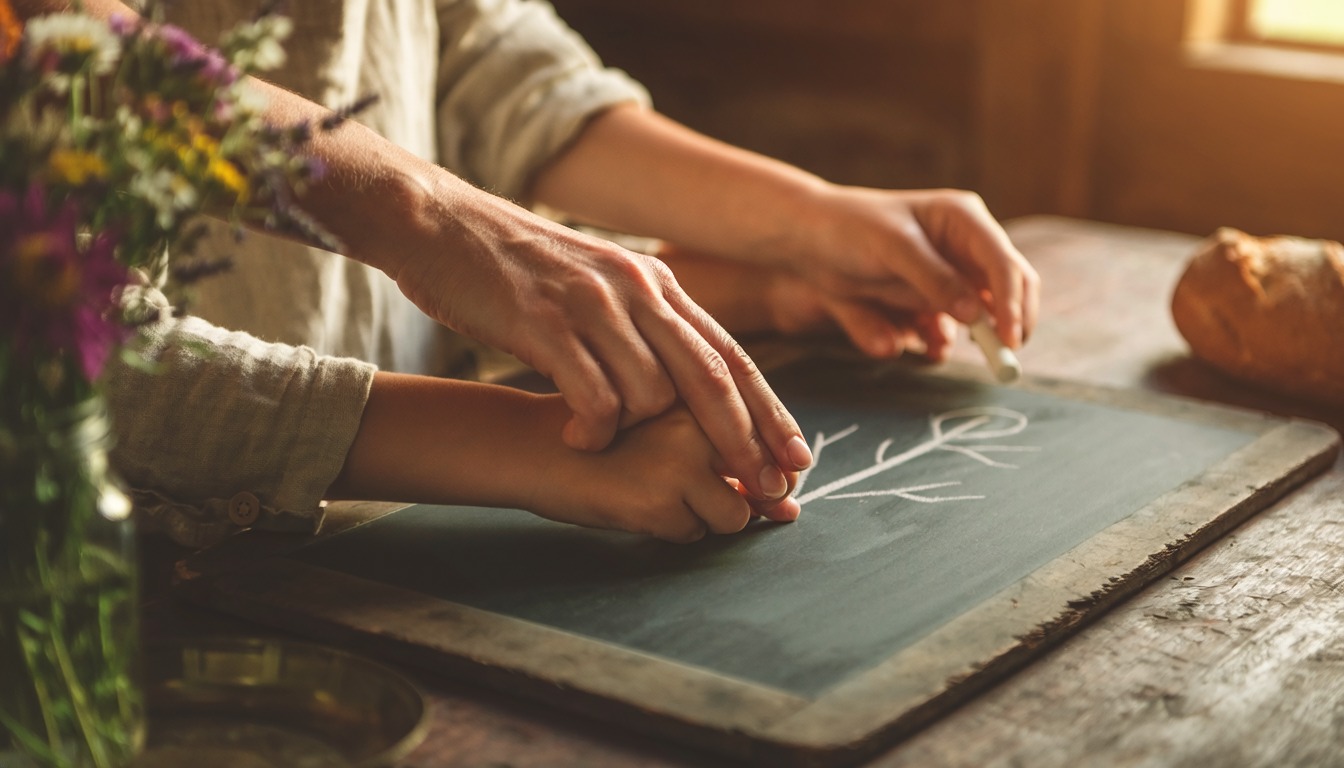
My mother is the kindest person I know, and kind to everyone.
Not the performative kind of kindness that arrives with an audience and disappears when the room empties. Not the strategic kind that calculates the return before making the investment. The unconditional kind. The kind that extends to strangers and neighbours and the person behind the counter and the one nobody else notices in the room.
She is kind to people who can do nothing for her. Kind to people who will never know her name. Kind in the small, invisible, unremarkable moments that nobody photographs or posts about, the ones that happen between a woman and the world every day, without fanfare, without applause, without anyone stopping to say I see what you are doing, and it matters.
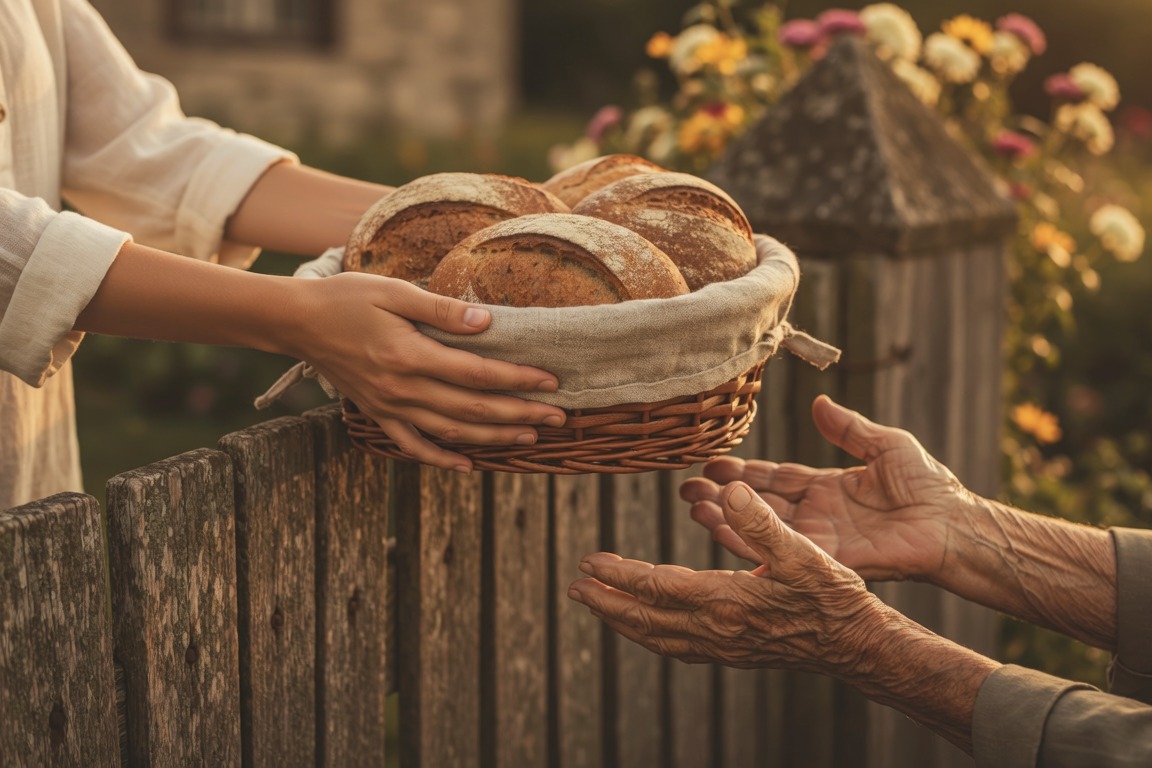
I grew up watching this. Not understanding it at first. Just absorbing it the way children absorb everything, not through lectures but through living. Through the daily, relentless, wordless curriculum of watching a woman move through the world with her hands open instead of closed.
And somewhere along the way, without either of us naming it, she taught me the most important lesson I have ever learned:
It costs you nothing to be kind. But it gains you everything.
Not everything in the material sense. Everything in the human sense. Trust. Connection. The quiet knowledge that you have left every room a little warmer than you found it. The understanding that your impact on the world is not measured by what you accumulate but by how many people felt seen because you were in the room.
My mother has never called this a philosophy. She has never built a framework around it. She has never written it on a poster or turned it into a programme.
She just lives it. Every day. For everyone.
And in doing so, she is the first school I ever attended. The school where I learned everything that matters, not maths, not English, not the capital of Peru, but how to be a human being in the company of other human beings.
That is what mothers do. They are the first school. And they are the finishing school. They are where character begins, and where the rough edges are smoothed, and where the clay is shaped into something that resembles a whole person, long before any institution gets its hands on the work.
The School That Never Closed
We used to have a concept called the finishing school. It has fallen out of favour, and for good reason, much of what it represented was shallow. Deportment. Etiquette. Which fork goes where. How to sit, how to stand, how to enter a room in a way that suggested you had been practising entering rooms.
But underneath the veneer, there was an idea worth rescuing:
The deliberate shaping of a young person’s character before they enter the world.
Not their qualifications. Not their resume. Their character. The qualities that determine how they treat people, how they handle failure, how they carry success, how they love, how they lead, how they sit with someone in pain without running from the room.
We dismantled the old finishing schools because they were often elitist, superficial, and gendered. Fair enough. But we forgot to replace them. We took down the institution and assumed the work would happen on its own.
It didn’t.
But it also never fully stopped. Because one institution never closed its doors. One school kept operating, without funding, without a curriculum, without a single policy document or government review, producing graduates of extraordinary character, year after year, generation after generation.
The mother.
The kitchen table. The car on the way to school. The bedside at midnight. The conversation after the mistake, and the conversation after the triumph, and the quiet wordless presence on the days when no conversation was needed at all, just the knowledge that she was there, and she was not going anywhere, and the door was always open.
That is the finishing school that never closed. And it is running right now, in every home where a mother is doing the slow, invisible, unglamorous work of shaping a human being.
“The hand that rocks the cradle rules the world.” William Ross Wallace
Not because she seeks to rule. Because she shapes the people who will.
The Curriculum Nobody Writes Down
At Arete Estate, I teach six virtues. I have spent years building frameworks, writing curricula, designing programmes that deliberately shape the character of young people.
But here is the truth I don’t say often enough:
Everything I teach, I learned first from a mother.
Not from a textbook. Not from a philosopher. From the woman who shows me what each virtue looks like in practice, without ever naming them, without ever knowing she is delivering a masterclass in human formation every single day.
She teaches me Fortitude by standing firm when the house is shaking. Not by telling me to be tough. By showing me what steadiness looks like when it is real. The morning after the hard night. The calm voice in the middle of the crisis. The refusal to fall apart in front of her children, not because she isn’t afraid, but because the people behind her need someone who won’t move. Every mother who holds it together when she is breaking inside teaches her children more about Fortitude than any lecture ever could.
She teaches me Wisdom by letting me fail. Not by protecting me from consequences but by sitting with me inside them. The conversation after the bad decision. The silence that isn’t punishment but patience. The question she asks when I want an answer: what do you think you should do? She doesn’t hand me her wisdom. She makes me find my own. And in doing so, she gives me something no school ever could: the habit of honest self-examination.
She teaches me Love by being unconditional. Not unconditional in the way that tolerates everything. Unconditional in the way that stays. Through the arguments and the silence and the teenage years when I was certain she didn’t understand anything. She stayed. She keeps the door open. She holds the standard and holds the love and somehow, in a feat of human engineering that no philosopher has ever adequately explained, she has never let either one drop.
That is the miracle of maternal love. It demands the best from you while accepting you at your worst. It says I expect more and I love you exactly as you are in the same breath. And somehow, impossibly, both of those things are true at the same time.
She teaches me Courage by letting me go. By standing at the door and watching me walk toward something she could not protect me from, a deployment, a decision, a life that was mine and not hers, and choosing to let me go anyway. That is the courage nobody talks about. Not the courage of the one who leaves. The courage of the one who stays behind and waits.
She teaches me Temperance through manners. Not the fork-and-knife kind. The human kind. Please and thank you. Look people in the eye. Treat the person serving you the same way you treat the person hosting you. She teaches me that manners are not performance, they are the visible expression of an invisible truth: every person you encounter is worth your respect. That is not etiquette. That is character. And she drilled it into me so deeply that I cannot walk past a person without acknowledging them. That is her finishing school, still running, still enrolling, still open for business.
She teaches me Gratitude by planting what she will not harvest. Every meal that is ready before I am hungry. Every sacrifice she makes without naming it, without tallying it, without once saying look what I’ve given up for you. She plants orchards she will never sit under. And the fruit of those orchards is who I am.
The Invisible Graduates
There is no graduation ceremony for the mother’s finishing school. No diploma on the wall. No alumni network or class reunion.
But the graduates are everywhere.
They are the man who holds the door for a stranger and doesn’t think about it, because his mother held the door for everyone and made it look like breathing. They are the woman who sits with a colleague in crisis because her mother taught her that presence is the most generous thing you can offer. They are the child who crosses the playground to sit beside the one who sits alone, because somewhere, at some kitchen table, a mother said: how do you think they feel?
They are the adult children, thirty, forty, fifty years old, who still call on a Sunday. Not because they have to. Because the school is still in session. Because the woman who shaped them is still shaping them, and they are wise enough now to know what they are receiving.
My mother’s graduating class includes me. And every person I have ever been kind to is her credit, not mine. Every time I hold a space for someone, every time I notice the person nobody else has noticed, every time I choose patience when the day is begging me to choose frustration, that is her curriculum, alive in my body, doing what she designed it to do. And she is still teaching. The school has never closed.
A mother’s kindness is not a moment. It is an inheritance.
We dismantled the old finishing schools and forgot to replace them. If we are to bring one back, let it be a finishing school for character, for boys and girls, in schools and homes and communities, where the six virtues a mother teaches instinctively are taught deliberately. That is the work of Wisdom & Wonder at Arete Estate: not because mothers are failing, but because mothers have been doing this alone for too long, and the rest of the world needs to catch up.
Every virtue I teach is a virtue a mother taught first. Every framework I build is an attempt to do deliberately what she does instinctively. Every essay in this library, every lesson, every conversation I have with a young person about character started at a kitchen table, watching a woman be kind to everyone she met, and understanding that it cost her nothing and gained her everything.
“All that I am, or hope to be, I owe to my angel mother.” Words attributed to Abraham Lincoln
To Every Mother Reading This
You are not thanked enough. That is the truth of it, and I want to say it without qualification, without caveat, without turning it into a lesson or a framework.
You are not thanked enough.
The meals. The drives. The midnight conversations. The loads of laundry that appeared clean in drawers as if delivered by benevolent ghosts. The school projects you helped with at 10pm. The arguments you absorbed. The apologies you offered when you didn’t need to, because peace in the home mattered more than being right.
The worry. The relentless, bone-deep, never-ending worry that lives in a mother’s chest from the moment her child is born and does not leave, not when they turn eighteen, not when they move out, not when they have children of their own. It just changes address.
The sacrifice you never named. Because naming it would make it a transaction, and what you give is not a transaction. It is a condition. Like gravity. Like oxygen. Like the earth turning without being asked.
You are the first school. The finishing school. The school that never closes, never stops enrolling, never gives up on a student. The one whose curriculum is kindness, whose textbook is patience, and whose graduation ceremony is the moment your child walks into the world and treats another human being with the grace you spent a lifetime teaching them.
You may never see the full harvest of what you have planted. That is the gift and the grief of motherhood in a single breath. But I can tell you this, as a man who was shaped at your kind of table, by your kind of hands:
The harvest is growing. Even when you cannot see it. Even when the garden looks empty. Even when the child you shaped seems to have forgotten every lesson you taught.
They haven’t forgotten. They are living it. In a thousand small ways they do not yet recognise, your kindness is alive in their hands. Your patience is running through their decisions. Your love is the architecture underneath every good thing they build.
You are not thanked enough. But you are seen. Every day.
Every morning, somewhere in Australia, a mother wakes up before the house.
She does not set an alarm. Her body knows the time. It has known the time since the first child arrived, and it will know the time long after the last child leaves.
She makes the tea. She wipes the bench. She checks the bags, the lunches, the permissions, the weather. She does the invisible arithmetic of a household, the calculations nobody sees, that keep the whole machine turning without a sound.
And then the house wakes up. And she is ready. As she always is. As she always has been.
Nobody will write this down. Nobody will record it. Nobody will hand her a certificate or add it to a resume or stand in a room and applaud.
But I will say it here:
Thank you.
For the school you built without a building. For the curriculum you wrote without a pen. For the finishing school that never closed, that polished us with love instead of rules, that sent us into the world carrying your kindness in our bones.
To my mother, who teaches me every day that it costs nothing to be kind and gains you everything. The school is still open, Mum. And I am still learning.
To Skye, who is building that same school for our children, with the same grace and the same fierce, unconditional love.
And to every mother reading this, the one whose children still hand her a card, and the one whose children haven’t called yet, and the one whose children are grown and gone and carrying her lessons into rooms she will never enter:
You are the first school. And the last. And every lesson in between.
The lighthouse is lit. And it was a mother who lit it first.
About the author
Marcus J Emsley · The Guide
Marcus spent seventeen years as a welfare officer in the Royal Australian Air Force, at home and on operations overseas, sitting with people in grief, trauma and the mornings they did not want to rise. He is the founder of Arete Estate in the Barossa Valley, South Australia, the creator of The Sculptor's Journey and Wisdom & Wonder, and the author of the debut novel Wisdom & Wine. He is the son of a primary school teacher who coached footy, cricket and life, and a palliative care nurse who showed him what kindness at the hardest door looks like. He has stood in the dark himself, and he writes from the far side of it.
What we are building at Arete Estate
Arete is excellence becoming. It is the highest expression of who you were always meant to be, not the finished version, but the version that keeps reaching. It is not built. It is revealed.
Arete Estate exists to help people reveal, not construct, the highest version of themselves. We do this through six virtues drawn from the world's wisdom traditions, taught through stories, walked through daily practice, and offered to anyone who is ready to begin: the parent raising a child, the leader carrying a team, the soldier returning from service, the school shaping the next generation, the person sitting alone in the early hours of the morning wondering if there is a path through.
Our work is to make that path visible. To stand as a lighthouse for the seekers, the grieving, and the broken. To remind every person we reach that excellence is not built, it is revealed by storms, and that they are not alone in the storm.
We do not chase. We shine. The Sculptor's Journey (The Doorway, The Walked Path, The Guided Path), An Hour with the Guide, Meditate with Arete, Wisdom & Wonder and The Sculptor's Library are the rooms of that house.
Six virtues. One journey. Your highest self.
www.areteestate.com.au · info@areteestate.com.au · Instagram @areteestate
If this essay touched something raw
Some of what is written here is heavy. If it has stirred something you are carrying, please do not carry it alone tonight.
Lifeline 13 11 14 · Open Arms (veterans and families) 1800 011 046 · 1800RESPECT 1800 737 732 · Kids Helpline 1800 55 1800 · In an emergency, call 000.
Reaching out is not weakness. It is all six virtues at once: the Fortitude to stay, the Wisdom to know you need a hand, the Love to let someone in, the Courage to ask, the Temperance to set the weight down, and the Gratitude for the one who answers.

Responses