Courage · For the children, the teachers, and the parents.
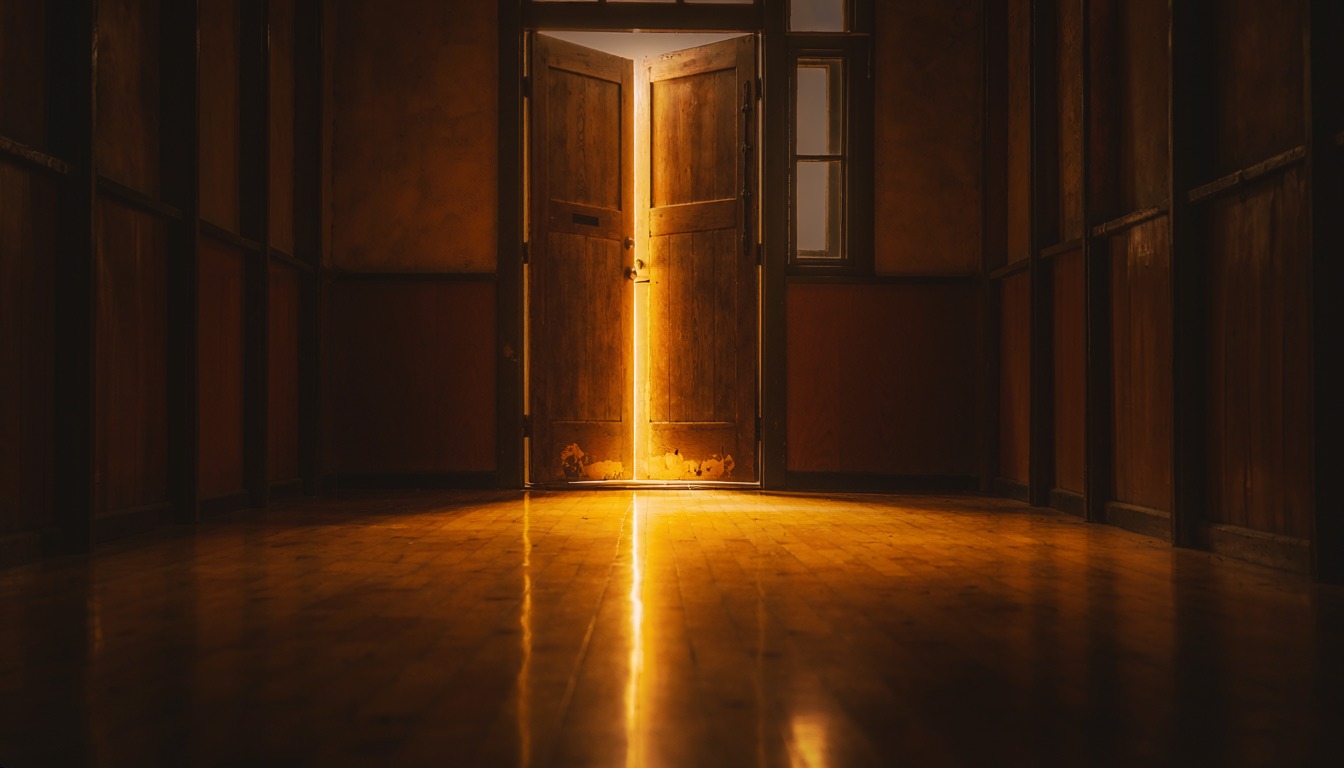
There is a door.
It looks like a classroom door. Scuffed at the bottom from years of shoes and schoolbags. A narrow window beside it, the kind you can see through if you press your face to the glass, but only just. The handle is cold. The corridor behind you is loud, laughter, footsteps, someone’s bag being dragged along the floor, the hum of a school that is always, always moving.
On the other side of this door, something different is waiting. Not a test. Not a lesson plan. Not a lecture on behaviour or a worksheet on comprehension or another conversation about what year twelve will require.
On the other side of this door is a question.
A single question, written on a board, or spoken aloud, or held in the quiet space of a room where somebody has decided that the most important thing a young person can hear today is not information. Not instruction. Not assessment.
An invitation.
What kind of person do you want to become?
Not what job. Not what score. Not what subject pathway or university preference or career trajectory.
Who.
That question, held in a twelve-year-old’s hands for the first time, changes everything.
The Question Nobody Is Asking
Something should keep us awake at night.
A child will spend thirteen years in school. Thirteen years of mornings and classrooms and homework and tests. Thirteen years of bells and timetables and report cards and parent-teacher interviews. Roughly fifteen thousand hours of formal education.
And in all of those hours, in all of those years, most children will never once be asked the question that matters most.
What kind of person do you want to become?
They will be asked what they want to study, what they are good at, what they got on the test, where they see themselves in five years. They will be sorted, streamed, assessed, ranked, and reported on, measured in every conceivable dimension except the one that will determine the actual quality of their life.
Their character.
We do not teach character in most schools. Not really. Not as a subject that matters in the way maths matters, or English, or science. We mention it. We allude to it in values statements and assemblies and anti-bullying posters on corridor walls. We hope it gets absorbed through sport, or drama, or the general experience of being around other human beings for six hours a day.
But we do not sit a young person down, look them in the eye, and say: the most important thing you will ever build is not a career. It is yourself. And we are going to spend time, real time, protected time, the kind of time we currently give to algebra and essay structure, helping you build it.
Frederick Douglass, who understood the relationship between education and freedom better than almost anyone, is credited with a line whose weight still hasn’t lifted:
“It is easier to build strong children than to repair broken men.” (attributed to Frederick Douglass)
Easier to build. Not cheaper. Not more convenient. Easier. Because the building happens naturally when someone gives a young person the vocabulary, the framework, and the invitation. And the repair, the work that happens in counselling rooms and welfare offices and hospital corridors when the vocabulary was never given, is infinitely harder. Infinitely more expensive. And infinitely more painful for the person sitting in the chair.
The door is there. The question is waiting. The child is ready.
The question is whether we are brave enough to open it.
The Child at the Door
Imagine a twelve-year-old sitting in a classroom. Any twelve-year-old. Yours, if you have one. Or the one you were.
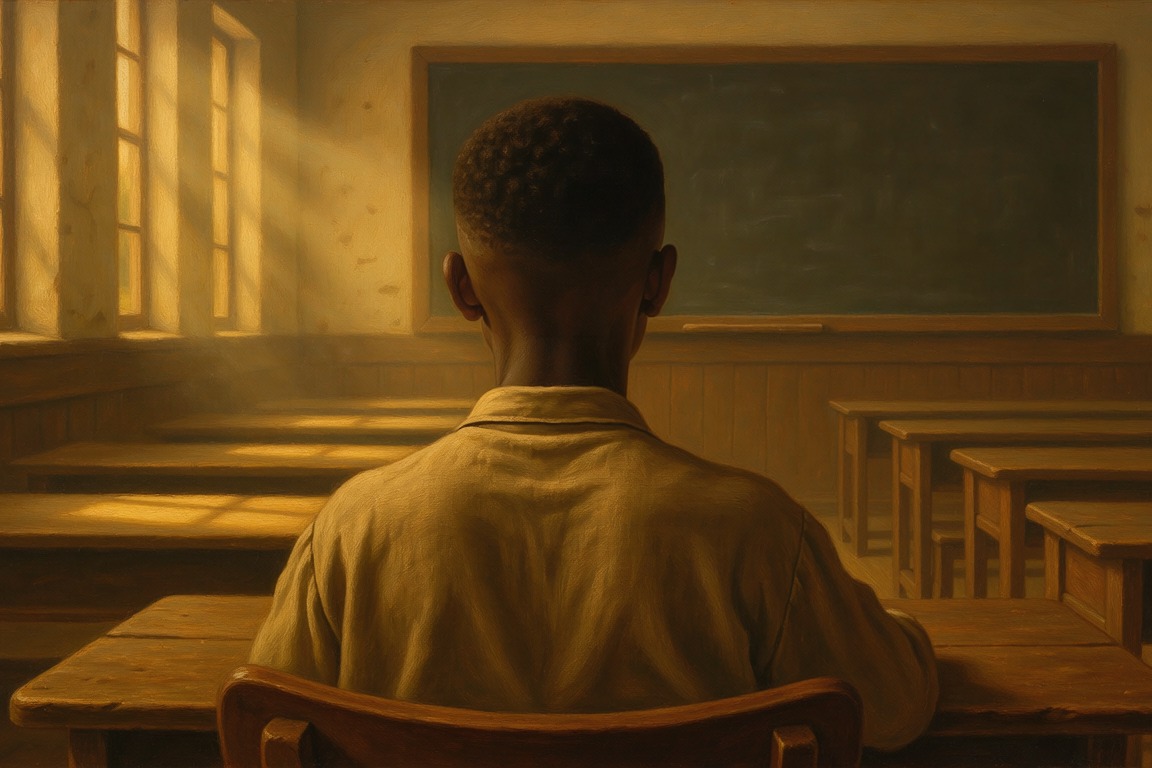
They are at the most extraordinary crossroads in human development. Their brain is literally rebuilding itself, pruning old connections, forging new ones, rewiring the architecture of who they are and who they will become. Their body is changing in ways they didn’t ask for and can’t control. Their social world is a minefield of belonging and rejection that shifts daily, sometimes hourly. They are trying to figure out who they are in a world that is simultaneously telling them to be themselves and to fit in, two instructions that, at twelve, feel like they come from different planets.
And into this chaos, this beautiful, terrifying, once-in-a-lifetime chaos, most of the adults in their life are offering them two things: information and assessment. Here is what you need to know. Here is how well you know it.
But what if someone offered them something different?
Maggie Dent, one of Australia’s most trusted voices on children and resilience, a former teacher and counsellor, a mother of four sons, and a woman who has spent decades fighting for the inner life of young people, wrote something that should be pinned above the door of every classroom in this country:
“Human connectedness is the key to resilience, authentic happiness and a sense of wellbeing. This can only be achieved through the recognition, honouring and nurturing of the human spirit that exists within every child ever born.” (Maggie Dent, Saving Our Children from Our Chaotic World)
The human spirit that exists within every child ever born. Not the human spirit that needs to be installed. Not the character that needs to be constructed from scratch. The spirit that is already there, waiting to be recognised, honoured, and nurtured. Waiting for someone to open the door and say: I see you. Not your test score. Not your behaviour report. You.
What if someone sat with them, not in front of them, not above them, but with them, and said: before we talk about what you need to learn, let’s talk about who you want to become. Not who the world wants you to be. Not who your parents expect. Not who your friends will approve of. Who you, the actual, specific, unrepeatable human being sitting in this chair, want to become.
And what if, instead of leaving that question hanging in the air like a nice sentiment, someone gave them a framework for answering it?
Not a rulebook. Not a behaviour management system. Not a list of values printed on a laminated card and stuck to the wall.
A path. With six virtues on it that have been practised by human beings in every culture, on every continent, for over two thousand years. Virtues that are not abstract, that live in the way you treat the person who annoys you most, the way you respond when you fail publicly, the way you sit with a friend who is hurting, the way you stand up for someone when it costs you something.
Fortitude. Temperance. Wisdom. Love. Courage. Gratitude.
Six words. Six doors inside the door. And behind each one, a question that is more interesting, more useful, and more life-shaping than anything on the test.
A twelve-year-old who is given the vocabulary for character before the storms arrive will navigate those storms differently. Not because they are tougher. Because they can name what is happening, and naming is the first act of mastery.
The twelve-year-old is ready for this. More than ready. They are hungry for it, for something that treats them as a person becoming, not just a student performing.
All they need is someone to open the door.
The Teacher at the Door
If you are a teacher reading this, and I hope you are, because this was written with you in the room, I want to say something to you that the system probably hasn’t said in a while.
You didn’t go into teaching for the data.
You went into teaching because somewhere, at some point, a young person looked at you, or you looked at a young person, and something clicked. Something that had nothing to do with content delivery and everything to do with the terrifying, sacred possibility that you might actually matter in this child’s life.
That you might be the person who sees them. Really sees them, not their grade, not their behaviour, not their postcode or their parents or their diagnosis, them. The human being inside the uniform who is quietly, desperately trying to figure out who they are.
Every teacher already knows in their bones that education is not the learning of facts. It is the training of the mind to think. Not what to think. How to think. How to examine your own thoughts. How to question your own assumptions. How to sit with uncertainty and complexity and the uncomfortable realisation that not everything has a right answer, and that the quality of the question matters more than the speed of the answer.
That is character education. That is what happens when you give a young person a virtue and say: let’s explore this. Not memorise it. Not write an essay on it. Explore it. What does courage look like in your life right now? Where is your fortitude being tested? What would temperance look like in the way you use your phone?
You already know how to do this. You do it every time you have the conversation that isn’t in the lesson plan, the one in the corridor, the one after class, the one at the door of the bus when a student says something quiet that lets you know they’re carrying something too heavy for a twelve-year-old body.
The difference is this: what if that conversation wasn’t the exception? What if it was the curriculum? What if the school gave you protected time, real time, weekly time, to sit with your students and do the work you actually went into teaching to do?
Not instead of maths. Not instead of English. Alongside them. Because a young person who has been invited to think about their own character brings a different quality of attention to everything they do.
Maggie Dent has made the same point at the level of the brain itself: relationship brings belonging, and belonging lets the primitive brain relax enough for the higher brain, where our best thinking and behaviour live, to open. When a child feels they belong, truly belong, not in the compliance sense but in the seen-and-valued sense, their brain literally opens. The guard comes down. The higher functions come online. The capacity for thinking, for reflection, for the kind of deep engagement that every educator dreams of, becomes available. Not through better content. Through better connection. Through a door that says: you belong here. Not because of your grade. Because of who you are.
The teacher who opens this door is not adding to their workload. They are returning to the reason they became a teacher in the first place.
The Parent at the Door
And now, to the person lying awake at midnight.
You know who you are. You are the parent of a child who is growing faster than you can keep up with. A child who was small enough to carry yesterday and is now taller than you, or nearly, and the speed of it, the sheer, relentless, unstoppable speed of them becoming, takes your breath away in a way that nobody warned you about.
And you are worried. Not about the grades; you can check those. Not about the surface things, you can see those. You are worried about the thing beneath the surface. The thing you can’t measure, can’t test, can’t access through the school portal.
Is my child okay?
Not academically. Not socially. Not in any of the ways the system knows how to measure. But okay in the way that means: do they know who they are? Do they have the vocabulary for what they’re feeling? When the storm comes, and it will, because it comes for everyone, will they have roots?
Khalil Gibran, who understood the parent-child relationship with a clarity that makes you feel seen and undone at the same time, wrote:
“Your children are not your children. They are the sons and daughters of Life’s longing for itself. You may give them your love but not your thoughts, for they have their own thoughts.” (Khalil Gibran, The Prophet)
They have their own thoughts. Their own questions. Their own becoming that will not, cannot, be a copy of yours, no matter how much you wish you could hand them the answers you had to earn the hard way.
But you can give them something better than answers. You can give them the question.
What kind of person do you want to become?
You can give them the vocabulary, the six virtues, the images, the practices, that turn a vague anxiety about character into something tangible, something they can hold, something they can return to when the corridor is loud and the world is confusing and they need a door to walk through.
And this is the part that will surprise you: when your child is given this vocabulary at school, when a teacher opens this door and invites them through, it comes home. It arrives at your dinner table. It shows up in conversations you didn’t plan. Your twelve-year-old says something about courage on a Tuesday night that makes you put down your fork. Your fourteen-year-old asks a question about wisdom that you don’t know how to answer, and the not-knowing, the sitting together in the question, becomes the most important moment of the week.
When a child is given the language of character, the conversation changes, not just at school, but at every table they sit at for the rest of their life.
What’s Behind the Door
Behind the door is not a programme. Not a box of worksheets. Not a laminated poster with values listed in a cheerful font.
Behind the door is a journey. A semester of it: a young person walking through the same six virtues that have been practised by human beings on every continent for over two thousand years, not as abstract philosophy, but as lived, weekly, hands-in-the-soil practice. In the first week they are asked the question: what kind of person do you want to become? They don’t have to answer it perfectly. They barely have to answer it at all. They just have to hear it, maybe for the first time in their life, and sit with it. And then, week by week, they are given the tools to answer it. They meet the lighthouse and discover that being strong doesn’t mean being hard. They meet the conductor and learn that the phone, the group chat and the noise are instruments they can conduct rather than be conducted by. They pan for gold in the mud of their own week. They learn that love is a choice, that fear is the scout and not the commander, and that gratitude is the discipline of noticing what is also true.
These are not lessons. They are invitations. Each one a door within the door. Each one asking the young person not to memorise a definition, but to try something, this week, in their actual life, with their actual friends and family and fears, and see what happens.
Character is not taught in a classroom. It is practised in a life. But the classroom can be the place where the invitation is first offered, and the door is first opened.
The Door Is Open
This essay has been for three people. The child, the teacher, and the parent. And I want to close by speaking to each of them directly.
To the young person: if you are reading this, or if someone you love reads it to you: nobody expects you to have the answer yet. Nobody expects you to know, at twelve or fourteen or sixteen, exactly who you want to become. The question is not a test. It is a door. And all you have to do, today, is notice it is there. You don’t have to walk through it yet. You just have to know it exists. And when you’re ready, when something inside you says I want to be more than my grades, more than my followers, more than the version of me that other people expect, the door will still be there. It has been there for two thousand years. It is not going anywhere.
To the teacher: you already know this matters. You feel it every time a student says something in the corridor that tells you they are carrying more than their schoolbag. You feel it every time you watch a child navigate something hard and wish you had more to offer than a referral and a kind word. The door is there. And the work behind it, the real work, the character work, the work you went into teaching to do, is ready for you. Not as an extra. As a return to the centre.
To the parent: the worry is real. The midnight question (is my child okay?) is the most honest question a parent can ask. And I want you to hear this: you do not have to carry it alone. There are people building something for your child. Not a programme that measures them differently. A journey that sees them differently. That sees them as a person becoming, and gives them the vocabulary to do the becoming with intention, with courage, and with roots.
Nelson Mandela understood what was at stake. He understood it from inside a prison cell, where he spent twenty-seven years thinking about what kind of world he wanted to build, and who would need to build it:
“Education is the most powerful weapon which you can use to change the world.” (Nelson Mandela)
The most powerful weapon. Not curriculum reform. Not standardised testing. Not a new app or platform or data system. Education. The real kind. The kind that asks a young person: who are you becoming? The kind that opens a door and says: there is more inside you than anyone has ever measured. And we have time. Let’s begin.
Tonight
Somewhere tonight, a twelve-year-old is lying in bed. The phone is face-down on the bedside table, still glowing. The house is quiet. The ceiling is familiar. And inside that child, beneath the homework stress and the friendship drama and the low-level anxiety that has become so normal for this generation that they don’t even recognise it as unusual, a question is forming.
They might not have the words for it yet. It might arrive as a feeling, a restlessness, a quiet hunger for something they can’t name but know they haven’t been offered. The question is:
Is this it? Is this all there is? Tests and grades and likes and followers? Or is there something more, something deeper, something real, something that would help me understand who I am and why I’m here?
There is.
There is a door. And behind it, a question that has been waiting for two thousand years to be placed in their hands.
What kind of person do you want to become?
That question, held gently, explored with care, returned to weekly, lived in daily, will do more for a young person than any test score, any ranking, any report card, any university offer ever will.
Because the test measures what they know. The question shapes who they are.
The door is there. The question is waiting. All we have to do is open it.
About the author
Marcus J Emsley · The Guide
Marcus spent seventeen years as a welfare officer in the Royal Australian Air Force, at home and on operations overseas, sitting with people in grief, trauma and the mornings they did not want to rise. He is the founder of Arete Estate in the Barossa Valley, South Australia, the creator of The Sculptor's Journey and Wisdom & Wonder, and the author of the debut novel Wisdom & Wine. He is the son of a primary school teacher who coached footy, cricket and life, and a palliative care nurse who showed him what kindness at the hardest door looks like. He has stood in the dark himself, and he writes from the far side of it.
What we are building at Arete Estate
Arete is excellence becoming. It is the highest expression of who you were always meant to be, not the finished version, but the version that keeps reaching. It is not built. It is revealed.
Arete Estate exists to help people reveal, not construct, the highest version of themselves. We do this through six virtues drawn from the world's wisdom traditions, taught through stories, walked through daily practice, and offered to anyone who is ready to begin: the parent raising a child, the leader carrying a team, the soldier returning from service, the school shaping the next generation, the person sitting alone in the early hours of the morning wondering if there is a path through.
Our work is to make that path visible. To stand as a lighthouse for the seekers, the grieving, and the broken. To remind every person we reach that excellence is not built, it is revealed by storms, and that they are not alone in the storm.
We do not chase. We shine. The Sculptor's Journey (The Doorway, The Walked Path, The Guided Path), An Hour with the Guide, Meditate with Arete, Wisdom & Wonder and The Sculptor's Library are the rooms of that house.
Six virtues. One journey. Your highest self.
www.areteestate.com.au · info@areteestate.com.au · Instagram @areteestate
If this essay touched something raw
Some of what is written here is heavy. If it has stirred something you are carrying, please do not carry it alone tonight.
Lifeline 13 11 14 · Open Arms (veterans and families) 1800 011 046 · 1800RESPECT 1800 737 732 · Kids Helpline 1800 55 1800 · In an emergency, call 000.
Reaching out is not weakness. It is all six virtues at once: the Fortitude to stay, the Wisdom to know you need a hand, the Love to let someone in, the Courage to ask, the Temperance to set the weight down, and the Gratitude for the one who answers.

Responses