
On Integrity, Silence, Men’s Mental Health and the Courage to Say Three Words.
Dedicated to the Dawson family.
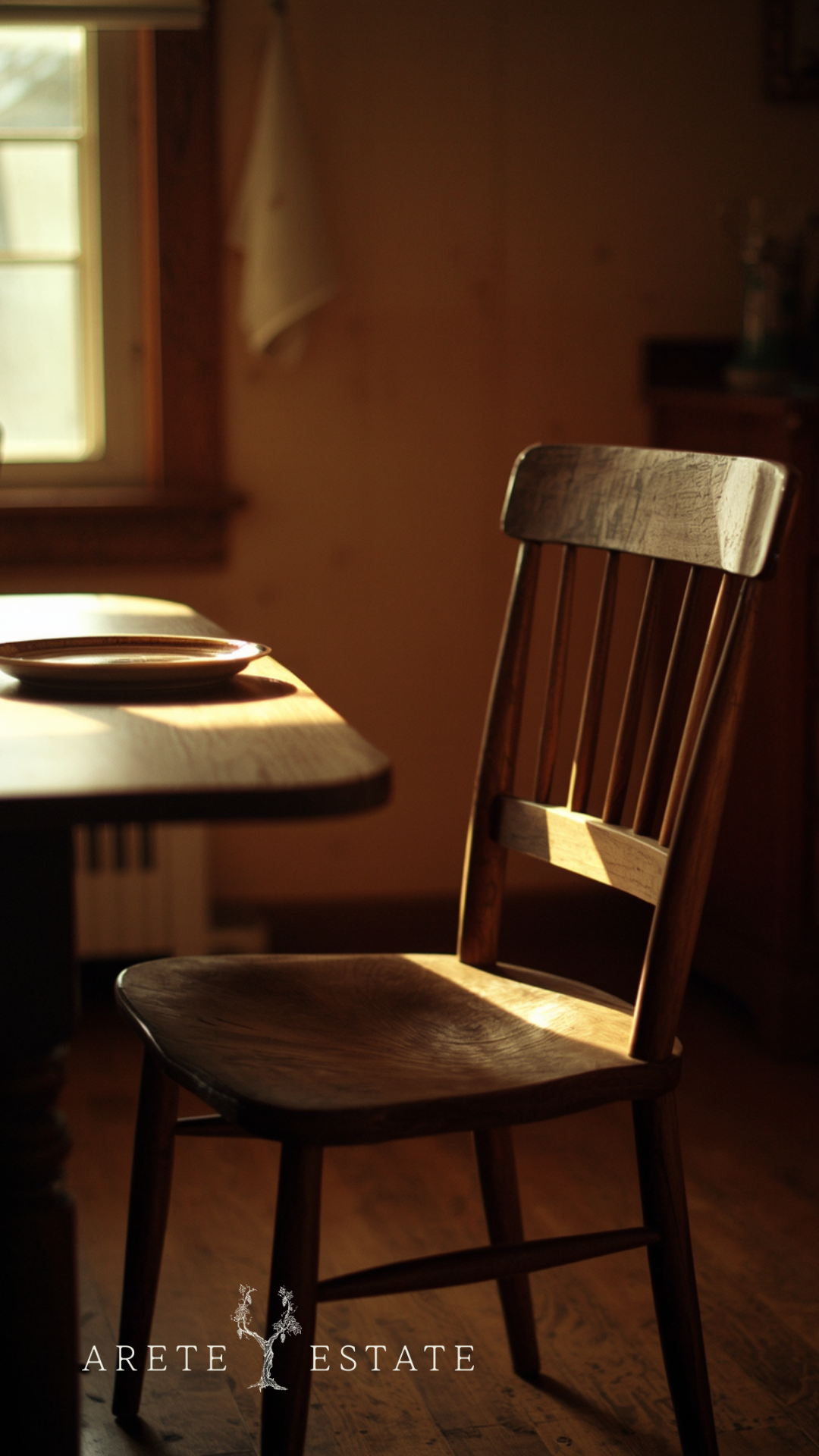
For another man lost. For the beautiful family left behind. And for every man sitting in the dark right now, wondering if anyone would notice the empty chair.
We would notice. We would always notice.
There is a room in every man’s life that no one else sees.
It is not a physical room. It is the space behind the face he shows the world. The silence underneath the competence. The gap between I’m fine and the truth.
Most men visit this room late at night, when the house is quiet and the performance of the day has ended. When there is no one left to be strong for. No meeting to run, no child to reassure, no partner to convince that everything is under control.
In this room, a man sits with whatever he has been carrying. The weight of it. The shape of it. The growing certainty that he cannot sustain it much longer and the absolute conviction that he must.
Because that is what he was taught. That is the unwritten contract he signed the moment the world decided he was a man: carry it. Don’t speak about it. Handle it. Alone.
I spent seventeen years sitting in rooms like this with other men. As a welfare specialist in the Australian Defence Force, I was the person on the other side of the door. I sat with soldiers, sailors, aviators, officers, fathers, sons, men who had carried so much for so long that the carrying itself had become the crisis.
And I learned something in those rooms that I will carry for the rest of my life:
The decisions that define a man’s character are never made in the light. They are made in the dark, before the outcome is known, before anyone is watching.
The decision to stay. The decision to speak. The decision to open the door and say the three words that every model of manhood has taught him to swallow:
I’m not okay
The Lie We Built Into Them
We need to talk about what we have done to men. Not to excuse anything. Not to compete in the suffering. To understand how we arrived here.
From the earliest age, boys receive a message so consistent, so pervasive, so reinforced by every institution and relationship in their lives that it becomes invisible. It stops being a message and starts being the air they breathe:
Strong men don’t ask for help.
It comes from fathers who never cried in front of them. From coaches who told them to walk it off. From mates who changed the subject whenever the conversation got too real. From a culture that celebrates male stoicism and punishes male vulnerability. From a manosphere that has built an entire economy on the lie that feelings are a defect to be engineered out of the male experience.
And so men learn. They learn to armour. To perform competence when they are drowning. To say I’m fine so many times that the words lose all meaning and become nothing more than a door they close between themselves and anyone who might help.
They learn that silence is strength. That carrying alone is honourable. That the weight on their shoulders is the price of admission to manhood, and if they buckle under it, they have failed — not at a task, but at being a man.
“Vulnerability is not weakness. And that myth is profoundly dangerous.” — Brené Brown
Profoundly dangerous. She chose those words carefully. Because the myth is not just wrong. It is lethal.
The Weight of the Silence
I need to share some numbers with you. I wish I didn’t have to. But silence about these numbers is part of the architecture that produces them.
In 2024, 3,307 Australians died by suicide. More than three-quarters of them — 2,529 — were men.
Seven men a day.
Seven fathers, brothers, sons, mates, husbands, colleagues. Seven empty chairs at seven dinner tables. Seven families who will spend the rest of their lives in the wreckage of a silence that was never broken.
The male suicide rate in Australia is more than three times higher than the female rate. Not because men suffer more. Not because men’s problems are worse. Because men were taught to carry more and say less. Because the architecture of masculinity, the lie that strong men don’t ask for help, is doing exactly what it was designed to do.
It is killing them.
Every one of those 2,529 men made a decision in the dark. And for too many of them, the decision was silence. Not because they didn’t want help. Because they were never given permission to ask for it.
Behind every statistic is a family. A kitchen that is quieter now. A bed that is half empty. Children who will grow up asking a question that has no answer: why didn’t he tell us?
I am writing this essay because of one of those families. The Dawson family. Another man lost. Another beautiful family left in the aftermath of a silence that should have been broken.
I cannot bring him back. But I can say what needs to be said. And I can say it now, while men who are sitting in the dark tonight might still hear it.
The Stone That Sets in the Dark
There is a stone called soapstone. When it is first quarried from the earth, it is soft. You can carve it with your hands. Shape it with your fingers. Press your decisions into it like letters into wet clay.
But over time, exposed to heat and pressure, soapstone hardens. It becomes dense. Nearly permanent. The shape it holds is the shape it was given when it was soft.
Character works the same way.
The decisions you make when no one is watching, when the material is still soft, when the outcome is unknown, when the room is dark, those are the decisions that set the shape of who you become. By the time the world sees you, the stone has hardened. And the carving was done in the dark, in choices no one witnessed.
The decision to ask for help is a carving in soft stone. So is the decision to stay silent. Both set a shape. Both harden into something that defines every day that follows.
One shape is a man who learned that vulnerability is not weakness, that opening his mouth saved his life.
The other shape is an empty chair.
Integrity Before the Outcome Is Known
We talk about integrity as if it is a public virtue. Something measured in boardrooms and courtrooms and public speeches.
But the truest integrity is invisible. It is the decision you make when no one will ever know you made it. When there is no audience, no applause, no guarantee that choosing right will lead to a right outcome.
For a man sitting in the dark with the weight of his life pressing down on his chest, integrity looks like this:
It looks like picking up the phone at 2am and calling someone. Not because he is sure it will help. But because the alternative, the silence, the carrying, the pretending, is no longer survivable.
It looks like saying I’m not okay to a mate who didn’t ask, in a voice that shakes, at a moment when every fibre of his conditioning is telling him to swallow it and move on.
It looks like walking into a room, a doctor’s office, a counsellor’s waiting room, a kitchen where his wife is sitting, and letting the performance drop. Letting the armour fall. Letting himself be seen as he actually is, not as he has been pretending to be.
That is not weakness. That is the bravest decision a man will ever make.
Fear tells you the stakes. Courage says “noted” — and begins anyway.
The stakes are your life. Begin anyway.
Six Decisions Made in the Dark
Every virtue I teach is, at its root, a decision made in the dark. A choice that defines character before the outcome is known.
Fortitude — the decision to stand firm when every part of you wants to collapse. But standing firm does not mean standing alone. The lighthouse shines, but it is anchored to rock. You need the rock. You need the people. Strength without support is not fortitude. It is isolation wearing a mask.
Temperance — the decision to govern yourself. Including the decision to recognise when you are beyond self-governance. Asking for help is not losing control. It is the highest form of it. The conductor who knows when to put down the baton and let someone else lead the orchestra, that is not failure. That is wisdom in action.
Wisdom — the decision to see clearly. To acknowledge the mud. Not the polished version you show the world. The actual, honest, terrifying truth of what you are carrying. Wisdom is not having all the answers. It is having the courage to say I don’t have the answers, and I need help finding them.
Love — the decision to let someone in. To choose to be seen when every instinct says hide. Letting another human being witness your unedited self is the hardest direction love can take. It is also the one that saves your life.
Courage — the decision to begin. To pick up the phone. To walk through the door. To open your mouth and let the words out, even when your voice is shaking and you have no idea what will happen next. That is courage. Not the absence of fear. The presence of action in fear’s company.
Gratitude — the decision to believe your life is worth tending. That the garden is not dead. That there is something still growing, even in the dark, even when you cannot see it. The decision to stay, for the people at the table, for the children who need the chair to be full, for the future version of yourself who will one day be grateful that tonight, you chose to remain.
To the Man in the Dark
If you are reading this and you recognise the room, if you are sitting in it right now, or you visit it more often than anyone knows, I want to speak to you directly.
Not as a coach. Not as a writer. As a man who sat on the other side of the door for seventeen years and knows what the silence sounds like.
You are not broken.
You are carrying something that was never designed to be carried alone. And the fact that you have carried it this long is not a sign of strength. It is a sign that the lie worked. The lie that told you silence was honourable. That carrying alone was what men do. That asking for help would make you less.
The lie is wrong. And it is killing good men.
The bravest thing you will ever do is not on a battlefield. It is not in a boardroom. It is not in the gym or the garage or the pub.
The bravest thing you will ever do is sit across from another human being and say: I’m not okay. And I need help.
That is not the end of your manhood. It is the beginning of it. The beginning of the real thing, not the performance, not the armour, but the honest, anchored, whole version of yourself that has been waiting behind the door this entire time.
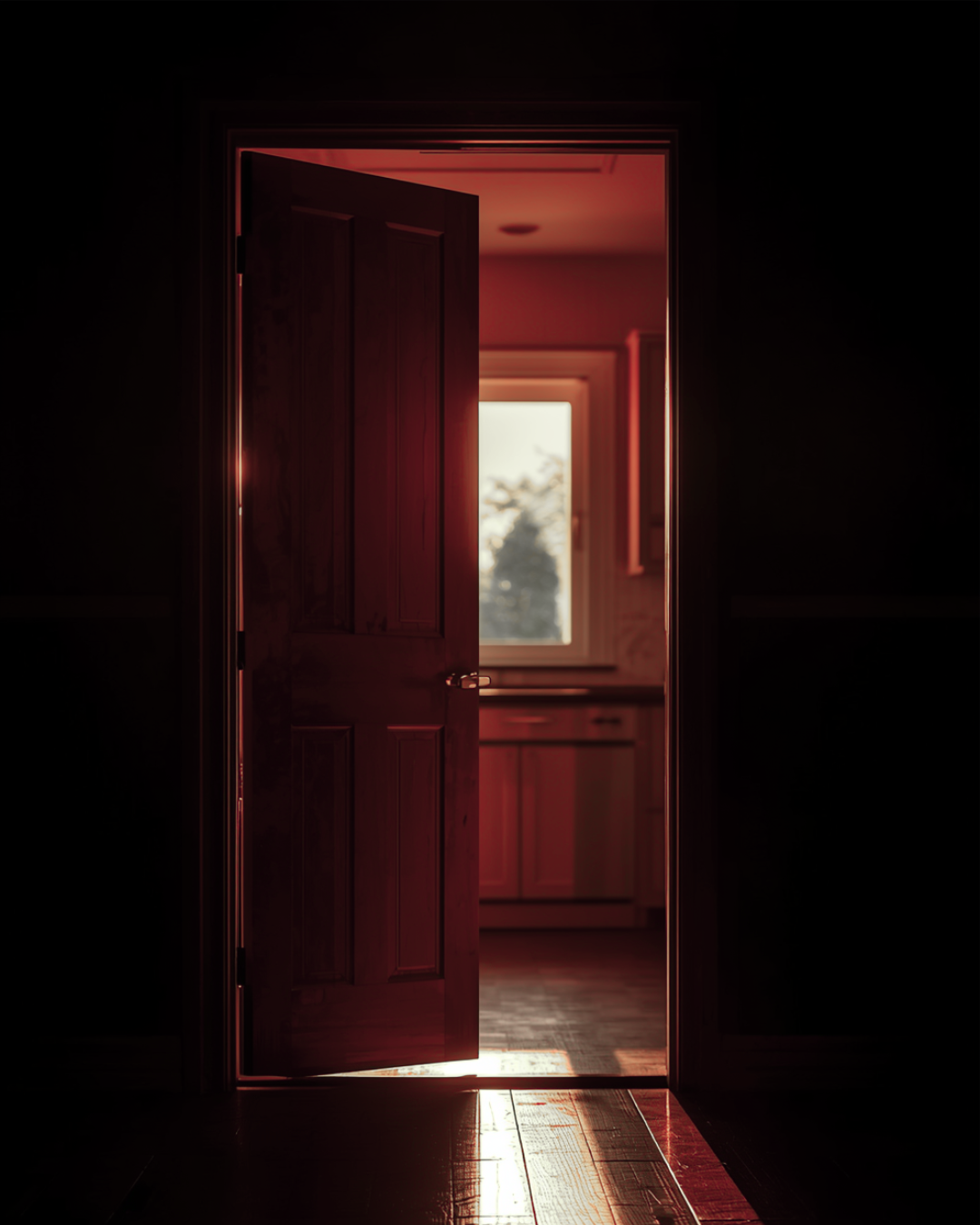
Open the door.
Say the words.
Let someone in.
To the Ones Who Love Him
And if you are reading this and you love a man who is in the dark, if something in this essay has made your chest tighten because you know someone, you live with someone, you are married to someone who visits that room more than he admits, I want to speak to you too.
You cannot carry it for him. You cannot fix it. You cannot force the door open.
But you can do something that matters more than you will ever know:
You can let him know the chair is not going anywhere.
You can sit with him without trying to solve it. You can ask the question, are you okay? And I mean really, and then stay for the silence that follows. Because sometimes the silence is not refusal. It is the sound of a man deciding whether he trusts the room enough to speak.
Don’t fill the silence. Stay in it. Let him know you are not going anywhere. Let him know the table is set and his seat is waiting and the people in this house would rather sit in the mess of his honesty than the comfort of his performance.
“Courage starts with showing up and letting ourselves be seen.” — Brené Brown
Sometimes the most courageous thing is not showing up yourself. It is making the room safe enough for someone else to show up.
When the Dark Feels Too Close
If you are in the dark right now, tonight, this moment, and the weight is pressing down and you don’t know what to do, here are five things you can do before you do anything else. Not tomorrow. Now.
1. Shrink the timeframe. You do not need to solve your life tonight. You do not need to fix the marriage, the job, the debt, the grief, the shame. You need to get through tonight. That is all. Just tonight. Tomorrow is another decision, and you can make it then. But tonight, your only job is to stay. Tell yourself: I just need to get through tonight. That is enough. That is everything.
2. Breathe on purpose. Your body is in crisis mode right now. Your breath is shallow. Your chest is tight. Your mind is racing. You can interrupt that cycle with one deliberate action: breathe in for four seconds, hold for four, out for four, hold for four. Repeat it four times. You are not fixing anything. You are telling your nervous system that you are still here, and you are choosing to stay. Four breaths. That is all.
3. Name five things you can see. Look around the room. Not at the thoughts in your head, at the room. Name five things you can see. Four you can touch. Three you can hear. Two you can smell. One you can taste. This is not a trick. It is a grounding exercise that pulls your brain out of the spiral and back into the present. The present is survivable. It is the projected future that feels unbearable. Come back to the room. The room is safe.
4. Break the silence with a voice. Not a text. Not a message. A voice. Pick up the phone and call someone. It does not matter if it is 2am. It does not matter if you wake them. The people who love you would rather be woken at 2am than attend your funeral. Call Lifeline on 13 11 14 if you cannot call someone you know. Call Open Arms on 1800 011 046 if you are a veteran. Call MensLine on 1300 78 99 78. There is a human being at the end of every one of those numbers, and they are there because they chose to sit in the dark with strangers. Let them sit with you.
5. Move your body out of the room. Stand up. Walk outside. It does not matter where. The front step. The driveway. The end of the street. Movement changes the chemistry. A different room changes the architecture of the thoughts. You do not need to go far. You just need to change the walls around you. Stand under the sky. Feel the air. Remind your body that the world is larger than the room you have been sitting in.
These five things will not solve the problem. But they were never meant to. They are meant to get you to the next hour. And the next hour is meant to get you to the morning. And the morning is where help lives, real help, professional help, the kind that meets you where you are and walks beside you.
You do not need to carry this alone. You were never meant to.
There is a man reading this right now who almost didn’t.
He opened the essay because the title caught something in him. Something he hasn’t named. Something he carries into the dark every night and brings back out every morning, hidden behind the competence, the smile, the I’m fine.
I want to say something to that man, and I want it to be the last thing he reads tonight:
Your life is not a burden. It is a garden. And gardens go through seasons of dark. That does not mean they are dead. It means something is growing underground, in the silence, where no one can see it yet.
The chair at your table is not empty. It is waiting for you. The people in your life are not better off without you. They are incomplete without you. The weight you are carrying is real, and it is heavy, and it is yours, but it was never meant to be carried alone.
Excellence is not the absence of storms. Excellence is revealed by them.
This is the storm. And the decision you make in it, the decision made in the dark, before the outcome is known, before anyone is watching, is the decision that will define everything that comes after.
Open the door.
Say the words.
Stay.
The lighthouse is lit. And it is shining for you.
If You or Someone You Know Needs Help
Lifeline Australia — 13 11 14 — 24 hours, 7 days
Beyond Blue — 1300 22 4636 — 24 hours, 7 days
Open Arms (Veterans & Families) — 1800 011 046 — 24 hours, 7 days
Suicide Call Back Service — 1300 659 467 — 24 hours, 7 days
MensLine Australia — 1300 78 99 78 — 24 hours, 7 days
If you or someone you know is in immediate danger, call 000.
A Personal Invitation
I spent seventeen years holding space for men who were carrying more than they could carry alone. That work did not end when I left the Defence Force. It is the reason Arete Estate exists.
If this essay found you in the dark, if you are the man at the door, or if you love someone who is, I genuinely want you to know: I will hold the space for you if you need it. No judgement. No agenda. Just a man who has sat in that room before and knows what the silence sounds like.
Reach out.
Email: marcus@areteestate.com.au
Social Media: @areteestate
The door is open. The chair is waiting. You do not need to have the words ready. You just need to show up.
Written by Marcus J Emsley, The Guide, at Arete Estate in the Barossa Valley. First published 20 April 2026.
Excellence revealed by storms.

Responses