The story of Anh Do — and what the boat carried.
THE ARETE HEROES SERIES · PART III
Modern lives that embody the ancient pursuit of excellence
The Boat
Close your eyes.
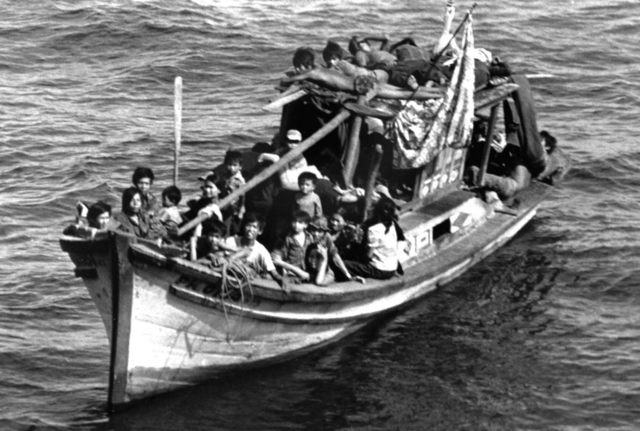
There is no land on the horizon. There has not been land on the horizon for five days. The sun is high. The sea is glass. The deck is hot beneath bare feet that have not touched solid ground in over a hundred hours.
The boat is nine and a half metres long. Two metres wide. A wooden fishing vessel built for two men and a morning’s catch.
There are forty people on it.
Mothers holding infants against their ribs to keep them quiet. Old men curled into the bow with their knees drawn up to their chests. Cousins sleeping standing up because there is nowhere left to sit. The smell of salt and diesel and the sweet rotting of food that ran out two days ago. And the only sound, the only sound for so many days now that nobody on the boat can remember what silence is, is the sea.
It is the Indian Ocean. The year is 1980.
And another boat is slicing the water toward them at speed.
It is the second time today. The engines on the fishing boat have already failed twice. The men on the deck are starting to see what is coming. The children are starting to feel the adults go still around them.
The pirates come over the side.
They take what is left to take, the last of the jewellery, the wedding rings prised off knuckles, the gold teeth caps pulled from mouths still wet from saltwater. One of them, the biggest, picks up a baby. He holds her over the side of the boat. He dangles her by one arm above the water. And as she squirms, a sliver of gold falls from her nappy onto the deck.
A young Vietnamese man at the helm, twenty-five years old, his wife and his infant son packed into the hull behind him, begins to scream. Not in Vietnamese. In something older than language. The pirates do not understand his words but they understand the noise. The biggest pirate lowers the child. The pirates take what they have taken. The pirates climb back into their boat.
And then, as their engine pulls them away across the flat hot water, the youngest of the pirates, no more than eighteen years old, the one whose eyes have been doing something different to the others all morning, does something nobody on the fishing boat will ever be able to explain.
He turns. He picks up a plastic gallon of water. He throws it back across the gap between the two boats. It lands on the deck of the fishing boat with a soft, ordinary thud.
And the pirates leave.
A gallon of water. From a boy with no reason to be merciful.
That water kept forty people alive. They drank it slowly, in shifts, over the days that followed. They were rescued by a German merchant ship before the gallon ran out. They were taken to a refugee camp in Malaysia. They were eventually given asylum in a country they had never seen, on the far side of the world, called Australia.
Decades later, the boy on that boat would grow up to write a memoir. And in it, he would describe the second pirate attack, the one with the eighteen-year-old who threw the water back, in a way that nobody who had not been there could ever have framed it.
“You can’t drink jewellery or eat gold teeth caps. But that water meant everything, because it bought us an extra day. That second pirate attack saved our lives.”
Read that line slowly. Because everything this essay is trying to teach you is hidden inside it.
A man, looking back on the worst day of his family’s life, a day on which his mother was held at gunpoint, a day on which his baby sister was almost thrown overboard — calling that day, with quiet conviction, the day that saved their lives.
Not the rescue ship. Not the German merchant captain who pulled them out of the water. Not the asylum officials in Malaysia. The pirate attack itself.
The boy on the boat, carried in his mother’s arms, too young to have any memory of his own, was two and a half years old.
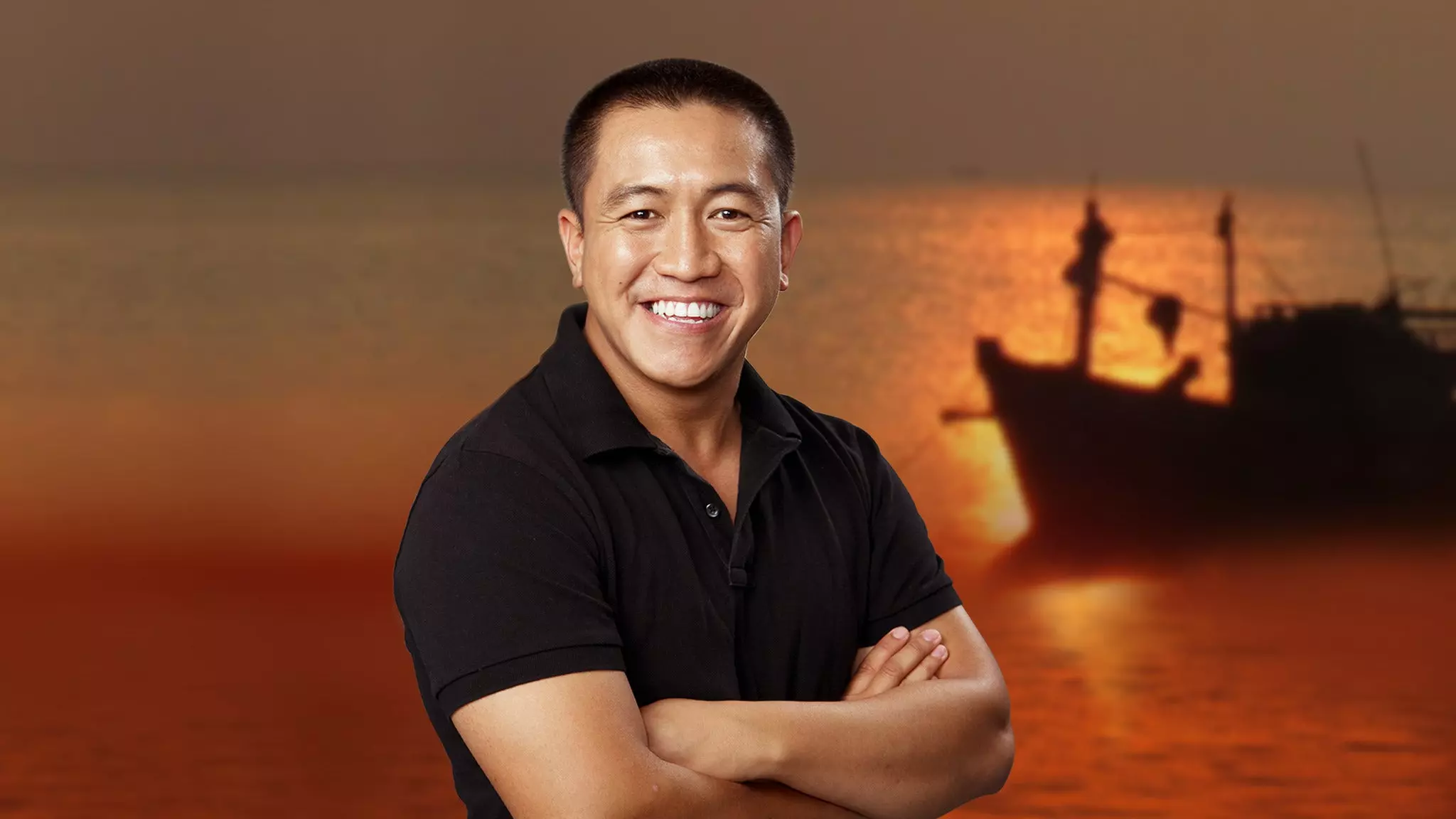
His name is Anh Do.
And the gallon of water is the seed of what I want to teach you in this essay.
What the Boat Carried
This essay is not a profile of a comedian. It is not a tribute to a beloved Australian. It is not a biography of a refugee boy who became a national treasure, though all of those things will, in their way, sit inside the pages that follow.
This essay is a lighthouse.
And the light it is trying to throw is this.
You were carried. By people. But more deeply, by the storms themselves. You are now the boat. And the harvest you give back is what those storms were for.
Read that twice. Because what I am about to tell you is, in the truest sense, the inheritance of every person reading these words.
Most of us spend our lives convinced that the difficult years were in the way of our real lives. The seasons we would not choose again. The deployments. The diagnoses. The marriages that ended. The childhoods we have not yet learned how to talk about. We treat them as obstacles, as the part of our story that came before we got to who we really are. We hope to put them behind us. We hope to forget the smell of them.
And we are wrong.
The ancients understood it differently. Eighteen hundred years ago, a Roman emperor named Marcus Aurelius wrote a single line in a private notebook he never intended for any of us to read. The line was this:
“The impediment to action advances action. What stands in the way becomes the way.”
The thing standing in front of you, he was saying, is not standing in the way of your life. The thing standing in front of you
IS your life. The forge that made you. The fire that burned you down to the shape you were always meant to be.
And so the harvest you carry now — the wisdom, the steadiness, the soft eyes you bring to the people who are hurting, the calm hands you put on the shoulder of someone losing their job, the way you know how to sit with a friend at 2am when their world is falling apart, that harvest is not something you generated.
That harvest was given to you. By every storm you survived. By every fire that did not, in the end, kill you. By every gallon of water that was thrown across an ocean for reasons nobody can explain.
It was never yours to keep.
It was given to you so you could give it back.
That is what this essay will teach you. And the man who is going to teach it to you, through the textures of his actual life, is Anh Do. Because Anh Do has been throwing the gallon of water back for forty-five years, and his life is the clearest, gentlest, most public example of this teaching that this country has ever produced.
Stay with me. Because the rest of this essay is going to put a lantern in your hand. And by the time you finish reading it, you will know what to do with it.
The Hero of the Boat
Look again at the young man at the helm. Twenty-five years old. Standing barefoot on the deck of his own fishing boat, with the sun behind him and his family in the hull at his feet.
His name is Tam.
He has the kind of body a young Vietnamese fisherman has after a lifetime of hauling nets — lean, dark from the sun, his hands rough with rope-burn. He is wearing the cheap rubber thongs his country wears in 1980, the only shoes he owns. There are still soldiers on the coast he has just escaped. He has spent every dollar he could borrow on getting his family onto this boat. He has not slept for forty-eight hours.
When the engine fails for the second time, just before the second pirate attack, Tam reaches down, tears a strip of rubber from his own thong, and uses it to repair the carburettor. He fixes the engine of his own escape with the shoes off his own feet. He gets the boat moving again. He saves their lives a second time.
And when the pirate lifts the baby over the side of the boat, it is Tam who steps forward, who finds in himself a voice he has never used before, who roars in a language the pirates cannot understand the line his son will repeat, with reverence, for the rest of his life.
“We must save the child. We will fight to the death to save the child.”
That line is the founding moment of the Do family’s story. In any other essay, it would also be the closing one. The hero saves the family. The family reaches Australia. The boy grows up. The boy becomes Anh Do.
But this essay is not interested in the easy version of any life.
Because what happens to Tam — after the ocean, after the rescue, after the refugee camp, after the boat is finally moored and the family steps off it onto the cracked pavements of a suburb in Sydney called Yagoona — is the part of the story that almost nobody talks about.
The hero of the boat could not save them on land.
And here, the teaching begins to surface. Because the storms that made Anh Do were not just the storms at sea. They were the storms in the kitchen. The storms underneath his roof. The storms inside his father. The storms a hero brings home when he no longer has an ocean to be heroic on.
Those storms are coming. Stay with me.
Yagoona
Picture the small fibro house in Yagoona in the early 1980s. The brown brick fence. The Hills hoist in the back yard. The clothesline turning slowly in the southwesterly. A Vietnamese family of seven — the boy now five years old, his brother Khoa three, his baby sister, his mother, his father, two grandparents — sharing rooms in a country whose language they are still learning, whose customs they do not know.
Tam tries everything.
He buys a small farm with money borrowed from every relative and friend he can find. He learns Australian agriculture the way he learned to navigate by the stars on the ocean, by doing it. He plants. He harvests. He sells. He plants again.
Then the high-interest-rate years come. The crops fail. The bank takes the farm. The savings are gone. The relatives are angry. The brothers brawl over the lost money in the kitchen of the Yagoona house while the children listen from the bedroom.
And the drinking starts.
Not all at once. Slowly. The way the drinking always starts, in any country, when a man has been the hero and is now being asked to live as something less. A beer at the end of the day becomes a beer with lunch. The beer becomes whiskey. The whiskey becomes the thing he reaches for when he wakes up. The man who screamed we will save the child on the ocean now sits at the kitchen table in Yagoona, in the late afternoon, with a bottle in his hand and a silence that frightens his own children.
And then — the violence.
I will not describe it in detail because Anh has not. But it was real. It was the kind of violence a small fibro house in 1980s Sydney saw too often, in too many families, behind too many closed doors. It was the violence of a man whose own dignity had been taken from him by a country and an economy and a thousand small disappointments, and who turned, in the absence of anywhere else to put it, on the woman he loved.
The boy is now thirteen.
He is, by his own description, at least as heavy as his father. Not as tall yet. But heavy enough to know that if it came to it, he might stand a chance.
One evening — we do not know which evening, exactly, because Anh has never told us — the thirteen-year-old version of Anh Do walks into the kitchen of the house in Yagoona and slides open the drawer beside the sink. He looks at the knives. He chooses the largest one. He carries it back to his bedroom. He lifts up the corner of his mattress. He places the knife underneath, against the box spring, where his mother will not find it when she changes the sheets.
He lies down on top of it.
And he sleeps on top of that knife for years.
“If he lays a finger on Mum,” he wrote in his memoir, two and a half decades later, “I will kill him.”
Read that line slowly. And then look at it through the lens of the teaching this essay is offering you.
That kitchen knife under that mattress was not a detour on the way to Anh Do’s real life. That kitchen knife was the forge. The years he spent sleeping on top of it, holding the household together with the silent will of a boy who was thirteen years old — those years did not happen to him on the road to who he was becoming. Those years made him who he became.
Most of us would not see it that way. Most of us would call those years his trauma. We would call them his wound. We would call them, in the language of modern wellness, the thing he had to heal from before he could be free.
Anh Do would tell you something different.
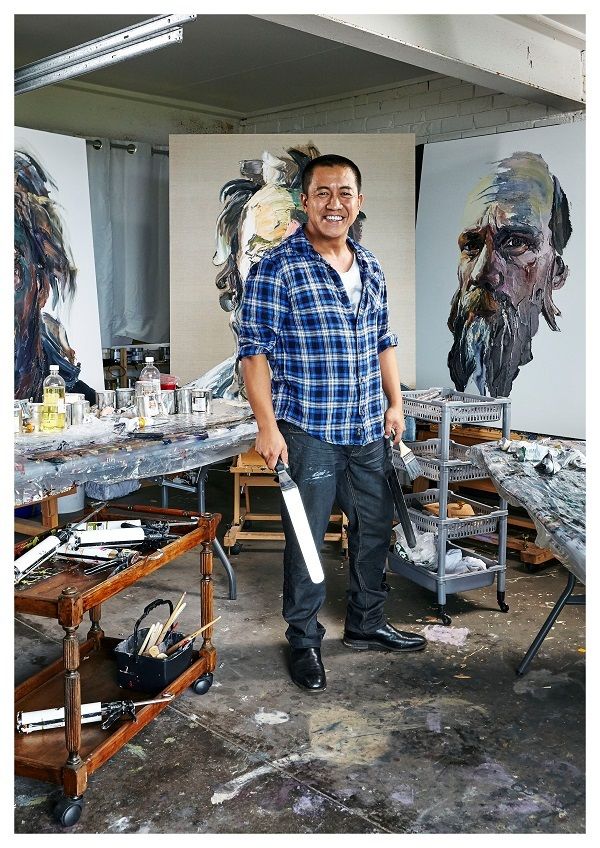
Anh Do would tell you that the boy on top of the knife is not separate from the man you watch on television painting Magda Szubanski’s face while she weeps. The boy on top of the knife is the reason he can paint her face that way. The capacity for compassion he has, the way he can sit with somebody else’s pain without flinching, the famously soft eyes, those things were not given to him by an easy life. They were given to him by the storm.
The obstacle was the way.
And the cargo of joy he now carries was forged on top of that knife. Not delivered around it. Not unaffected by it. Through it.
Tam eventually left. Anh’s mother asked him to. He went back to Vietnam. He came home six months later, knocked on the door, and was sent away again, weeping. He did not return for the rest of Anh’s childhood.
And the single mother — a young Vietnamese refugee woman with three children, almost no English, and no money — picked up the boat. She set it on her own back. And she carried it.
She worked three jobs. She kept the children at school. She did not let the cargo be lost.
Take a moment with that picture too. Because it is the picture this country has been built on, in a hundred thousand small fibro houses, in a hundred thousand quiet suburbs, in a hundred years of mothers picking up boats their husbands could not finish carrying. Anh’s mother was one of them. There were countless others. There still are. Some of them are reading this essay right now.
The Borrowed Books
I want to take you inside a classroom now.
It is St Aloysius College in the late 1980s, in the eastern part of Sydney. The boys are filing in for the first lesson of the day. Their blazers are dark blue. Their ties are the school tie. Their shoes are polished. They have been to schools like this since before they could read, because their fathers went to schools like this, and their fathers’ fathers before them, in the long quiet succession of Sydney private school money.
Two of the boys do not quite belong.
They are Vietnamese. They are at the school on half-scholarships. Their mother has worked three jobs to pay for the half the scholarship does not cover. They wear the same blazer as the other boys, but their blazers were bought on layaway, and their lunches are smaller, and they do not have the rest of the things the other boys have without thinking — the cricket whites, the football boots, the rowing gear, the bag of cash a thirteen-year-old in a private school carries around for the small daily currencies of belonging.
And they do not have the textbooks.
Anh’s mother could not stretch to those. She had stretched to everything else, but the textbooks were the bridge too far.
Anh has a friend named Phil Keenan. Phil is one of the rich boys, but a particular kind of rich boy — the kind who has noticed, in some quiet way, what life is like for the kid in the blazer next to him.
Every morning before school, Phil and Anh meet at the same spot.
“What have you got first?” Phil asks.
“English.”
“Right. I’ve got it second. Take mine. Meet me back here at the bell, I’ll grab it for my class.”
They work it out, subject by subject, period by period, every day for years. No teacher ever notices. No other student ever knows. Anh has spent his whole school day, every school day, choreographing a deception that exists only to hide his own poverty from a school that would not have been kind about it had they known.
“This concern,” he wrote later, “totally overtook my life. It was all-encompassing and supremely annoying.”
Supremely annoying.
Read that phrase twice.
Most of us, looking back on a memory like that, would make it tragic. We would call it humiliating. We would call it formative trauma. We would, given a memoir contract, dwell on it.
Anh calls it supremely annoying. Two words. He refuses to make the moment heroic. He refuses to ask the reader for pity. He treats his thirteen-year-old self the way a kind older brother might treat a younger one — with affection, with mild teasing, with a refusal to let the past hold him hostage.
That is the teaching, already at work in the soul of a fourteen-year-old.
Because here is what Anh Do already understood, without needing the philosophy to explain it to him. The storm of those textbook years was not stealing his life. The storm of those textbook years was giving him the life he would later become world-famous for.
The compassion he would one day bring to interviewing other Australians on national television, the famously gentle way he draws stories out of people who have never told them, that compassion was being built in him, period by period, every time he handed Phil’s textbook back at the bell. He was learning, in real time, the texture of what it feels like to need something you do not have. He was learning what dignity costs when you do not have the money to buy it.
Most of the men who later sat in his studio in front of his easel would never have had those lessons. He would. And that is the entire reason he could ask them the questions nobody else thought to ask.
The obstacle was the way.
And here, I want to turn for a moment. To the men and women in this country who are listening.
Because the cargo of joy Anh Do learned to carry, by daylight, while sleeping on a knife by night, was not a cargo he carried alone. He had Phil Keenan. He had a brother named Khoa who would one day become Young Australian of the Year for his work with disadvantaged kids. He had a mother whose three jobs were the bedrock of every textbook he ever borrowed.
And he had something else. Something that does not get named enough in the modern conversation about resilience.
He had the brothers and sisters the storm gave him.
Because here is the truth almost nobody tells you about the hardest years of your life.
The storms gift you the people.
The deployments give you the brothers and sisters in arms. The team you played sport with through the cold mornings becomes your family for life. The injuries give you the physio you still see for coffee twenty years later. The marriage that ended gave you the women who held you on the kitchen floor at 2am. The job you hated gave you the colleague who became your best friend. The hardship gave you the comrades. The boat gave you the people on the boat.
Look around your table tonight. The people sitting at it are there because of what you have survived. Not despite it. Because of it. The storms delivered them to your door.
That is a kind of harvest most people do not stop to notice. But it is one of the deepest harvests the storms ever leave behind.
And it is yours.
Four Hours
Now I want to skip forward.
Past the university years. Past the meeting of Suzie at a bar in Fitzroy. Past the law degree at UTS, with its long library nights and its borrowed textbooks now replaced by real ones bought from the university bookshop with money Anh has earned. Past the moment when Anh — the eldest son of a refugee, the boy who once slept on a knife in Yagoona — is offered, in his final year of law school, the kind of job that is supposed to redeem an entire migration.
A major Sydney law firm. Sixty-five hours a week. A starting salary that would have made his mother weep with relief. The kind of position that takes a working-class refugee family and — in the span of one son’s career — places it inside the upper-middle-class Australian dream forever.
Anh is twenty-two. The papers are on the table. He is about to sign.
And then — the same week — a friend invites him to a comedy show.
Picture the room. A small comedy club in Sydney, late on a Tuesday. The chairs are mismatched. The lighting is bad. The audience is fifty people drinking beer from plastic cups. The comedian onstage is making them laugh, ordinary, working, slightly-tired Australians, who came in carrying their own week and are leaving lighter than they arrived. The show ends. The applause is warm. The comedian collects his takings and walks off.
Anh finds him by the bar afterwards. They have a drink. They talk, the way comedians talk to each other in the small hours of any city in the world.
And Anh, almost casually, asks the question that will change everything.
“How many hours a week do you actually work?”
The comedian thinks about it. Counts the gigs in his head. Counts the writing time. Counts the travel.
“Four,” he says.
Four hours a week.
Anh stands very still in that pub.
Sixty-five hours, in a glass tower in the city, in a suit, billing time. Or four hours, in a room like this one, making strangers feel a little lighter than they did before he walked in.
A man whose father risked everything to get him to a country where he could one day choose freely, standing, finally, in the moment of choice.
He chooses comedy.
He does not sign the papers. He calls the firm. He thanks them. He walks away from a guaranteed life into an entirely speculative one. He goes home and tells his mother. We do not know what she said. We can imagine.
“Just because you can, doesn’t mean you should.”
And here, the teaching of this essay deepens.
Because Anh Do, at twenty-two, in that pub, was already practising a wisdom most of us never reach. He understood, even then, that the cargo of joy he was carrying was not meant to be spent on billable hours. The boat had not crossed an ocean, the pirates had not been outwitted, the gallon of water had not been thrown back, so that the boy could one day sit in a glass tower for sixty-five hours a week drafting contracts for people who would never know his name.
The cargo was given to him for something else.
It was given to him to be — given away. Slowly. Daily. For the rest of his life.
Most of us spend a lifetime in the sixty-five-hour version of a life we never really wanted, because we did not know we were allowed to choose differently. Some of us spend our whole lives staring at the four-hour version through the glass and telling ourselves the timing is not right, the kids are too young, the mortgage is too big, the parents would never understand.
And here is the question the teaching of this essay now puts to you directly, while we are in this part of Anh’s story.
What is your four hours?
What is the work — the small, quiet, possibly poorly-paid, possibly unrespectable work — that the storms of your life were for? What was the cargo you were given, that you have not yet started giving back?
Hold that question in your chest while we move on. Because the rest of Anh’s life is the proof that the choice can be made. And by the end of this essay, the question is going to be put to you again. Not in theory. In practice.
Mens Sana in Corpore Sano
A sound mind in a sound body.
A pause now. Especially for the men reading this.
Particularly the men who carry, somewhere inside their grown-up bodies, a thirteen-year-old version of themselves with something heavy under the bed. Maybe yours was a knife. Maybe yours was a private vow you made in your father’s house, a vow you have never said out loud to anyone, that you would protect the people you loved from him, or from the world, or from whatever was coming, and that you would not let yourself fall apart while you were doing it.
There are millions of you in this country. The boys who became men too early. The sons of difficult fathers. The eldest brothers who held entire families together with a will nobody saw, because the whole point of the will was that nobody had to see it. The men who learned, somewhere between eight and fifteen, to carry everything quietly.
Anh Do was one of you.
And what his life teaches you, more clearly than anything else, is this.
You do not have to harden into the version of yourself the storm made you.
You do not have to keep sleeping on the knife.
You can let someone in. You can ask for help, and you should, and you must, because the cargo of joy was never meant to be carried alone. The lighthouse was built by many hands. And it is kept by many more.
And here is the thing I want you, particularly, to hear.
Look around at the people in your life right now — your wife, your kids, your mates, the blokes you served with, the colleagues who still ring you when something is wrong. Those people are there because of what you went through. Not despite it. The storms you survived did not isolate you. They delivered to you, slowly and quietly, the exact community of people who could love you.
The deployment gave you your brothers. The footy team gave you your father figures. The hard job gave you the friends who are now your family. The hardest years of your marriage gave you the version of your wife who has now seen everything and stayed anyway.
The storms gifted you the people.
And those people — every one of them — are part of the harvest you are now meant to give back. Not just to them. Through them. The cargo of joy travels in convoys. Not in lonely ships.
If you are reading this from inside your own quieter version of the same storm, if there is a boy still living somewhere in your chest, holding something heavy, exhausted from holding it, you should know two things.
First, that you are not the only one.
Second, that the man whose name is on the cover of this essay was once that boy too. And he chose, slowly, with help from the people his storms gave him, to put the knife back in the drawer.
You can too. Stand firm. Not silent. Firm.
Unprimed Linen
I want to take you into one more room.
It is 2014. Anh Do’s studio in Sydney. The light is good — the kind of slanted northern light that painters in this country have been chasing since before there was a country. There is an easel set up in the middle of the room. There are tubes of oil paint laid out on a small table. There is a canvas already stretched on a frame, waiting.
Anh had planned to paint a famous comedian friend that week. The brief was simple. The pose was set. The conversation was already half-rehearsed in his head.
But that morning, his father had come over to the house.
Tam, now sixty, has had a brain tumour scare. He had not told the family. He is small now, smaller than Anh remembers him being. His hair is grey. He has dropped to fifty kilos — the weight of a tall teenager. When Anh hugs him hello, he can feel his father’s ribs through the cotton of his shirt.
It is not the man Anh grew up afraid of. It is not the man on the boat, screaming at pirates with the strength of ten men. It is not the man at the kitchen table in Yagoona with the bottle in his hand.
It is, finally, just a father. An old, small, vulnerable father, holding his son in the hallway of his son’s house, weighing fifty kilos and saying nothing.
Anh sets him in front of the canvas instead of the comedian.
And before he picks up the brush, here is the detail that turns this whole moment into the deepest piece of writing one Australian son has ever produced about an Australian father, Anh does something unusual.
He does not prime the canvas.
Primer is the thing painters put on raw linen before they paint. The white acrylic ground that gives the oil somewhere clean to sit. Without primer, the oil paint will soak into the fibres of the linen. The colour will sink. The image will bleed through to the back. The painting will never look quite finished. The truth of the canvas underneath will be part of the painting forever.
Anh wanted that. He wanted the linen to be raw. He wanted the paint to soak in. He wanted the shadow of his father to bleed through to the underside of the canvas, where most viewers would never see it but where Anh would know it was, always, sitting there.
“I wanted the oil paint to bleed a shadow of my father.”
Those are his own words, written in the Archibald catalogue when the painting was hung in 2014.
Read them one more time.
I wanted the oil paint to bleed a shadow of my father.
And now hear, please, what this teaches.
Because what Anh did on that piece of unprimed linen is the single most important act of this whole essay. He took the man who had once been his greatest fear, the man he had once slept on a knife to protect his mother against, and he held him. Not in spite of the storm. With the storm visible underneath the painting. With the truth of who Tam had been, hero and danger, saviour and harm, bleeding through into the very weave of the canvas.
He did not pick a version. He held both.
And he did it because, somewhere along the way, he had learned the teaching this essay is trying to put into your hands.
The forge made the man. All of him. The hero and the harm. Both belong to the soul of the father. And both belong to the soul of the son.
Most men of my generation — I have walked alongside thousands of them, in welfare rooms, in defence chapels, in the quiet hours when soldiers finally tell you what they have been carrying — most of those men cannot do what Anh did on that piece of linen.
They have to pick one version of their father. The good one or the bad one. The hero or the danger. They cannot hold both.
And so the unforgiven part of the man sits inside the son forever, like a sliver of glass under the skin. They never get it out. They drink to anaesthetise it. They rage to push it down. They go silent. They harden. They become the next version of the father they could not forgive.
Anh refused.
He took the canvas. He left it raw. He let the truth bleed through. He looked at all of his father — the gallon of water on the boat, the kitchen knife in Yagoona, the fifty kilos in the hallway — and he loved him anyway.
That is the deepest harvest a son can ever give back.
And it is the harvest the teaching of this essay is asking you to consider giving back, too. Not necessarily to your father. To whoever it was in your life that you have, until now, only been able to hold in one version. The mother who could not love you the way you needed. The friend who betrayed you. The boss who broke something in you. The marriage that left a piece of glass under your skin.
You can leave the linen unprimed. You can let the truth bleed through. You can hold all of them. You can forgive without forgetting. You can love without pretending.
That is what wisdom looks like when it is fully grown.
And it is what the storms were trying to teach you all along.
The Brush with Fame
A final detail.
In 2016, two years after the painting of his father, Anh starts a television show on the ABC.
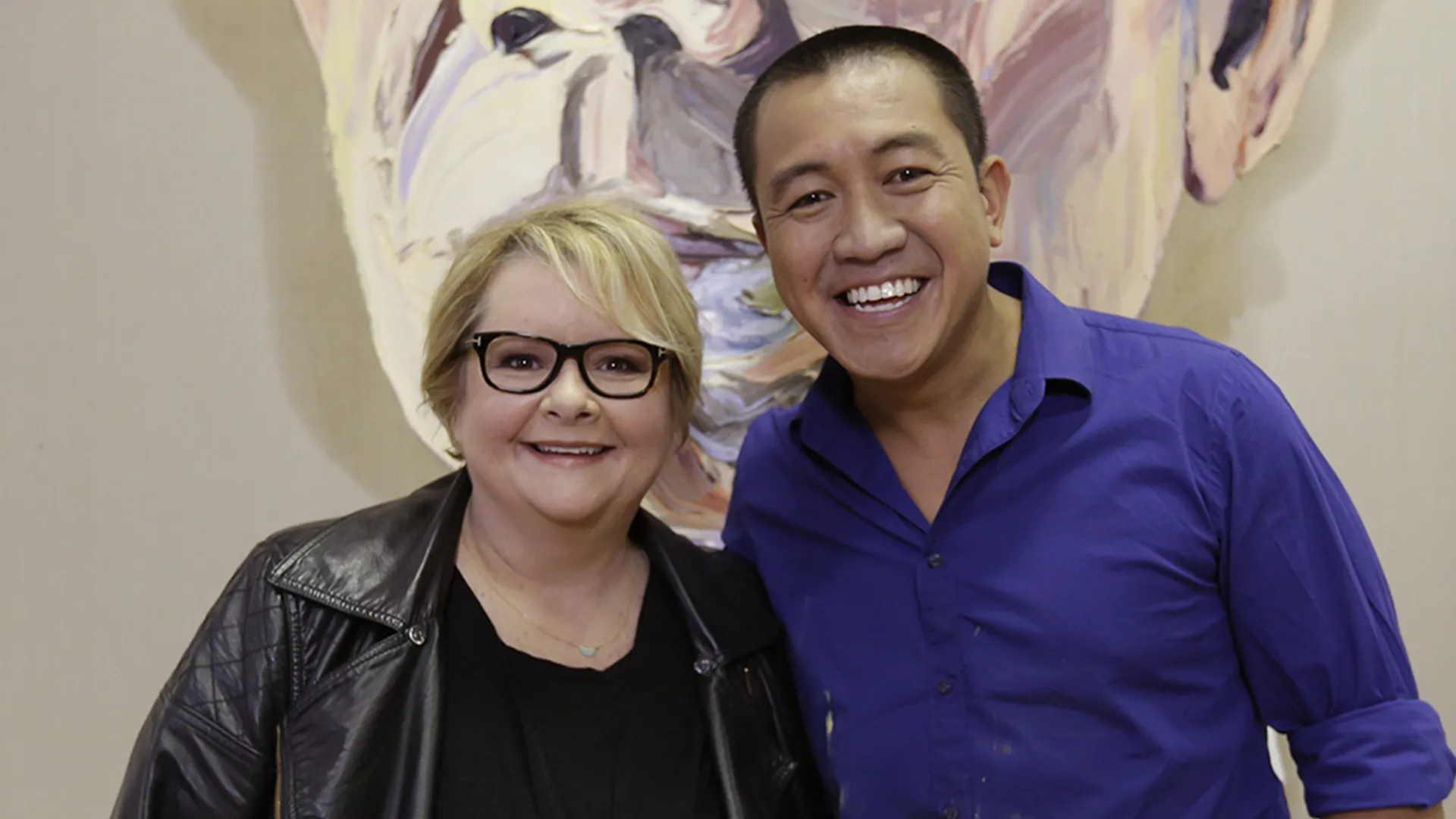
The premise is unusually simple. He paints the portrait of a famous Australian while interviewing them — a Jimmy Barnes, a Magda Szubanski, a Charlie Teo, a Rosie Batty — over the two or three hours it takes to finish the canvas. No studio. No band. No edits. Just Anh, the guest, the easel, the light, and a conversation.
The show runs for six seasons. Sixty episodes. Half a decade.
And here is what Anh has said, in his own words, about what he was trying to do:
“I really want to talk, go deep, you know. I wanted to ask — what’s your life philosophy? What’s your deepest regret? What’s your greatest joy? I wanted to go there.”
Three questions. The same three questions every priest, every coach, every philosopher worth their salt has ever asked another human being.
Anh asked them. On national television. Of sixty Australians. While painting their faces in oil.
He wept with Rosie Batty. He pulled stories out of Jimmy Barnes that the country had never heard. He held Magda Szubanski’s grief about her own father in a way that she had not, until that day in his studio, allowed anyone to hold it.
He was, on his own quiet terms, doing the work of a coach. He was, on his own terms, doing what I am trying to do right now, with this essay, with you.
And he had earned the right.
Because the boy who slept on the knife — the teenager who borrowed the textbooks, the young man who chose four hours over sixty-five, the son who painted his father on unprimed linen — that boy had been forged by every one of those storms to be exactly the kind of man who could sit across from another suffering Australian and hold their pain without flinching.
The textbook years gave him the empathy for the unseen. The kitchen knife years gave him the capacity to sit with the unfinished. The father years gave him the patience to wait for someone to be ready to speak.
Every storm in his life had been training him for the moment he would sit in his studio and ask Magda Szubanski about her father.
The obstacle was the way. The forge made the gift. The cargo of joy was for giving back.
And he has been giving it back, in one form or another, for forty-five years.
Through stand-up comedy in pubs in Sydney. Through children’s books that have taught a million Australian kids to read. Through portraits painted on unprimed linen. Through The Happiest Refugee, which is now studied in every secondary school English curriculum in this country. Through sixty hours of national television asking strangers what their greatest joy is.
Through the slow, patient, unglamorous work of making the country he washed up in, on a fishing boat at age two, a little bit gentler every time he opens his mouth.
Not a feeling. A practice.
Gratitude, in the form the Greeks understood it.
Six Virtues. One Boat.
A word, now, from me. Marcus.
At Arete Estate — the work I built after seventeen years of walking alongside soldiers and their families through the worst days of their lives — character formation is grounded in six virtues. Six ancient Greek pieces of the soul, recovered for the modern world.
Most lives, when you look closely, reveal one or two of them clearly. Anh Do’s life reveals all six.
Gratitude. Forty-five years of remembering the gallon of water. Tending what you didn’t plant. Honouring the gift before you understood it as a gift.
Courage. A thirteen-year-old with a kitchen knife. A teenager borrowing textbooks every period for two years. A young man walking away from sixty-five hours for four. The windmill before the storm. A thousand quiet mornings, before any camera was watching.
Fortitude. Five days on a fishing boat. Yagoona in the 1980s. The single-mother household. The lighthouse standing firm when the storm is inside the house.
Temperance. Comedy over law. Four hours over sixty-five. Family over fame — he is famously private about Suzie and the children. Just because you can, doesn’t mean you should.
Wisdom. The painting on unprimed linen. The capacity to hold two fathers in one canvas without flattening either of them. The gold pan after the long flood. Acknowledge the mud. Record the gold. Choose what to carry forward.
Love. Suzie. The four children. His brother Khoa. His mother Hien. Sixty episodes sitting with strangers and asking them what their greatest joy is. You don’t fall in love. You choose it. The fall is choosing it again tomorrow.
Six virtues. One life. Hammered out under pressure rather than handed over in calm.
Arete. The Greek word for the fullest expression of what a human being can become.
I write these essays because the six virtues do not belong to the ancient Greeks. They are yours. They are already inside you. The lives we tell stories about are not the unreachable heroes of myth — they are mirrors held up so that you can find the same six pieces inside yourself, and learn to live them on purpose.
Not from pain. Through pain. Pain that has been turned, slowly and deliberately, into joy.
That is the work of Arete Estate. That is what this whole series is for. And that, in the end, is the work Anh Do has been doing in his own way for half a century.
He is not the first lighthouse on the shore. He will not be the last. I am one of them too. So is everyone who reads this and chooses, tomorrow, to live a little more like the boy who threw the gallon of water and a little less like the pirates who left.
So. Now. You.
I want you to do three things before you close this essay.
Not later. Not when life is less busy. Not next month. Tonight, or tomorrow, or the day after. While the lantern is still in your hand.
First. Name your storms.
Out loud. To yourself, if no-one else. Find the three or four hardest seasons of your life and say their names.
The deployment. The diagnosis. The marriage that ended. The years you do not talk about. The childhood you have not yet learned how to talk about. The job that nearly broke you. The friend you lost. The night you do not visit in your memory if you can help it.
Whatever they were for you. Name them.
Because the first act of carrying the harvest is acknowledging the forge that made it. You cannot give back what you have not yet admitted you were given.
Second. Thank them.
Yes. Thank them.
Not the people in them necessarily, though that is good too — and if there is a Phil Keenan in your life, a teacher, a comrade, a stranger who threw the gallon of water back, please ring them this week and tell them. Today, if you can.
But thank the storms themselves. The forge. The fire that almost burned the boat down and instead, somehow, smelted the cargo into the shape it needed to be in to be given away.
Because the person sitting in that chair tonight, reading this essay, is the person those storms made. There is no other version of you. There is no version of you that did not pass through those waters. The harvest you are now carrying, the patience, the soft eyes, the way you sit with a friend at 2am, the camaraderie, the brothers and sisters who showed up because of what you went through, all of it was forged in the fire.
The obstacle was the way. The storm was the gift. The boat carried more than you knew at the time.
Say thank you. To the years you would not choose to live again. They made you.
Third. Give the harvest back.
This is the hardest part. And the most important.
This week — not next week, this week — identify one person whose boat you have noticed quietly struggling. Maybe at work. Maybe in your family. Maybe in your friend group. Maybe a neighbour. Maybe a young person you coach. Maybe a colleague you have only ever spoken to in passing but whose eyes you have noticed are not quite right lately.
Throw them your gallon of water.
I do not know what your gallon will look like. It depends entirely on what your storms gave you. If your storm gave you financial scarcity, your gallon might be a meal you cook and drop off. If your storm gave you grief, your gallon might be the phone call where you finally say I have been through what you are going through, and I am here. If your storm gave you the brothers and sisters of service, your gallon might be the introduction you make between two people who need each other and do not yet know it. If your storm gave you the textbook years, your gallon might be the textbook, the resource, the knowledge, the leg up, you quietly hand to a kid who would not ask for it.
You will know what your gallon is. The storms made sure of that.
Throw it back. This week. To one person. Specifically. While you still have the lantern in your hand.
Because here is the final truth this essay is asking you to carry.
The cargo of joy you were given, the precious, fragile, miraculous thing that your storms delivered safely to where you are sitting right now, was never yours to keep.
It was given to you so you could give it back.
The harvest is not what arrives. The harvest is what you do with what arrived.
Anh Do made his choice in a kitchen in Yagoona at thirteen, with a knife under his bed. He could have carried bitterness. He could have carried resentment. He could have carried the rage of every refugee child who has watched the world disappoint his family.
He chose joy.
Daily. Slowly. Deliberately. For forty-five years.
And he turned it, over those decades, into a country that is gentler than it was when he arrived.
You can do this too.
Whatever your boat carried into your life. Whatever your knife under the bed was. Whatever the four-hour-a-week version of your own work might be. Whatever the unprimed linen in your own soul is still waiting to be painted on.
Viktor Frankl, the psychiatrist who survived the very worst of human history and came out the other side teaching the rest of us how to live, wrote it as cleanly as anyone ever has:
“When we are no longer able to change a situation, we are challenged to change ourselves.”
Anh Do changed himself. He could not change the boat. He could not change his father. He could not change the country he washed up in or the years of borrowed textbooks or the kitchen knife under the mattress. He could only change what he chose to make of them.
And he made joy.
Stand firm. Shine anyway.
Your arete is not waiting in a podium, or a portrait, or a passport. It is waiting in the cargo you choose to carry forward.
THE ARETE HEROES SERIES
A fortnightly portrait of lives that embody the six virtues of Arete Estate — Fortitude, Wisdom, Love, Courage, Temperance, Gratitude. These are not profiles of perfection. They are stories of people whose arete — their highest character — was revealed by the storms they refused to run from. And the teaching their lives have to give us, if we will let them.
Written by Marcus J Emsley, The Guide, at Arete Estate in the Barossa Valley. First published 14 May 2026.
Excellence revealed by storms.

Responses