Courage · On the thing you keep running from, and why the way out is to turn around.
The Running
A tiredness that sleep cannot touch
There is a particular tiredness that sleep doesn’t touch.
You know the one. It has nothing to do with how much you slept, or how hard you worked. It is the tiredness of a person who is, somewhere beneath the surface of an ordinary, competent life, running. From something. A fear you have never quite named. A grief you have been too busy to sit with. A conversation you have rehearsed a hundred times and never once had. A truth about your life you have arranged, very carefully, never to look at directly.
We are good at it, this running. We have more ways than any generation in history to stay a step ahead of ourselves: the endless scroll, the second screen, the calendar packed too full to feel anything. And it works, for a while. The thing stays behind us. But it never stops pacing, and some part of us never stops sprinting, and that is the tiredness sleep cannot reach: the exhaustion of a life spent outrunning something that will not tire.
The Lion
What cannot be fled must be faced
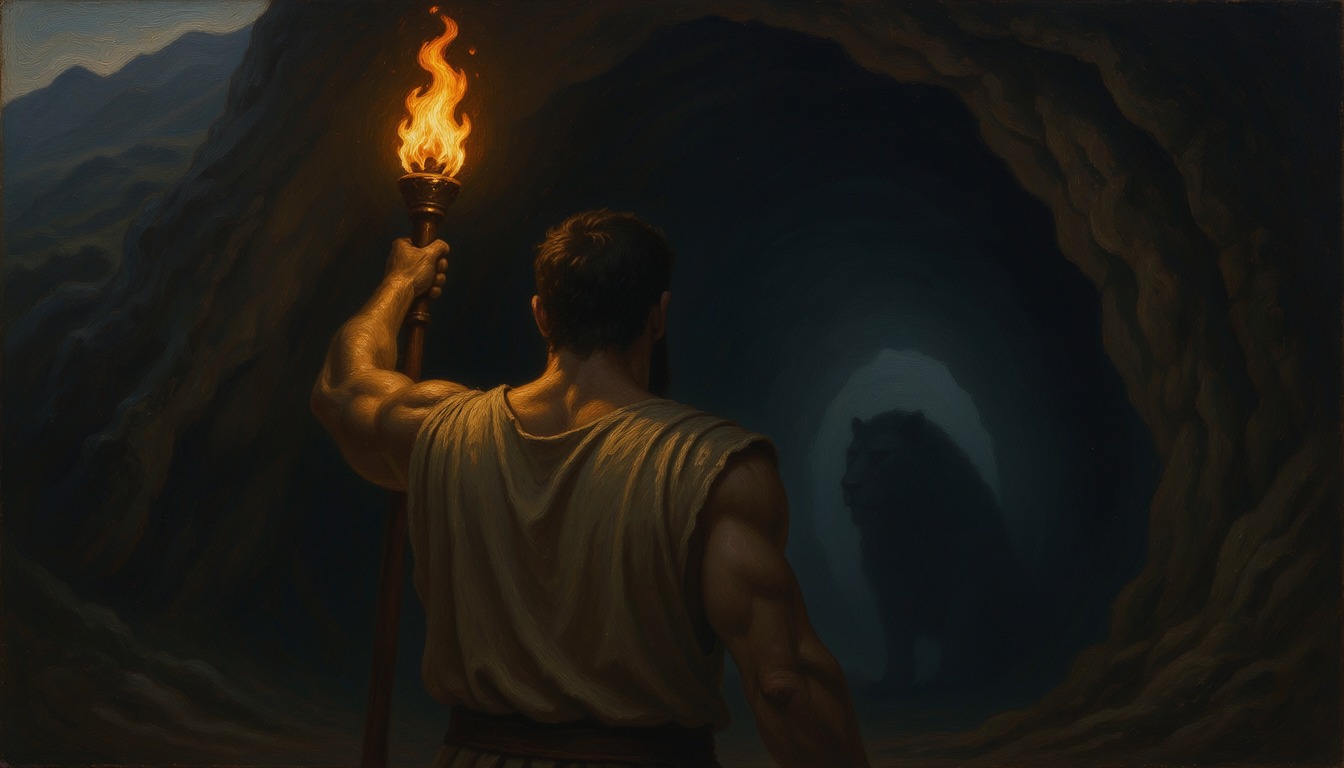
I want to tell you about a lion. The first of the labours of Heracles sent him against the Nemean Lion, a beast whose golden hide no arrow could pierce and no blade could cut. Men had died trying to kill it from a safe distance, their weapons shattering against its skin, their bones left scattered around its lair. Heracles came as they had, with his weapons, and watched his arrows break against it. From a distance, with every tool he trusted, the lion could not be beaten.
So he did the thing he least wanted to do. He followed it into the dark of its own cave, sealed the entrance behind him so there could be no retreat, and there, where no weapon could help him, he faced it with nothing but his bare hands and his will, and did not let go until it was over.
And this is the detail I would ask you to carry. Afterwards, he skinned the lion with its own claws, the only thing sharp enough, and wore its hide as armour for the rest of his life. The very thing that had terrified a nation became the thing that shielded him.
The Drawer
What you avoid does not shrink, it grows
Every age has known a beast that cannot be outrun, and called it by a different name. Yours has one too. And the hard, freeing truth the lion holds is this: what you avoid does not shrink. It grows. Not the thing itself; the thing stays exactly the size it always was: three paragraphs, one sentence, a single unsaid name. What grows is the shadow it throws. Every time you flee, you teach yourself a little more deeply that it must be unsurvivable (why else would you be running?), and the dread swells to fill every room you give it. The modern science of the mind calls avoidance the food that fear grows fat on. The older traditions called the turning-around something deeper. They called it courage.
I think of a man I know, competent, admired, the kind others lean on. In the hallway of his house there is a sideboard, and in the sideboard there is a drawer, and for three years he did not open it. Inside was a letter from his father, unopened since the funeral.
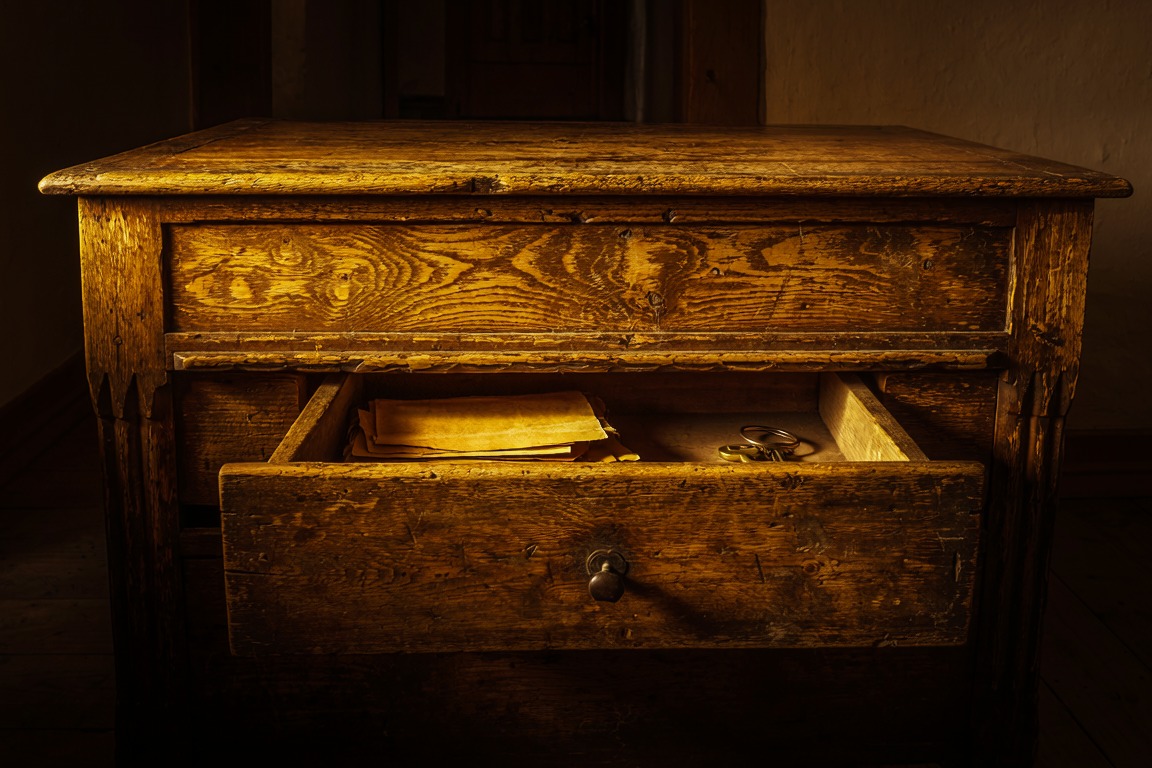
He could tell you exactly where it sat, back left corner, beneath the spare keys and the takeaway menus, as though such a thing could be buried under ordinary life. He was not afraid of paper. He had faced boardrooms and battlefields without flinching. But he knew what the envelope held: the last words his father would ever say to him. While it stayed sealed, they were still to come. Open it, and his father had finished speaking, forever. That is the weight of a drawer like that. It does not hold a letter. It holds the last of a voice.
So he walked past it every day, and every day the walking past cost him something too small to notice and too constant to escape. Avoidance is never free; it collects, quietly, every day. He paid in the reserve that crept into his marriage like cold air under a door, in the way he slept, in the strange flatness of rooms his father had once laughed in. The drawer became the quietest, heaviest thing in the house, and the whole house learned to bend around it.
The evening he finally opened it, it was not courage as he had imagined courage, no deep breath, no squared shoulders. Just a tiredness that had at last outgrown the fear. The letter was three paragraphs long. It took him three years to reach it and about ninety seconds to read it. He wept, and then he laughed, once, at a line only the two of them would ever understand. And that night, for the first time in three years, he was not tired in the way that sleep cannot touch. His father had not stopped speaking after all. He had been waiting to be heard.
Seneca, who thought more clearly about fear than almost anyone before or since, put the whole of it in a single line: “He who is brave is free.”
Not admired. Free. Because the one who has finally turned to face their fear has nothing left chasing them. Everything you are still running from owns a piece of you: a piece of your attention, your energy, your peace. The moment you stop running and turn around, you take that piece back. Freedom was never waiting on the far side of the fear. It was always on the near side of turning around.
The Cave
The fear and the treasure share one room
The scholar of myth Joseph Campbell spent his life reading the hero stories of every culture on earth, and found the same shape hidden in all of them: the same dark threshold, the same hard door. The line most often attributed to him distils it: “The cave you fear to enter holds the treasure you seek.”
Read it slowly. The very place you have been avoiding, the grief, the truth, the conversation, is not where your life goes to be destroyed. It is where the treasure is kept. The thing you are most afraid to face, and the thing you most need, are, more often than we ever expect, in the same dark room.
And notice what the treasure usually turns out to be. It is rarely gold. More often it is a piece of yourself you left behind in that room: the tenderness you sealed away in order to survive, the voice you silenced to keep the peace, the version of you that was brave before the world taught you to be careful. We do not enter the cave only to slay something. We go in to retrieve what we abandoned there. The man with the letter did not simply lay a grief to rest. He got his father back, and something of himself besides.
You have a drawer of your own. Perhaps it is not a drawer at all; perhaps it is a phone number never deleted and never dialled, an appointment endlessly deferred, a room you no longer enter, a subject your family has silently agreed does not exist. We build our lives around these sealed places the way a river bends around a stone, and then we wonder at the shape of the river. Look at where your life curves strangely, where the energy drains, where the conversation always turns away, and you will usually find, at the centre of the bend, the very thing you have been walking around. The detour always costs more than the door.
The Turning
You become ready by turning, not before
We tell ourselves we will face it when we are ready, stronger, steadier, further along the road. But readiness is the most convincing lie fear tells, because it always arrives dressed as wisdom. The truth the old stories keep insisting on is harder and far kinder: you become ready by turning, not before you turn. Strength is not a ticket you buy before the journey begins. It is the thing the journey presses into your hand, at the door, on the way in.
Marcus Aurelius, writing notes to himself by lamplight that he never meant anyone to read, reached the same door from the other side: “What stands in the way becomes the way.”
The obstacle is not blocking your path. It is the path, the very material out of which the walking is made.
None of this asks you to hurl yourself, tomorrow, at the hardest thing in your life. Heracles did not fight the lion in the open, on its terms; he chose his ground, and took it one grip at a time. You can begin far smaller than the dread suggests. You can begin, in fact, with a single word.
Name the beast. Say plainly, if only to yourself, if only on a page no one will ever read, the thing you have been outrunning. Fear loses a surprising amount of its power the moment it is named, because a named thing is a thing you can finally look at. And then take the smallest real step toward it that this week allows. One honest look. One sentence said aloud. One drawer opened that you have kept shut for years. You are not trying to defeat the lion today. You are only refusing, today, to keep running from it.
The Armour
What hunts you can become what protects you
So if you are tired, tired in the way sleep cannot reach, take heart. It is not a sign that something is broken in you. It is a sign that some part of you already knows what it is time to face, and is waiting, with more patience than you deserve, for you to turn around. The lion has been pacing a long while. And it is not, as it turns out, waiting to devour you. It is waiting to be faced, so that it can become the thing that carries you.
The poet Rilke, writing to a young man wrestling with his own dark rooms, went further still: “Perhaps everything terrible is, in its deepest being, something helpless that wants help from us.”
Perhaps all the dragons of our lives are princesses, waiting to see us act, just once, with beauty and courage. It is a strange and kindly thought: the beast is not your enemy. It is your errand.
Because this is the promise the lion holds, and it is worth carrying with you: what hunts you can become what protects you. The fear faced becomes courage. The grief grieved becomes compassion. The wound, walked all the way through, becomes the very armour you will one day wear to help the next person through theirs. You do not enter the cave to be destroyed. You enter it to be revealed.
That turning-around is the first step of a longer walk, the walk out of a life spent fleeing, and into one spent facing. It is a walk I have spent years mapping, and one I would count it an honour to make beside you. But the first step is yours alone, and you can take it tonight, exactly where you are.
Name the beast. Turn around. And begin.
Stand firm. Keep shining.
For the Young Warriors
The whole essay, small enough to carry
A wonderful man once said to me, if you can’t explain it simply, you don’t know it well enough. If you are young, still at school, still working out who you are, this part is for you. Here is the whole essay, made small enough to fit in a pocket.
Everyone is scared of something. Everyone, even the bravest person you know. And here is the secret most people learn far too late: running away from a scary thing makes it grow bigger. Turning around to face it makes it shrink. The brave people you admire are not people without fear. They are people who turned around.
You do not have to beat your beast today. You only have to be a little braver today than you were yesterday. That is how every strong person you have ever admired was built, one small brave thing at a time, practised the way you would practise kicking a footy or learning an instrument. Braver today than yesterday. Then again tomorrow. That is the whole secret.
So tonight, try this. Name the thing that scares you, say it out loud, or write it down where nobody will see it. That is the first brave thing. Tomorrow, do one more. You’ve got this.
About the author
Marcus J Emsley · The Guide
Marcus spent seventeen years as a welfare officer in the Royal Australian Air Force, at home and on operations overseas, sitting with people in grief, trauma and the mornings they did not want to rise. He is the founder of Arete Estate in the Barossa Valley, South Australia, the creator of The Sculptor's Journey and Wisdom & Wonder, and the author of the debut novel Wisdom & Wine. He is the son of a primary school teacher who coached footy, cricket and life, and a palliative care nurse who showed him what kindness at the hardest door looks like. He has stood in the dark himself, and he writes from the far side of it.
What we are building at Arete Estate
Arete is excellence becoming. It is the highest expression of who you were always meant to be, not the finished version, but the version that keeps reaching. It is not built. It is revealed.
Arete Estate exists to help people reveal, not construct, the highest version of themselves. We do this through six virtues drawn from the world's wisdom traditions, taught through stories, walked through daily practice, and offered to anyone who is ready to begin: the parent raising a child, the leader carrying a team, the soldier returning from service, the school shaping the next generation, the person sitting alone in the early hours of the morning wondering if there is a path through.
Our work is to make that path visible. To stand as a lighthouse for the seekers, the grieving, and the broken. To remind every person we reach that excellence is not built, it is revealed by storms, and that they are not alone in the storm.
We do not chase. We shine. The Sculptor's Journey (The Doorway, The Walked Path, The Guided Path), An Hour with the Guide, Meditate with Arete, Wisdom & Wonder and The Sculptor's Library are the rooms of that house.
Six virtues. One journey. Your highest self.
www.areteestate.com.au · info@areteestate.com.au · Instagram @areteestate
If this essay touched something raw
Some of what is written here is heavy. If it has stirred something you are carrying, please do not carry it alone tonight.
Lifeline 13 11 14 · Open Arms (veterans and families) 1800 011 046 · 1800RESPECT 1800 737 732 · Kids Helpline 1800 55 1800 · In an emergency, call 000.
Reaching out is not weakness. It is all six virtues at once: the Fortitude to stay, the Wisdom to know you need a hand, the Love to let someone in, the Courage to ask, the Temperance to set the weight down, and the Gratitude for the one who answers.

Responses