
Wisdom · Winning and losing are the same teacher in two masks.
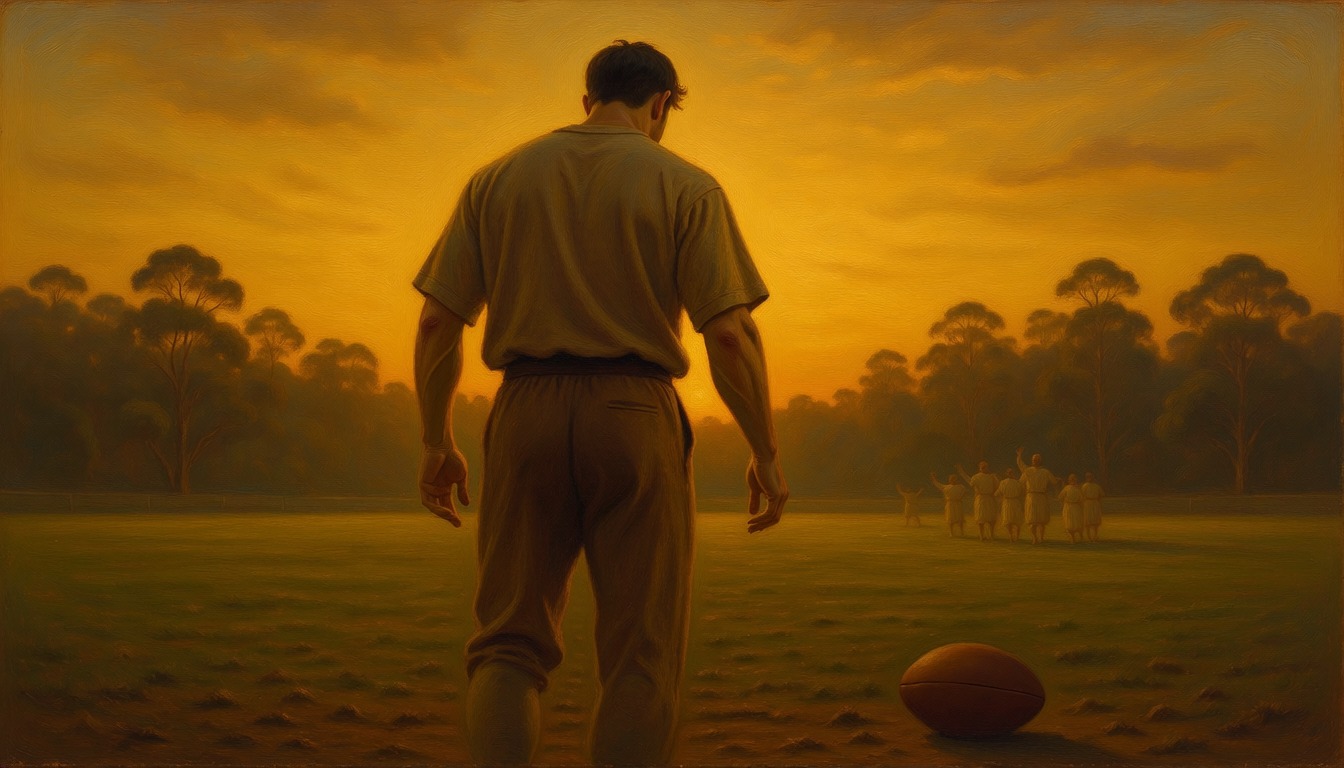
“If you can meet with Triumph and Disaster, and treat those two impostors just the same ...” (Rudyard Kipling, “If”)
In these essays I try to hand you one idea worth carrying into the week ahead. This one is an old one, dressed in new clothes, and I have come to believe it is one of the very few that can change the entire shape of a life. It is about winning. It is about losing. And it is, above all, about the rare and beautiful art of learning from both.
The Two Nations
The whistle goes, and in a single breath the field, the court, the board divides into two nations, two worlds. On one side stand the ones who won, arms raised, faces open, carrying the particular weightlessness of having been, for one afternoon, proven right. On the other stand the ones who lost, heads bowed, the long walk to the bench, the dressing room, a silence that has a texture you can almost reach out and touch. The crowd has already sorted them. We have all, at one time or another, been the crowd. We know without being told which side to envy and which to pity.
But there is a part the crowd never stays long enough to witness. Come back in a year. Find the two of them again, the one who lifted the trophy and the one who made the long walk, and look this time at their lives, not their afternoons. Tell me which result was the kinder one. More often than you would ever guess, you cannot say. The victory quietly softened one of them. The defeat quietly forged the other. And the scoreboard, which felt on the night like the whole and final truth, turns out to have recorded almost nothing that mattered at all.
That is not a comfortable thought. But it is a liberating one. Because if the scoreboard is not the story, then you are no longer at its mercy, and a person who is no longer at the mercy of the result is a person who has just been handed back their life.
The Same Teacher, Two Masks
We are taught, from the time we are very small, that winning and losing are opposites. One is a prize and one is a punishment. One is to be chased with everything you have; the other is to be feared, avoided, escaped at any cost. Almost every system a person passes through, the classroom, the team, the office, quietly reinforces it. Win, and you are good. Lose, and you are less.
I want to put a different idea in your hands today, because I have come to believe, and to witness that the first one quietly costs people their lives, not all at once, but slowly, by teaching them to live only for the afternoons that happen to go their way.
Winning and losing are not opposites. They are the same teacher, wearing two masks.
The lesson does not change with the mask. Both outcomes arrive to ask you the very same question (who are you becoming?) and both will answer it for you, in time, if you do not answer it for yourself. The only thing that changes is the costume the teacher happens to be wearing on the day. And the moment you learn to see through the costume, something extraordinary becomes possible: you can begin to learn from your victories and your defeats with the same open, unflinching hand.
The Conductor’s Hand
You will know Kipling’s old line, the one most of us met at school and almost none of us understood: to meet with Triumph and Disaster and treat those two impostors just the same. Most people read it as a counsel of indifference. Chin up. Feel nothing. A stiff and bloodless stoicism. It is nothing of the sort. Read it again, slowly. He does not call them enemies. He calls them impostors, because both of them lie to you, and they tell the very same lie in two opposite voices.
Victory leans close and whispers: you have arrived. Defeat leans close and whispers: you are finished. Both are false. Both are an ending pressed upon a person who is still, in truth, in the middle of becoming. And the instant you believe either one, the same thing happens, you stop. You set down the only work that was ever truly yours to do.
This is why the first virtue this whole question asks of you is Temperance, and not the thin, modern version of the word that has come to mean merely “less.” The older meaning is far grander. Temperance is the conductor’s hand. Stand a great conductor before an orchestra and watch closely what he does not do: he does not strain at the crescendo, and he does not slump into the silence. He holds the entire piece at the right pace, so that the thunderous passages and the tender ones each receive exactly their due, and not a single beat more. All things in harmony.
That is the art of winning and losing. To receive the result, any result, and refuse to let it become the thing that conducts you. You may hold the trophy; you must not let it hold you. You will carry the loss; you must not let it carry you off. And there is a freedom hidden inside that discipline, the part almost nobody tells you: the person who can meet both outcomes with a steady hand is, perhaps for the first time, truly free. Free of the tyranny of the next result. Free, at last, to give the work everything they have, precisely because their worth no longer rises and falls with how it happens to land.
The Sweeter Lie
And now the part almost nobody warns you about, because it sounds, at first, a little like ingratitude. Of the two impostors, winning is by far the more dangerous.
A loss, at least, has the decency to announce itself. It hurts, and pain is a teacher who makes you sit up and pay attention. You examine. You adjust. You go looking, in the wreckage, for what went wrong and how you might do better. Defeat practically marches you to the lesson and stands over you while you read it.
But victory arrives wearing a smile, and asks nothing of you at all. It does not knock. It lets itself in, makes itself comfortable, pours itself a drink, and begins, very gently, very pleasantly, to take the edge off. This is the sweeter lie, and it is sweeter precisely because it feels like a reward rather than a risk.
Watch people closely over the long arc of a life and you will see the same pattern, again and again. The quiet undoing almost never happens in the season of the loss. It happens in the season after the win. The hunger leaves the room so softly you never hear the door. The standard slips by a degree too small to measure. The discipline that earned the victory is mistaken for a summit that has now been reached and may, surely, be rested upon. There is mud in every triumph, the small, sweet, seductive lie that the climbing is finished, and the work of a wise person is to pan it patiently and keep only the gold. And the gold in any victory is only ever this: proof that the work works. Evidence, and nothing more. Not a finish line. A foothold, from which to climb again.
So when you win, and I hope with all my heart that you win, and win often, celebrate fully, give honest thanks, and then, while the others are still raising glasses to the summit, quietly lace your boots.
The Storm Is Not Your Enemy
Then there is the loss. And here we must move from the conductor to the lighthouse, because a real loss is not a setback to be managed. It is a storm. And the very first thing I need you to understand, the thing this whole company was built to say, is that the storm is not your enemy.
Everything we make turns on a single, stubborn conviction: excellence is revealed by storms. Not built in fair weather and merely tested in foul, revealed, drawn out, by the foul weather itself. Think of the sculptor and the marble. He does not add the figure to the stone. The figure was always there, waiting inside it. His entire art is the patient, forceful removal of everything that was never the figure. And a loss does exactly this to a life. It strikes away the borrowed confidence, the unearned certainty, the comfortable version of you that was only ever propped up by results going your way. And when the dust finally settles, it shows you, without mercy and without flattery, what is actually load-bearing underneath.
That is a brutal education. It is also the only one that cannot be faked. You can buy a trophy. You can inherit an advantage. You can borrow a great deal of confidence on credit. But you cannot counterfeit the thing a storm reveals in you, because the storm itself does the revealing, and the storm cannot be bribed.
Stand firm and shine, even when the storm is inside you.
That is the lighthouse teaching, and notice carefully what it does not ask of you. It does not say feel strong. It does not say wait until the weather clears. It says one word, stand. You will not feel like someone who has earned the right to be standing. Stand anyway. Because to stand through the storm of a loss, not denying it, not drowning in it, simply refusing to be moved off your post, is how the storm does its work on you instead of to you. Read that twice. The ones who come out forged are never the ones the loss spared. They are the ones who stood in it, kept the light burning, and would not let it go out.
The Art of Losing and Learning
But standing is not the whole of it. A storm merely endured teaches you that you can survive. A storm truly learned from teaches you who to become. This is the art at the very centre of everything I want to give you today, the art of losing and learning, and it is an art, which means it can be practised, and practised badly or practised well.
Most people, handed a defeat, do one of two things, and both are a kind of waste. Some bury it. They look away, change the subject, push the loss down quickly so they never have to feel it again, and in burying the pain, they bury the lesson alongside it. Others drown in it. They relive the loss on an endless loop, mistake the rumination for reflection, and let one single afternoon swell into the whole story they tell about themselves. The first throws the gold out with the mud. The second never stops panning the same cold handful of dirt.
The art lives between those two, and it has a shape you can learn. First, you let the loss be real, you feel it fully, because a lesson you refuse to feel is a lesson you will never keep. Then, once the first heat has passed, you turn back to it not as a judge but as a student, and you ask it three honest questions. What in this was truly mine? Not to flog yourself, but because the only part of any loss you can ever learn from is the part you truly own. What in this was simply the weather? Because some storms are no one’s fault, and a person who blames himself for the rain learns nothing true. And then the question that turns the whole thing to gold: what will I carry forward from here, and what will I finally lay down? For every defeat hands you two things at once, a lesson to keep and a weight to release, and the whole of wisdom is learning to tell which is which. Keep the lesson. Lay the weight down. Then rise, and walk on, lighter and wiser than you sat down.
The losses you once feared become the masonry of the person you are most proud to be.
Do that, even a handful of times across a life, and something quietly miraculous begins to happen. Your defeats stop being the things that happen to you and become the things that build you. The very losses you once dreaded become, in hindsight, the masonry of the person you are most proud to have become. That is the alchemy at the heart of this entire work. That, in the end, is how a storm becomes a cathedral.
Two Hands, One Light
So the full art asks two hands, working together. Temperance, to hold both outcomes with the same steady grip, to win without arrogance and lose without despair, and to refuse to let either impostor climb into the conductor’s chair. And Fortitude, to keep standing when the holding gets hard, and to keep the light burning through the worst of the weather until the storm has finished teaching you what it came to teach.
The conductor keeps the tempo. The lighthouse keeps the light. Hold them both, and you arrive at last at what Kipling truly meant, to treat those two impostors just the same. Not because you have grown cold to either. Not because the win does not delight you, or the loss does not ache. But because you have finally understood, all the way down to the bone, that neither one of them is the point.
You are the point. The person being quietly formed the entire time, in the winning and the losing alike, by what you chose to do with each. The result was never the prize. You were always the prize, and you are still, this very morning, being made.
What Is Within Your Power
None of this is new. Two thousand years ago the Stoics built a whole philosophy on the same quiet foundation: that the one freedom no circumstance can take from you is the freedom to choose how you meet it. Epictetus, born a slave, yet the man whose words would one day steady an emperor on his throne, drew a single clean line through all of human experience: some things are within our power, and most things are not. The outcome of the contest is not within your power. The verdict of the crowd is not within your power. But the grace with which you carry the win, and the courage with which you stand in the loss, those are yours, wholly and always. Seneca went further: fire, he wrote, is the only honest test of gold, and hardship the only honest test of a soul, for the one that has never been tried does not yet know its strength. And Marcus Aurelius, an emperor who carried more weather than most, left himself a single instruction for the days the world broke against him: “Be like the headland on which the waves break and break; it stands firm, and tames the fury of the water around it.” That is the deep root beneath the steady hand: to meet triumph and disaster the same is not coldness, but the oldest wisdom we have, the refusal to hand the keys of your inner life to anything that happens outside it.
What the Scoreboard Cannot Touch
The scoreboard, the outcome, the result will read what it reads. The crowd will envy, or it will pity, and then, and this is the quiet mercy of it, the crowd will go home. But there is a part of you the scoreboard cannot touch and the crowd will never see: the part that was taking shape underneath the result the entire time, in the grace with which you held the prize and the courage with which you stood in the storm. That part is the only thing you truly get to keep. Tend it as the most valuable thing you own, because it is.
So win gently. Lose well. Learn from both as though your character depended upon it, because it does. And on the days the weather turns against you, and it will turn, for it turns for every one of us, do not run for shelter. Stand. Shine. Let the results come and go like the weather they have always been.
And whatever the scoreboard says tonight, keep walking.
For the Young Ones
The same truth, made small enough to hold. To be read aloud.
Every game has a winner and a loser. When you win, it feels wonderful, light, like you could float right up to the ceiling. When you lose, it feels heavy, like a small stone sitting in your chest. Both feelings are real. Both are allowed.

But there is a secret that even some grown-ups have not learned. Winning and losing are both teachers. Winning says, “Look what you can do, keep going!” And losing teaches you something even bigger: it shows you how brave and how strong you really are on the inside, in the hard moments, the part of you that you can never see while everything is easy.
So when you win, be happy, say thank you, and then get ready to try again. And when you lose, you are allowed to feel sad for a little while. But do not throw the feeling away too fast, and do not carry it around forever. Instead, ask yourself one gentle question: “What is this teaching me?” Keep the lesson. Set the heavy stone down. And then, this is the most important part of all, stand back up, and keep going.
Because you are not your win, and you are not your loss. You are the brave, growing person who is learning from both. And you are still growing.
A Practice to Take Away (and the Grown-Up Goes First)
Tonight, before the lights go out, try this together, and parents, you go first, always. Be the example. Tell your child about one moment today that you “won”, something that went well, and one moment you “lost”, something that did not. Say how each one felt. Then tell them the one small thing the hard moment taught you.
Then it is their turn. Ask them softly: What was your win today? What was your loss? And what did the hard part teach you? Do not fix it. Do not lecture. Just listen, and let them see you do it first. That is the whole lesson, taught not with words, but with a parent brave enough to go first.
About the author
Marcus J Emsley · The Guide
Marcus spent seventeen years as a welfare officer in the Royal Australian Air Force, at home and on operations overseas, sitting with people in grief, trauma and the mornings they did not want to rise. He is the founder of Arete Estate in the Barossa Valley, South Australia, the creator of The Sculptor's Journey and Wisdom & Wonder, and the author of the debut novel Wisdom & Wine. He is the son of a primary school teacher who coached footy, cricket and life, and a palliative care nurse who showed him what kindness at the hardest door looks like. He has stood in the dark himself, and he writes from the far side of it.
What we are building at Arete Estate
Arete is excellence becoming. It is the highest expression of who you were always meant to be, not the finished version, but the version that keeps reaching. It is not built. It is revealed.
Arete Estate exists to help people reveal, not construct, the highest version of themselves. We do this through six virtues drawn from the world's wisdom traditions, taught through stories, walked through daily practice, and offered to anyone who is ready to begin: the parent raising a child, the leader carrying a team, the soldier returning from service, the school shaping the next generation, the person sitting alone in the early hours of the morning wondering if there is a path through.
Our work is to make that path visible. To stand as a lighthouse for the seekers, the grieving, and the broken. To remind every person we reach that excellence is not built, it is revealed by storms, and that they are not alone in the storm.
We do not chase. We shine. The Sculptor's Journey (The Doorway, The Walked Path, The Guided Path), An Hour with the Guide, Meditate with Arete, Wisdom & Wonder and The Sculptor's Library are the rooms of that house.
Six virtues. One journey. Your highest self.
www.areteestate.com.au · info@areteestate.com.au · Instagram @areteestate
If this essay touched something raw
Some of what is written here is heavy. If it has stirred something you are carrying, please do not carry it alone tonight.
Lifeline 13 11 14 · Open Arms (veterans and families) 1800 011 046 · 1800RESPECT 1800 737 732 · Kids Helpline 1800 55 1800 · In an emergency, call 000.
Reaching out is not weakness. It is all six virtues at once: the Fortitude to stay, the Wisdom to know you need a hand, the Love to let someone in, the Courage to ask, the Temperance to set the weight down, and the Gratitude for the one who answers.

Responses