
Temperance · The Virtue Series, Part Two: the most misunderstood virtue in the ancient world
You know the feeling.
It is 9:47pm. The children are finally asleep. The kitchen is almost clean. Almost, because there is always something left on the bench that didn’t quite make it back to where it belongs. You have forty-five minutes. Maybe an hour. This is your time. The only time in the day that is yours and nobody else’s.
And you are standing in the hallway trying to decide what to do with it.
Your body says rest. Your mind says there are emails you didn’t finish. Your phone says scroll. Something deeper, something you can barely hear beneath the noise of the other three, says read, or walk outside, or sit on the back step and do absolutely nothing for ten minutes and feel what your life feels like when it’s not being pulled in four directions at once.

You know which one you’ll choose. You almost always choose the same one. The emails. Or the phone. Or the show you’re not really watching but that fills the space well enough. And the thing your soul was asking for, the rest, the quiet, the ten minutes of being a person instead of a function, gets pushed to the back of the stage again.
Not because you don’t want it. Because everything else is louder.
Seneca, a man who spent his life surrounded by wealth, power and noise, saw this two thousand years ago: “It is not that we have a short time to live, but that we waste a great deal of it.”
He wasn’t talking about productivity. He was talking about the forty-five minutes. The hallway. The moment when the thing your soul actually needs loses, again, to the thing that shouts loudest.
That moment, the hallway moment, the four competing voices, is the entire subject of this essay. It is about the virtue that teaches you how to hear the quiet voice. The one that helps you give every part of your life its proper volume: not silencing anything, not denying anything, but learning which voice this moment actually needs.
The ancient Greeks had a name for it. For two thousand years, the world has been getting it wrong. They called it Temperance. And it has almost nothing to do with what you think.
The Word They Ruined
Say the word temperance to most people and watch their face. You will see it: the slight flattening of interest. The polite nod. The word lands like homework.
Don’t drink too much. Don’t eat too much. Don’t want too much. Deny yourself. Restrain yourself. Be sensible. Be moderate. Be, and this is the real translation the modern world has settled on, less.
Temperance, as most of us inherited it, is the virtue of going without. The broccoli of the moral life. The one you include on the list because you should, then quietly ignore because it sounds like the opposite of being alive.
And that understanding is wrong. Profoundly, almost comically wrong.
The ancient Greeks, the ones who actually invented this idea, were not talking about denial. They were not interested in a virtue that made you smaller, quieter, or less alive. These were people who built the Parthenon, invented democracy, wrote tragedies that still make grown adults weep two and a half thousand years later. They were not in the business of shrinking.
When they talked about temperance, they used a word, sophrosyne, that scholars still argue about because no single English word captures it. The closest anyone has come is this: the harmonious ordering of the soul. Every part of you, your desires, your fears, your ambitions, your rest, your fire, your quiet, given its proper place. Its proper voice. Its proper moment.
They were not describing a person who had less. They were describing a person who had everything, in proportion.
And then they gave it an image that should have survived the centuries but somehow didn’t. An image that, once you hear it, will change the way you understand this virtue forever.
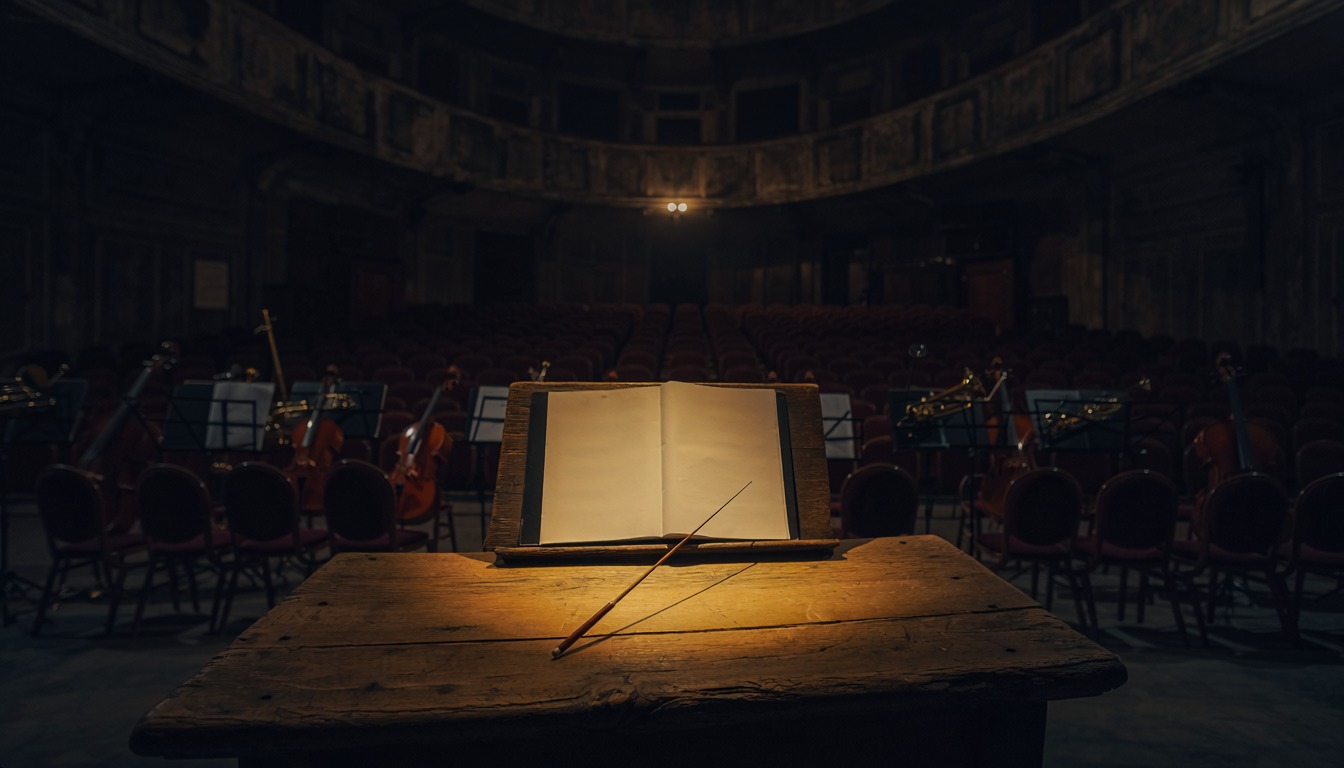
The conductor.
Temperance was never about playing less music. It was about learning to conduct it.
The Conductor
Think about what a conductor actually does.
They don’t play a single note. Not one. In an orchestra of a hundred musicians, some of the most talented people in the room, the conductor produces no sound at all. They hold a small stick and they move their hands and they do something that looks, from the outside, almost like nothing.
But take the conductor away and you will hear the difference immediately. Not because the musicians can’t play; they can, beautifully, individually. But a hundred beautiful individuals playing at the same time without someone to hold them together is not music. It is noise. Impressive noise, perhaps. Talented noise. But noise.
The conductor’s gift is knowing which voices to bring forward and which to hold back. When to let the strings soar and when to quiet them so the oboe can speak. Where to give the drums their moment and where to let them rest. How to hold the tension of competing sounds, the power of the brass, the ache of the cello, the bright clarity of the flute, and weave them into something that no single instrument could create alone.
Now think about your life.
You are the orchestra. Every part of you, your work, your rest, your ambition, your contentment, your role as a parent, a partner, a friend, an employee, a human being who needs sleep and sunlight and the occasional hour with nothing in your hands, is an instrument. Each one has a voice. Each one has legitimate needs. Each one, left to its own devices, will play at full volume and drown out everything else.
Your work will consume your evenings if you let it. Your phone will consume your presence if you let it. Your ambition will consume your peace if you let it. Your fear will consume your courage if you let it. Not because any of them are bad instruments (they are all part of you, all necessary, all real) but because an instrument without a conductor knows only one volume. Maximum.
Your life is an orchestra. The question is not whether the instruments are playing. They are. The question is whether anyone is conducting.
When the Music Becomes Noise
You know what it sounds like when nobody is conducting. You don’t need philosophy to tell you. You feel it in your body.
It starts small. You skip the walk because there is not enough time. You eat lunch at your desk because there is too much to do. You cancel the catch-up with the friend because something came up. You say yes to the extra commitment because you feel like you should. You stay up later because the house is finally quiet and this is your only chance to get ahead, and the sleep you sacrifice tonight will be worth it tomorrow, except tomorrow you sacrifice it again.
None of these is a crisis. None of them, individually, is even a mistake. They are all reasonable. They are all the kind of small, sensible trade-offs that functioning adults make every day. But stack enough of them together, a week’s worth, a month’s worth, a year’s worth, and something happens. The instruments that need rest don’t get it. The instruments that are overplaying never get turned down. And the overall sound of your life shifts, so gradually you don’t notice, from music to noise.
It is the Sunday night when you realise you haven’t had a conversation with your partner that lasted longer than a logistics update in two weeks. You have talked about the schedule, the shopping, who’s picking up the kids. You have not talked about anything that matters. And the distance between you is not the result of a fight or a betrayal or anything dramatic enough to name. It is the result of one instrument, the constant management of life, playing so loudly that every other voice in the relationship has been drowned out.
It is the body you have been ignoring. The headaches you push through. The shoulders that carry tension like a second skin. The meals you eat standing up, or skip entirely, because the body, your body, the only one you will ever have, has been demoted from a vital section of the orchestra to an afterthought. A machine to be maintained, not a voice to be heard.
It is the feeling, and this is the one that will land for most of you, of being tired in a way that sleep doesn’t fix. Because it is not a tired body. It is a tired soul. A soul that has been living in noise for so long that it has forgotten what music sounds like.
And then comes the day you recognise it. Maybe it is the moment you snap at someone you love and the force of it surprises you, and the answer to where did that come from? is: it came from a person who has been playing every instrument at maximum volume for so long that there is nothing left. Maybe it is the quiet realisation, sitting in the car, staring at nothing, that you are not enjoying your life. Not unhappy, exactly. Not in crisis. Just not hearing the music anymore.
That is not burnout in the dramatic sense. It is something more common and more dangerous: the slow erosion of harmony in a life that looks, from the outside, like it is working perfectly.
Burnout is not a failure of stamina. It is what happens when the music has been replaced by noise and nobody has reached for the baton.
The baton is still there. It has always been there. It is not a tool you need to buy or a skill you need to learn. It is a decision. The decision to stop letting every instrument play at the same volume and start choosing, deliberately, daily, with the same care a conductor brings to a symphony, which voice this moment needs.
What It Actually Looks Like
Temperance, when you see it in a person, does not look like restraint. It looks like freedom. Like someone who has found a rhythm the rest of us are still searching for.
It looks like a woman who closes her laptop at 5:45pm. Not because she doesn’t care about the work; she cares deeply, and the inbox is bottomless, and her boss has never once said go home, that’s enough. She closes it because she has learned something it took her years to understand: the work will be there tomorrow, and the version of herself that shows up to do it will be shaped entirely by what she does tonight. Whether she eats a real dinner. Whether she sees her children’s faces before they sleep. Whether she sits down for fifteen minutes and remembers what her life feels like when it’s not running. She is not less committed. She is better conducted.
It looks like a man at a barbecue, nursing his second beer while the rest of the table is on its sixth. He is not performing discipline. He is not judging anyone. He simply knows, with a quiet self-knowledge that took some hard lessons to develop, that the version of himself after two is someone he likes. Relaxed, warm, present, laughing at the right things. The version after six is someone he doesn’t. And he has chosen, without announcement, without theatre, to stop at the version he respects. That is not denial. That is one of the most sophisticated things a person can do: know yourself well enough to choose who you want to be in a room.
Lao Tzu said it simply: “Knowing others is intelligence; knowing yourself is true wisdom.” That man at the barbecue is not performing temperance. He is living it, quietly, without a single person at the table knowing what he just chose, or what it cost him to learn.
It looks like a mother who has been offered a role that would change everything: more money, more status, the kind of title that would make the announcement practically write itself. And she turns it down. Not because she is unambitious. Because she has listened, really listened, to her whole orchestra, and one section is telling her something the ambition section is trying to drown out: this will cost me bedtimes. This will cost me Saturdays. This will cost me the version of motherhood I promised myself I would fight for. And she decides that ambition is one voice in the ensemble, and a vital one, but it does not get to be the only voice. Not this year. Not at this cost.
It looks like a father pausing in the driveway for thirty seconds after a devastating day. Hands on the steering wheel. Breathing. Choosing. He is not pretending the day didn’t happen; he’ll talk about it later, with his partner, when the kids are asleep. But in this moment, his family needs a certain version of him, and he has the self-awareness and the love to provide it. He is deciding which instrument walks through that front door. That is conducting. That is temperance lived in the space between the car and the kitchen.
It looks like the moment you put the phone down. Not forever. Not with a dramatic digital detox announcement. Just down. On the bench. Face down. For the duration of dinner, the conversation, the bedtime story. Because you have recognised, quietly, that the phone is one instrument and it has been playing at full volume in every room of your life, and something has to give, and tonight, what gives is the scroll. What you get back is the eyes of the person sitting across from you.
Temperance is not the virtue of less. It is the art of enough. The daily, unglamorous practice of giving every part of your life its proper voice, and its proper rest.
The Art of Knowing When Not to Play
Nobody tells you this about conducting, or about life: the most powerful thing a conductor does is not bring the music in. It is hold the silence.
The pause between movements. The breath between the notes. The moment the entire hall holds still and the silence is not empty. It is full. Full of everything the next movement needs. Full of the echo of what just passed. Full of anticipation. Full of rest.
Your life needs those pauses. Desperately. Not as an indulgence. Not as a luxury for people with more time than you. As a structural necessity, the way a bridge needs expansion joints, the way a heart needs the space between beats. Without the pause, the music becomes a single, unbroken, relentless wall of sound. And a wall of sound, no matter how beautiful the individual notes, is just another way of saying noise.
When was the last time you paused? Not collapsed. Paused. There is a difference. Collapsing is what happens when the body finally overrides the mind and forces you to stop. That is not rest. That is a system failure.
Blaise Pascal, a man who understood the human mind better than most, put it with uncomfortable precision: “All of humanity’s problems stem from man’s inability to sit quietly in a room alone.”
Read that again and feel the truth of it in your chest. We cannot sit still. We cannot let the hall be quiet. We fill every silence with sound, every pause with activity, every spare moment with stimulation, because the quiet asks us questions we are not sure we want to answer.
But a pause is not emptiness. A pause is chosen. Deliberate. A moment where you step off the podium and let the hall be quiet and ask yourself: what does the next movement need from me? Which instruments have been overplaying? Which have gone silent? What would this life sound like if I gave it ten minutes without a single demand, a single notification, a single voice asking me to be something for someone?
The Buddha understood this. He had lived at both extremes: all the luxury the ancient world could offer, then all the deprivation an ascetic could endure. Neither worked. The excess didn’t satisfy him. The denial didn’t free him. What freed him was the middle, the place where you are not drowning in the river and not dying of thirst on the bank, but standing in the water at exactly the right depth. The Middle Way, as his first teaching has it, gives vision and knowledge and leads to calm.
Calm. Not emptiness. Not the silence of a person who has removed everything interesting from their life. The calm of a person who has found the pause between the notes. Who has discovered that the space between the doing is not wasted time. It is where the meaning lives.
The Root and the Baton
Fortitude is the foundation: the roots, the capacity to stand firm when the storm arrives. Temperance is what you do with the standing.
Because it is not enough to endure. A person who only endures, who stands firm and shines but never learns when to rest the light, when to dim it, when to let the darkness do its quiet work, burns out the lamp. You cannot run a lighthouse at full brightness every hour of every day. The keeper knows this. The keeper sleeps. The keeper eats. The keeper tends the mechanism. And then, when the night demands it, the keeper climbs the stairs and lights the lamp with everything they have.
Fortitude gives you roots. Temperance gives you rhythm. Fortitude says: I will not be moved. Temperance says: I will move deliberately.
Think of a tree in a storm. The roots go deep; that is fortitude. But the tree also knows something that the wall never learned: when to grow and when to shed. When to reach for the sun and when to draw inward. When to bear fruit and when to let the branches rest. A tree that tries to bloom in every month, fruit in every week, grow in every direction at once, doesn’t fall in the storm. It withers from the inside. Slowly. Quietly. In a way nobody notices until the leaves stop coming back.
Fortitude is the root. Temperance is the season. Together, they are the rhythm of a life that endures and flourishes.
The Teaching
Each virtue on The Arete Path carries a teaching. A single line. An invitation, not an instruction. The teaching of Temperance is this:
Conduct your life with balance. All things in harmony.
Conduct, not control. Not manage. Not optimise. Conduct. The word carries music inside it. It assumes that your life has many voices, and that every one of them matters. You are not the CEO of your existence, cutting what doesn’t serve the bottom line. You are the conductor, the one who finds a place for everything and holds it all together with care.
Your life, not someone else’s. Not the one the algorithm suggests you should want. Not the one that looks impressive from the outside but sounds like noise on the inside. Yours, with its specific instruments, its particular music, its unrepeatable composition. The first act of temperance is to stop comparing your orchestra to everyone else’s and start listening to your own.
With balance, all things in harmony: not silence. Not simplicity. Not the removal of everything until only discipline remains. Harmony means multiple voices sounding at once and creating something beautiful. Your ambition and your rest can coexist. Your strength and your tenderness can share a stage. Your work and your play, your solitude and your togetherness, all of them, in proportion, creating a sound that is yours and no one else’s.
Tonight
You are standing in the hallway again. It is late. The house is quiet. You have some time, maybe forty-five minutes, maybe an hour, and the voices are already competing. The emails. The phone. The show. The thing your soul has been asking for that keeps getting pushed to the back.
Tonight, I am not going to ask you to change your life. I am not going to suggest a morning routine or a productivity system or a dramatic rebalancing of your priorities. I am going to ask you to do one thing.
Listen.
Not to the loudest voice. To the quietest one. The one that has been trying to speak for weeks, maybe months, and keeps getting drowned out. It might be saying rest. It might be saying move. It might be saying call that person, or put the phone down, or go outside and stand in the dark for five minutes and feel what your life feels like when nothing is being asked of you.
Whatever it is saying, tonight, give it the stage. Turn one instrument down. Turn one instrument up. Let one voice rest. Give one voice permission to play.
That is temperance. Not the grand overhaul. The small, brave, daily act of conducting your life with a little more awareness. A little more honesty about what you need. A little more courage to choose what matters over what’s loudest.
You were never meant to play every instrument at once. You were meant to conduct.
Conduct your life with balance. All things in harmony. And listen, tonight, really listen, for the music your life has been trying to make. It has been waiting for you to hear it.
The baton is in your hand.
A Sculptor's Pause
Before the next thing, rest here a while. Meditate with Arete is a quiet room: a two-minute sitting, one breath at a time, with nothing asked of you. Sit with Arete
About the author
Marcus J Emsley · The Guide
Marcus spent seventeen years as a welfare officer in the Royal Australian Air Force, at home and on operations overseas, sitting with people in grief, trauma and the mornings they did not want to rise. He is the founder of Arete Estate in the Barossa Valley, South Australia, the creator of The Sculptor's Journey and Wisdom & Wonder, and the author of the debut novel Wisdom & Wine. He is the son of a primary school teacher who coached footy, cricket and life, and a palliative care nurse who showed him what kindness at the hardest door looks like. He has stood in the dark himself, and he writes from the far side of it.
What we are building at Arete Estate
Arete is excellence becoming. It is the highest expression of who you were always meant to be, not the finished version, but the version that keeps reaching. It is not built. It is revealed.
Arete Estate exists to help people reveal, not construct, the highest version of themselves. We do this through six virtues drawn from the world's wisdom traditions, taught through stories, walked through daily practice, and offered to anyone who is ready to begin: the parent raising a child, the leader carrying a team, the soldier returning from service, the school shaping the next generation, the person sitting alone in the early hours of the morning wondering if there is a path through.
Our work is to make that path visible. To stand as a lighthouse for the seekers, the grieving, and the broken. To remind every person we reach that excellence is not built, it is revealed by storms, and that they are not alone in the storm.
We do not chase. We shine. The Sculptor's Journey (The Doorway, The Walked Path, The Guided Path), An Hour with the Guide, Meditate with Arete, Wisdom & Wonder and The Sculptor's Library are the rooms of that house.
Six virtues. One journey. Your highest self.
www.areteestate.com.au · info@areteestate.com.au · Instagram @areteestate
If this essay touched something raw
Some of what is written here is heavy. If it has stirred something you are carrying, please do not carry it alone tonight.
Lifeline 13 11 14 · Open Arms (veterans and families) 1800 011 046 · 1800RESPECT 1800 737 732 · Kids Helpline 1800 55 1800 · In an emergency, call 000.
Reaching out is not weakness. It is all six virtues at once: the Fortitude to stay, the Wisdom to know you need a hand, the Love to let someone in, the Courage to ask, the Temperance to set the weight down, and the Gratitude for the one who answers.

Responses