
Wisdom · The action comes first and the feeling follows. Choose one rung, write it down, and tell one witness.
“Energy and persistence conquer all things.” Attributed to Benjamin Franklin
You know the morning. The alarm goes off and your legs are concrete. Sometimes it is just a small kind of morning: day three after your first session back at the gym, when every stair is a negotiation and your thighs are filing a formal complaint with each step, and the whole body has hired a lawyer to argue for one more day off. Sometimes it is the big kind: the morning after the funeral, the suit still over the chair. The morning after the email that ended the job. The first morning the other side of the bed is cold, and it stays cold, and you lie there listening to a house that has not yet learnt the new silence. Big hit or small, the behaviour is identical. The doona weight is extreme. The ceiling feels close enough to touch. And the most reasonable voice you will hear all day arrives right on time: wait until you feel ready. Rise when the energy comes back. Get up when you feel like yourself again. I have heard that voice in a canvas tent in Afghanistan and in a rented kitchen in the Barossa, and I have obeyed it on more mornings than I would like to admit. It sounds like wisdom. It sounds like kindness. It is the trap. Because the feeling you are waiting for does not live where you are looking. It lives on the far side of the very action you are refusing to take. The Greeks knew it. A Roman emperor wrote it down at dawn. A printer from Philadelphia turned it into a daily craft. Rising is not a mood that visits the lucky. It is a skill. And skills can be learnt this week. So let me take you somewhere colder than your bedroom.
The Emperor Who Could Not Get Out of Bed
Picture the tent. Frost on the inside of the canvas. The Danube somewhere out in the dark, frozen hard enough to march an army across, which is exactly what the tribes on the far bank intend to do. Plague in the camp. Letters from Rome that all want something. And on a bed under a pile of furs, the emperor of the known world, nearing sixty, coughing, with a chest that has never once in his life been strong, lying still and thinking what every one of us has thought: not today. You may know his name. Marcus Aurelius. You have probably seen the passage that comes next on a poster, or on a phone screen with a mountain behind it, sanded down into something noble. Forget the poster. What he actually did that morning is far stranger and far more useful, and it is the reason you are still reading.
He picked up the notebook nobody was ever meant to read and had an argument with himself, and he wrote both sides down. At dawn, when you cannot rise, say this: I am getting up to do the work of a human being. Then the objection, in his own hand, because he was honest enough to record it: but this is so much more pleasant. Then the reply: were you born for pleasure, then? The birds and the bees are already at their work. Will you not go and do yours? Read it as a fight, not a quotation, because that is what it is. The most powerful man alive lost that fight some mornings. You can tell, because you do not write yourself a note like that once. You write it because the blankets beat you last week and you know they will try again. That page is not the record of an iron man. It is the record of a tired one who had learnt to prepare for his own weakness in daylight, and to leave the argument where his weaker self would find it in the dark.
That is what makes him different from the poster. He had no one to witness his mornings. Emperors do not text a mate at 6am to say, done. So, he made the page his witness, and the page outlived the empire. It is not lost on me that I carry his name. I did not earn it, and I have lost more mornings than he did. But I have also learnt the thing he learnt on that bed: rising is not something you feel. It is something you prepare, and the preparation is done by the version of you who is standing up. Which leaves one honest question. Why does a note work at all, on a morning when nothing else does? Because it obeys a law older than Rome, and you can watch it in any fireplace in the country.
The most powerful man alive wrote himself a note for the mornings he could not rise.
Ask yourself: what is the reasonable-sounding voice you obey on your low mornings, and what has it cost you this year?
The Fire Is Laid Cold
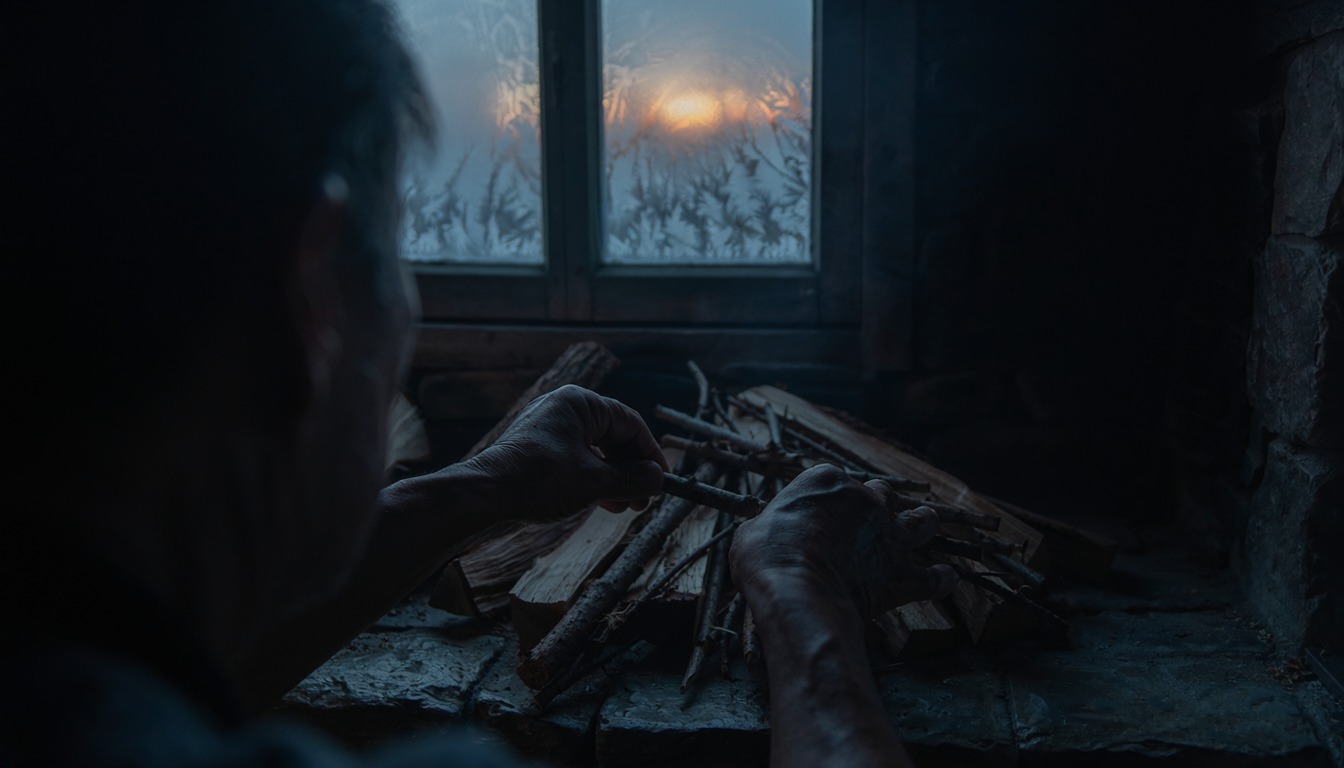
A fire never warms the kindling before it is laid. No heat arrives in advance, as a deposit, to make the laying pleasant. The wood is stacked cold, with numb fingers, in the grey and the dark, by someone who feels nothing whatsoever like a firemaker. And then, only then, there is flame, and the warmth arrives to find the work already done. You have lived this and not named it. The walk you did not want to take, and the moment twenty minutes in when the sky changed colour and so did you. The phone call you dreaded for a fortnight that took four minutes and left you lighter for a week. Ask anyone who has ever driven to the gym for a 6am session with legs still wrecked from the last one. The warmth did not come first. It came somewhere in the third set, or on the drive home, or a few months later in the mirror. Or, on some mornings, not at all, and they went anyway, and that is precisely why they are the ones you admire. Not one of them felt like it at first. They laid the fire cold and the feeling came to meet them.
We are taught the order backwards, and nobody corrected us. Feel motivated, then act. Feel ready, then begin. Feel better, then get up. So the low day wins its victories not because we lacked strength but because we were waiting for warmth before laying the wood. The waiting, dressed as patience, quietly costs the morning. The lost morning lowers the mood, which recommends more waiting, and the spiral tightens until a whole Saturday has vanished behind the curtains and left shame where the day should have been. You know that shame. It arrives at about four in the afternoon, when the light goes gold outside and you have not seen it. Nothing about that spiral is a verdict on you. It is what happens to anyone who has the order wrong: the sore-legged, the newly grieving, the freshly sacked, the quietly heartbroken, all of us. And the correction is not more strength. It is the right order. Motion changes mood. The body persuades the mind in a way the mind can never persuade itself. Benjamin Franklin, who rose before dawn for sixty years and kept a ledger of his own character the way a shopkeeper keeps accounts, put it in five words that have outlived him by two centuries: energy and persistence conquer all things. And persistence, on a low morning, is never a mighty act. It is one small motion, made cold. Which raises the only question that matters on the mornings that matter: what do you lay, when you cannot lift anything at all?
The action comes first. The feeling follows.
The First Rung
So here is the craft. You will not always be able to summon the will to rise. Nobody can, and every plan that assumes otherwise is a plan that fails on the exact mornings it was built for. You know those plans. The gym at six, the new regime, the whole new me, drafted in a strong hour and sunk without a trace on the first grey morning, taking a little self-belief down with them. That is not a failure of character. It is a ladder with no bottom rung. The fix is the emperor’s: decide in advance, in daylight, the one small action that requires no willpower at all. So small it is harder to refuse than to do. Make the bed. Walk to the corner and back. Drink the glass of water. Send one message. Shower. Then leave it waiting where the low morning will find it: on the mirror, on the phone’s first screen, on a card beside the bed in your own handwriting. The rung is not the recovery. The rung is the ignition. And ignitions are meant to be small.
Watch what the first rung actually does, on the morning it matters. The bed gets made. Ninety seconds, no willpower, just an instruction your stronger self already wrote. And something almost imperceptible shifts: one thing is done, and you are now a person who did a thing. The second motion is slightly easier than the first. The walk to the corner suggests the longer loop; the shower suggests the clothes; and by mid-morning momentum is doing quietly what motivation refused to do at dawn. You were never asked to lift the day. You were asked to lift the rung. The day follows. And beneath the mechanics something larger is happening. Aristotle taught that we become brave by doing brave acts, not by waiting to feel brave, and every cold rung you climb casts a vote for who you are: I am the kind of person who gets back up. Not because it is easy. Not because you feel it. Because it is what you do now. A self built out of kept mornings is a self that no single low day can argue with, and it is a self you can be quietly proud of on the mornings you are not proud of anything else. But there is one thing the emperor never had on that frozen bed, and you do.
You are never asked to lift the day. You are asked to lift the rung.
Ask yourself: what is your first rung, small enough to be possible on your worst morning, not your best?
Witnessed Rising
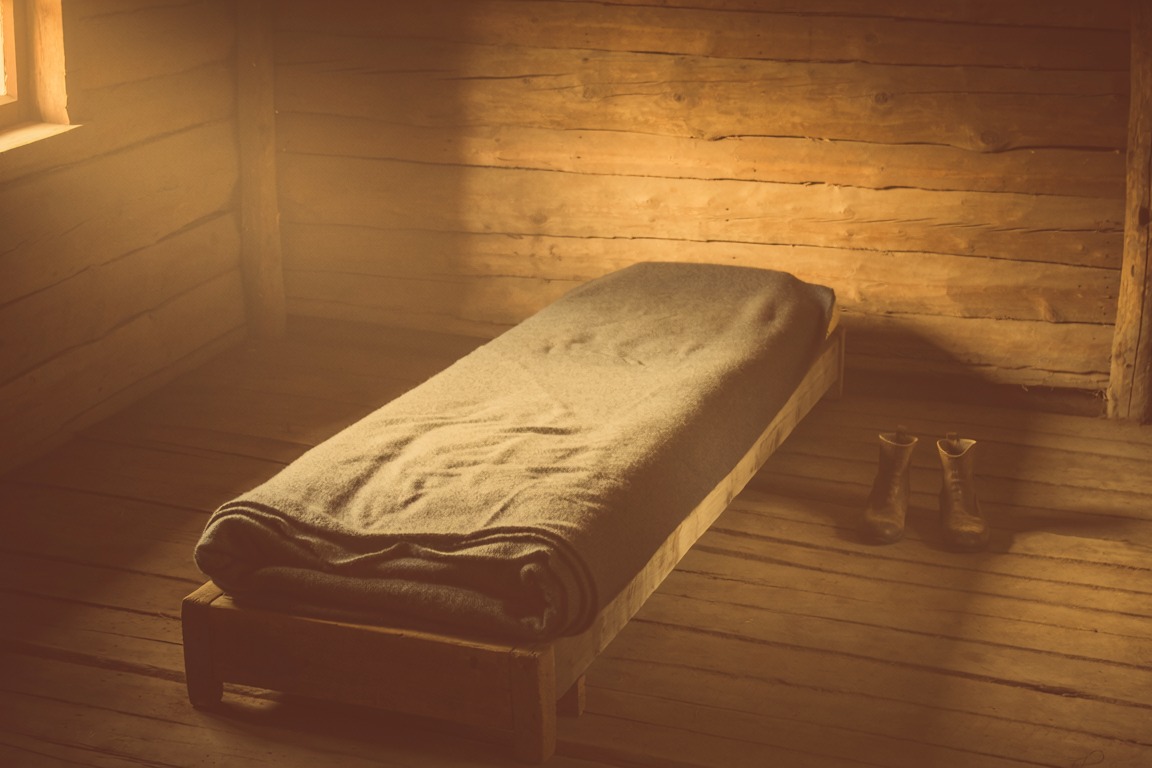
I learnt the first rung in uniform before I had words for it. Seventeen years in the Air Force, and the oldest ritual in every military on earth is the made bed: every morning, before a young recruit is awake enough to argue, the bed is made, tight, square, to a standard. Outsiders think it is about tidiness. It was never about the bed. It is the first rung, drilled into a body until the body climbs it without consulting the mood, so that on the worst morning of a life, the one after the loss, after the news, after the night, there is one thing that gets done before the mind has finished its case for staying down. The armies knew what the emperor knew. You do not rise by feeling. You rise by action.
And you do not climb it alone. That is this letter’s law. A rung kept in secret is a promise made to no one, and promises made to no one are the easiest thing in the world to break at 6am. So, tell one person your first rung. The friend, the partner, the mate you finally rang. Then on the low morning, a single text has a witness, and its absence is noticed kindly. Not with pressure. With presence: thinking of you, the rung is still there. I have received those texts from men I thought I had lost. I am up. Shaved. See you at work. Seven words at 6:04 in the morning, and I have wept over some of them, because I knew exactly what it took to send them. A shave is not a shave on that morning. It is a man deciding to have a face again. That one thread halves the gravity. It is the difference between a promise to no one and a promise with a face on it. Rising is a skill. Witnessed rising is a faster one. So build the ladder now, while you are strong enough to be reading this.
Rising is a skill. Witnessed rising is a faster one.
Ask yourself: who will know your rung, and who could you be the witness for, this week?
Build the Ladder in Daylight
This is a letter with a practice, and the practice is done today, in daylight, for a morning that has none. Three moves. First, choose the rung: the one small action for your next low morning, decided now, so small it is embarrassing. Second, write it where the low day cannot lose it. The mirror. The first screen of the phone. A card on the bedside table in your own handwriting, which is the closest thing you have to the emperor’s notebook. Third, tell one person, tonight, what your rung is, and ask them to be the witness. That is the whole ladder. It has one rung, and one rung is all a low morning ever needs.
Because the morning is coming. Tomorrow, or Tuesday, or the morning after news you have not received yet, the doona will have weight again and the ceiling will be close and the reasonable voice will be waiting with its kindness. Do not argue with it. You will lose; the emperor did. Instead, read the note your stronger self left you, climb the one rung, cold, and let the fire do the rest. The feeling will come to find the work already done. It always has. And somewhere in the same grey light, someone who loves you will be watching a phone for a few plain words, up, shaved, see you at work, and when they arrive, both of you will have risen.
Decide one step. The Arete Path makes rising a skill, morning after morning, beside people who refuse to let each other stay down. The lamp at Arete Estate is lit. It will not chase you. It will keep burning until you are ready. Come in when you are. Bring your rung.
Excellence revealed by storms.
For the Young Ones
The same truth, made small enough to hold.
Here is a secret about fires. A fire never warms the wood before it is laid. Somebody has to build it first, with cold hands, in the dark, when nothing feels warm at all. Only after the wood is stacked and the match is struck does the warmth come, and it comes to find the work already done. Nobody ever felt warm first and then built the fire. It always goes the other way round.
People go the same way round. On the mornings when you do not feel like doing the hard thing, the homework, the training, the apology, the getting out of bed, a sneaky voice says: wait until you feel like it. But the feeling is hiding on the other side of the doing. So you do the tiniest bit first. You put on one sock. You open the book to the right page. You say the first word of the sorry. And the feeling comes running to catch up, every time, the way warmth comes to the laid fire.
That is what the brave people know, and now you know it too. You do not wait to feel brave. You do one small brave thing, cold, and the brave feeling follows you in.
A practice, and the grown-up goes first
Tonight, everyone builds a ladder with one rung on it. Grown-ups, you go first: tell the young ones about a morning you did not feel like getting up, and the one small thing you did anyway that got the day started. Then everyone chooses their own first rung for a hard morning, something so small it would be silly to say no to: one sock, one glass of water, one page. Write it on a sticky note and put it where the hard morning will find it, on the mirror, on the bedroom door. And tell one person at the table what your rung is. A rung that somebody knows about is much harder to skip.
About the author
Marcus J Emsley · The Guide
Marcus spent seventeen years as a welfare officer in the Royal Australian Air Force, at home and on operations overseas, sitting with people in grief, trauma and the mornings they did not want to rise. He is the founder of Arete Estate in the Barossa Valley, South Australia, the creator of The Sculptor's Journey and Wisdom & Wonder, and the author of the debut novel Wisdom & Wine. He is the son of a primary school teacher who coached footy, cricket and life, and a palliative care nurse who showed him what kindness at the hardest door looks like. He has stood in the dark himself, and he writes from the far side of it.
What we are building at Arete Estate
Arete is excellence becoming. It is the highest expression of who you were always meant to be, not the finished version, but the version that keeps reaching. It is not built. It is revealed.
Arete Estate exists to help people reveal, not construct, the highest version of themselves. We do this through six virtues drawn from the world's wisdom traditions, taught through stories, walked through daily practice, and offered to anyone who is ready to begin: the parent raising a child, the leader carrying a team, the soldier returning from service, the school shaping the next generation, the person sitting alone in the early hours of the morning wondering if there is a path through.
Our work is to make that path visible. To stand as a lighthouse for the seekers, the grieving, and the broken. To remind every person we reach that excellence is not built, it is revealed by storms, and that they are not alone in the storm.
We do not chase. We shine. The Sculptor's Journey (The Doorway, The Walked Path, The Guided Path), An Hour with the Guide, Meditate with Arete, Wisdom & Wonder and The Sculptor's Library are the rooms of that house.
Six virtues. One journey. Your highest self.
www.areteestate.com.au · info@areteestate.com.au · Instagram @areteestate
If this essay touched something raw
Some of what is written here is heavy. If it has stirred something you are carrying, please do not carry it alone tonight.
Lifeline 13 11 14 · Open Arms (veterans and families) 1800 011 046 · 1800RESPECT 1800 737 732 · Kids Helpline 1800 55 1800 · In an emergency, call 000.
Reaching out is not weakness. It is all six virtues at once: the Fortitude to stay, the Wisdom to know you need a hand, the Love to let someone in, the Courage to ask, the Temperance to set the weight down, and the Gratitude for the one who answers.

Responses