
Gratitude · The Gold Pan Practice
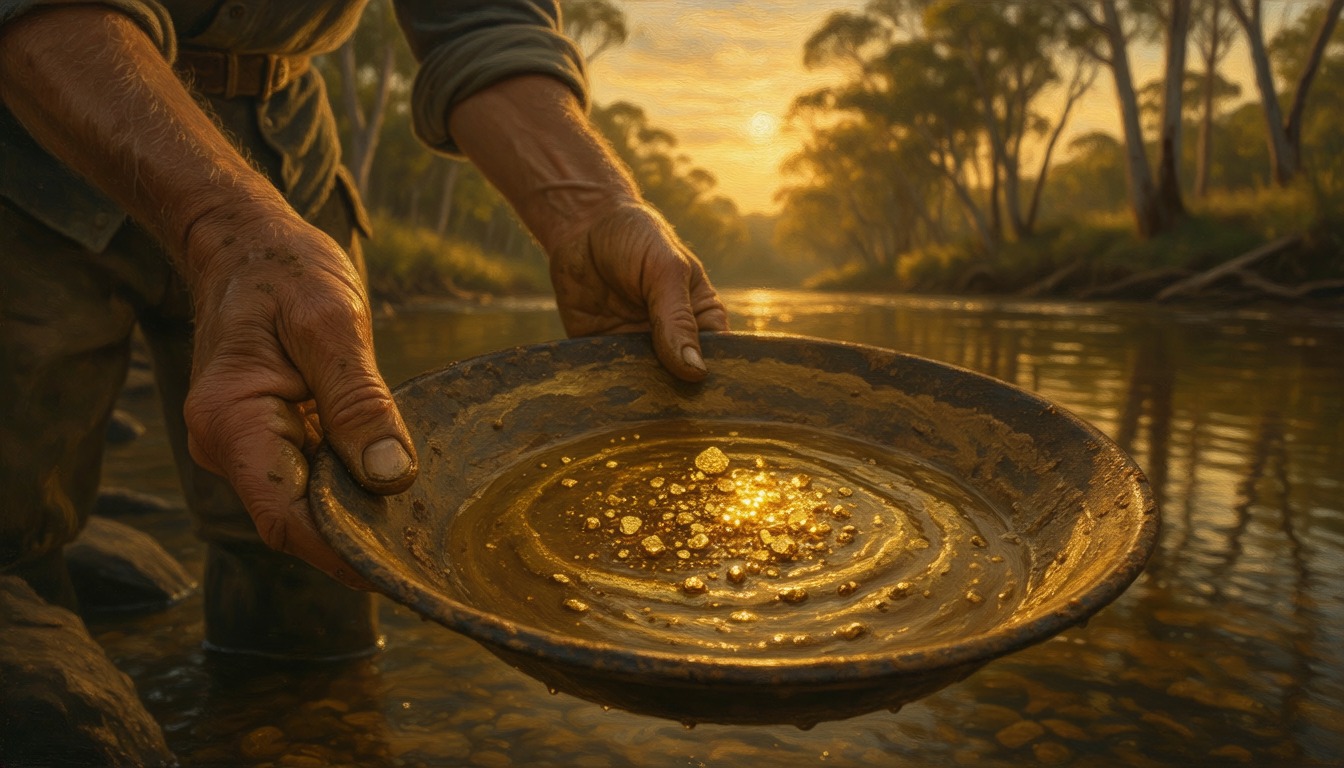
Every day, life gives you mud and gold.
Both. Always both.
The meeting that went badly, and the stranger who held the door. The argument with your partner, and your child’s laugh at dinner. The news that broke you, and the friend who called without being asked.
Mud and gold. Mixed together. Every single day.
The question isn’t whether you’ll get mud. You will.
The question is whether you’ll learn to pan for gold.
What Gold Panning Actually Is
You crouch by the river with a shallow pan. Scoop up sediment: mud, sand, gravel, water. Then you swirl. Gently. Patiently. The lighter material washes over the edge. The heavier material sinks.
Swirl. Wash. Repeat.
Most of what you scoop is worthless. That’s the nature of it. You’re not expecting treasure in every pan. You’re expecting to find small flakes hidden in ordinary river mud, if you have the patience to look.
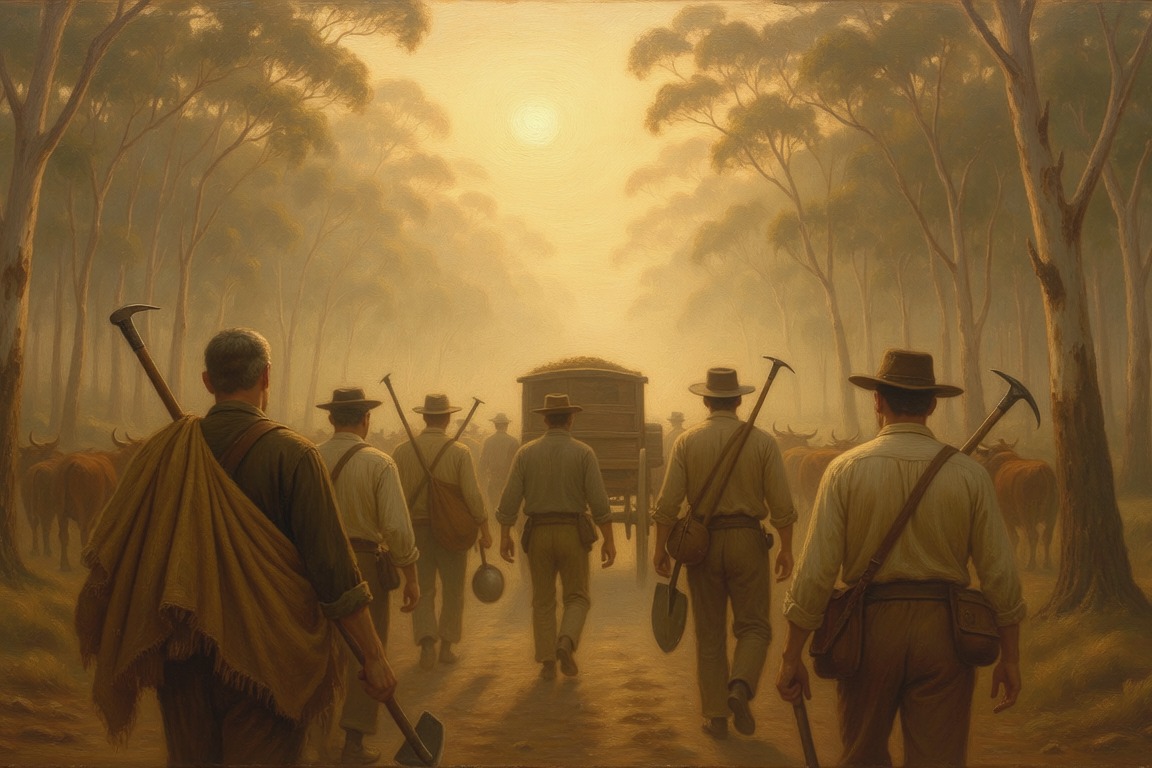
The diggers who walked hundreds of kilometres to the Victorian goldfields in 1851 understood something: the gold was always there. Mixed into the sediment. Invisible until someone took the time to separate it out.
The same is true of your days.
The Practice
Every evening, I ask myself two questions.
What was the mud today?
Not to dwell. Not to spiral. Just to name it. See it clearly.
The mud was the email that derailed my morning. The mud was feeling invisible to my wife. The mud was the diagnosis.
You don’t have to fix the mud. You just have to see it for what it is: sediment. Part of the stream. Not the whole stream.
What was the gold today?
This is the real work. Because gold doesn’t announce itself. It doesn’t demand attention the way mud does.
Mud is loud. Gold is quiet.
The gold was my daughter’s face when she finally got it. The gold was ten minutes of silence on the back porch. The gold was remembering why I started.
The gold is always there. But you have to pan for it.
Why This Works
Seventeen years of sitting with people in crisis, in military welfare, in grief work, in the rooms where people fall apart, taught me this: the people who find their way forward aren’t the ones who had less mud.
Everyone gets mud. Tragedy doesn’t check your privilege before arriving. The people I watched rebuild weren’t dealt better hands. They learned to pan for gold in whatever sediment they were given.
This isn’t toxic positivity. I’m not asking you to smile through the wreckage. The mud is real. Name it. Feel it.
But the gold is also real. And if you don’t look for it, you’ll miss it entirely, washed away in a day you dismissed as “bad”.
The Trap
We do this thing where we let one piece of mud contaminate everything.
One hard meeting becomes “a bad day”. One argument becomes “everything is falling apart”. One piece of bad news becomes “nothing good ever happens”.
That’s not true. It’s never true. There was gold in that day. There’s gold in every day.
You just stopped looking when the mud showed up.
What Changes Over Time
I’ve done this practice for years, and it shifts you slowly.
You start seeing gold in real time. At first, you look back and search. Eventually, you catch it as it happens. You hold the moment and you think: this is gold. Don’t miss this.
Your definition of gold expands. Early on, you look for the obvious: wins, compliments, achievements. The practice teaches you subtler gold. The taste of morning coffee. A dog walking past. The fact that your body carried you through another day.
The mud bothers you less. Not because you’re numb, but because you see it in proportion. Yes, that meeting was brutal. But it wasn’t the whole day. It was one pan of sediment in a river that also contained gold.
And gratitude becomes a skill, not a feeling. You stop waiting to feel grateful. You do the work. The feeling follows.
How to Start
Tonight. Or tomorrow morning with your coffee.
Name the mud. What was hard? What frustrated you, hurt you, disappointed you? Say it plainly. Don’t dramatise it. Don’t minimise it. Just see it.
Then pan for gold. What else was true? What small good thing did you almost miss? Find one. Ideally three.
Then hold the gold. Don’t rush past it. Let yourself feel it. This was real. This counts.
Five minutes. Every day. Acknowledge the mud. Keep the gold. Keep searching. That is the whole practice, and it is the first practice we hand people inside The Doorway, because everything else on the path is built on learning to see.
The River Keeps Flowing
You don’t do this once.
New sediment arrives every day. Some days the mud is thick and the gold is scarce. Other days you strike a vein.
But you keep showing up. Keep crouching by the river. Keep doing the work of separating what matters from what doesn’t.
Because the gold is always there. Hidden in the ordinary. Waiting to be found.
Every day, life gives you mud and gold. Both. Always both.
The wise ones learn to pan.
About the author
Marcus J Emsley · The Guide
Marcus spent seventeen years as a welfare officer in the Royal Australian Air Force, at home and on operations overseas, sitting with people in grief, trauma and the mornings they did not want to rise. He is the founder of Arete Estate in the Barossa Valley, South Australia, the creator of The Sculptor's Journey and Wisdom & Wonder, and the author of the debut novel Wisdom & Wine. He is the son of a primary school teacher who coached footy, cricket and life, and a palliative care nurse who showed him what kindness at the hardest door looks like. He has stood in the dark himself, and he writes from the far side of it.
What we are building at Arete Estate
Arete is excellence becoming. It is the highest expression of who you were always meant to be, not the finished version, but the version that keeps reaching. It is not built. It is revealed.
Arete Estate exists to help people reveal, not construct, the highest version of themselves. We do this through six virtues drawn from the world's wisdom traditions, taught through stories, walked through daily practice, and offered to anyone who is ready to begin: the parent raising a child, the leader carrying a team, the soldier returning from service, the school shaping the next generation, the person sitting alone in the early hours of the morning wondering if there is a path through.
Our work is to make that path visible. To stand as a lighthouse for the seekers, the grieving, and the broken. To remind every person we reach that excellence is not built, it is revealed by storms, and that they are not alone in the storm.
We do not chase. We shine. The Sculptor's Journey (The Doorway, The Walked Path, The Guided Path), An Hour with the Guide, Meditate with Arete, Wisdom & Wonder and The Sculptor's Library are the rooms of that house.
Six virtues. One journey. Your highest self.
www.areteestate.com.au · info@areteestate.com.au · Instagram @areteestate
If this essay touched something raw
Some of what is written here is heavy. If it has stirred something you are carrying, please do not carry it alone tonight.
Lifeline 13 11 14 · Open Arms (veterans and families) 1800 011 046 · 1800RESPECT 1800 737 732 · Kids Helpline 1800 55 1800 · In an emergency, call 000.
Reaching out is not weakness. It is all six virtues at once: the Fortitude to stay, the Wisdom to know you need a hand, the Love to let someone in, the Courage to ask, the Temperance to set the weight down, and the Gratitude for the one who answers.

Responses