
Love · The Virtue Series, Part Four. You don’t fall in love. You choose it.
There is a moment, and if you have loved anyone for long enough, you know exactly the one I mean, when the feeling stops.
Not forever. Not dramatically. Not with a door slam or a revelation or a betrayal. Just... quietly. Like a tide going out. You wake up on an ordinary Tuesday and the person beside you is the same person who once made your chest ache just by walking into a room, and today they are just... there. Breathing. Taking up their half of the bed. Leaving the coffee cup in the same wrong place they have left it every morning for the last eleven years.
And somewhere between the alarm and the shower, a thought arrives, uninvited, unwelcome, and so quiet you almost miss it:
Is this still love?
The world has an answer for that question. The movies have an answer. The songs have an answer. The romance novels and the wedding speeches and the entire billion-dollar industry built on the assumption that love is a feeling have an answer, and it is this: if you don’t feel it, it’s gone. Move on. Find someone who makes you feel it again. Because love is a fire, and if the fire dies, what’s left is just... staying.
And that answer, that confident, seductive, deeply destructive answer, is the biggest lie the modern world tells about the most important thing in human life.
Because love is not a fire.
Love is a choice. Made daily. Made quietly. Made on the mornings when the feeling is a bonfire and on the mornings when the feeling is an ember and on the mornings when the feeling is ash and you choose it anyway.
You don’t fall in love. You choose it. The fall is choosing it again tomorrow.
Those five words, you don’t fall in love, might be the most countercultural thing in this entire series. Because every song you’ve ever heard, every film you’ve ever watched, every fairy tale you were told as a child, taught you the opposite. They taught you that love arrives. That it happens to you. That it sweeps you off your feet, as though your feet were the problem, as though standing on your own solid ground was something love was supposed to rescue you from.
It wasn’t. It isn’t. Love is not a rescue. Love is a practice. And the difference between those two things is the difference between a relationship that collapses the moment the feeling fades and a relationship that is still standing, still warm, still lit from within, forty years later, not because the feeling never left, but because two people decided, on the mornings when it did, to choose each other anyway.
The Lie We Were Told About Love
We were told love is something you fall into.
Think about that word. Fall. You don’t choose to fall. You don’t plan a fall. Falling is what happens when the ground disappears; it is loss of control dressed up as romance. And we built our entire understanding of the most important human experience around a word that means losing your footing.
No wonder so many relationships don’t survive the first real winter. They were built on a feeling that, by its own definition, was never in your hands.
The fairy tale goes like this: you meet someone. Something happens: chemistry, attraction, a look across a room, a conversation that makes time disappear. The feeling arrives, enormous and uninvited, and suddenly everything is different. Colours are brighter. Songs make sense. The world rearranges itself around this person and you think: this must be love, because nothing has ever felt like this.
And you’re right. It is something. It is real. It is powerful and beautiful and important and it deserves to be honoured.
But it is not love. It is the invitation to love.
It is the door. Not the house. And most people spend their lives running from door to door, mistaking the thrill of the entrance for the thing itself, never staying long enough to see what’s inside. Never sitting in the quiet room behind the door, where the real thing lives, because the quiet room does not feel like the doorway. The quiet room feels like Tuesday.
Erich Fromm saw this with painful clarity over half a century ago:
“Love is not something natural. Rather it requires discipline, concentration, patience, faith, and the overcoming of narcissism.” Erich Fromm, The Art of Loving
Read that list. Discipline. Concentration. Patience. Faith. The overcoming of narcissism. Does that sound like falling? Does that sound like something that happens to you while violins play in the background? That sounds like work. Beautiful, sacred, life-defining work, but work. The kind nobody warned you about because the warning doesn’t sell tickets.
What It Actually Looks Like
Real love, love as a virtue, love as a practice, love as a daily choice rather than a recurring feeling, looks nothing like the movies. It looks like your life. Right now. In the quiet rooms nobody films.
It looks like a man who has been married for twenty-three years, sitting on the edge of the bed at 6am, looking at his wife while she sleeps. She does not look like she looked on their wedding day. Neither does he. The electricity of the early days is a memory, a warm one, a good one, but a memory. What replaced it is something the early days could never have produced: a knowing. He knows her. Not the version she shows the world; the real one. The one who is afraid of being forgotten. The one who cries at the dog food commercial. The one who cannot sleep without the fan on even in winter. He knows her in the way you know a house you have lived in for decades: every creaking board, every sticking window, every patch of light that falls across the floor at a certain time of day. And this knowing, this unglamorous, unsexy, completely uncinematic knowing, is more intimate than anything the early days could have dreamed.
He gets up. He makes the coffee. He makes it the way she likes it, not the way he likes it, because he learned the difference fifteen years ago and has been choosing her way every morning since. Nobody is watching. Nobody will applaud this. It will never be a grand gesture. It will never be a story he tells at a dinner party.
It is love. The realest kind. The kind that is built not in the moments that take your breath away, but in the ten thousand mornings when you choose to make the coffee.
It looks like a woman standing in a hospital corridor. Her mother is on the other side of that door, smaller now, confused sometimes, a version of the fierce, brilliant woman who raised her that she was not prepared to meet. The doctors have said what they needed to say. The pamphlets have been read. The decisions that no child should have to make about a parent have been made, and they sit in her stomach like stones.
She pushes the door open. She sits down. She takes her mother’s hand, a hand that once braided her hair, once packed her school lunches, once held her face after a nightmare and said nothing because nothing needed to be said, and she holds it. Not because it will change anything. Not because her mother knows she is there, not today, not fully. But because love is not a transaction. Love is not: I will show up as long as you recognise me. Love is: I am here. Whether you know it or not. Whether it makes a difference or not. I am here.
Love is not a feeling you find. It is a promise you keep, on the days it’s easy and on the days it takes everything you have.
It looks like two old friends meeting for coffee after a silence that lasted too long. Something happened: not a fight, not a falling out, just the slow drift of lives moving in different directions. Kids. Jobs. Cities. The comfortable lie that you’ll catch up soon, repeated until soon becomes months becomes years. And one of them picks up the phone. Not because the feeling of friendship was burning in their chest. Because they chose to. Because love, and friendship is love, is not sustained by feeling. It is sustained by the person who reaches out when the reaching is inconvenient.
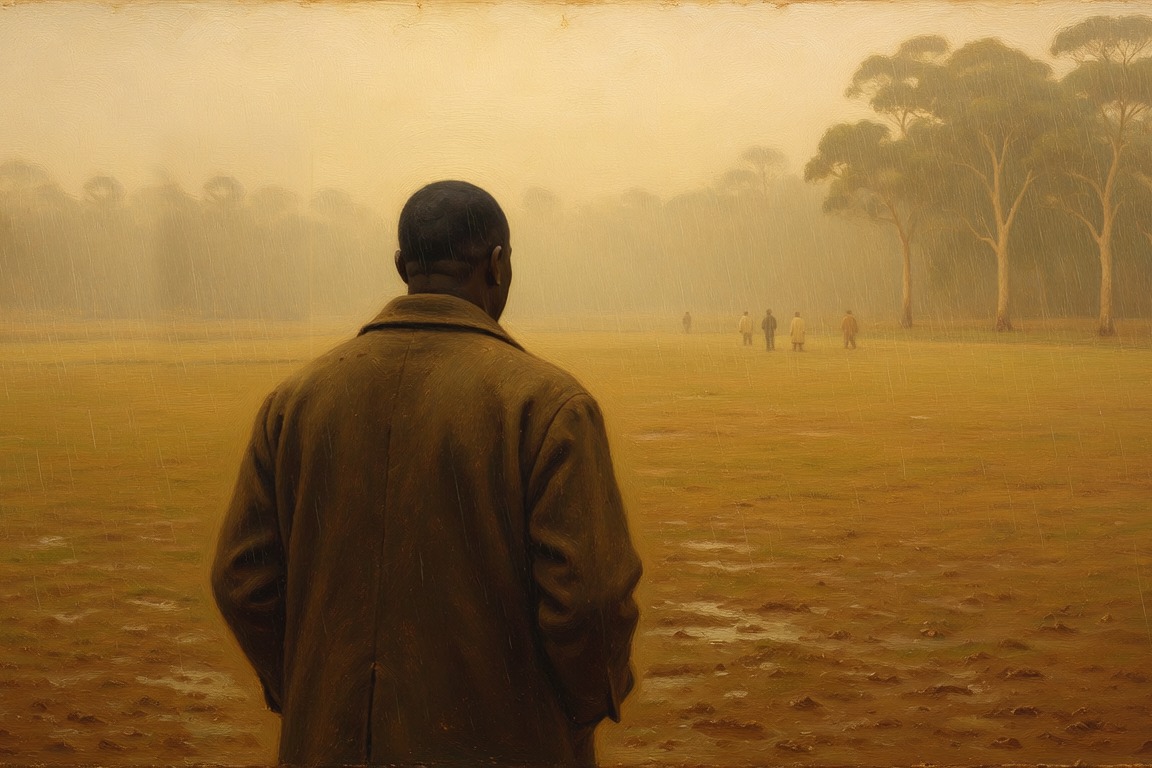
It looks like a father at his son’s football game, standing on the sideline in the rain, watching a team that is losing badly, watching his boy struggle, watching the thing his child cares most about in the world go wrong in real time. And he stays. He doesn’t check his phone. He doesn’t leave at half time. He stands in the rain, fully present, fully there, because his son will look up at the sideline at some point during the second half (they always look up) and what he will see is his father. Still there. Wet and smiling and not going anywhere.
That look, the one the boy gives when he sees his dad hasn’t left, is worth more than a hundred I love yous. Because that look is not about words. It is about evidence. It is the child’s nervous system receiving the data it needs more than any other data in the world: you stayed.
Love Is a Verb
The Greeks, who seemed to understand everything about the human heart two thousand years before we reinvented the conversation, had multiple words for love. Not one. Several. Because they understood that love is not a single experience. It is a family of experiences, each one different, each one necessary, each one demanding something specific from you.
They spoke of eros: the fire, the passion, the love that starts in the body and floods the mind. This is the one the movies sell. This is the door.
They spoke of philia: the love of deep friendship, of shared history, of two people who have walked enough road together that they no longer need to explain themselves. This is the two old friends at the coffee shop.
They spoke of storge: the love of family, the love that is not chosen so much as inherited, the love between parent and child that exists before the child even has a name. This is the father in the rain.
And they spoke of agape, the highest form. Unconditional love. The love that says: there is no version of you I will not love. No failure, no distance, no silence, no season of difficulty will make me leave. This is the woman in the hospital corridor. This is the man making the coffee at 6am.
Agape is the love that most of us want and almost none of us have been taught to practise. Because it requires something that the modern world does not value: staying.
Staying when the feeling has left the building. Staying when the person you love is not being loveable. Staying when the door of someone new and exciting is standing open and the quiet room of the person you’ve chosen looks, for a moment, like a prison rather than a home.
Corinthians, whether you are a person of faith or not, contains the most accurate job description of love ever written:
“Love is patient, love is kind. It does not envy, it does not boast, it is not proud. It is not easily angered, it keeps no record of wrongs.” 1 Corinthians 13:4-5
Read that as a to-do list. Patient: today, not in theory. Kind: to this person, the one who left the coffee cup in the wrong place, not a hypothetical person who is easy to be kind to. Keeps no record of wrongs, which means the argument from last Thursday is over, fully over, not stored in a filing cabinet to be retrieved during the next argument.
That is not a feeling. That is a discipline. A daily, chosen, practised discipline of the heart.
The Lavender and the Book
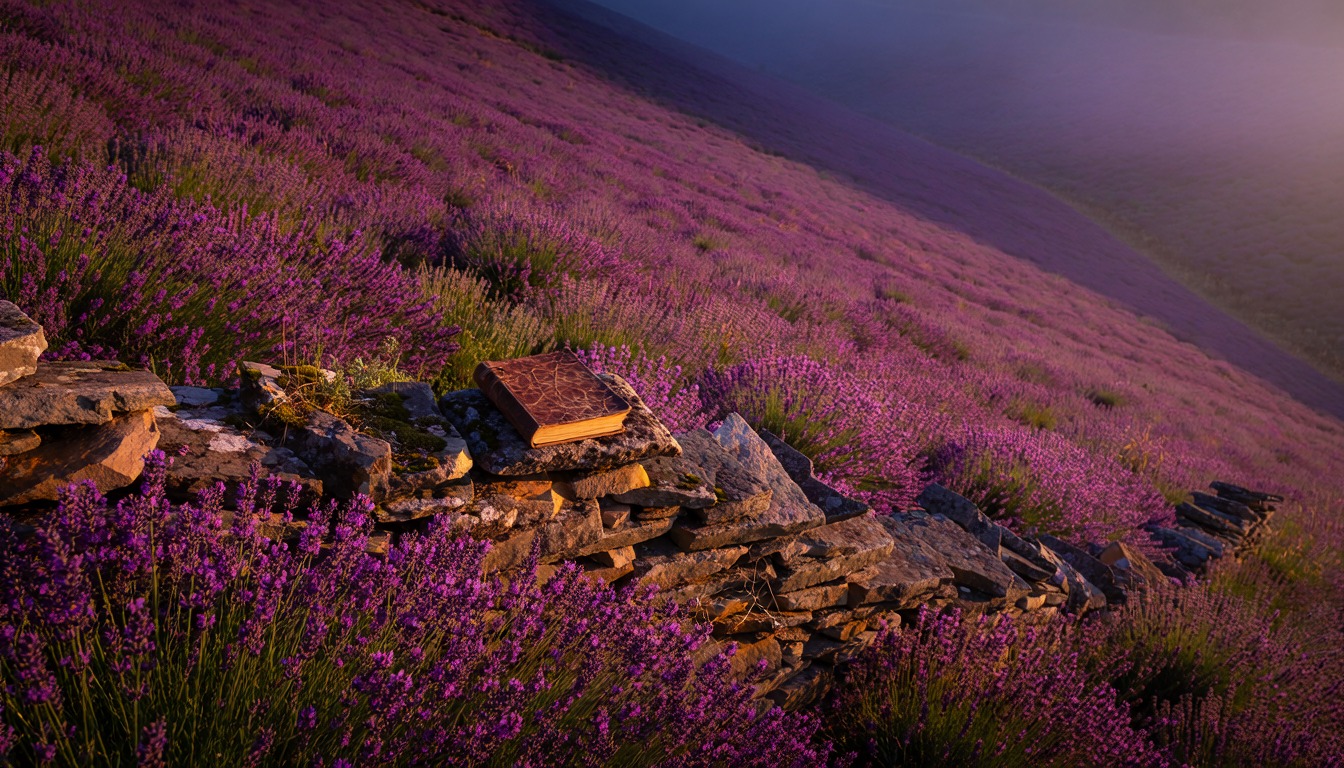
The symbol of Love on The Arete Path is not a heart. It is not a ring. It is not a rose.
It is lavender and a book.
And there is a reason for that, and the reason will matter to you if you sit with it.
Lavender is one of the most resilient plants on earth. It grows in poor soil. It thrives in drought. It does not need pampering or perfect conditions; it needs sunlight and time. Leave it alone and it will fill an entire hillside. Cut it back hard and it grows back stronger. Press it between the pages of a book and it holds its fragrance for years; long after the bloom has dried, long after the colour has faded, the scent remains.
That is love. Not the hothouse flower that needs constant attention and perfect conditions and collapses the moment the temperature drops. The plant that grows in difficult soil. The fragrance that endures after the bloom.
And the book is the record. The story you are writing together: not the story you planned, not the story the fairy tale promised, but the real story. The one with chapters you’d rather skip and chapters that make you weep with gratitude. The one with margins full of notes and corrections and the occasional page that is stained with something you spilled while you were living it.
There is a line often attributed to Rumi:
“Your task is not to seek for love, but merely to seek and find all the barriers within yourself that you have built against it.”
The barriers. Not the feeling. Not the person. The barriers within yourself: the fear of being known, the habit of keeping score, the refusal to be vulnerable because the last time you were vulnerable someone used it against you. Those are the weeds in the lavender field. And love, real love, the chosen kind, is the daily work of pulling them up so the plant can grow.
Love in the Hard Season
Every love will face a winter. Every single one. The winter of distance. The winter of boredom. The winter of the terrible thing that was said that hasn’t fully healed. The winter of the illness, the job loss, the grief that moved into the house and stayed longer than anyone expected. The winter of looking at each other across the kitchen and not knowing what to say.
Most loves die in winter. Not because the love itself has gone, but because both people are waiting for the other one to bring the spring. Both are standing in the cold room, arms folded, waiting to feel it again before they act.
And the love that survives winter, the love that is still there on the other side, stronger and quieter and more real than anything the summer version could have imagined, is always the one where somebody chose first.
Somebody made the coffee without being asked. Somebody reached across the bed in the dark and placed a hand on the other person’s back, not to initiate anything, not to fix anything, just to say: I’m here. I know it’s cold. I’m not going anywhere.
Somebody chose love before they felt it. And the feeling followed. It always follows. Not immediately. Not on your schedule. But it follows, the way spring follows winter, not because anyone earns it, but because that is what happens when you stay in the field long enough.
Viktor Frankl, a man who survived the unsurvivable and spent the rest of his life writing about what makes human beings endure, said something about love that should be engraved on every wedding ring and every doorframe and every mirror where someone stands in the morning wondering if this is still enough:
“The salvation of man is through love and in love.” Viktor Frankl, Man’s Search for Meaning
Through love and in love. Not through the feeling of love. Through the act of it. Through the daily, unglamorous, teeth-gritting-sometimes practice of choosing another person when every impulse says protect yourself.
That is what salvation looks like. Not a single heroic moment. A thousand quiet ones. A thousand coffees. A thousand hands on backs in the dark. A thousand mornings of choosing it again.
What Love Needs Beneath It
Love does not stand alone. It never has. It needs the three virtues that came before it, and without them, it collapses into something that looks like love but doesn’t last.
It needs Fortitude, because love will be tested. The commitment you make on the good day will be audited on the worst day. And without roots, without the capacity to stand firm when every instinct says walk away, love becomes conditional. I will love you as long as it’s easy. That is not love. That is a lease.
It needs Temperance, because love that has no balance consumes everything. The parent who loves so fiercely they smother. The partner who loves so desperately they lose themselves. Love without temperance is an orchestra with every instrument at maximum: not music, noise. Love conducted with balance gives each person space to breathe, to grow, to be themselves within the shelter of something shared.
It needs Wisdom, because love without understanding is blind devotion, and blind devotion has never saved anyone. Wisdom is the gold panner’s eye, the ability to look at the mud of a relationship honestly and say: this is what is real. This is what needs work. This is the gold. And this is the sediment I need to let go of. Without wisdom, love repeats its mistakes forever, calling the repetition commitment when it is actually fear.
Love without roots blows away. Love without rhythm burns out. Love without sight walks in circles. Love with all three walks forward, slowly, imperfectly, beautifully, into something that lasts.
Tonight
There is someone in your life right now that you love. Not the easy love. The complicated kind. The kind that has been through at least one winter and maybe more. The kind that has left the coffee cup in the wrong place so many times you’ve stopped counting. The kind that has said the wrong thing and done the wrong thing and been imperfectly, frustratingly, beautifully human in your presence for long enough that the fairy tale has well and truly worn off.
And you are reading this tonight, which means something in you is still burning. Something in you, beneath the exhaustion, beneath the frustration, beneath the quiet distance that has grown between you and this person like ivy between bricks, still believes that what you have is worth the work.
It is.
So tonight, I am not going to ask you to rekindle anything. I am not going to suggest a date night or a conversation framework or a five-step plan for falling back in love.
I am going to ask you to do one thing. The smallest thing. The thing that means the most.
Choose them.
Not because they deserve it tonight; maybe they don’t. Not because you feel it tonight; maybe you don’t. Choose them because that is what love actually is. The choosing. The returning. The act of walking back into the quiet room when every door in the building is open and saying: this is the one. This is the room I built. This is the person I chose. And I choose them again tonight.
Make the coffee. Reach across the bed. Send the text. Sit on the sideline in the rain. Hold the hand that doesn’t hold back. Show up for the person who has stopped expecting you to.
Not because it will fix everything. Because it will mean everything.
You don’t fall in love. You choose it. The fall is choosing it again tomorrow.
Choose it tonight.
And tomorrow morning, when the alarm goes off and the person beside you is just... there, breathing, familiar, imperfect, yours, choose it again.
That is Love. The fourth virtue. The one that makes all the others worth practising.
And it is, without question, the bravest thing you will ever do.
A Sculptor's Pause
Before the next thing, rest here a while. Meditate with Arete is a quiet room: a two-minute sitting, one breath at a time, with nothing asked of you. Sit with Arete
About the author
Marcus J Emsley · The Guide
Marcus spent seventeen years as a welfare officer in the Royal Australian Air Force, at home and on operations overseas, sitting with people in grief, trauma and the mornings they did not want to rise. He is the founder of Arete Estate in the Barossa Valley, South Australia, the creator of The Sculptor's Journey and Wisdom & Wonder, and the author of the debut novel Wisdom & Wine. He is the son of a primary school teacher who coached footy, cricket and life, and a palliative care nurse who showed him what kindness at the hardest door looks like. He has stood in the dark himself, and he writes from the far side of it.
What we are building at Arete Estate
Arete is excellence becoming. It is the highest expression of who you were always meant to be, not the finished version, but the version that keeps reaching. It is not built. It is revealed.
Arete Estate exists to help people reveal, not construct, the highest version of themselves. We do this through six virtues drawn from the world's wisdom traditions, taught through stories, walked through daily practice, and offered to anyone who is ready to begin: the parent raising a child, the leader carrying a team, the soldier returning from service, the school shaping the next generation, the person sitting alone in the early hours of the morning wondering if there is a path through.
Our work is to make that path visible. To stand as a lighthouse for the seekers, the grieving, and the broken. To remind every person we reach that excellence is not built, it is revealed by storms, and that they are not alone in the storm.
We do not chase. We shine. The Sculptor's Journey (The Doorway, The Walked Path, The Guided Path), An Hour with the Guide, Meditate with Arete, Wisdom & Wonder and The Sculptor's Library are the rooms of that house.
Six virtues. One journey. Your highest self.
www.areteestate.com.au · info@areteestate.com.au · Instagram @areteestate
If this essay touched something raw
Some of what is written here is heavy. If it has stirred something you are carrying, please do not carry it alone tonight.
Lifeline 13 11 14 · Open Arms (veterans and families) 1800 011 046 · 1800RESPECT 1800 737 732 · Kids Helpline 1800 55 1800 · In an emergency, call 000.
Reaching out is not weakness. It is all six virtues at once: the Fortitude to stay, the Wisdom to know you need a hand, the Love to let someone in, the Courage to ask, the Temperance to set the weight down, and the Gratitude for the one who answers.

Responses