
Love · Nobody is coming to knight you.
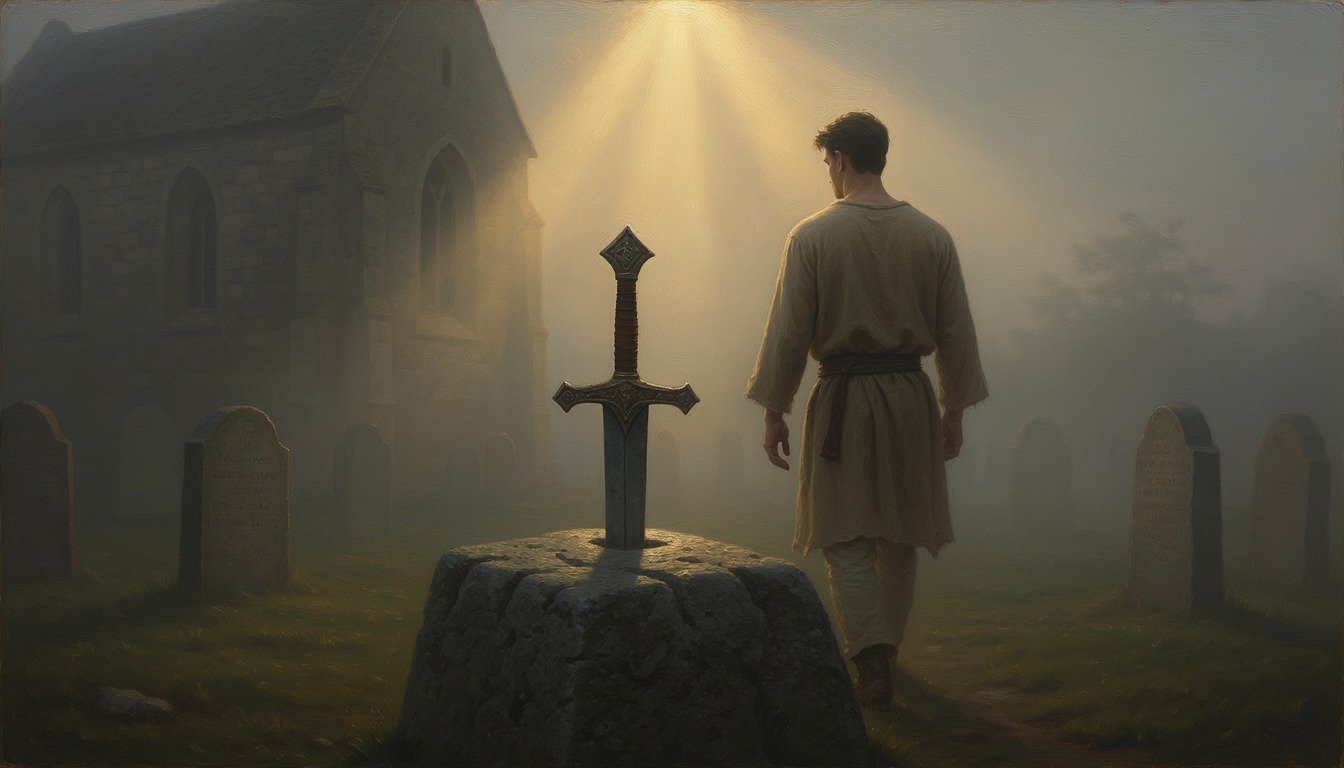
“Look within. Within is the fountain of good, ready always to bubble up, if you will always dig.” (Marcus Aurelius, Meditations)
This essay is about four words, four small, enormous words, that most adults will go their entire lives without ever once saying out loud and meaning. It begins on the carpet of a suburban lounge room, forty years ago, in front of a television. It travels through the oldest story of a sword ever told. And it ends, if you will let it, with you standing alone somewhere this week, saying something to yourself that may be the hardest and most important sentence of your year. Stay with me. This one goes all the way down.
The Boy in Front of the Television
It is a Saturday morning in 1985, and a boy is sitting cross-legged on the carpet, too close to the television, the way children always sit when a thing matters. On the screen, a cartoon prince, unremarkable, overlooked, ordinary by design, raises a sword above his head and speaks words of power. And in a blaze of light he is transformed: taller, stronger, unafraid, everything he was apparently not. He-Man, the show was called, and for a generation of children that morning ritual carried a jolt that had nothing to do with animation quality. Something in the chest lifted every single time the sword went up. Ask a grown adult of a certain age about that moment and watch their face, forty years on, the shiver is still there.
Now, why? Why does a cheaply drawn Saturday-morning cartoon still raise the hair on the arms of grown men and women? The answer is the doorway to everything else in this essay: because the transformation scene is not a story convention. It is a memory. Somewhere very deep, beneath the mortgages and the meetings and the years of being sensible, every one of us recognises that moment, the ordinary self, the raised sword, the becoming, as something true about ourselves that we have not yet done. The shiver is not nostalgia. The shiver is recognition. It is the person you were meant to be, knocking from the inside.
The Secret Inside Every Transformation
Because there is something nobody tells you about transformation stories, though humanity has been telling them for as long as there have been fires to tell them around. They all hide the same twist. The sword, the feather, the crown, the cape, the glowing stone, in every telling, in every age, the magic object turns out to be the same thing in the end: not the source of the power, but the permission to use it. The object never transforms the hero. It authorises the hero to stop hiding.
The oldest version in our tradition says it plainest. A sword stands buried in a stone in a churchyard, and around it gathers every strong man in England, knights, champions, kings-in-waiting, each one heaving at it with everything he has. It will not move. And then a boy named Arthur, who has come as nobody, a squire running an errand, takes the hilt and draws it out like a knife from butter. Read the old story closely and you will see what the crowd that day could not: the sword was never a test of strength. It was a test of identity. It could not be pulled by the mightiest arm in the kingdom, only by the person who was already, in his marrow, the king. The stone did not make Arthur royal. It revealed that he had been royal all along, standing unnoticed in the crowd, running errands, waiting for the moment that would finally give him permission to be what he was.
The sword never held the power. It only gave him permission to use his own.
Ask yourself: which sword have you been waiting for (the title, the qualification, the sign, the someone) before you let yourself begin?
The Marble Knows
If you have read these essays for a while, you will feel the ground turning familiar underfoot, because this is the very stone this whole estate is built on. Michelangelo, asked how he made the David, gave the answer the sword-stories had been whispering for centuries: the figure was already in the marble. He did not build a masterpiece out of nothing; he removed, chip by patient chip, everything that was not the masterpiece, until what had been standing inside the stone all along stepped out into the light. You are not built, we say at Arete Estate, again and again, because it cannot be said too often in an age that has forgotten it: you are revealed.
Hold the two images together now, the sword and the chisel, and see what they are jointly telling you. The transformation you have been waiting for is not an acquisition. There is nothing to be fetched from outside, no title, no relationship, no windfall, that installs the person you are meant to be. That person is already present: in the marble, in the marrow, in the boy on the carpet who felt the shiver and knew. What stands between you and them was never a missing power. It was a withheld permission. And the terrible, wonderful truth of adult life is that there is only one person left who can grant it.
You are not waiting for power. Power is waiting for permission.
The Words We’re Afraid to Say
Let me name the thing our whole age keeps politely in the shadows, because you will recognise it the moment it is said. We are a generation standing around the stone, waiting to be authorised. Waiting for the boss to say you’re ready. Waiting for the parent, sometimes long gone, to finally say I’m proud of you, you can start now. Waiting for the diploma, the invitation, the tap on the shoulder, the sign from the universe. We have outsourced the keys to our own becoming, and then wondered, year after year, why nobody ever arrives to unlock us. So hear the hardest sentence in this essay, said with love: nobody is coming. There is no herald on the road. No one is going to hand you the sword, because, and this is the secret the stories have been shouting in a whisper all along, the sword was never in anyone else’s keeping. It has been at your hip the entire time.
And this is why the words are so hard to say. “I give myself permission. I have the power.” Say it in an empty room and feel what happens in your body, the flinch, the cringe, the voice that rushes in with who do you think you are? That flinch is not humility. Humility is truthful about gifts as well as limits. That flinch is the crowd around the stone, living in your own chest, every voice that ever taught you that wanting to be more was arrogance, that stepping forward was showing off, that the sword belonged to somebody else. The flinch is the whole diagnosis. And the cure is not to wait until the words feel comfortable. The cure is to say them before you are ready, and let the becoming catch up. It always does.
Nobody is coming to knight you. Pick up the sword yourself.
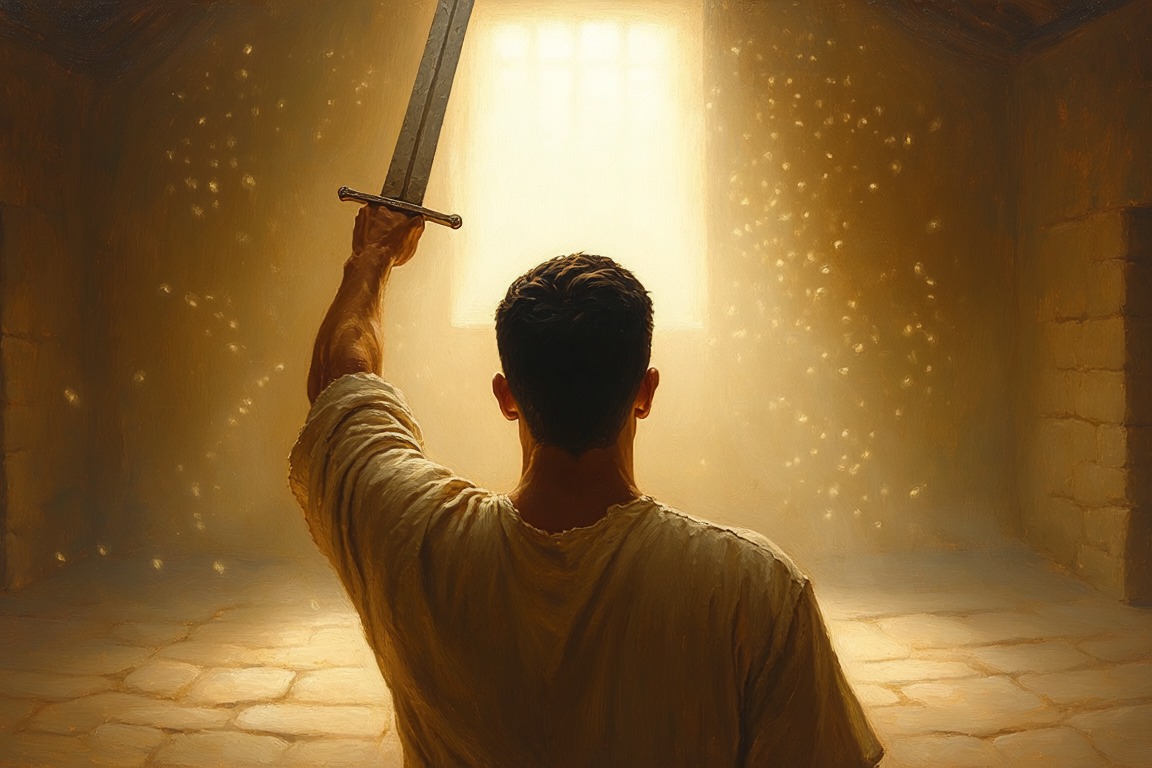
Ask yourself: whose permission have you been waiting for, and how many years have they been keeping you waiting?
Say the Words
So this is the practice, and I am aware of how strange it sounds, and I am asking you to do it anyway, because the strangeness is the point. This week, once, find somewhere you can be alone. The car before you go inside. The paddock. The bathroom mirror, which is where most of the real battles of a life are fought anyway. Stand there, and say the four words out loud, not in your head, out loud, where your own ears can hear your own voice claim them: I give myself permission. I have the power. Then say the longer version, the one with your name on it: I give myself permission to ... and finish the sentence with the thing. The book. The business. The apology. The boundary. The becoming. The thing you thought of before I finished this paragraph.
Then, because words without demonstration are only values, and you know by now what this estate thinks of undemonstrated values, take one act, that same day, that the newly permitted self would take. Send the enquiry. Book the room. Write the first page. Make the call. Small is fine; small is how every sword is first swung. What matters is that the act and the words agree, that for one day, on your own authority, you lived as the person who was in the marble all along.
The boy on the carpet knew something the grown man forgot, and this essay exists to give it back to you. The shiver was never about the cartoon. It was your own becoming, calling to you across the lounge room, across the decades, across every year you spent waiting by the stone for somebody else’s hand. The sword is at your hip. The figure is in the marble. The words are on your tongue. The library lamp at Arete Estate is lit. It will not chase you. It will simply keep shining until the day you walk in, sword in hand, and say the words like you mean them. Because you can. Because it was always yours.
I give myself permission. I have the power.
Excellence revealed by storms.
For the Young Ones
The same truth, made small enough to hold. To be read aloud.
Have you ever had a lucky thing? Lucky socks for the big game. A special pencil for the spelling test. A little charm in your pocket for the first day of school. Nearly everyone has one, at some time or another. And lucky things really do seem to work, that’s the mysterious part. You wear the socks, and you play brilliantly. You hold the pencil, and the words come out right.
But this is the biggest secret in this whole essay, and I will tell it to you straight, the way the old stories tell it. The socks never scored the goal. Your legs did. The pencil never spelled the word. Your clever head did. The lucky thing was only ever a little key, something that helped you unlock the brave, brilliant you that was in there the whole time. The magic was never in the thing. The magic was always in you.
Every great story knows this trick. The hero finds a magic sword, or a special feather, or a glowing stone, and at the very end of the story, they always discover the same thing: the power was theirs all along. The sword just helped them believe it. So the next time you face a big scary thing and your lucky charm is nowhere to be found, don’t worry. You are the lucky charm. You always were.
A Practice (and the Grown-Up Goes First)
Tonight at the table, play “The Magic Thing”, and grown-ups, you go first. Tell them about a lucky thing you once believed in, and the day you worked out the power had been yours the whole time. Then it’s their turn: what’s your magic thing? And what is it really unlocking in you? Finish by teaching them the bravest words in this whole essay, said out loud, together, hands on hearts if you like: I give myself permission. I have the power. Say it like you mean it. Grown-ups too, especially grown-ups.
About the author
Marcus J Emsley · The Guide
Marcus spent seventeen years as a welfare officer in the Royal Australian Air Force, at home and on operations overseas, sitting with people in grief, trauma and the mornings they did not want to rise. He is the founder of Arete Estate in the Barossa Valley, South Australia, the creator of The Sculptor's Journey and Wisdom & Wonder, and the author of the debut novel Wisdom & Wine. He is the son of a primary school teacher who coached footy, cricket and life, and a palliative care nurse who showed him what kindness at the hardest door looks like. He has stood in the dark himself, and he writes from the far side of it.
What we are building at Arete Estate
Arete is excellence becoming. It is the highest expression of who you were always meant to be, not the finished version, but the version that keeps reaching. It is not built. It is revealed.
Arete Estate exists to help people reveal, not construct, the highest version of themselves. We do this through six virtues drawn from the world's wisdom traditions, taught through stories, walked through daily practice, and offered to anyone who is ready to begin: the parent raising a child, the leader carrying a team, the soldier returning from service, the school shaping the next generation, the person sitting alone in the early hours of the morning wondering if there is a path through.
Our work is to make that path visible. To stand as a lighthouse for the seekers, the grieving, and the broken. To remind every person we reach that excellence is not built, it is revealed by storms, and that they are not alone in the storm.
We do not chase. We shine. The Sculptor's Journey (The Doorway, The Walked Path, The Guided Path), An Hour with the Guide, Meditate with Arete, Wisdom & Wonder and The Sculptor's Library are the rooms of that house.
Six virtues. One journey. Your highest self.
www.areteestate.com.au · info@areteestate.com.au · Instagram @areteestate
If this essay touched something raw
Some of what is written here is heavy. If it has stirred something you are carrying, please do not carry it alone tonight.
Lifeline 13 11 14 · Open Arms (veterans and families) 1800 011 046 · 1800RESPECT 1800 737 732 · Kids Helpline 1800 55 1800 · In an emergency, call 000.
Reaching out is not weakness. It is all six virtues at once: the Fortitude to stay, the Wisdom to know you need a hand, the Love to let someone in, the Courage to ask, the Temperance to set the weight down, and the Gratitude for the one who answers.

Responses