
A story about three mates, two barrels, and the wine they were always going to make.
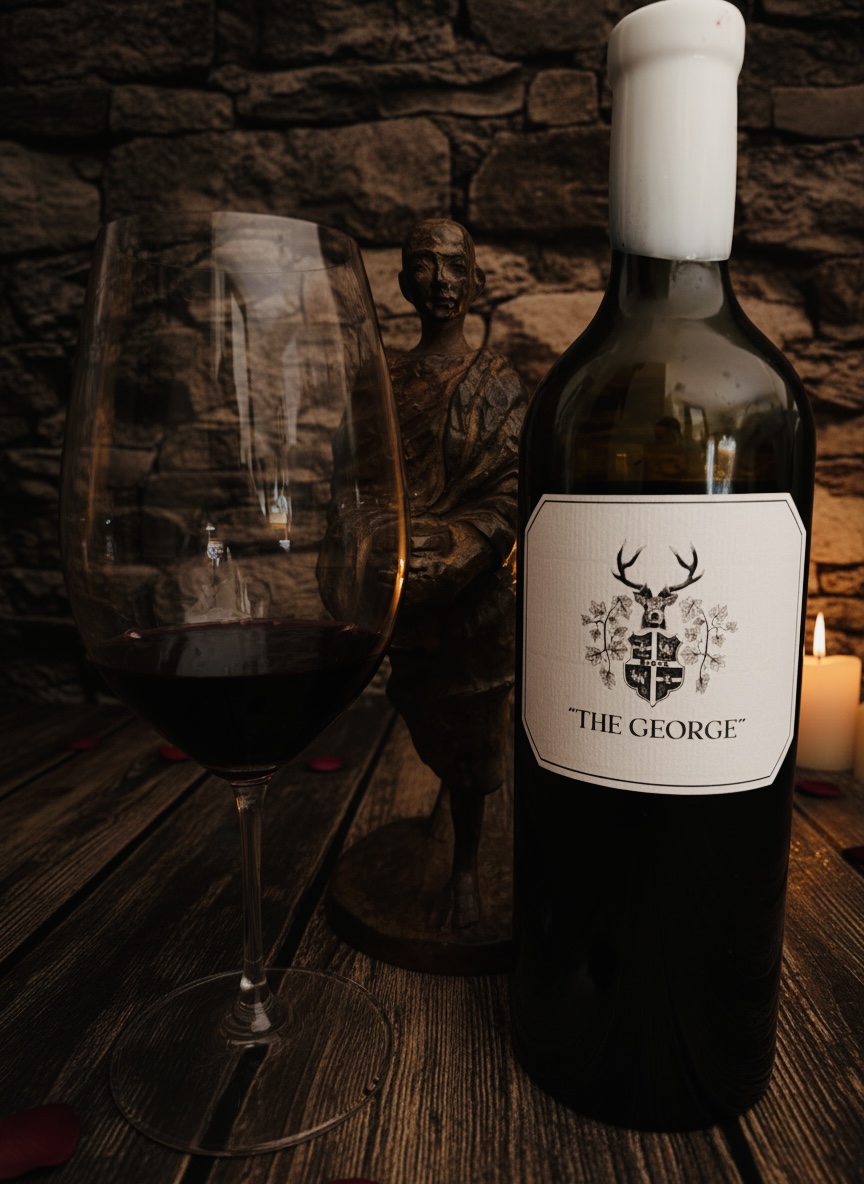
Some wines you drink. Others you witness.
I’m holding one of five hundred bottles that exist on this earth. The glass is dark — almost black — and through it, nothing. No light gets in. No light gets out. The wax cap is white, cracked open twenty minutes ago, and the room hasn’t been the same since.
There is a smell that happens when something has been waiting a long time to be opened. Not just wine. Anything. A letter kept in a drawer. A door to a house you grew up in. A conversation you’ve been circling for years. That first breath when the seal breaks carries everything — the years, the silence, the becoming.
This wine breathes like that.
Pour it. Watch it.
It moves slowly. Not thick — deliberate. The kind of viscosity that tells you the liquid has weight, memory, architecture. In the glass, it’s the colour of a Barossa night sky ten minutes after the sun drops behind the ranges — not quite black, not quite purple, but that bruised, sacred space in between where the stars haven’t arrived yet but the light has already surrendered.
Bring it to your nose.
There it is.
Dark fruit first. Not jammy, not sweet — serious. Blackberry that grew in hard soil. Plum that ripened slowly under a February sun that didn’t relent. Then underneath, something older: leather. Cedar. A trace of dried herbs — almost medicinal, almost sacred, like the inside of a wooden chest that hasn’t been opened in decades. And then — and this is the thing that makes you stop — smoke. Not fire smoke. Not char. The ghost of smoke. The way a cold hearth smells the morning after. Something was burning here once, and now all that’s left is the memory of warmth.
Take the first sip and understand that you are not tasting a wine.
You are tasting twelve years of someone’s life.
Three Boys and a Valley
Bruce Blackwell grew up in the cellars of St Hallett. Not visiting. Not touring. In them. His father, Stuart Blackwell — a Baron of Barossa, a title that means something in this Valley because it can’t be bought, only bestowed — made wine the way cathedral builders laid stone: with the understanding that you might not live to see the finished thing, but you build it true anyway.
Bruce watched. He learned. Then he left.
He went to Chile and learned Spanish between vintages. He worked harvests across three continents. He sat in tasting rooms in places most wine drinkers will never visit, and he drank what the locals drank, and he listened to what they said when they thought no one important was listening. That’s where you learn what wine actually is — not in the grand estates, but in the kitchens. In the arguments over dinner. In the quiet moments when someone pours a glass of something their grandfather made, and the room goes still.
Josh Norman — “George” — is a seventh-generation winemaker. Let that land for a moment. Seven generations. His family has been making wine in this soil since 1851. That’s not a career. That’s a geological fact. When Josh talks about Cabernet, he’s not talking about a grape variety. He’s talking about an inheritance that runs deeper than memory. His hands know things his mind hasn’t catalogued yet.
Christian Roediger’s family arrived in 1849. His great-grandfather, Pastor Carl Augusta Julius Roediger, established one of the first independent Lutheran churches in South Australia. The Roedigers didn’t come here to make wine. They came to build something permanent. To put roots into foreign ground and say: this is where we stay. That impulse — to commit, to remain, to endure — runs through everything Christian touches.
In 1998, these three boys — because they were boys then, barely out of school, all vinegar and ambition — shook hands and made a pact. No contracts. No lawyers. A handshake.
They would make wine together. Their wine. From their Valley. In their way.
Then they left. Separately. Across a hundred countries and sixty-five vintages between them. They fermented grapes in Spanish cellars and New Zealand sheds and South African heat. They made every mistake available. They drank every lesson down to the lees.
And then they came home.
Ebenezer and Stonewell
The Barossa Valley is not one place. It’s a mosaic — sub-regions that sit side by side but speak entirely different languages through the vine. And “The George” draws from two of the most eloquent.
Ebenezer sits at the northern tip of the Valley. The soil is red-brown earth over calcareous subsoil — ancient, mineral-rich, and unforgiving in the way that all great terroir is unforgiving. Vines don’t have it easy here. They push deep. They fight for water. And in that fight, they produce fruit of astonishing concentration: dark, lifted, laced with lavender and spice and a tannin structure as fine as powdered talc.
The single barrel of Shiraz in “The George” comes from Ebenezer. One barrel. That’s roughly three hundred litres. Twenty-five cases. From vines that have been doing this longer than any of us have been alive.
Stonewell is in the western Barossa. It takes its name from the early settlers who dug a well through solid rock. Think about that for a moment. They hit stone. They kept digging. The water that came was barely enough. But they stayed, and the micro-climate that developed around that stubborn, stony ground now produces Cabernet Sauvignon of extraordinary depth — structured, dark-fruited, and built with the kind of architectural precision that only constraint can teach.
The single barrel of Cabernet in “The George” comes from Stonewell. One barrel. Married to the Ebenezer Shiraz with — and the back label says this so perfectly I almost didn’t believe a winemaker wrote it — “a hand as light as a whisper.”
Two barrels. Two sub-regions. Two families. One wine.
Five hundred bottles.
And then it’s gone. Not next year. Not eventually. Now. This is a wine that exists in a quantity so small that by the time you finish reading this, there are almost certainly fewer bottles available than when you started.
What Twelve Years Tastes Like
I need to talk about the palate because that’s where this wine stops being a story and starts being an experience.
The Shiraz arrives first. Of course it does. Shiraz doesn’t wait for an invitation. It’s dark berry fruit — blackberry, mulberry — but not the fat, syrupy fruit of an over-extracted Barossa red. This is taut. Energetic. Fruit that was picked when it was ready, not when someone’s spreadsheet said it should be. There’s black pepper in there, and a savoury quality — black olive, cured meat — that tells you the Ebenezer terroir is speaking.
Then the Cabernet enters. And this is where the wine becomes something else.
Cabernet doesn’t shout. It structures. It arrives like the frame of a building — you don’t see it, but you feel it holding everything up. Blackcurrant. Dark plum. A fine-grained tannin that coats the palate without gripping it, like the feeling of running your hand across old leather that’s been oiled and cared for across decades. There’s cedar in the finish. A whisper of dried tobacco. And length — God, the length — this wine doesn’t end so much as it recedes, like a tide pulling back from the shore, leaving you standing in the wet sand wondering what just passed through.
At 13.9% alcohol, it’s restrained for a Barossa red. That’s not an accident. That’s a choice. These winemakers aren’t chasing warmth or weight. They’re chasing balance. The word on the label is 2040+ for cellaring, and I believe it. The bones of this wine will hold for decades. But right now, tonight, in this glass, it’s already speaking in full sentences.
Six Virtues in a Single Glass
At Arete Estate, we teach six virtues. Not as motivational posters. Not as bumper stickers for the spiritually curious. As tools. Chisels, actually — because we believe you are marble, and who you’re becoming is already inside you, waiting to be uncovered.
I didn’t expect to find all six in a bottle of wine. But here they are.
Fortitude — The Lighthouse
“Stand firm and shine, even when the storm is inside you.”
Shiraz from Ebenezer doesn’t grow in easy ground. The soil is red-brown earth over calcrete — ancient, unyielding, and dry. The vines push deep because they have no choice. They don’t get pampered with irrigation and rich topsoil. They get stone. They get heat. They get drought. And from that resistance, they produce fruit of such concentration that a single barrel can hold a room in silence.
That’s Fortitude. Not the absence of the storm. The refusal to be moved by it.
Every vine that produced the Shiraz in this glass survived seasons that would have killed a lesser plant. They didn’t survive despite the hardship. They became extraordinary because of it. The tannin structure, the depth of fruit, the lavender and spice that lift off the glass like incense — none of that exists without struggle. None of it.
You don’t build a lighthouse on calm water.
Temperance — The Conductor
“Conduct your life with balance — all instruments in harmony.”
Cabernet Sauvignon is the most disciplined grape on earth. It ripens late. It builds tannin slowly. It doesn’t give itself up to the winemaker — it has to be coaxed, structured, and given time. Where Shiraz declares, Cabernet arranges. It’s the architectural spine that holds a wine together across decades.
But here’s the thing about “The George” — the blend is where Temperance lives. Not in the Cabernet alone. In the marriage. Two varieties that could easily overwhelm each other. Two barrels that could clash. And three winemakers who understood that the greatest act of skill isn’t adding more — it’s knowing when to stop.
Blended with a hand as light as a whisper.
That’s not winemaking. That’s conducting. Knowing which instrument to bring forward. Knowing which to hold back. Knowing that balance isn’t the midpoint between two extremes — it’s the moment when everything plays at exactly the volume it was meant to.
Wisdom — The Gold Pan and the Journal
“Acknowledge the mud. Record the gold. Choose what you carry forward.”
Twelve years. Let that number do its work.
Twelve years of vintages that weren’t right. Twelve years of fruit that was good but not this. Twelve years of tasting, assessing, and saying the hardest word in any craft: no.
Wisdom isn’t knowing everything. Wisdom is knowing what to discard. Bruce, Josh, and Christian panned through twelve years of mud — dozens of vintages, hundreds of barrels, thousands of decisions — and they carried forward only this. Two barrels. Five hundred bottles. Everything else, they let go.
That’s the Gold Pan. You stand in the river. The mud runs through your fingers. Most of it washes away. And what remains — what always remains, if you’re patient enough — is gold.
The journal part? It’s on the back label. They wrote it down. They recorded what this wine is, where it came from, and why it matters. Because wisdom that isn’t documented is just a good memory. And good memories fade. Gold, recorded, endures.
Courage — The Windmill
“Fear tells you the stakes. Courage says ‘noted’ — and begins anyway.”
Five hundred bottles at $225 each from a winery most people outside the Barossa have never heard of.
Read that again.
This isn’t Penfolds. This isn’t Henschke. This is three mates from Rowland Flat who looked at the most competitive fine wine market in Australia and said: we belong here. Not with a marketing budget. Not with a celebrity endorsement. With a single wine that backs up every cent of its price tag with what’s in the glass.
That’s terrifying. You don’t release a $225 wine unless you believe — in your bones, in your blood, in the dirt under your fingernails — that it’s worth it. And if you’re wrong, everyone knows. There’s nowhere to hide at five hundred bottles. Every single one is a handshake. Every cork pulled is a promise kept or broken.
Fear told them the stakes. Courage said noted.
And they made the wine anyway.
Gratitude — The Garden
“Planting what you won’t harvest — and tending what you didn’t plant.”
Stuart Blackwell didn’t make “The George.” He made the winemaker who made “The George.” He spent his career in the cellars of St Hallett, Baron of Barossa, building a craft that his son Bruce would carry forward in ways Stuart might never have imagined.
The Norman family didn’t make “The George.” Seven generations of them made the soil — not literally, but culturally. They tended vines. They passed down knowledge. They kept the faith through droughts and depressions and the 1980s vine pull, when the Australian government paid people to rip out the very Shiraz vines that now produce the country’s most sought-after wines.
The Roedigers didn’t make “The George.” Pastor Carl Augusta Julius Roediger built a church and a community, and from that community grew a family that would eventually produce a man who understood that commitment to place — to staying — is itself a form of genius.
None of them harvested this. All of them planted it.
And Bruce, Josh, and Christian? They’re tending what they didn’t plant. Every bottle of “The George” is an act of gratitude — for the fathers, the families, the Valley, and the vines that were here before them and will be here after.
Gratitude isn’t a feeling. It’s a practice. It’s the act of tending someone else’s garden as if it were your own — because, in every way that matters, it is.
Love — The Lavender and the Book
“You don’t fall in love. You choose it. The fall is choosing it again tomorrow.”
A handshake in 1998.
Not a contract. Not an MOU. Not a shareholders’ agreement with exit clauses and non-competes. A handshake. Between three boys who barely knew what they were promising, only that they meant it.
Twenty-seven years later, that handshake holds.
Through a hundred countries. Through sixty-five vintages. Through the unglamorous middle years when no one was writing articles about them and the wine club was small and the cellar door wasn’t a cellar door at all but a mate’s kitchen and a Land Rover and a case of something they’d made with their own hands.
They didn’t fall into this. They chose it. Again and again and again. Every vintage was a recommitment. Every harvest was a vow renewal. Every bottle they released was a declaration: we’re still here. We’re still mates. We’re still making wine together.
“The George” is a love letter. Not the romantic kind — the real kind. The kind written in calluses and early mornings and arguments about barrel selection and the quiet drive home after a fourteen-hour day when nobody says anything because nothing needs to be said.
That’s Love. Not the fall. The choice to fall again tomorrow.
Six virtues. One wine. Five hundred bottles.
This is what we teach at Arete Estate: that excellence isn’t a destination. It’s a practice. It’s the daily decision to pick up the chisel, face the marble, and remove one more piece of what doesn’t belong — until what remains is true.
Bruce, Josh, and Christian have been practising for twenty-seven years. “The George” is what remains.
And it is true.
To Bruce
I want to say something personal here, because this isn’t just a wine to me. It’s the work of a friend.
Bruce Blackwell is the kind of man who shows up. Not with fanfare. Not with a pitch deck. He shows up with a bottle, a handshake, and a story that somehow always ends with you knowing more about yourself than you did before you sat down.
He didn’t have to make this wine. He could have stayed comfortable in the mid-range, churning out solid Barossa reds that would sell reliably and review well. But that’s not who he is. That’s not who any of them are.
They made “The George” because it was in them. Because after a hundred countries and sixty-five vintages and a handshake in 1998 that held firmer than any contract ever could, this wine was the inevitable result of three men who refused to make anything less than what they were capable of.
Five hundred bottles. Twelve years. And a friendship that started before any of them knew what they’d become.
Bruce — this one’s for you. For Josh. For Christian. For your fathers and their fathers and the settlers who dug wells through stone because they believed something good was underneath.
It was.
How to Get It
You probably can’t. That’s not a marketing line — it’s mathematics. Five hundred bottles. No major distribution. Available through the Bruno & George wine club and, I suspect, through knowing someone who knows someone.
If you find one, don’t save it for a special occasion.
Open it on a Tuesday. Open it when nothing remarkable is happening. Open it when the kids are in bed and the house is quiet and the only thing on the agenda is being present with something that took twelve years to arrive.
That’s when wine like this matters most. Not at the celebration. At the ordinary Wednesday that it turns into something extraordinary.
“The George” 2023 Shiraz Cabernet
Bruno & George Winery
Barossa Valley, South Australia
500 bottles produced | Cellaring potential: 2040+
https://www.brunogeorgewines.com.au/
Our home — The Barossa Valley.
Written by Marcus J Emsley, The Guide, at Arete Estate in the Barossa Valley. First published 9 February 2026.
Excellence revealed by storms.

Responses