Courage · The Virtue Series, Part Five: it was never the absence of fear
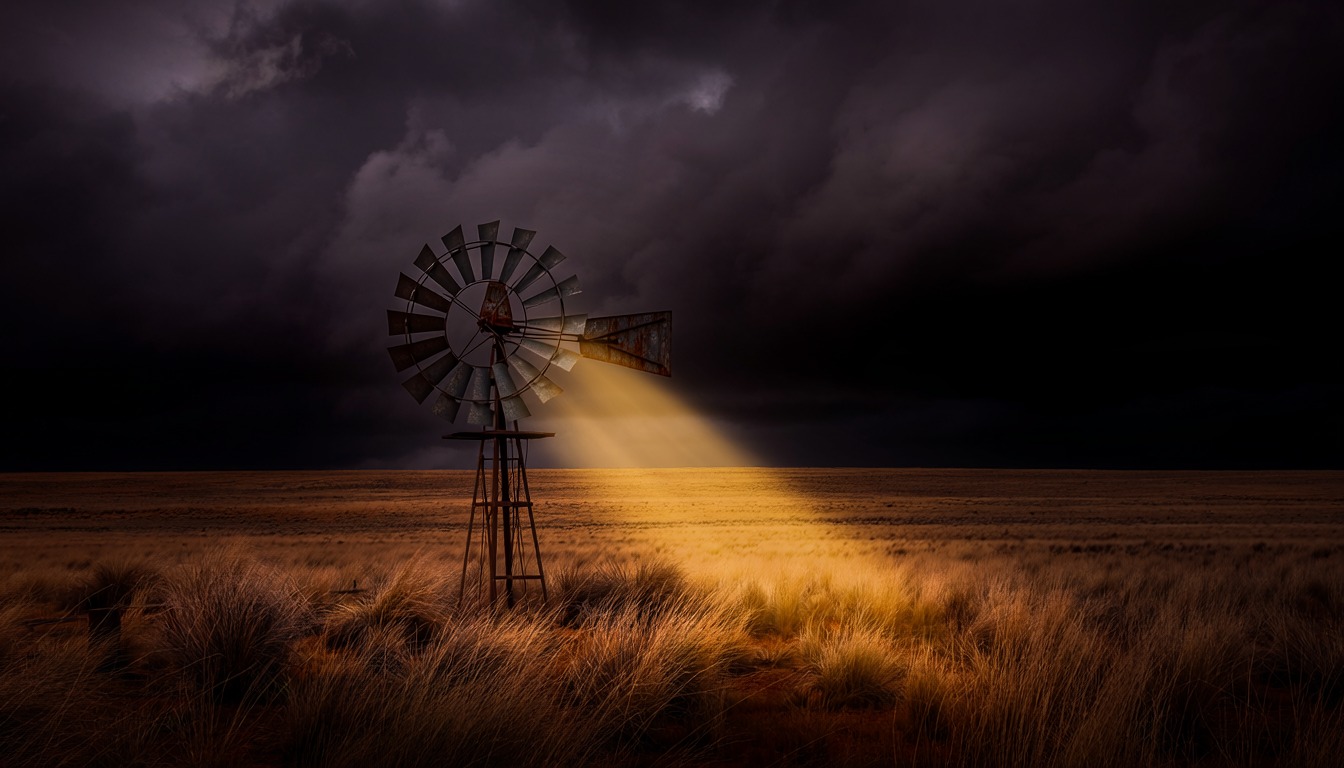
There is a windmill on a plain.
You have seen it. Maybe not this one, but one like it. Standing alone in a wide, flat landscape where there is nothing between the earth and the sky except the wind. The kind of place where weather doesn’t sneak up on you. You see it coming from miles away, dark on the horizon, and there is nowhere to hide and nothing to hide behind.
The windmill does not hide.
It stands in the open, fully exposed, arms wide. It was built here on purpose: not in the sheltered valley, not behind the hill, not in the place where the wind is gentlest. It was built in the exact spot where the wind is strongest. Because the windmill does not fear the wind. It needs it. Without the wind, the windmill is just a building. A tower with arms that don’t move. A structure with no function. The wind is not the enemy of the windmill. The wind is the thing that makes it come alive.
Watch it on a stormy day. The blades turn, not frantically, not in panic, but with a steady rhythm that speaks of something deeper than survival. The windmill is not enduring the wind. It is not resisting it. It is facing the wind directly, catching the full force of it, and turning it into something useful. Into energy. Into power. Into the grinding of grain that will become the bread that will feed the family that built it.
That is Courage. Not the absence of wind. Not the retreat to the sheltered valley. Not the fantasy of a life without storms. The decision to stand in the open, face what is coming, and use it.
Courage is not waiting for the wind to stop. It is building your life in the place where the wind blows strongest, and turning every gust into something that feeds you.
The Lie About Fearlessness
There is a version of courage the world loves to tell. The version with the soundtrack. The hero who charges the line. The firefighter who runs into the building. The person who stands up in a room of powerful people and says what nobody else will say, and walks out with their head held high and their hands perfectly still.
And all of that is real. It happens. It matters.
But it is not the whole story. And it has created a lie that has kept more people silent, stuck and small than almost any other lie in human history: the lie that courage is the absence of fear.
If you believe that, if somewhere in your operating system there is a line of code that says courageous people don’t feel afraid, then every time you feel afraid and don’t act, you will tell yourself it’s because you lack courage. And every time you feel afraid and do act, you will discount it, because the fear was there, which means, by this definition, it can’t have been real courage.
Either way, you lose.
The lie makes courage impossible. It turns it into a superpower possessed by other people: braver people, harder people, people who are wired differently from you. And it lets you off the hook. Because if courage requires fearlessness, and you are afraid, then the absence of action is not a choice. It is a condition. And conditions are not your fault.
Except it is a choice. And it is your fault, in the most compassionate, most liberating sense of the word fault. Because once you understand what courage actually is, you realise you have been capable of it your entire life. You just didn’t recognise it, because it came with shaking hands.
Nelson Mandela, a man who spent twenty-seven years in prison and walked out of it without bitterness, said it as clearly as it has ever been said: “I learned that courage was not the absence of fear, but the triumph over it. The brave man is not he who does not feel afraid, but he who conquers that fear.”
The triumph over it. Not the elimination of it. Not the pretence that it doesn’t exist. The triumph, which means the fear was there, fully present, fully felt, and the person moved anyway. The fear didn’t leave the room. The person simply refused to let it make the decision.
That is courage. Fear with forward motion.
What Fear Is Actually Telling You
A reframe that might change the way you experience fear for the rest of your life: fear is not your enemy. Fear is your scout.
It goes ahead of you into the territory you haven’t entered yet and comes back with a report: there is something at stake here. Something that matters. Something you could lose. The bigger the fear, the bigger the stakes. The more afraid you are, the more important this thing is to you.
Think about that. You are not afraid of things that don’t matter. Nobody lies awake at night terrified of a meeting that means nothing. Nobody’s hands shake before a conversation that has no consequences. The fear is proportional to the meaning. And if you can learn to read it that way, not as a stop sign but as a signal, everything changes.
Mary Oliver, who spent her life writing about the courage it takes to be fully alive, captured this in a single question that has haunted me since the first time I read it: “Tell me, what is it you plan to do with your one wild and precious life?”
Your one wild and precious life. Not your safe life. Not your comfortable life. Not the life where you stay in the sheltered valley because the wind on the plain is too strong. Your wild life. The one that is waiting for you on the other side of the thing you are most afraid to do.
Fear knows where that life is. Fear has already scouted the territory. Fear is standing at the door of the room you most need to walk into and saying: this matters. This will cost you something. Are you coming?
Fear tells you the stakes. Courage says “noted”, and begins anyway.
What It Actually Looks Like
Forget the movie version. Courage, lived, is smaller than a battle cry and quieter than a standing ovation. It is the thing you do on a Tuesday when your voice shakes and nobody claps.
It looks like a woman sitting in her car in a car park outside a building she has driven to three times and never entered. It is a therapist’s office. She has the appointment. She made it two weeks ago, cancelled it, remade it, almost cancelled it again this morning. She is not afraid of the therapist. She is afraid of what will happen when she sits down and someone asks her how she is and she tells the truth, the real truth, not the I’m fine truth, for the first time in years. She is afraid that if she starts talking, she won’t stop. That the dam will break. That the person she has been holding together with willpower and routine and the sheer force of not looking too closely will come apart in that room.
She opens the car door.
That is courage. Not walking in with confidence. Walking in with terror and doing it anyway, because the cost of staying in the car has finally become higher than the cost of opening the door.
It looks like a man in his forties standing in front of a mirror in his bedroom. He has been rehearsing a conversation he needs to have with his wife. Not a dramatic conversation. Not an affair, not a crisis. Something quieter and in some ways harder. He needs to tell her he is not okay. That the version of himself he has been performing for the last year, capable, steady, fine, is a costume, and underneath it is a person who is exhausted and frightened and doesn’t know what comes next.
He is afraid that she will see him differently. That the admission of struggle will change the way she looks at him. That the man she married, the one who always had the answer, who always shouldered the weight, who was always fine, will disappear the moment he tells the truth, and what will be left will not be enough.
He walks downstairs. He sits at the kitchen table. He says: I need to tell you something.
That is courage. Not the absence of fear. The presence of something stronger: the knowledge that a life built on a performance is not a life at all, and the only way out is through.
Brené Brown, who has spent her career studying exactly this intersection of vulnerability and bravery, puts it this way: “Vulnerability is not weakness. It is our most accurate measure of courage.”
The woman in the car park. The man at the kitchen table. The teenager who raises their hand in class knowing they might be wrong. The employee who says I disagree in a room full of people who don’t. The person who sends the message, makes the call, has the conversation, takes the step. Not because the fear went away. Because they walked through it. And walking through fear, with your heart in your throat and your hands shaking, is the bravest thing a human being does.
It looks like a young woman standing at the counter of a business she has just opened. The sign went up yesterday. The website went live last week. The savings account is empty. The business plan is a document she has rewritten so many times she could recite it in her sleep. And the shop is quiet. Day one. No customers yet. Just her, and the counter, and the window, and the street outside where people are walking past without looking in.
She could close. She could go back to the job that was safe and boring and paid the bills and drained her soul one Tuesday at a time. Nobody would blame her. Nobody would call it failure. They would call it sensible. Responsible. Realistic.
She stays.
She turns the sign to open. She makes a coffee. She waits. Not because she is confident. Because she has decided that the life she wants is on the other side of this fear, and the only way to get there is to stand in the open, like the windmill on the plain, and face whatever comes.
It looks like an old man picking up the phone. His son hasn’t spoken to him in four years. Something happened, something that was his fault, or partly his fault, or mostly his fault; the details don’t matter as much as the silence that followed. Four years of it. Four Christmases. Four birthdays that passed without a call. And now he is sitting in a kitchen that used to be full of noise and is now so quiet he can hear the clock.
He dials the number. He doesn’t know if his son will answer. He doesn’t know what he will say if he does. He doesn’t have a speech prepared. He has something better and something harder: the willingness to say, I was wrong. I am sorry. And I would rather hear you hang up than spend another year in this silence.
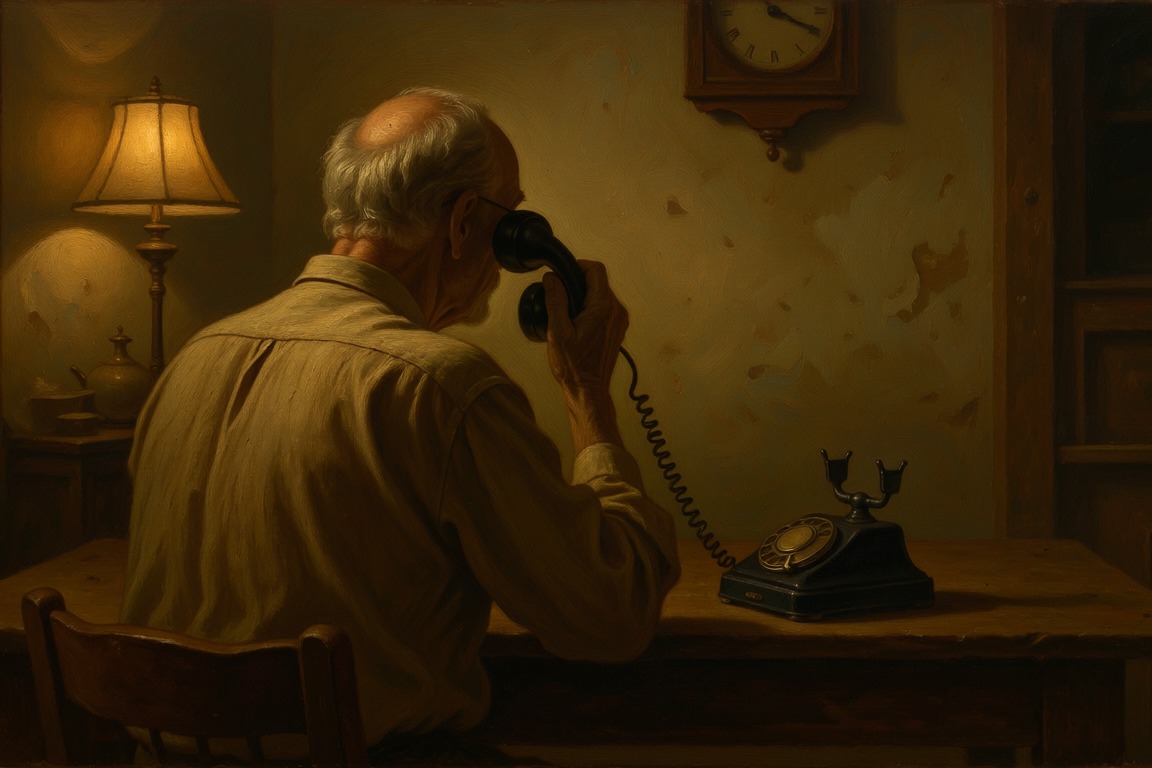
The phone rings.
That is courage. The old man kind. The kind that doesn’t get a movie. The kind that happens in a quiet kitchen with a clock ticking and a heart pounding and nothing on the line except everything.
Courage almost never looks the way you expected. It looks like a car door opening, a kitchen table conversation, a phone call after four years of silence, a sign turned to open on a quiet street. It looks like you, on your most frightened day, doing the thing anyway.
The Wind You Need
This is the part of this virtue that the world misses entirely, and the part that the windmill understands in its bones. The wind is not the obstacle. The wind is the fuel.
Every courageous act you have ever witnessed, every business that was started, every relationship that was mended, every truth that was spoken, every life that was changed, happened because someone was afraid and moved toward the fear rather than away from it. The fear was the wind. And the person turned their face into it and let it move them.
The sheltered valley is easy. Nothing threatens you there. The wind doesn’t reach you, the storms pass overhead, and you can live an entire life without ever feeling the full force of what the world can throw at you. But the windmill in the sheltered valley does not turn. The arms are still. The grain is not ground. And the life, the wild, precious, unrepeatable life, goes unlived.
Kierkegaard, who understood the relationship between anxiety and freedom better than any philosopher before or since, put it in words that still haven’t been improved upon: “Anxiety is the dizziness of freedom.”
The dizziness of freedom. Not the dizziness of danger. Of freedom. Because every moment of fear in your life is also a moment of possibility. The fear exists because you are standing at the edge of something that could change. And change, real change, the kind that rearranges who you are and what your life looks like, always has a cost. Always involves risk. Always makes you dizzy.
That dizziness is not a warning to step back. It is an invitation to step forward. It is the feeling of standing on the plain with the wind in your face, arms wide, and deciding, before you know how this ends, that you would rather turn in the wind than stand still in the valley.
There are two ways to fail here. Not starting: that is the sheltered valley, the windmill with no wind, the life that was technically safe and practically unlived. And not going all the way: the windmill that turns once and stops. The person who opens the car door but doesn’t walk in. Who dials the number but hangs up before it rings. Who starts the conversation and retreats at the first sign of discomfort. Courage is not a single act. It is a sustained facing of the wind. It is staying on the plain long enough for the grinding to happen, long enough for the fear to become fuel and the fuel to become bread.
The Courage Nobody Applauds
There is loud courage and quiet courage. The world celebrates the loud kind. It should: it is real and it matters and the people who charge the line deserve every honour we give them.
But quiet courage changes more lives.
Quiet courage is the person who says no for the first time. After years of yes. After a lifetime of being the one who accommodates, who adjusts, who makes themselves smaller so someone else can be comfortable. They say no. It is a single syllable and it costs them more energy than most people spend in a week, because the no is not just a word. It is the sound of a boundary being built for the first time in a life that never had one.
Quiet courage is the parent who apologises to their child. Who gets down on one knee, or sits on the edge of the bed, or pauses the car, or stops in the middle of the supermarket, and says: I got that wrong. I’m sorry. I am the adult and I should have handled that better. Those words, spoken from parent to child, rearrange the architecture of a family. They teach the child that strength includes admitting fault. They teach the child that love does not require perfection. And they cost the parent something enormous, the myth of their own infallibility, which is exactly the price of growing.
Quiet courage is asking for help. Not the performative kind, the post about vulnerability that is actually a carefully curated display of strength. The real kind. The phone call where your voice breaks. The conversation where you say the words I am not coping and you mean them, fully, without a punchline or a qualifier or a but I’ll be fine at the end.
Quiet courage is staying. In the marriage that is in its winter. In the friendship that requires effort. In the career that is building slowly when the world says you should have arrived by now. In the body that is healing at its own pace. In the life that doesn’t match the one you imagined but is, if you are honest, if you are brave enough to look at it clearly, the one you are supposed to be living.
Quiet courage is letting go. Of the grudge that has been keeping you warm for years. Of the expectation that someone will change when they have shown you, repeatedly, who they are. Of the version of yourself that you have outgrown but are afraid to leave behind because at least it is familiar, and the next version is unknown.
The quiet kinds of courage will never make the news. But they are the ones that make a life.
What Courage Needs Beneath It
Courage is the fifth virtue on The Arete Path, and by now you can feel why it sits here: not first, not last, but near the end, after the foundations have been laid.
It needs Fortitude, because a courageous act without roots is reckless; the windmill turns because it is anchored to the earth, and without roots the first strong wind doesn’t power it, it tears it apart. It needs Temperance, because courage without balance is destruction, chaos with a courageous label; the windmill turns with rhythm, with the conductor’s hand on the baton. It needs Wisdom, because not every hill is worth dying on and not every fear is a door you need to walk through; wisdom is the gold panner’s eye that says this fear is telling me to wait, and this one is telling me to move. And it needs Love, because the deepest acts of courage are not performed for yourself. The father makes the phone call for his son. The mother says I’m sorry for her child. The partner tells the truth for the relationship. Love gives courage its direction. Without it, courage is just motion. With it, courage is motion toward something that matters.
Roots. Rhythm. Sight. Love. Then, and only then, the windmill turns. Not recklessly. Not blindly. With everything beneath it holding it steady while it faces the wind.
Tonight
There is a wind in your life right now. You can feel it. You have been feeling it for a while, pressing against you, asking you to move, asking you to turn.
Maybe it is a conversation you need to have. Maybe it is a phone call you need to make. Maybe it is a door you need to open, a truth you need to speak, a change you need to begin, a boundary you need to build, a hand you need to reach for, a version of yourself you need to leave behind.
You know what it is. You have always known. The fear has been circling it for weeks, months, maybe years, scouting the territory, reporting back: this matters. This will cost you something. This is real.
The fear is right. It does matter. It will cost you something. And it is real.
But the fear doesn’t tell you this: the cost of not moving is higher. The cost of standing still in the sheltered valley, with the wind blowing overhead and the arms not turning, is a life that is technically safe and practically unlived. And that cost, the slow, silent accumulation of things you didn’t say and calls you didn’t make and doors you didn’t open, is the most expensive thing in the world. Because you pay it in time. And time is the one currency you cannot earn back.
So tonight, I am not going to ask you to be fearless. That was never the deal. That was the lie. I am going to ask you to be afraid, fully, with your heart in your throat and your hands doing whatever they need to do, and then I am going to ask you to begin.
Open the door. Make the call. Have the conversation. Start the thing. Say the truth. Build the boundary. Reach for the hand.
Not because you are ready. You will never be ready. Not because the fear is gone. It won’t leave. Not because you know how it ends. Nobody knows how it ends. Because the wind is blowing. And the windmill was not built for the valley. It was built for the plain.
Face the wind. Turn.
That is Courage. The fifth virtue. The one that takes everything you’ve built, the roots, the rhythm, the sight, the love, and puts it in motion. And it begins, as it always has, with the smallest, bravest thing:
Begin anyway.
A Sculptor's Pause
Before the next thing, rest here a while. Meditate with Arete is a quiet room: a two-minute sitting, one breath at a time, with nothing asked of you. Sit with Arete
About the author
Marcus J Emsley · The Guide
Marcus spent seventeen years as a welfare officer in the Royal Australian Air Force, at home and on operations overseas, sitting with people in grief, trauma and the mornings they did not want to rise. He is the founder of Arete Estate in the Barossa Valley, South Australia, the creator of The Sculptor's Journey and Wisdom & Wonder, and the author of the debut novel Wisdom & Wine. He is the son of a primary school teacher who coached footy, cricket and life, and a palliative care nurse who showed him what kindness at the hardest door looks like. He has stood in the dark himself, and he writes from the far side of it.
What we are building at Arete Estate
Arete is excellence becoming. It is the highest expression of who you were always meant to be, not the finished version, but the version that keeps reaching. It is not built. It is revealed.
Arete Estate exists to help people reveal, not construct, the highest version of themselves. We do this through six virtues drawn from the world's wisdom traditions, taught through stories, walked through daily practice, and offered to anyone who is ready to begin: the parent raising a child, the leader carrying a team, the soldier returning from service, the school shaping the next generation, the person sitting alone in the early hours of the morning wondering if there is a path through.
Our work is to make that path visible. To stand as a lighthouse for the seekers, the grieving, and the broken. To remind every person we reach that excellence is not built, it is revealed by storms, and that they are not alone in the storm.
We do not chase. We shine. The Sculptor's Journey (The Doorway, The Walked Path, The Guided Path), An Hour with the Guide, Meditate with Arete, Wisdom & Wonder and The Sculptor's Library are the rooms of that house.
Six virtues. One journey. Your highest self.
www.areteestate.com.au · info@areteestate.com.au · Instagram @areteestate
If this essay touched something raw
Some of what is written here is heavy. If it has stirred something you are carrying, please do not carry it alone tonight.
Lifeline 13 11 14 · Open Arms (veterans and families) 1800 011 046 · 1800RESPECT 1800 737 732 · Kids Helpline 1800 55 1800 · In an emergency, call 000.
Reaching out is not weakness. It is all six virtues at once: the Fortitude to stay, the Wisdom to know you need a hand, the Love to let someone in, the Courage to ask, the Temperance to set the weight down, and the Gratitude for the one who answers.

Responses