
Wisdom · On the craft of becoming, and why no one drifts into excellence.
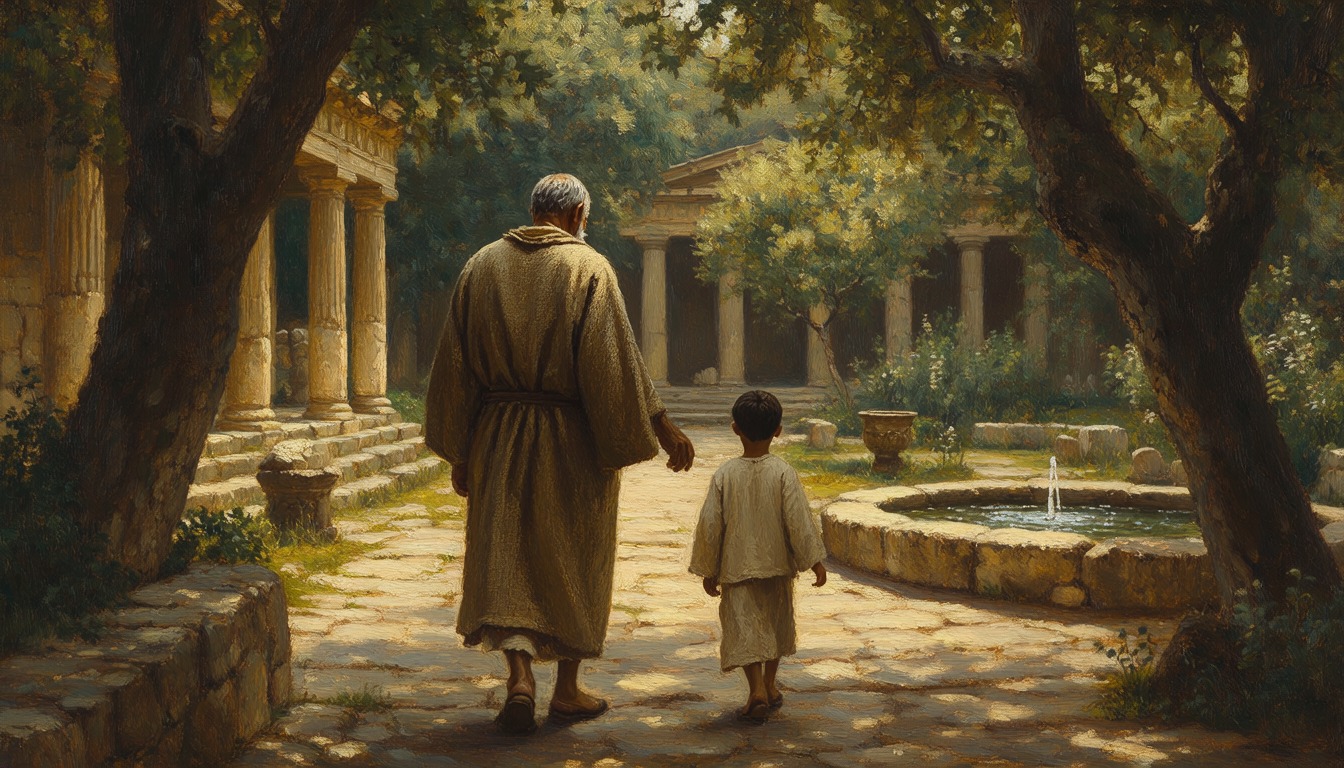
“For the things we have to learn before we can do them, we learn by doing them.” Aristotle, Nicomachean Ethics
Who you are is not what you say; it is what you do. Which leaves one question hanging in the lamplight, and I have come to believe it is the most important question a person can ask: can I actually change? If you have ever said “that’s just how I am”, too impatient, too timid, not built like them, then this letter was written for you, and it has been waiting a long time to find you. Because the answer is yes. It has always been yes. And by the end of this page, I want you to feel it in your chest.
The Garden at Mieza
Let me tell you about the most expensive teacher in history. Twenty-three centuries ago, in a garden in northern Greece, shaded stone walks, cool springs, the kind of quiet that makes room for great things, a thirteen-year-old boy took a lesson every morning. His father was the most feared king of his age: a scarred, one-eyed soldier who had taken half the known world by force, and could give his son absolutely anything. The finest horses. The deadliest weapons masters. Gold past counting.
Instead, he went hunting for a teacher. Not any teacher: the greatest mind alive, a thinker named Aristotle. And the price he paid still stops the breath two thousand years on: he rebuilt an entire city he had once burnt to the ground, every wall, every home, and gathered its scattered people back inside it. A whole city, raised from ash, as the fee for one man’s lessons.
The king was Philip of Macedon. And the boy walking those colonnades each morning was his son, Alexander, the same Alexander the world would one day call the Great, who carried what that garden gave him to the very edge of the known map. It is said that in later years he remarked that he owed his father his life, but his teacher the knowledge of how to live it well. Sit with that: the most powerful conqueror in history, weighing the gift of a teacher above the gift of a throne.
A city, for a teacher. Why? Because that hard old king knew something in his bones that our age has somehow misplaced. He knew that the one thing that would make or break his boy was not talent, not strength, not even brilliance. It was character. And he knew, as every serious builder of people has always known, that character does not drift in on the wind. It is not caught, like weather. It is taught, like a craft. He would not leave it to chance. The question that should keep us up at night is: why do we?
Caught or Taught
Because this is the story most of us have been quietly telling ourselves since school: that character is something you either got or you didn’t. You hear it every day, wearing the clothes of harmless talk. “She’s just a patient person.” “He’s naturally disciplined.” “I’m just not wired that way.” It sounds humble. It sounds honest. It is neither. It is a cage, and most people live inside it their whole lives without once testing the door.
Listen to what that story does to a soul. If character is caught, dealt out at birth, sealed in childhood, then whatever you hold by now is all you will ever hold. The short fuse is forever. The timidity is a life sentence. The steadiness you admire in someone else is a gift that went to them and passed you by. And the only thing left to do with the person you once hoped to become is quietly bury them. If that thought has ever sat on your chest at three in the morning, and it sits on more of us than would ever say so out loud, then read the next paragraph twice.
It is not true. None of it. Nobody is born patient; every truly patient person you have ever met practised their way there, one bitten tongue at a time. Nobody is born brave, or honest, or calm in the storm. Every one of us arrives with the raw material, every single one, and the finishing is done by teaching and by practice, the same way every craft this world has ever known is learned. The old teacher in the garden staked his life’s work on that single truth. Twenty-three centuries have battered it, and it has not moved.
No one drifts into excellence.
Ask yourself: who taught you the character you carry today, and who or what is teaching it now?
The Lyre and the Builder
Think back to the first time you sat behind the wheel of a car. Hands welded to ten and two. Heart going like a drum. Utterly certain the clutch had been designed by someone who despised you. Every part of it felt impossible: the mirrors, the roundabouts, that first hill start with a stranger idling behind you. And now? Now you drive home through evening traffic and barely remember the drive. Nobody handed you that. You were not born a driver. You practised your way into one, lesson upon lesson, until the impossible thing came and lived in your hands.
The old teacher said it almost the same way, long before there were cars to learn. We become builders by building, he said, and musicians by playing. You learn the thing by doing the thing; there has never been another door in. And then he said the part I want written where you will see it every morning: it works exactly the same for the person you are. We become brave by doing brave things. Patient by doing patient things. Honest by telling the truth on the days it costs us. The soul learns the way the hands do, by doing. Clumsily at first. Then less clumsily. Then, one quiet Tuesday, without your even noticing, it is simply who you are.
And that turns the key in the lock that has held most of us for years. You have been waiting to feel brave before doing the brave thing, waiting for the confidence to arrive so you could finally spend it. But no learner waits to feel like a driver before the first lesson. The feeling was never the ticket in. The feeling is the wage, paid after the work, every time, without fail. You had it running backwards. We all did. Turn it around this week, and watch what happens.
You do not wait to feel brave. You practise, and bravery arrives.
Ask yourself: which quality have you been waiting to feel before you practise it, when the practice was always meant to come first?
The Angel in the Marble
And if some quiet voice in you is still whispering “it’s too late for me”, come to Florence, in the year 1501, and stand in a cathedral work-yard before a block of marble lying on its back in the weeds. It is enormous, the locals simply call it the Giant, and it is, by every expert opinion in Italy, ruined. Two sculptors have already tried it and walked away. A gouge has been hacked clean through where a figure’s legs should be. Forty years it has lain there, open to the rain, and every master who comes to see it circles the damage slowly, and leaves. Ruined stone. Wasted years. Too far gone. You may know the feeling.
Then a young sculptor in his twenties walks around it, the same block, the same gouge, the same forty lost years, and sees what no one else on earth can see. He raises hoardings so that nobody may watch, and for three years the yard rings with his chisel, dawn to dark. And when the boards come down, out of the stone an entire city had given up on steps the David, perhaps the most beloved figure human hands have ever freed. The sculptor was Michelangelo. And the story goes that when they asked him how, he said the angel was already in the marble; he simply carved until he set it free.
Hold that against your own life, because it was never about stone. Perhaps you have labelled yourself the botched block. Too old now. Too many wasted years. Gouged, by what was done to you, or by what you did. Then hear this the way Florence learned it, standing in the square with its mouth open: the gouges may be real, but the verdict was wrong. What every passing expert called ruined was only ever unfinished, and the distance between those two words is the distance between a grave and a beginning. The practice is the chisel. Every small rep strikes away one more sliver of what was never you. You are not building a stranger from nothing. You are freeing someone who has been in there, waiting, the whole time. That is what I mean whenever I say it: you are not built, you are revealed.
You were never the wrong stone. You were only unfinished.
Ask yourself: which part of yourself have you quietly labelled ruined, that may only ever have been unfinished?
Choose Your Teachers
Now, if character truly is a craft, then something wonderful follows, something that should make you sit up: crafts have teachers, and you get to choose yours. The young prince had his chosen for him at the price of a city. Yours will cost you nothing, and they are standing all around you this very week. Think of the person in your world who stays steady while everything tips: the workmate who never raises his voice, the nan who has buried more than you know and still laughs from her belly, the friend who simply does not lose her footing. That person is a masterclass, running daily, free of charge. Move closer. Watch how they do it. Most of what a human being ever learns about being good, we learn by standing near someone who does it well.
Your teachers do not even have to be alive. A dog-eared book by someone wise is a teacher who is never too busy and never tires of you; Marcus Aurelius’s little tent-notebook has been quietly teaching people for eighteen hundred years. And if ever you feel embarrassed to be a beginner, take heart from this: Leonardo da Vinci, the greatest all-round genius our species has produced, started as a fourteen-year-old apprentice in another man’s workshop, sweeping floors, mixing paints, grinding pigments, learning the craft one humble rep at a time for years before a single masterpiece ever left his hands. He kept notebooks until the day he died, thousands of pages of questions, sketches, corrections: a man who never once stopped being a student. If Leonardo needed teachers, and years at the bench, and the patience to be bad before he was good, then you and I stand in very honourable company at the bottom of the staircase.
But there is a warning folded inside the gift, and it needs saying plainly, between friends. Something is always teaching you. Every day, something is shaping what you laugh at, what you shrug at, what you believe a normal person does. And if you do not choose your teachers, the loudest voices will take the chair uninvited: the endless feed, the outrage of the hour, whoever in the room behaves worst. You are being taught this very week; that was never in question. The only question, and it may be the most consequential one in this whole letter, is who you have left holding the chalk.
Choose your teachers, or the world will appoint them.
Ask yourself: if you chose your teachers on purpose, one person to watch, one old book, one small daily practice, who and what would you pick?
One Small Practice
So here is the invitation, and I have kept it deliberately small, because small is how every craft on earth begins. Choose one practice. Not a new life. Not a clean slate on Monday. One tiny, repeatable act of the person you intend to become, so small you cannot talk yourself out of it. Two honest sentences in a notebook before sleep. The phone left in another room while your family eats. One kindness, placed on purpose, before noon. The hard thing done first, once a day. Pick one. Then, and this is the entire secret, do it again tomorrow.
And be gentle with yourself about the start, because the start is meant to wobble. Nobody’s first pancake is any good. Nobody’s first hill start is smooth. The wobble is not evidence that you are not the type; it is evidence that the learning has begun, and it should be welcomed the way a builder welcomes the first nail. Do not measure the week by how the practice felt. Measure it by one thing only: did you come back? Because somewhere in the coming back, quietly, the way every real becoming happens, the practice stops being something you do and becomes someone you are. That is what a king once paid a city for. And it is on offer to you, this ordinary week, for the price of one small beginning.
Begin one small practice, and if you find you want more of the teaching, a longer walk built for the craft of becoming you, that is what The Sculptor’s Journey at Arete Estate is for. These letters are the lamplight from the library window: a lighthouse, never a salesman. It will not chase you across the water. It will simply keep shining, lesson after lesson, story after story, so that whenever you are ready to come in from the dark, you will know exactly where the door is. It is open. Come in when you are ready, and stay as long as you like.
For the Young Ones
The same truth, made small enough to hold · to be read aloud
Think about how you learned to ride a bike. You didn’t wait until you felt like a bike-rider. You got on, and you wobbled, and someone who loved you held the back of the seat, and you practised, and one day the wobble was gone. Nobody is born knowing how to ride. Everybody learns.
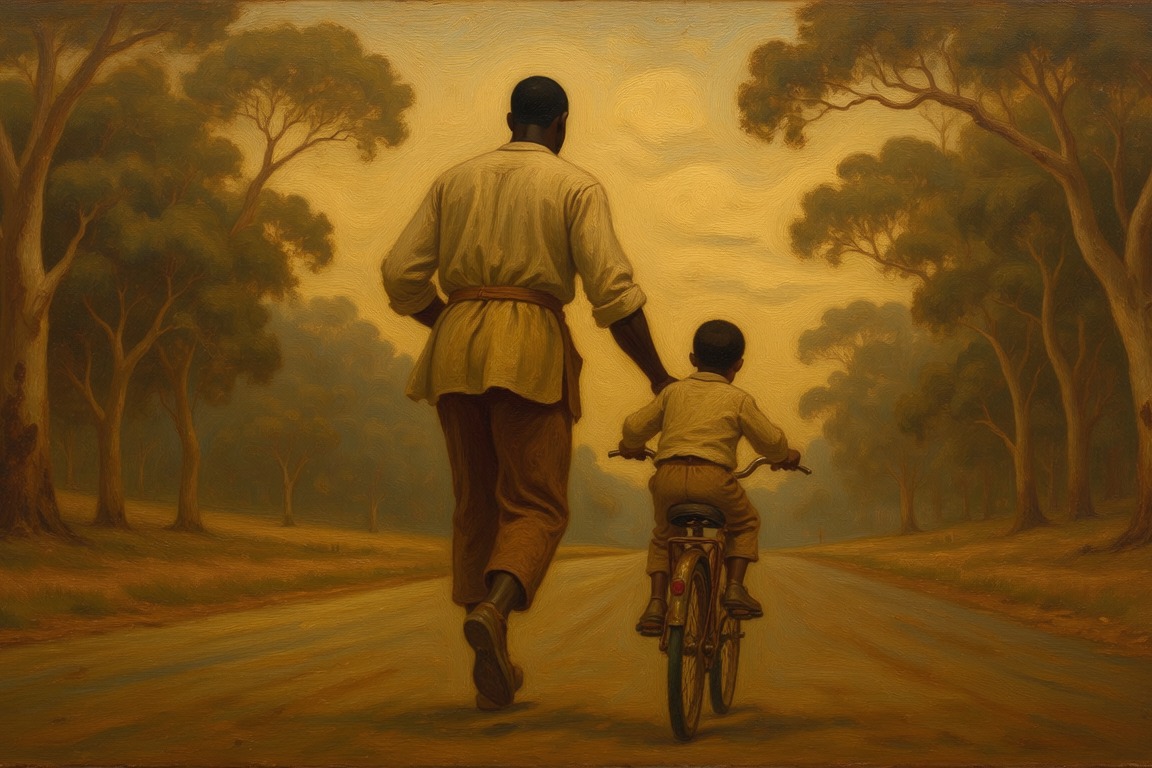
Now here is a secret most people never work out, even when they are big: being brave works exactly the same way. So does being kind. So does telling the truth when it’s hard. They are not magic gifts that some children get and others miss out on. They are like bike-riding: things you learn, by practising, with someone to help you.
So if you are not very brave yet, or not very patient yet, that is perfectly fine. “Yet” is the most powerful little word there is. You don’t wait to feel brave and then do the brave thing. You do one small brave thing, and that is how the brave feeling learns to come. Practice first. The feeling follows, like a puppy.
And just like bike-riding, it helps enormously to have teachers, people who show you how, not by telling you, but by how they live. Keep your eyes open for them. They are everywhere, once you start looking.
A practice, and the grown-up goes first
Tonight, at the table, play “My Teacher”, and grown-ups, you go first. Name one person who teaches you how to be good, not with words, but by how they act. Say what you have learned just from watching them. Then name one tiny thing you are going to practise tomorrow. Then it’s their turn: who is your teacher? What will you practise? You are handing them the biggest secret in this whole letter, that character is learned like a craft, and the learning never stops, not even for grown-ups.
About the author
Marcus J Emsley · The Guide
Marcus spent seventeen years as a welfare officer in the Royal Australian Air Force, at home and on operations overseas, sitting with people in grief, trauma and the mornings they did not want to rise. He is the founder of Arete Estate in the Barossa Valley, South Australia, the creator of The Sculptor's Journey and Wisdom & Wonder, and the author of the debut novel Wisdom & Wine. He is the son of a primary school teacher who coached footy, cricket and life, and a palliative care nurse who showed him what kindness at the hardest door looks like. He has stood in the dark himself, and he writes from the far side of it.
What we are building at Arete Estate
Arete is excellence becoming. It is the highest expression of who you were always meant to be, not the finished version, but the version that keeps reaching. It is not built. It is revealed.
Arete Estate exists to help people reveal, not construct, the highest version of themselves. We do this through six virtues drawn from the world's wisdom traditions, taught through stories, walked through daily practice, and offered to anyone who is ready to begin: the parent raising a child, the leader carrying a team, the soldier returning from service, the school shaping the next generation, the person sitting alone in the early hours of the morning wondering if there is a path through.
Our work is to make that path visible. To stand as a lighthouse for the seekers, the grieving, and the broken. To remind every person we reach that excellence is not built, it is revealed by storms, and that they are not alone in the storm.
We do not chase. We shine. The Sculptor's Journey (The Doorway, The Walked Path, The Guided Path), An Hour with the Guide, Meditate with Arete, Wisdom & Wonder and The Sculptor's Library are the rooms of that house.
Six virtues. One journey. Your highest self.
www.areteestate.com.au · info@areteestate.com.au · Instagram @areteestate
If this essay touched something raw
Some of what is written here is heavy. If it has stirred something you are carrying, please do not carry it alone tonight.
Lifeline 13 11 14 · Open Arms (veterans and families) 1800 011 046 · 1800RESPECT 1800 737 732 · Kids Helpline 1800 55 1800 · In an emergency, call 000.
Reaching out is not weakness. It is all six virtues at once: the Fortitude to stay, the Wisdom to know you need a hand, the Love to let someone in, the Courage to ask, the Temperance to set the weight down, and the Gratitude for the one who answers.

Responses